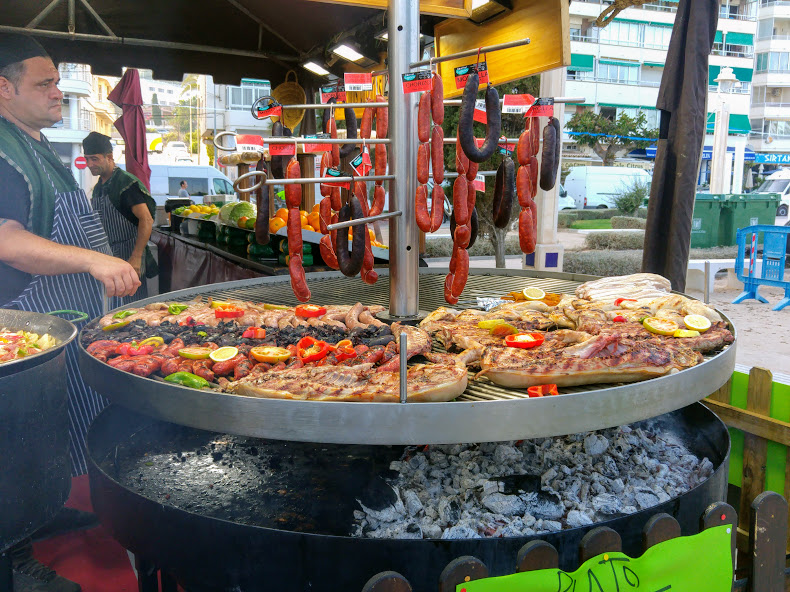
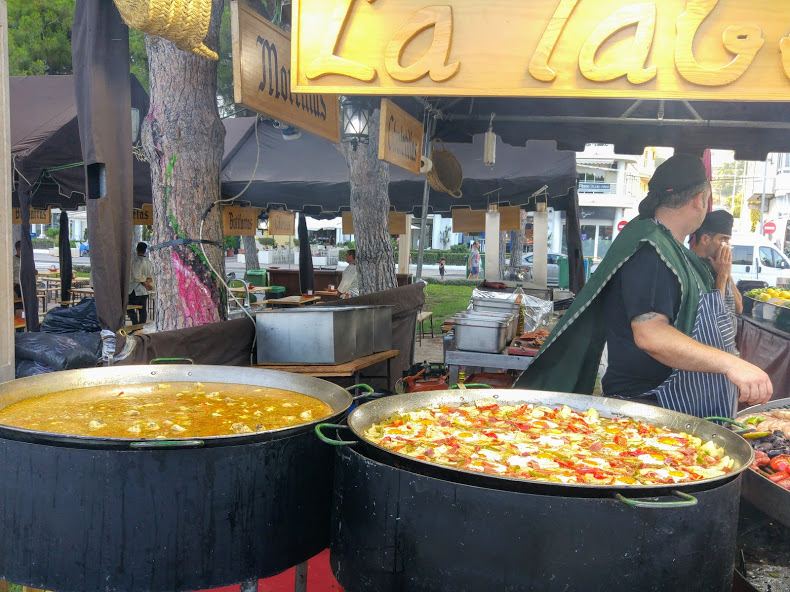
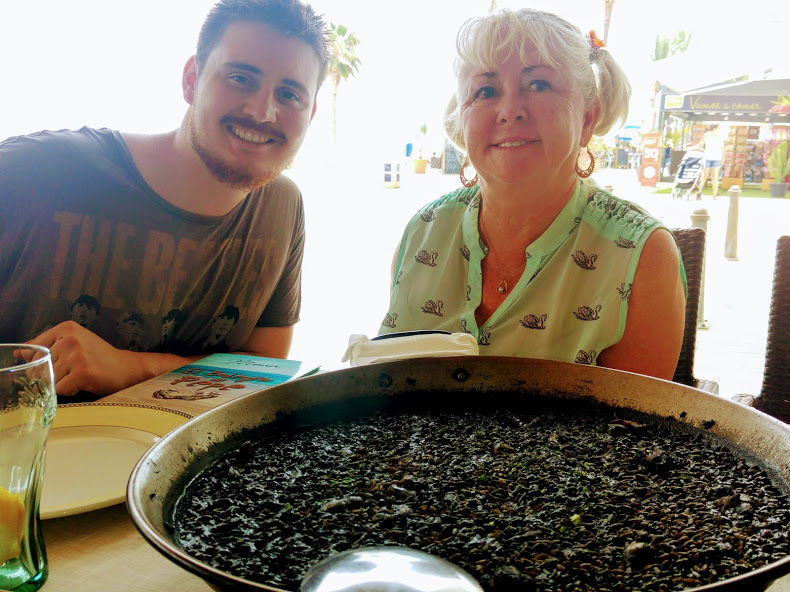
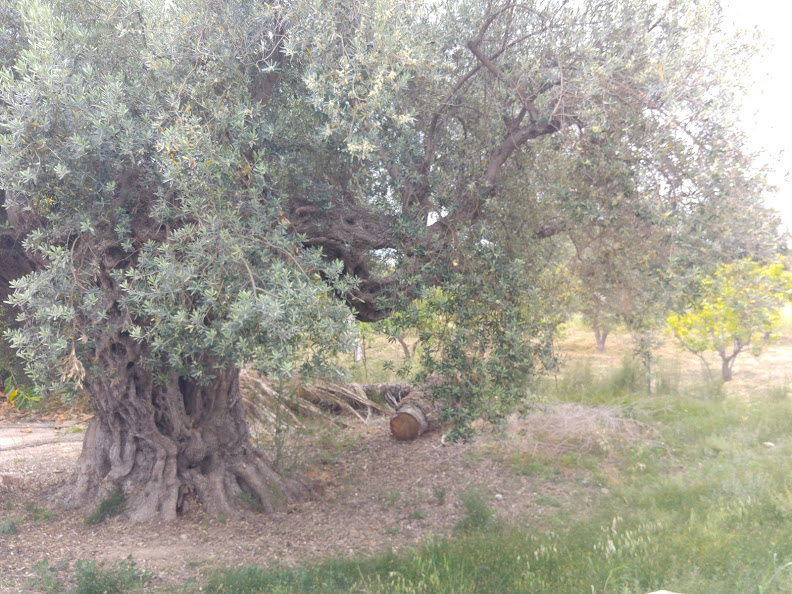
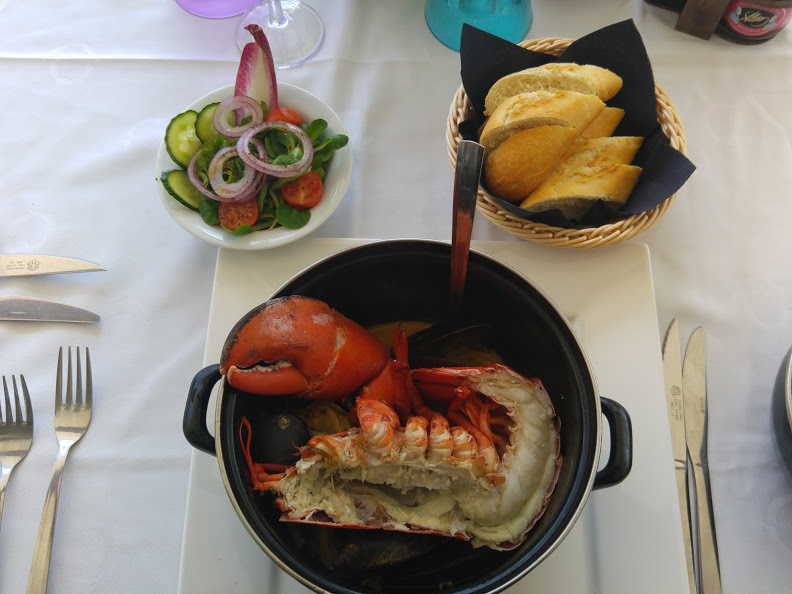
I have decided to revisit some of my favorite meals and foods here in the Costa Blanca area of Spain:
Another great day trip in the Costa Blanca area of Spain is a day in Jijona, a short drive in the hills northwest of Alicante. Jijona, also known in Valenciano as Xixona, is famous for its Turrón, an almond-based nougat.
Turrón is particularly popular at Christmas time in Spain. Jijona has a yearly four-day Christmas festival, which obviously features turrón, along with other Christmas- and winter-oriented gifts, like hats, scarfs, toys and more.
Turrón is typically made from finely ground almonds, egg whites, honey and sugar. It comes in a variety of textures and forms. There is one with a soft paste-like consistency, which, to me, had a gritty, not pleasing texture. There are soft and hard turrón bars, with pieces of almonds. I saw chocolate-flavored turrón, turrón-flavored gins and liqueurs, and many other non-traditional additions. Samples are generously provided from the Christmas parade of wooden stands located in the central market. There are also other Christmas-related exhibits, and food/tapas booths with adjacent seating where people can rest their feet, and enjoy a snack and beverage.
The Moors brought almond farming and turrón to Spain during their occupation of the area. During the 16th century, King Felipe II praised turrón, which increased its popularity. Historically, there were a few main families who dominated the turrón market. These decaying family mansions feature beautiful architecture and are visible on one of the main streets in Jijona: Monerris Planelles family home, Rovira family home, and Aracil family home. Only turrón made in Jijona and Alicante can receive the official seal of authenticity, “Consejo Regulador de Jijona y Turrón de Alicante.” There are tours available at the turrón museum and factory. Several other areas have a similar type of nougat like turrón, including Catalonia (Spain), France and Sicily.
There are other interesting things to see in Jijona including historical churches and a convent, the remains of a castle (destroyed in the Spanish War of Succession), “and snow wells” (thick walled round buildings located in the cool Carrasqueta mountain range which came into use in the 18th century to store snow for making ice cream.) In August, there is a Moros y Cristianos festival, which are very popular in the province of Alicante. Parking is typically a fair distance from the touristic areas, but are well-marked and on an easy, gradual incline.
I love most things about living in Spain, but customer service is not one of them. I have even contended they should remove the Spanish words for customer service, “atención al cliente,” from the lexicon. I have previously recounted my problems in receiving packages with my personal belongings from California. When I first reported no monetary value for the old personal items mailed to me, the Spanish authorities returned the package to the U.S. I tried unsuccessfully twice more to have my belongings sent. The last time, I completed all the requirements within the mandated time period, paid nearly 100 Euros in customs fees, and they still returned my package to California. By this time, all the potentially breakable items had broken. I never received the refund I requested. One package I did eventually receive was gaping open and the contents from the top of the box were missing; the Spanish postal service was not even professional enough to tape it closed. Then the postal worker who “delivered” the box claimed it was heavy and asked me to help carry it into my apartment.
If I mail order something from the U.S., there are huge import taxes, but there are some things worth paying extra for that I cannot get here in Spain. I have also mail ordered items from Spanish companies, and more often than not, the couriers claim they tried to deliver my package, even when I had been home the whole day. When I call the number they provide for the supposed missed delivery, they argue with me, saying they did come to my place and ring my doorbell. They are never wrong, and never apologize. One agent insisted they had a photo of the courier at my door, but when I asked them to send it, I was told they could not.
My friends and I have had similar difficulties when using a taxi. Some drivers will ignore directions I provide to avoid traffic snarls. They may bark at you for having an inadequate command of Spanish. The other day, our cab driver from our town of Altea was unfamiliar with any of the streets or major landmarks in our village.
Most of the time the food here is great, but there are occasions when the restaurant serves sub-par food. If they ask how the food was, and you give an honest assessment, most of the time, I have received the blank “Bambi in headlights” look, with no offer of any reparations. Once, when I tried to return or exchange a podiatry device which broke after one use, the pharmacist looked at me, shrugged her shoulders and said there is no guarantee on products they sell. WHAT?!
I recently learned of an even more ridiculous incident. A woman bought a pair of shoes, and when she got home and looked at them, she discovered they had given her two different sizes. When she went to correct the error, with receipt in hand, they insisted they had made no mistake, even suggesting she may have gone to another store to buy another pair to make a mismatched set. Her husband had no better success in attempting to rectify what should have been a simple exchange, accompanied by an apology.
And I won’t even start on confounding, changing requirements of the government bureaucracies in getting required documentation for a visa, registering your living address, getting a bank account and more. There is even a hilarious videos representative of many people’s exasperating experiences, which I have previously viewed on YouTube, although it seemed to have been removed when I tried to find it.
My recommendation in Spain is to remember, The client is always wrong.
My journey around the world
Adventure. Photography. Inspiration. And more!