Archive | Travel perils RSS feed for this section

Terrorism and Travel

22 Mar

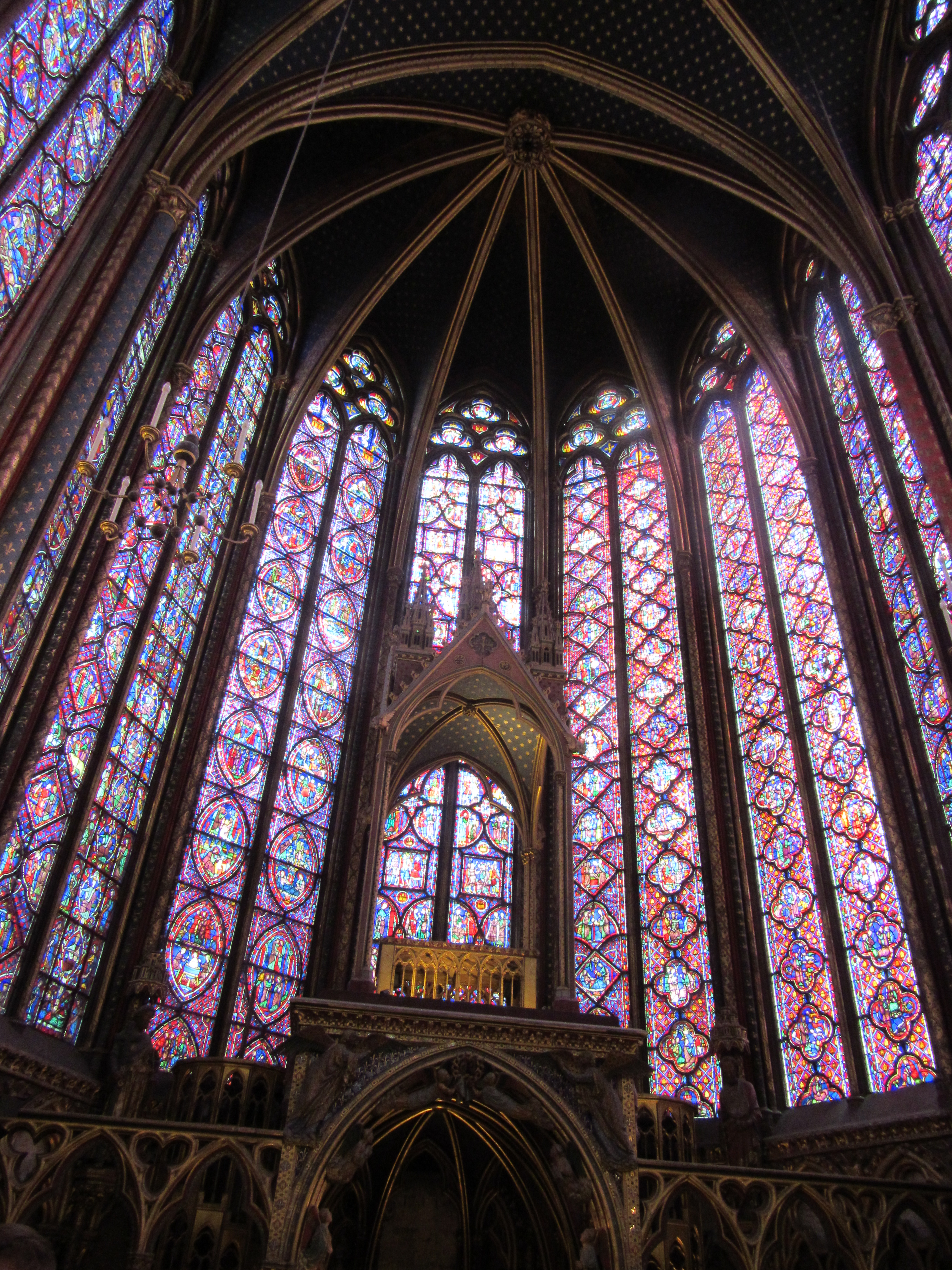
Gothic Sainte-Chapelle stained glass

A shooting involving a terrorist at Paris’ Orly Airport, while I was going through the security check there, was an anticlimactic end to my 60th birthday celebration in Venice and Paris with my middle son, Michael. Orly is France’s second largest airport. Just before I was scheduled to board my flight home to Alicante, Spain, I noticed the departure gate had changed to the downstairs departure area. As I tried to go to the new departure gate, the airport security officers told me there would be no more flights that day from Orly. Without explanation, they corralled us into the far half of the boarding area, not allowing anyone to leave. The televisions were switched off, and the departure screens frozen, which continued for several hours. We never received any notification from airport staff as to what was occurring, but I googled “Orly news” where I learned that a terrorist had tried to wrestle a gun from an airport police officer, and that he was shot. I did not learn the details until after returning home. Even though I had been told around 845 a.m. that there would be no further flights from Orly that day, around mid-day, without any speaker announcement, the boarding boards were turned back on, although without accurate, updated information on departure times. We finally boarded and departed around 330 p.m. As I write this on March 22, 2017, there has been a terrorist attack in London near the Parliament, and possibly inside.


There is no place in the world in which one is free from the possibility to violence, terrorism or even natural

Sacré Couer

disasters. In 1998, not long after the terrorist attack on the U.S. Embassy in Nairobi, Kenya, my oldest son and I went to Nairobi and then on safari the Tsavo Park area. Of course, at the time, we didn’t know that the attack was part of an organized terrorist organization. Not long after an American Airlines flight crashed in Queens, a borough in New York, in November 2001, only two months after New York’s September 2001 attacks, we flew to Europe. It was initially speculated the crash could have been a terrorist attack, but it was later determined to be caused by human error. During a tour of eight African countries, while in Bamako, Mali, the nation’s capital, we stayed at a hotel, where several years later, in spite of security, Islamist extremists took 170 people hostage, shooting 20.


Enjoying live classical and Brazilian music at Venice’s Caffè Florian, reported to be the oldest café in the world, dating back to 1720

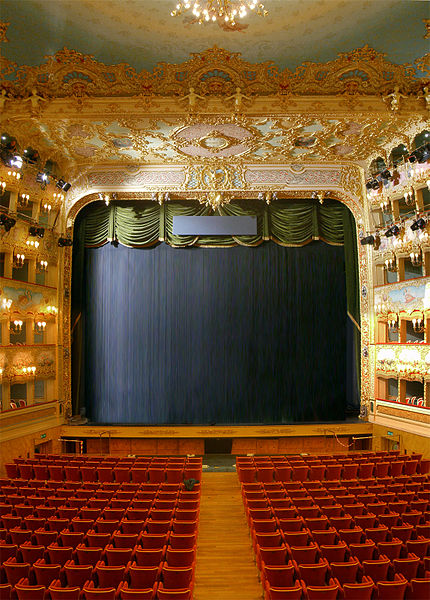
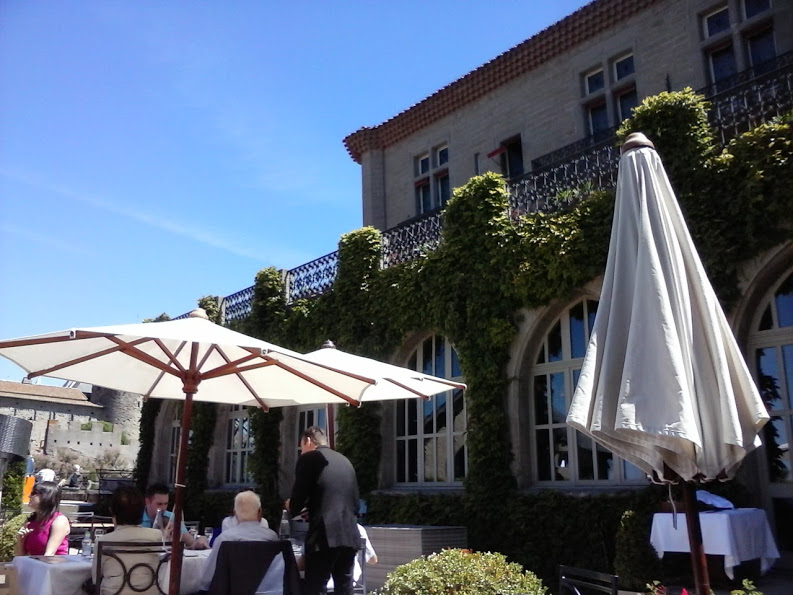
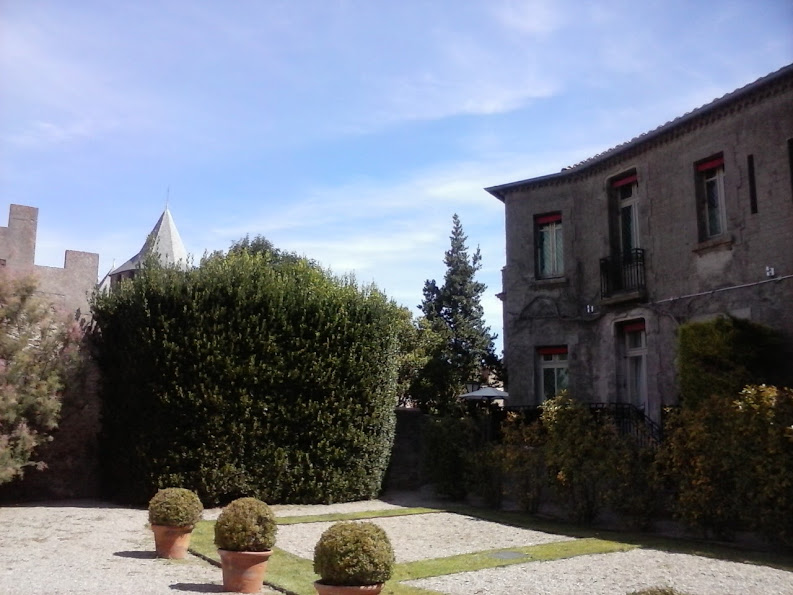
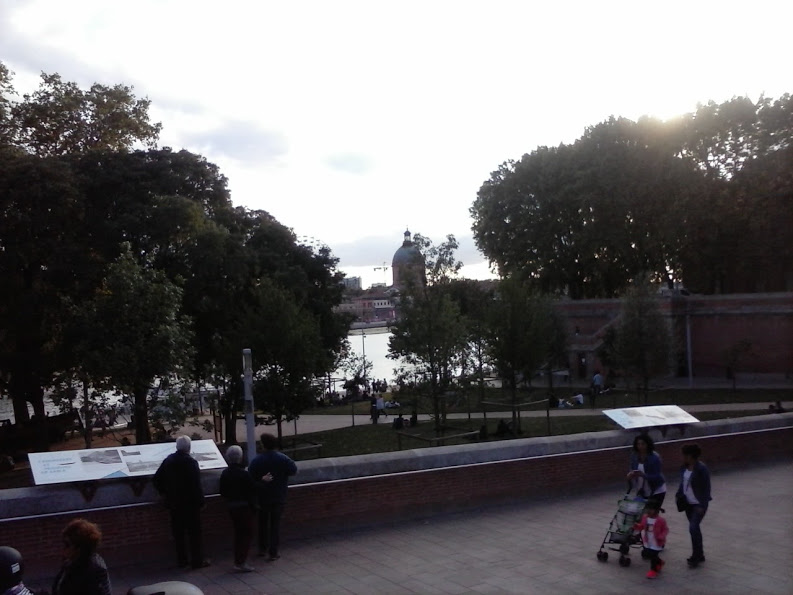
That said, as a psychologist, particularly a forensic psychologist where we rely heavily on statistics, I make informed decisions based on statistics rather than irrational fears. By far, I have a significantly greater chance of being killed by violence, particularly in the U.S., or by disease, or accidents. I choose to live my life with joie de vivre, focusing on relationships, food, culture, adventure, and curiosity. And if I should meet my end in a travelling accident, for me, that is far better than being holed up in my home or a bunker, or living my life in fear. To that end, I will be providing future blog posts on my Venice and Paris trip, and am providing a sampling of those photos here.

NOSTALGIC TRAIN RIDE…IN HELL

27 Nov
Thello train from Dijon to Venice

Overnight train from Dijon to Venice

As I am planning a trip to Venice and Paris soon with my middle son and am in the process of making transportation reservations, I am reminded of our disastrous overnight train ride from Lyon France to Venice.

I had always fantasized about a nostalgic overnight train trip. Thus, on my last trip to Europe before moving to Spain, I was determined to realize that overnight dream on the leg from Lyon, the gastronomic capital of France, to Venice, Italy. Admittedly, I had trouble figuring out exactly how to book the rail trip over the internet, so I eventually enlisted the more competent staff from the travel department of my credit card. Even so, it took them considerable effort to negotiate the details.

I was ecstatic when they were able to book a sleeper compartment for the two of us. The cost for the compartment was more than it would have been for both of us to fly from Lyon to Venice, but then that wouldn’t have been much of adventure. Little did we know what an adventure it would be.

We excitedly boarded the connecter train in Lyon which took us to Dijon where we were to transfer to our “sleeper” compartment. Alas, due to the late hour, none of the shops in the train station were open, so my plans to buy Dijon mustard from its town of origin was foiled. Perhaps that was an omen.

After boarding, we expectantly made our way with our suitcases through the jostling, narrow corridor toward our special place. When we opened the door we were shocked to see two people already sleeping in the compartment. They appeared just as surprised as we were, but since they didn’t speak English, we couldn’t be sure of what they said.
In spite of the language barrier, they kindly arose, helping us with our luggage into this micro area and then showing us how to convert the seating area on our side into two beds. The thin back of the seating area was raised to be horizontal above the bottom seat. The top “bed” appeared to hang perilously from the straps which allegedly supported it.

So much for my romantic notion of a luxurious, relaxing overnight rail trip. Now it was just about survival. I decided my best option was to head for the train’s bar to drink my way into a somnambulant state. After about an hour into imbibing in the train’s dining car, the train came to an abrupt stop. We sat motionless for an hour and a half. Meanwhile, the lights inside the train flickered and then went completely out.

After the train finally resumed moving and the lights came back on, we inquired around as to what had occurred. No official word, but other passengers related that here was some suspected illegal activity and that when the train stopped, those allegedly involved fled. At least those suspects weren’t my cellmates…I mean roommates.

Weary, we finally proceed to the room where we are greeted by the loud snores of our rather corpulent male roommate. I barely slept, but my son demonstrated one of the benefits of being a young adult male—being able to sleep anywhere.

As daylight broke, I stumbled to the communal bathroom to freshen up and change clothes. Obviously we slept in our regular clothes due to the unexpected roommate situation. Yet another surprise awaited me–a flooded, filthy bathroom. Guess I wouldn’t be changing my clothes or spending any unnecessary time in that area.

At least with the sunlight, we were able to enjoy the bucolic scenery of the Veneto, with its rows of grapevines, and villas dotting the countryside against the backdrop of the craggy Dolomite Mountains. As we approached Venice, I was thrilled to unexpectedly see one of the Palladian villas of UNESCO-fame. When I shared this information with parents travelling with young children, instead of thanking me, the mother corrected my pronunciation. Killjoy. For what it’s worth, much later, I learned my pronunciation was correct.

Is There Customer Service in Spain?

11 Nov

I love most things about living in Spain, but customer service is not one of them. I have even contended they should remove the Spanish words for customer service, “atención al cliente,” from the lexicon. I have previously recounted my problems in receiving packages with my personal belongings from California. When I first reported no monetary value for the old personal items mailed to me, the Spanish authorities returned the package to the U.S. I tried unsuccessfully twice more to have my belongings sent. The last time, I completed all the requirements within the mandated time period, paid nearly 100 Euros in customs fees, and they still returned my package to California. By this time, all the potentially breakable items had broken. I never received the refund I requested. One package I did eventually receive was gaping open and the contents from the top of the box were missing; the Spanish postal service was not even professional enough to tape it closed. Then the postal worker who “delivered” the box claimed it was heavy and asked me to help carry it into my apartment.


If I mail order something from the U.S., there are huge import taxes, but there are some things worth paying extra for that I cannot get here in Spain. I have also mail ordered items from Spanish companies, and more often than not, the couriers claim they tried to deliver my package, even when I had been home the whole day. When I call the number they provide for the supposed missed delivery, they argue with me, saying they did come to my place and ring my doorbell. They are never wrong, and never apologize. One agent insisted they had a photo of the courier at my door, but when I asked them to send it, I was told they could not.


My friends and I have had similar difficulties when using a taxi. Some drivers will ignore directions I provide to avoid traffic snarls. They may bark at you for having an inadequate command of Spanish. The other day, our cab driver from our town of Altea was unfamiliar with any of the streets or major landmarks in our village.


Most of the time the food here is great, but there are occasions when the restaurant serves sub-par food. If they ask how the food was, and you give an honest assessment, most of the time, I have received the blank “Bambi in headlights” look, with no offer of any reparations. Once, when I tried to return or exchange a podiatry device which broke after one use, the pharmacist looked at me, shrugged her shoulders and said there is no guarantee on products they sell. WHAT?!


I recently learned of an even more ridiculous incident. A woman bought a pair of shoes, and when she got home and looked at them, she discovered they had given her two different sizes. When she went to correct the error, with receipt in hand, they insisted they had made no mistake, even suggesting she may have gone to another store to buy another pair to make a mismatched set. Her husband had no better success in attempting to rectify what should have been a simple exchange, accompanied by an apology.

And I won’t even start on confounding, changing requirements of the government bureaucracies in getting required documentation for a visa, registering your living address, getting a bank account and more. There is even a hilarious videos representative of many people’s  exasperating experiences, which I have previously viewed on YouTube, although it seemed to have been removed when I tried to find it.

My recommendation in Spain is to remember, The client is always wrong.

A Humorous Guide to Smoking in Spain

2 Nov
  1. img_1410Although smoking is not allowed indoors, it doesn’t count if you light up while heading for the door.
  2. Nor does is count if you stand in the doorway and smoke.
  3. You can stand at the outside window counter of a bar/restaurant designed for serving people outside, and while facing the inside, blow smoke inside.
  4. You can smoke in an outdoor restaurant patio, even if enclosed or babies/children are present.
  5. You can hold your baby or child while smoking.
  6. You can throw your lit cigarette into the street when finished, regardless of whether you are walking, driving, or are on your third or fourth floor home balcony.
  7. You can publicly smoke at your job.
  8. You would rather sit outdoors so you can smoke, even in inclement weather.
  9. Don’t worry if your smoking bothers anyone else.
  10. You can smoke outside the gym door before and after exercising, and if you need a smoke break during your workout.
  11. Buy household items that can be used both as vessels for serving food and as an ashtray.
    IMG_0398[1]

    Cups that can be used to serve food such as allioli (Spanish version of aioli) or can be an ashtray.  I’m not kidding. See the four protrusions on top designed for putting cigarettes when vessel is empty.

Taxi Travel Perils and Moros y Cristianos in Altea Spain

9 Oct
Moros

Moros

“The taxi driver wouldn’t follow the directions you provided. He said, ‘Moros y Cristianos’ and ‘impossible,’ then stopped, unloaded our luggage and told us to get out. We don’t know where we are.” This was the first comment from my friend who had just arrived in Altea from California. In addition, the WhatsApp wouldn’t work for her, so I hadn’t gotten any of her prior calls. Having not heard from them at the expected arrival time, I then called her via regular (expensive) international mobile rates, which is when I received her panicked statement.


Camels with Moros

Camels with Moros

In anticipation of the arrival of my two girl friends from California, I fretted over possible, or should I say probable, problems with the cab driver getting to my apartment during the annual Moros y Cristianos (Moors and Christian) festival. This was not my first problematic experience with Spanish cab drivers. My fear was realized, in spite of spending several days providing a map and writing out the directions in Spanish (and English so my friends could see if he was going the right way.) At the beginning of the directions was the admonition in Spanish (which my friend read aloud) not to go the usual way due to the Moros y Cristianos festival. In response, he simply entered my address into his guidance system, and drove to the starting spot of the parade, at which point he dropped them off on the highway (Carretera 332) that runs through Altea.


Christian fila party across from my apartment

Christian fila party across from my apartment

After eventually figuring out where they were, I found them near the start of the Moros y Cristianos parade route. With luggage in tow, we then proceeded to the seats on the parade route a local friend had saved for us. Although I had told them they would be in Altea during the Moros y Cristianos festival, they had no idea of the magnitude and pageantry of it. The festival commemorates the Christians reconquering the areas of Spain that had been conquered earlier by the Moors.


img_2021

King in the procession to the church plaza from my window

Nor did they anticipate the incredible level of noise associated with most festivals in Spain. In the early morning, there is the despierta (wake-up) when the local filas (brotherhoods) proceed up the hill toward the church plaza while their respective brass bands play and others fire noise-making guns and firecrackers, all the while drinking and smoking. (Having attended the festival for two years, I have only seen one Muslim participate.) Throughout the day, the many filas have parties at their individual sites, with food, alcohol and music. The fila Moros across the street from my balcony, Els Malvins, have a fabulous group of musicians, which I am privileged to enjoy without having to leave my home. In addition, there are many other adjunctive activities such as midnight fireworks, re-enactment of battles between the two groups,


Solemn religious procession

Solemn religious procession

The festival culminates with evening parades, first the Moros, the next day a solemn religious procession, and finally the Christians. After those parades, the filas return to their home sites where they continue to party until the early hours of the morning. In addition, there are live music/dance venues that start after midnight and go for many hours. I don’t know how they can stay awake that long, let alone, party that intensely. Tellingly, on the day after the festival ends, almost all of the local businesses are closed, apparently for recuperation and clean up.


IMG_2012.JPG

Quail with apple slices, grapes fruit compote


My friends were thrilled with the Moros y Cristianos festival, as well as many other aspects of Spain, including the friendly international locals, the many varieties of activities, day trips to other towns, fabulous food and the ambience of beautiful Altea.


Sant Joan Festival in Altea Spain

26 Jun

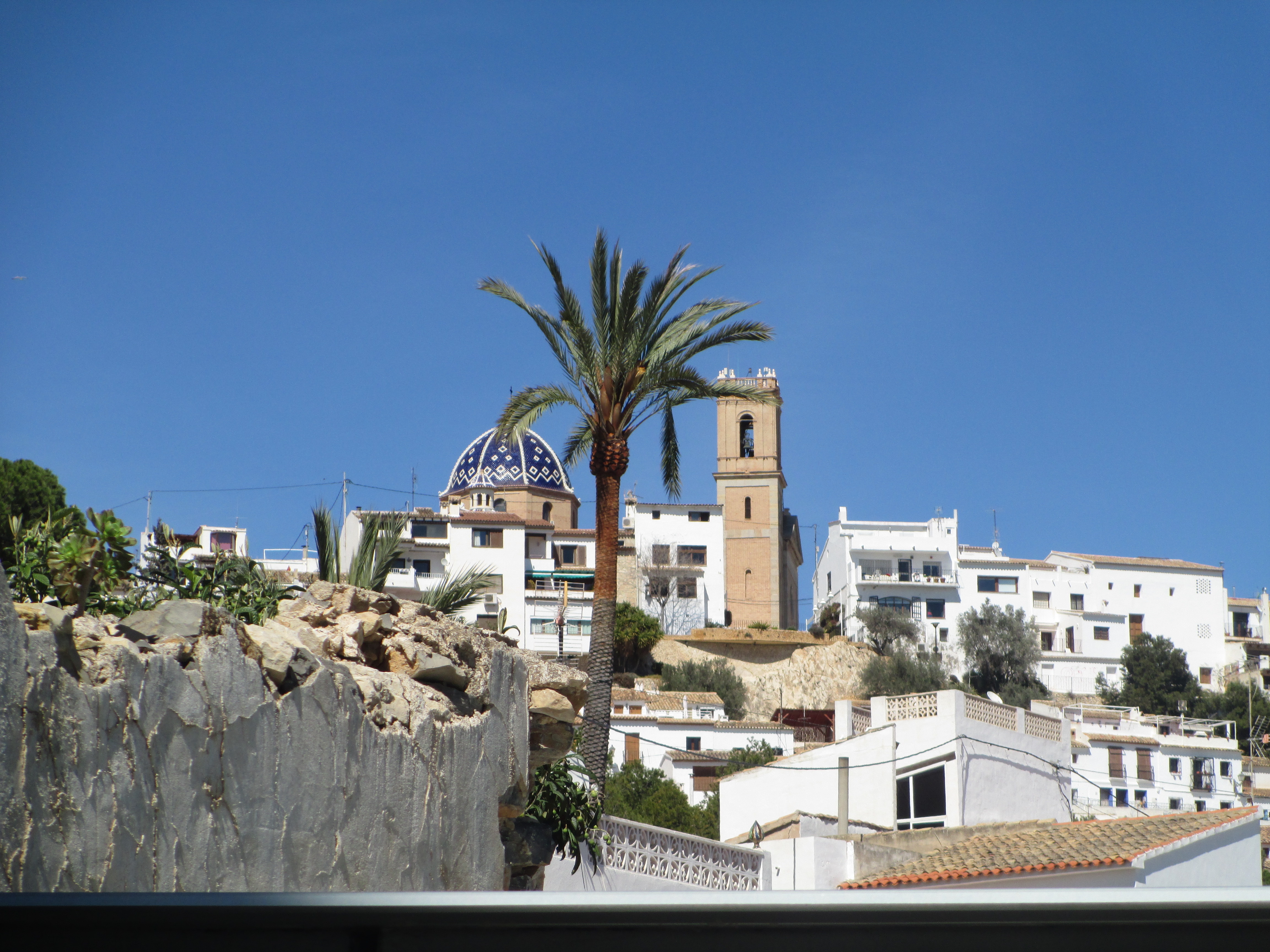
BOOM BOOM BOOM. The sounds outside were so loud as to cause my dog, Pepper, to run to hide under the bed. I peered out of my window which affords a view of the cathedral at the top of Altea’s old town, where I was surprised to see fireworks midday. The fireworks signaled the start of the day’s Sant Joan Festival.

IMG_1051

Waiting to be doused with water at Sant Joan festival in Altea

Sant Joan Festivals are very popular in Spain, particularly in the Province of Valencia where I live, as well as in Catalan-speaking areas, and Galicia. Sant Joan is the Valenciana and Catalan languages way of saying Saint John. The Sant Joan festival in Alicante is Spain’s largest, and one of Alicante’s most important festival. The festivals occur around June 23, the day of Sant Joan, typically with numerous days of activities that vary with the location.

In Alicante, there are large “Ninot” characters that are set on fire, much like the famous “falles” festival in Valencia in March. The Ninot are amusing parodies of famous people or politicians made of wood, cardboard, mud, and other items. This year’s Alicante festival occurs for four days. There are noisy early morning (for Spain) wake-ups, parades, costumes, music and many more activities.

IMG_1025

Sant Joan parade with masks

In my town of Altea, when I first heard about the impending festival, I had no idea what to expect. My initiation to the festival was the booming fireworks midday, followed later by a parade of locals with cartoon character heads. There have been three early morning wake-ups by noisy participants yelling, playing instruments, and more fireworks. My apartment is on the street where all the local parade participants go as they head up the hill to the cathedral in Altea’s main plaza. One afternoon, there was a huge pan of traditional paella cooked in the plaza for all to sample. One midnight during the festival, people wade into the ocean. After all, St. John is remembered for baptizing Jesus.

This festival requires stamina. The first group of parade participants, which included many musicians, continued to march and perform for more than 12 hours. During the second afternoon parade, the noisy participants of all ages wore torn t-shirts and were soaking wet as they made their way up the hill. There were two groups, each carrying a tall tree, many drinking from large jugs or other vessels of wine, while the people watching on from their apartments above dump and spray water on the giddy participants.


IMG_1865

Raising the tree


Once done with the procession, in the plaza the trees are hoisted to stand erect. Men attempt to climb the tree as high as possible onto the unstable trees to tie on their ripped t-shirt. An ambulance was waiting nearby for anyone who might fall. However, I think it is nearly as dangerous for the women who wear spindly high heel shoes while walking on the uneven, rocky plaza surface, or dancing when the late night band plays.


IMG_1901

Climbing the tree to tie on a flag

Today, Sunday, parade participants wore traditional costumes while trekking up the hill to the accompanying music followed by a “solemn” mass. There are numerous activities scheduled including more music processions. (Altea music schools for youth and a professional school for adults so music is always a prominent part of any festival.) There will be more fireworks, and in the plaza another giant communal paella, and disco music starting at 11:00 p.m.


What has been your favorite festival experience in Spain?

Alluring Alicante: Top Stops

4 Apr
Alicante with Santa Barbara Castle on the hill

Alicante with Santa Barbara Castle on the hill

Living in the beautiful, low-cost Mediterranean area of Spain known as the Costa Blanca offers many advantages, not the least of which is the opportunity to travel to enticing, affordable historical and cultural places in the country. Since moving to the Costa Blanca, I have been enjoying nearby venues, all within about an hour’s drive. Almost everything in Alicante is centrally located, so no vehicle is needed once you arrive, although local trams are available if one wants to explore outlying areas.


The cosmopolitan area, now known as Alicante, has been inhabited over 7000 years, with periods of rule by the Greeks, Phoenicians, Carthaginians, Romans, Visigoths, and Moors. One of the iconic sites visible from much of the city of Alicante is the hilltop Santa Bárbara Castle, which dates back to the period of Muslim rule starting in the 8th century. It was named for the saint day on which Castilian forces captured it on December 4, 1248. Over the centuries it endured many captures and bombardments, and was sometimes used as a prison. After a period of disuse, it was opened to the public. Entry is free, but there is a small fee to use the elevators to get to the top, or one can walk to the top. The panoramic view is spectacular.


Alicante Barrio

Alicante Barrio

Located near the Santa Bárbara Castle, is El Barrio, “the Old Quarter,” which features narrow pedestrian streets, with colorful homes and flowers, a photographer’s delight. There are numerous interesting historic buildings including St. Mary’s Church, built between the 14th to 16th centuries on top of a former mosque. Its ornate baroque façade and interior are a worthwhile stop. The Ayuntamiento (Town Hall) is a baroque building located behind the Explanada Park. Besides the beautiful architecture of the exterior, inside there are historic archeological remains, the famous “blue room,” a chapel, and cota cero, a reference point inside the building from where the height of sea levels throughout Spain can be measured.


El Barrio also has shops and stores featuring everything from handmade crafts to luxury brands. Leather manufacturing is a major industry in the Alicante area, so inexpensive quality leather products are widely available.


alicante-axplanade

Iconic Explanada

Alicante is well-known for its regional cuisine. There are many dining options, from informal to formal including traditional tapas to innovative gourmet tapas, paellas, fish and seafood, as well as other types of regional Spanish and international cuisines. For foodies, a visit to the Mercado Central will delight the senses with abundant displays of fresh and unique offerings. There are places to purchase prepared food in the market, and cafes just outside. Another area offering quality cuisine is in the marina area, which can be reached by taking a stroll down the Explanada de España, which is the palm-lined walkway along the Mediterranean. It is paved with six and a half million marble floor mosaic tiles laid in such a way as to create a wave-like appearance; many consider this one of the most beautiful beachside walkways in Spain.


Spaniards love friends, family, fun, and festivals. To that end, in both the Old Town and in the Marina areas, there are many inviting sidewalk cafes for socialization and rejuvenation during the day, and lively bars or discotheques where people party until the early morning hours.


Prices for a nice hotel typically start around 70€; an apartment or vacation rental may be even less expensive with two or more bedrooms, kitchenette, common living areas and laundry facilities; most beverages including wine, beer, water, and soda for around 2€; and menu del dias (two or three course special menu of the day for as low as 10€.)