Here are some photos of my recent trip to Treviso, Italy, in the Veneto region, just north of Venice.
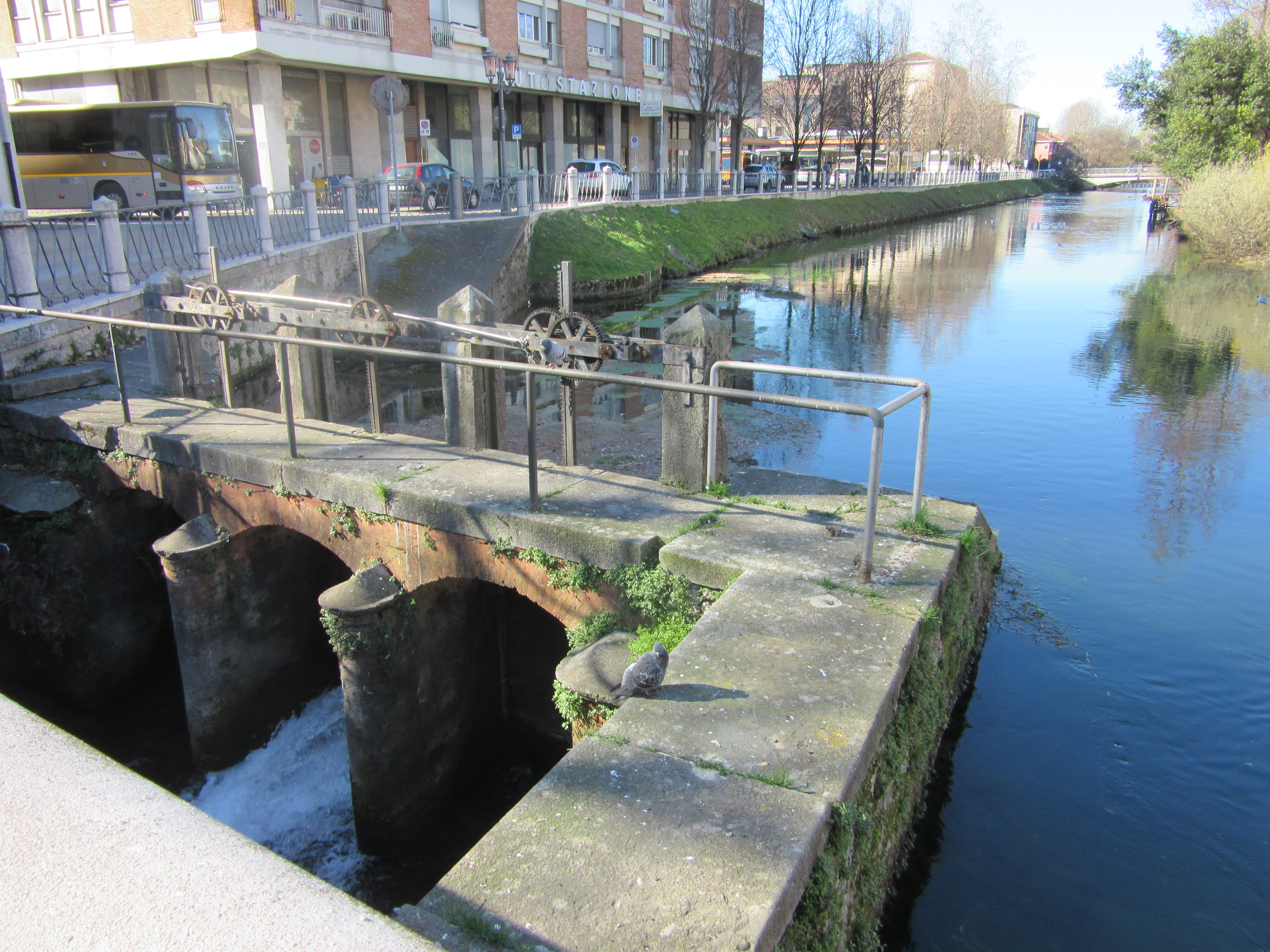
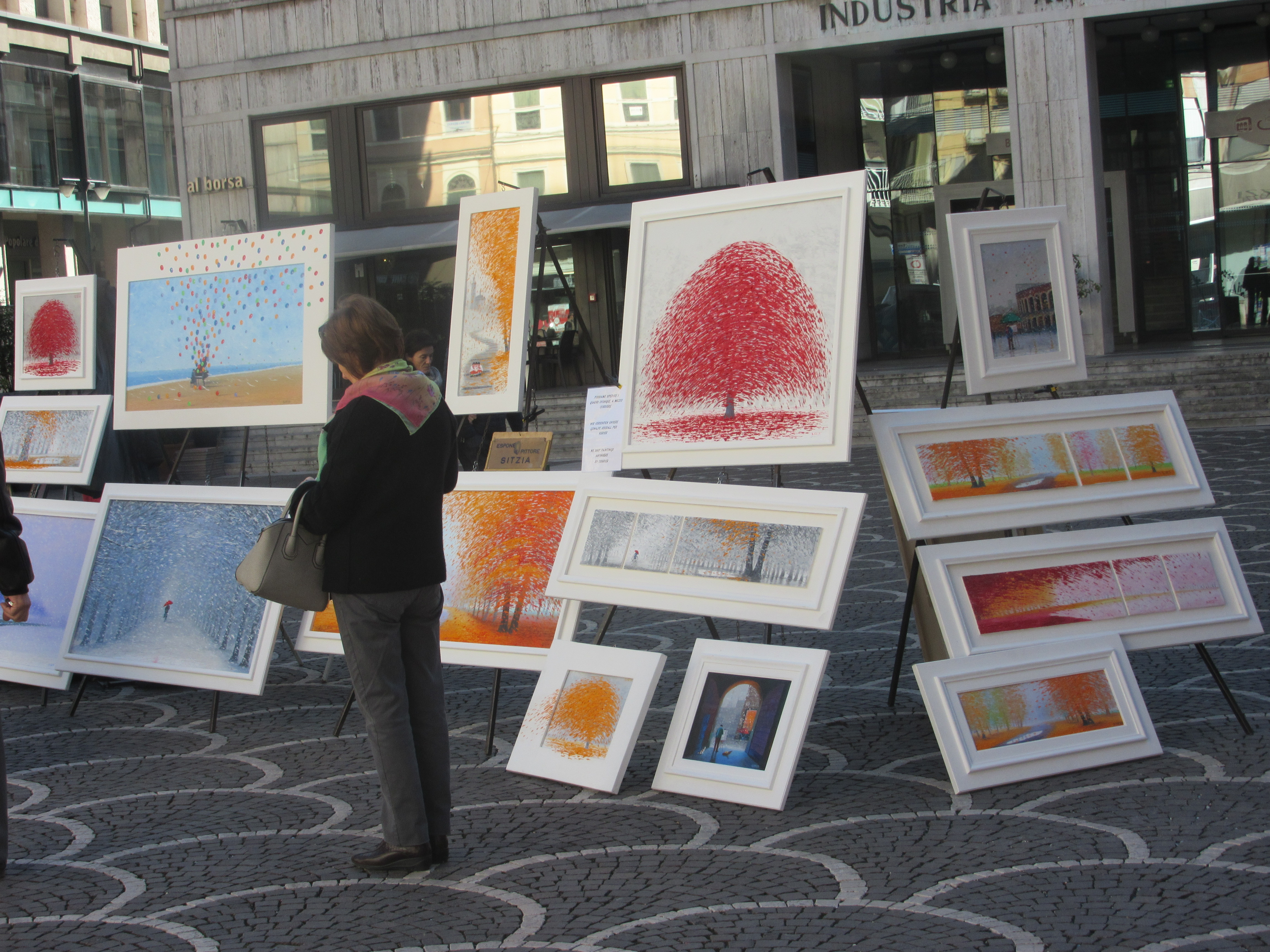
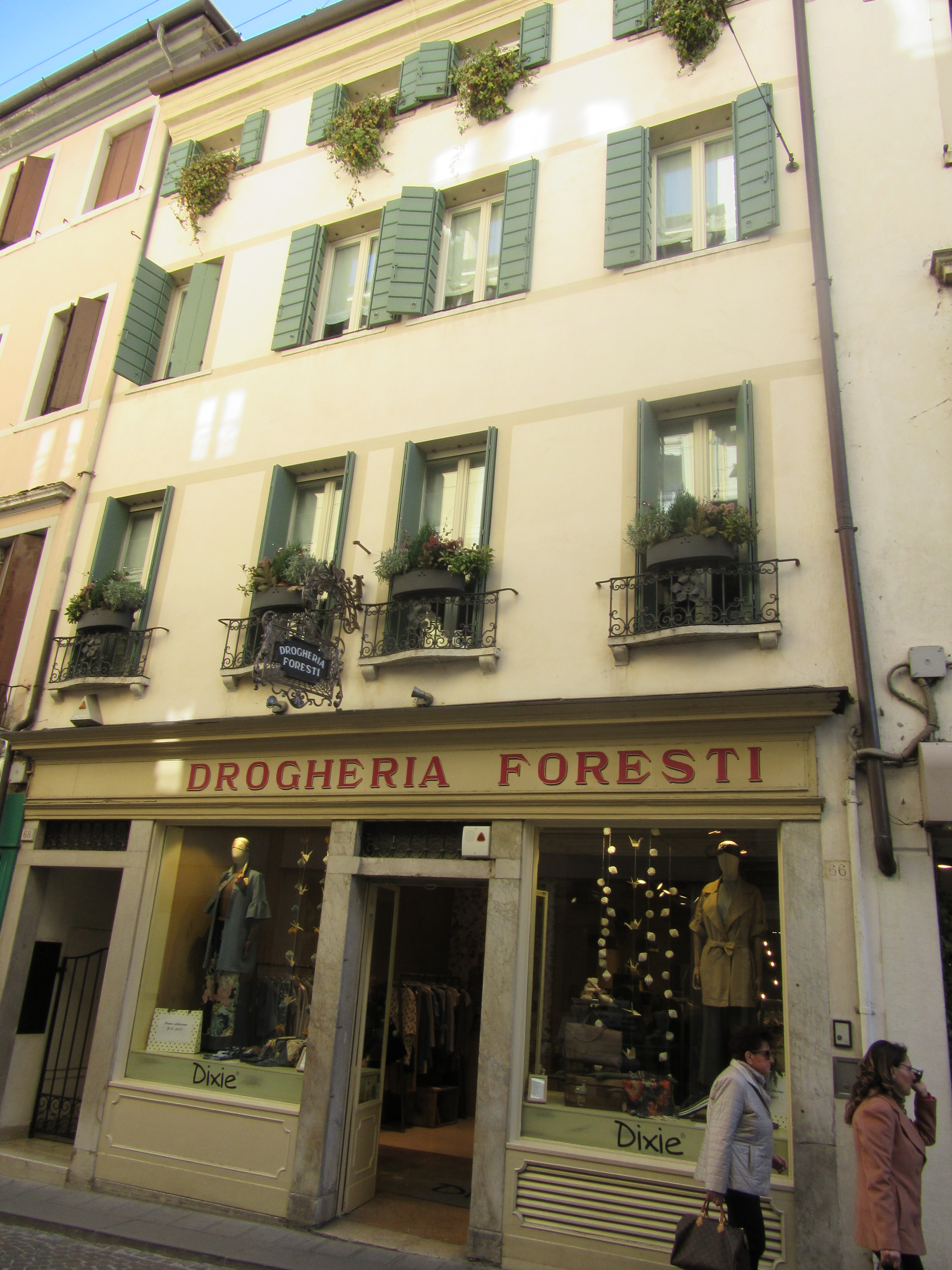
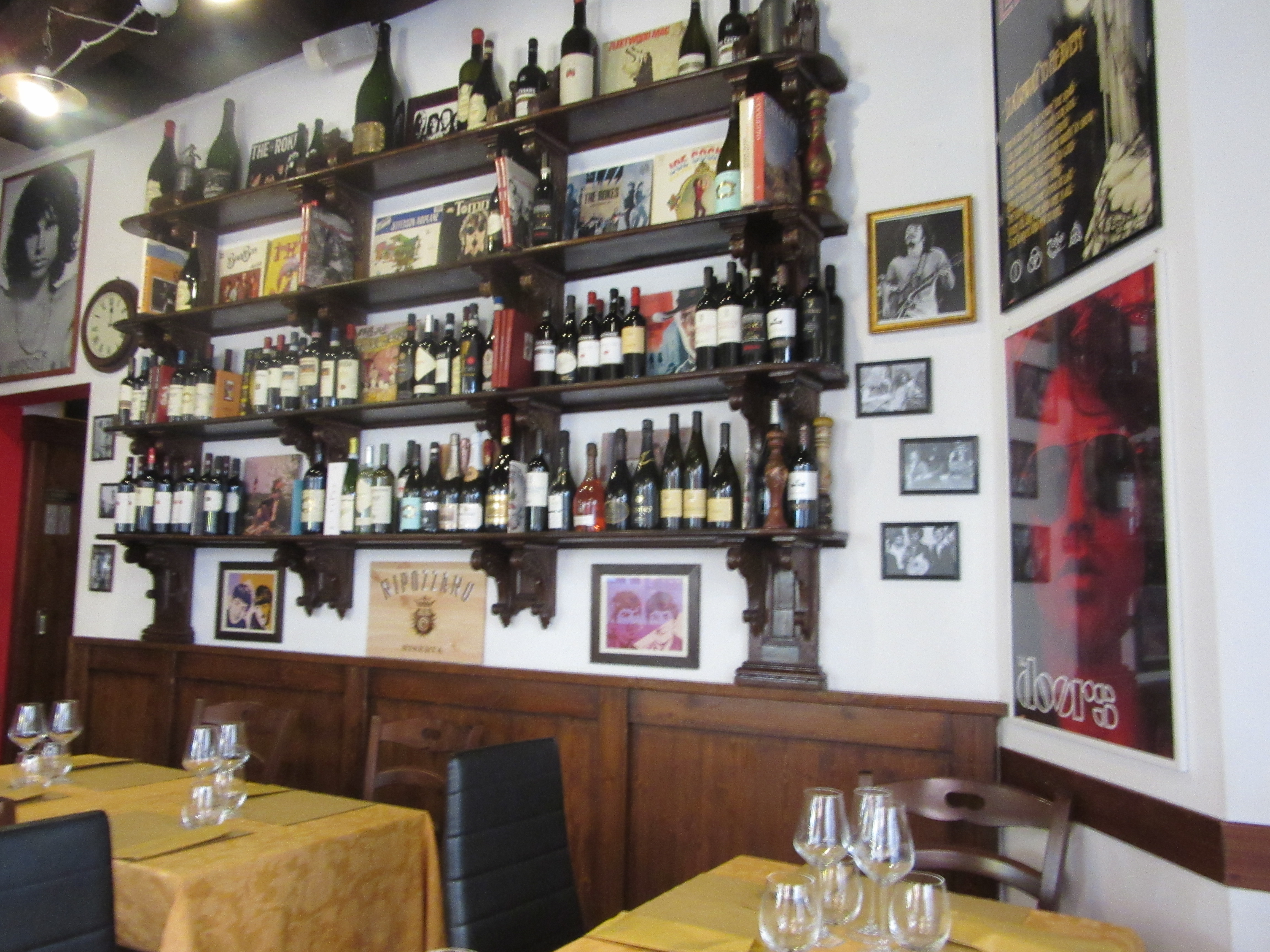



Here are some photos of my recent trip to Treviso, Italy, in the Veneto region, just north of Venice.

Water Wheel: Treviso
While I loved my new life as an ex-pat in the lovely Mediterranean village of Altea, Spain, I relish the opportunity to affordably travel to other destinations. For my most recent trip, I went to Venice, Paris, then back to where I live, with all three flights costing only 150 Euros.
There are many low-cost options available for transportation and accommodations. My original plan was to go to central Spain to the historic, beautiful and interesting cities of Salamanca (with arguably the most beautiful plaza in Spain), Segovia (with its intact Roman Aqueduct), and Avila (with its intact medieval city wall), all UNESCO World Heritage Sites. Spain has the second most UNESCO World Heritage Sites, after China.

Piazza San Marco
However, getting to those locations from where I live is not easy to do in a timely manner via train or flight. I did not want to rent a car or take ride-sharing Bla Bla Car. As I did not want to spend many hours to get to my destinations, I looked at the direct (non-stop) flights that departed and arrived from the two airports closest to me, Valencia and Alicante. Originally I found direct flights from my preferred airport of Alicante to many destinations, and I decided to go to Venice, then Paris, then home to Alicante airport. I also checked for airlines and hotels that accepted dogs, as I initially planned to take my small dog, Pepper. I subsequently decided not to take him because it would preclude us from going to events like the ballet in Paris, or restaurants which have only indoor seating.
Often flight, bus and other transportation schedules within Spain and Europe are not published until a few months before departure. Whereas my initial search found direct flights from Alicante to Venice, when I went to book it, there were no scheduled flights for March, none until July. Being flexible and willing to search for other options can yield reasonable alternatives. I was going to meet my son in Venice on a Sunday in March, and all the flights with more than one leg took a ridiculous length of time. I then found a flight the prior day, a Saturday, to Treviso, which is only a mere 30 minutes train ride to the Venice train terminal for only 3,40 Euros. I decided to get a hotel in Treviso, “The City of Art and Water,” that Saturday and explore the town, which has interesting history and culture. The next day, I strolled around town before heading to Venice. Of course, I had researched, and where necessary, scheduled all the connecting ground transportation for the whole trip. That was not necessary for the train from Treviso to Venice. In Italy, (and some other European countries), after you purchase your ticket, you must validate it in one of the machines on the wall or you risk getting a large fine when they train staff check your ticket.
 As private water taxis are very expensive in Venice, as are taxies in Paris, I scheduled them on Alilaguna, a group water taxi for about 14 Euros one way and 25 Euros roundtrip, and Blacklane for a roundtrip private transfer from Paris Orly airport to our hotel in the Plaza Vendôme area for about 50 Euros each way.
One unexpected issue we had on the flight from Venice to Paris on Transavia was just as we got to the staff to present our boarding passes we were told we could only have one carry-on, and that we would have to put any other items including my purse in my carry-on suitcase, which was already stuffed full. I had to throw out a few items in order for my purse to fit. All three flights were about two hours. It was the first time I had taken low cost airlines, and found them organized, and comfortable enough.
 We enjoyed stops in historic churches, art museums, live music venues, and public gardens. Included in this article are some of the interesting sites we saw on this trip.
For me, one of the many considerations, albeit not the most major, in making a decision to move to Spain was the ease and cost of travelling to relatively nearby European and African countries.

Altea
Here is an excellent article about Altea written by my friend, Ted Williams (aka Paul Theodore Williams) for International Living magazine.
Thursday, March 23, 2017
Dear Fund Your Life Overseas Reader,
One of the challenges of moving overseas is selecting the right place for you. Cost of living, climate, convenience, and several other factors will play a big part in your decision.
But when you find the perfect place for you, it’s something you won’t be able to put a number on. You’ll just know it.
Texan native Paul, who tells his story below, is one of the folks who has found his perfect overseas home. Read on, and discover why he’s so taken with this little town on Spain’s Costa Blanca…

Shane Ormond
Managing Editor, Fund Your Life Overseas
P.S. If you like the romance and culture of Europe…then Spain is calling your name. It offers sophistication, charm, comfort…and at a price you’d expect to see in Latin America. In fact, it’s the best bargain in Europe today. Uncover the insider secrets to find your ideal Spanish destination in our comprehensive Spain Uncovered Bundle—available this week only at an almost 50% discount. Act before midnight tomorrow and you’ll receive a free report on Spain’s Secret Income Opportunity.
***
Affordable Luxury in the Jewel of Spain’s Costa Blanca
By Paul Theodore Williams
This morning, I awoke to the spotless Altea seaside, refreshed by an early spring shower. These March mornings are cool, and showers are frequent at this time of year, but the afternoons are sunny and warm enough to peel off the jacket.
I took my two dogs for our morning ritual, walking down to the craggy beach just a couple-of-minutes from my home. The crisp morning air is a refreshing and energizing start to the day. As the waves crashed rhythmically against the shore, I began to wake up and turn my thoughts to the day to come.
These mornings, walking the coast in Altea, the jewel of Spain’s Costa Blanca, may feel like part of a vacation commercial. But it’s my normal everyday life, compliments of working as a teacher in Spain.
I teach at a school about seven miles inland from Altea. Is that why I came here? Not really. Teaching, for me, is a means to an end—a way to live life on my own terms. I’m not making a fortune by American standards, but compared to the cost of living, I live comfortably, have a constant flow of disposable income, and get plenty of time off to do what I want.
Coming from Texas, I was used to a lower than average cost of living. However, Altea is even drastically more affordable than that. My first home here was an apartment on the seafront, which I rented for just for $485 per month, with my utilities totaling at about $100 monthly. Since then I’ve met my wife—she was the landlord of that apartment as it happens—and I’ve moved on from that apartment to something bigger.
Fuel is more expensive here but my car gets 45 mpg and we only use it for going to work and our weekend adventures, since the whole town is happily accessible by foot. One stroll through the jasmine-filled streets and you’ll never want to get back in a car again. Fruit and vegetables are at least half the cost of back home and finding organically grown produce is the norm, not the exception.
We both love to cook, but we also love to eat out. For an authentic, traditional Spanish meal, you’ll get a glass of wine, starter, first and second courses, and dessert or coffee for about $11 at lunch and $16 at dinner. A great bottle of wine, that I would expect to cost $20 to $25 back home, may set me back about $5. If I’m watching soccer with the boys I can get a pint of beer for $2.70.
One of the best Indian restaurants in the area, Crown of India, sits on high in the old town with a 270-degree panoramic view of the mountains and coast. They offer a wonderful dining experience for about $20 including wine or beer. But I must admit, my favorite restaurant is a Michelin-star restaurant, BonAmb, in Javea, about 30 minutes away. It’s more expensive than the other restaurants in the area but they bring the essence of the Costa Blanca from land and sea to table with a refined, sophisticated touch.
Here, I’m able to indulge my love of food. My wife and I enjoy frequent outings to enjoy the region’s world-class wineries and artisanal cheeses. My favorite winery close to home is Mendoza in neighboring Alfaz del Pi. The extended four-hour tasting includes a tour of the grounds, and a tasting of eight wines along with locally produced meats, cheeses, and olive oils.
I could live in other towns nearby and live on even less, but Altea is my heaven on earth. To my front, I have the Mediterranean Sea with its calming rhythm; to my sides and back, I have a backdrop of rugged mountains. Together, they form a microclimate that means less extreme highs and lows in summer and winter, while also giving the town a magical light that must be seen to be understood.
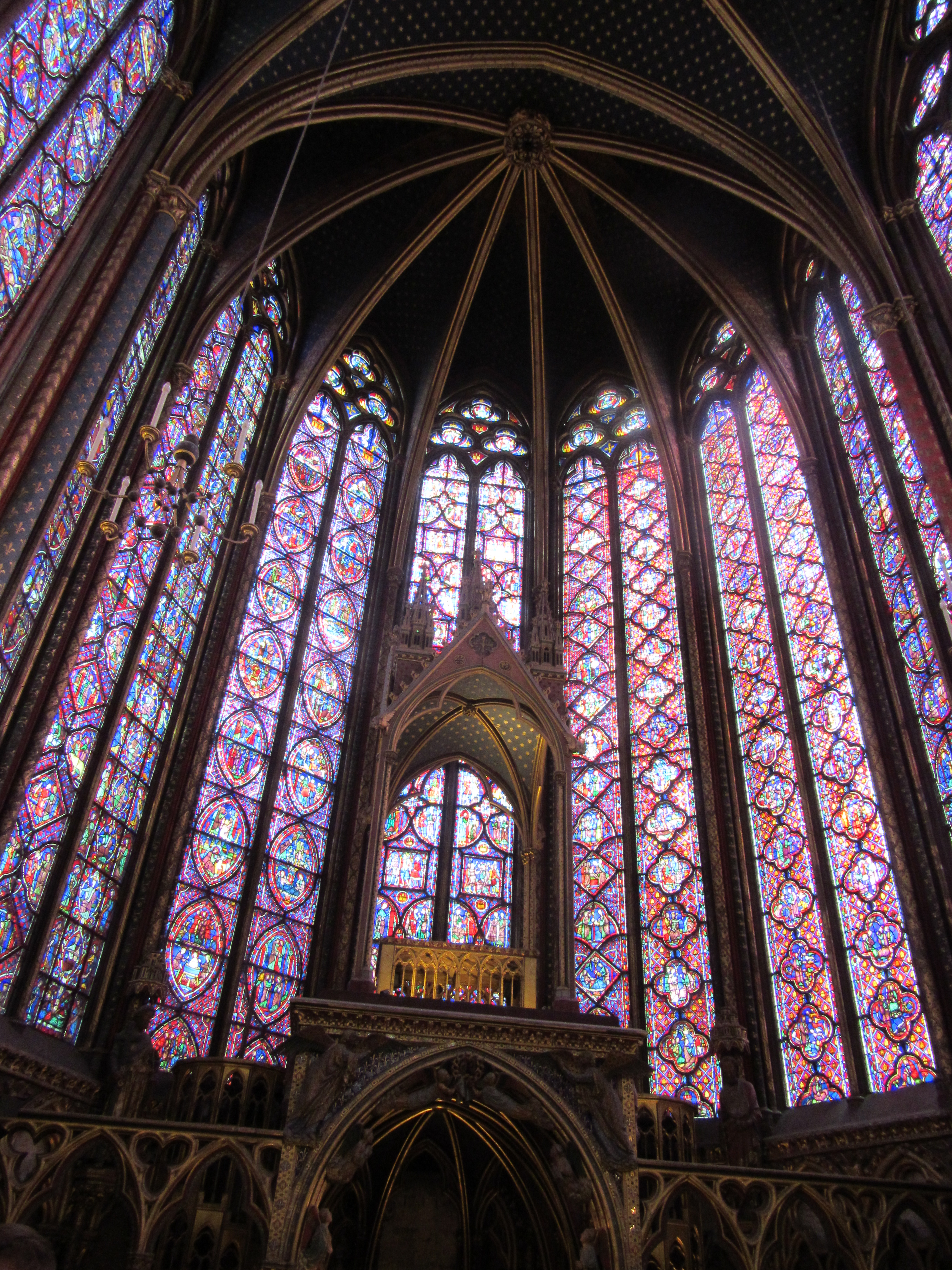
Gothic Sainte-Chapelle stained glass
A shooting involving a terrorist at Paris’ Orly Airport, while I was going through the security check there, was an anticlimactic end to my 60th birthday celebration in Venice and Paris with my middle son, Michael. Orly is France’s second largest airport. Just before I was scheduled to board my flight home to Alicante, Spain, I noticed the departure gate had changed to the downstairs departure area. As I tried to go to the new departure gate, the airport security officers told me there would be no more flights that day from Orly. Without explanation, they corralled us into the far half of the boarding area, not allowing anyone to leave. The televisions were switched off, and the departure screens frozen, which continued for several hours. We never received any notification from airport staff as to what was occurring, but I googled “Orly news” where I learned that a terrorist had tried to wrestle a gun from an airport police officer, and that he was shot. I did not learn the details until after returning home. Even though I had been told around 845 a.m. that there would be no further flights from Orly that day, around mid-day, without any speaker announcement, the boarding boards were turned back on, although without accurate, updated information on departure times. We finally boarded and departed around 330 p.m. As I write this on March 22, 2017, there has been a terrorist attack in London near the Parliament, and possibly inside.
There is no place in the world in which one is free from the possibility to violence, terrorism or even natural

Sacré Couer
disasters. In 1998, not long after the terrorist attack on the U.S. Embassy in Nairobi, Kenya, my oldest son and I went to Nairobi and then on safari the Tsavo Park area. Of course, at the time, we didn’t know that the attack was part of an organized terrorist organization. Not long after an American Airlines flight crashed in Queens, a borough in New York, in November 2001, only two months after New York’s September 2001 attacks, we flew to Europe. It was initially speculated the crash could have been a terrorist attack, but it was later determined to be caused by human error. During a tour of eight African countries, while in Bamako, Mali, the nation’s capital, we stayed at a hotel, where several years later, in spite of security, Islamist extremists took 170 people hostage, shooting 20.

Enjoying live classical and Brazilian music at Venice’s Caffè Florian, reported to be the oldest café in the world, dating back to 1720
That said, as a psychologist, particularly a forensic psychologist where we rely heavily on statistics, I make informed decisions based on statistics rather than irrational fears. By far, I have a significantly greater chance of being killed by violence, particularly in the U.S., or by disease, or accidents. I choose to live my life with joie de vivre, focusing on relationships, food, culture, adventure, and curiosity. And if I should meet my end in a travelling accident, for me, that is far better than being holed up in my home or a bunker, or living my life in fear. To that end, I will be providing future blog posts on my Venice and Paris trip, and am providing a sampling of those photos here.

Jijona (Xixona)
Another great day trip in the Costa Blanca area of Spain is a day in Jijona, a short drive in the hills northwest of Alicante. Jijona, also known in Valenciano as Xixona, is famous for its Turrón, an almond-based nougat.
Turrón is particularly popular at Christmas time in Spain. Jijona has a yearly four-day Christmas festival, which obviously features turrón, along with other Christmas- and winter-oriented gifts, like hats, scarfs, toys and more.
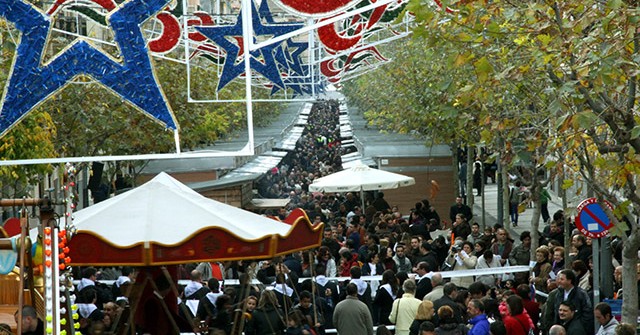
Jijona Christmas festival
Turrón is typically made from finely ground almonds, egg whites, honey and sugar. It comes in a variety of textures and forms. There is one with a soft paste-like consistency, which, to me, had a gritty, not pleasing texture. There are soft and hard turrón bars, with pieces of almonds. I saw chocolate-flavored turrón, turrón-flavored gins and liqueurs, and many other non-traditional additions. Samples are generously provided from the Christmas parade of wooden stands located in the central market. There are also other Christmas-related exhibits, and food/tapas booths with adjacent seating where people can rest their feet, and enjoy a snack and beverage.

Turrón samples readied for festival go-ers
The Moors brought almond farming and turrón to Spain during their occupation of the area. During the 16th century, King Felipe II praised turrón, which increased its popularity. Historically, there were a few main families who dominated the turrón market. These decaying family mansions feature beautiful architecture and are visible on one of the main streets in Jijona: Monerris Planelles family home, Rovira family home, and Aracil family home. Only turrón made in Jijona and Alicante can receive the official seal of authenticity, “Consejo Regulador de Jijona y Turrón de Alicante.” There are tours available at the turrón museum and factory. Several other areas have a similar type of nougat like turrón, including Catalonia (Spain), France and Sicily.
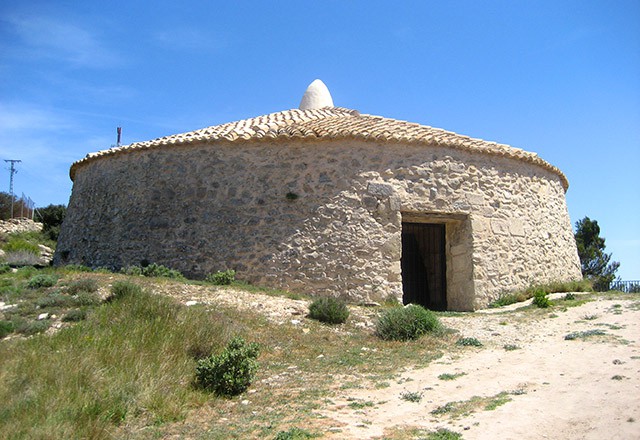
Snow well
There are other interesting things to see in Jijona including historical churches and a convent, the remains of a castle (destroyed in the Spanish War of Succession), “and snow wells” (thick walled round buildings located in the cool Carrasqueta mountain range which came into use in the 18th century to store snow for making ice cream.) In August, there is a Moros y Cristianos festival, which are very popular in the province of Alicante. Parking is typically a fair distance from the touristic areas, but are well-marked and on an easy, gradual incline.

Enjoying Xiringuito Ton-Tin with Sandie Sheppard
With so many interesting places and events here on the Costa Blanca in Spain, I have decided to start taking short trips to some of these spots. Serendipitously, I met a woman at a local jazz fusion concert, who also is a live music fan. While we shared a table, I was expressing my frustration about the difficulty finding information on the internet about live music venues. She then volunteered that she knew several live music venues and offered to send me the information.
Xiringuito Ton-Tin in El Campello, just north of Alicante, was one of the locations she recommended. During July and August, they offered daily performances every evening. The day we went the saxophone and trumpet players were featuring jazz, soul, bossa nova, and swing. The two musicians were fantastic. A few people danced, but at other events there seem to be far more dancers. Xiringuito Ton-Tin features a wide variety of music genres, and will continue to have live performances in September. It is located on the beach, with the seats and tables and large globe-shaped white lamps, all situated on the sand, which we loved. For those unfamiliar, Xiringuito, also spelled chiringuito, is typically a small beachside business where one can get beverages and snacks. Many times they are only seasonal summer spots. Xiringuito Ton-Tin regularly posts their calendar of events and video excerpts of concerts. Reservations are recommended as many tables were booked in advance.
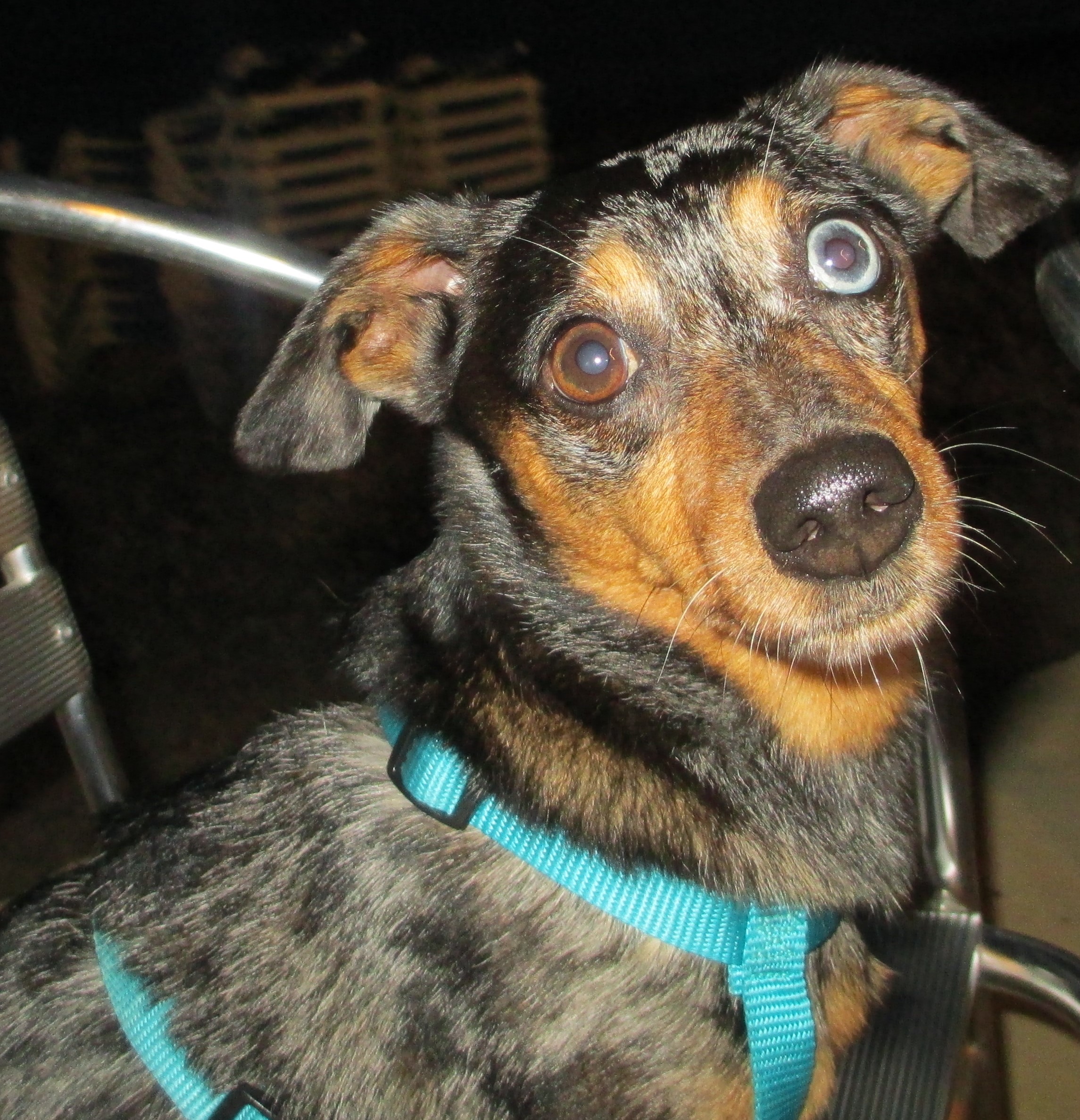
Pepper at a concert
To get there, we took the tram from Altea to El Campello, which took a little over an hour. I brought my little dog in a wheelie back-back, although I have gotten inconsistent information on whether pets are allowed, so I just placed the backpack in a position between my legs where no one could see what was inside. When we arrived, we ate at a local restaurant across the street from the ocean, and a very short distance from the tram station from which we exited. I only booked the trip the day before we left, yet still managed to find a reasonably-priced hotel that was pet-friendly in nearby San Joan d’Alacant. It was a bit too far for us to walk, so we took cabs to the hotel. A couple of times, the drivers appeared to be taking a circuitous route, which unnecessarily added to the fare, but I wasn’t familiar enough with the area to give directions.
The next morning, we took a cab to another area of El Campello, including a busy, active beach area. It offered numerous cafes and restaurants, a variety of water sports including an inflatable floating gym for kids. In the heart of central El Campello, there were some quality eateries for very reasonable prices, and interesting stores if you enjoy shopping (which I don’t.) We headed back to Altea mid-afternoon. This was a very economical trip, even with all of the activities, food and beverages. I am looking forward to my next Costa Blanca adventure.
Have you had any memorable short trips?

Summer in Altea’s Casco Antiguo with craft booths
While Altea (Spain) always has many entertaining activities, summer brings additional fun offerings. Ever a music fan, I appreciate the variety of city-sponsored live bands playing at various outdoor venues, including 40’s style Big Band, jazz fusion with a Mohawk-sporting accordion and keyboard player, flamenco, regional (Valenciano) folk music, to mention a few. I also went to a rock jam session held on Sunday afternoon at a local tram station, which had an eclectic, inviting atmosphere.

One of the 60 mural paintings hanging from balconies in Altea’s Casco Antigua
In Altea’s hilltop Casco Antiquo, (Old Town), the church plaza and the walkway to it, which are sparsely filled during the winter months (as exemplified my Facebook cover photo), are now packed with throngs of visitors and locals. This month in Casco Antiguo there are a display of 60 painted murals by different artists which hang off balconies, hence named Balconades d’Altea. Also during the summer in Casco Antiguo, there are many artisan craft booths featuring various types of original art, jewelry, leather and more. Most restaurants in Casco Antiguo are open for the summer season, with many types of cuisine available such as Spanish, French, Italian, and other ethnic cuisines.

L’Olla fireworks
In June, we had the San Joan (Valenciano) for St. John festival, which features water-inspired activities, including parades and midnight bonfires at the beach, which normally are prohibited. Another popular summer beach activity is the spectacular firework display, Castell de l’Olla, over the Mediterranean. People head down to the beach with beverages and/or picnics for the midnight show, which this year lasted over 30 minutes. Alternatively, people may watch the show from the comfort of their balconies or terraces, as I did, or a café in Casco Antiguo’s plaza.
During the summer, many people enjoy going to temporary, seasonal chiringuitos, beachside bars/restaurants, which offer full service food and beverages with tables, and shade, if desired. I recently went to bonavida, a great chiringuito on the beach where I love their fried fish and seafood plate. (I recently posted a short video from it on my Facebook.) On many of the beach areas, there are lounge beach chairs and umbrellas available for rent.
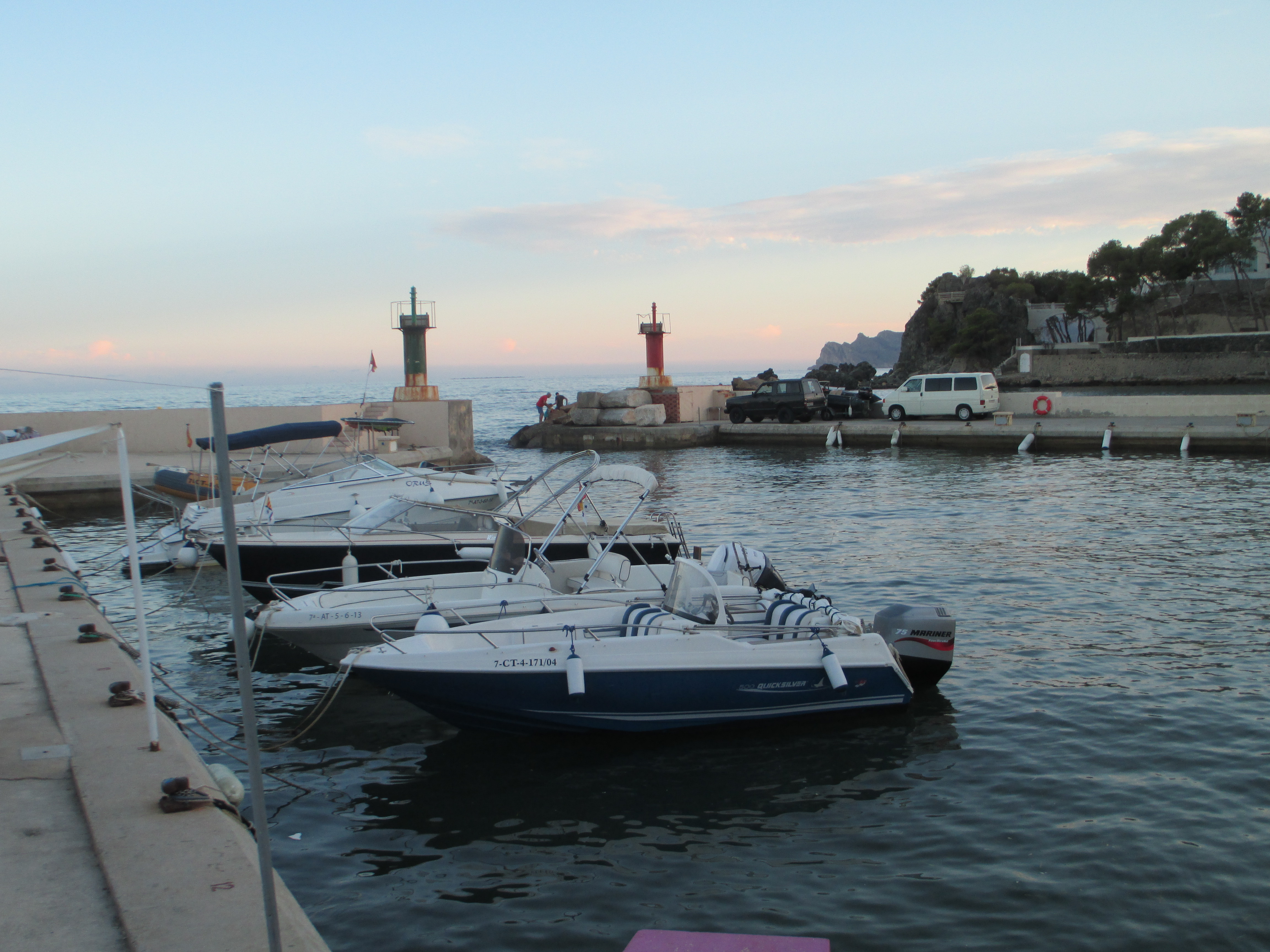
One of the water sports marinas in Altea
There are many water sports available with a number of seaside businesses offering such activities as snorkeling, diving, kayaking, boat rental, sailing lessons, fishing, kitesurfing, and more. I love snorkeling, and every Christmas school vacation, I took my three sons to warm spots with good snorkeling, such Australia, Belize, Hawaii, Mexico, and various Caribbean islands. The Mediterranean in Altea is warmest in July and August, reaching 25C/80F degrees. For me, that is an ideal snorkeling temperature, so I scheduled a boat snorkeling tour this past week. It was postponed due to unusual rain, so I went the following day. The water was not as clear as I was hoping and the sea life not as vibrant to those which I am used to, but it may have partially been due to the recent rain. I enjoyed it anyway. There are also places to snorkel right off the beach without a boat. The dive center from which I took my snorkeling trip was located at Greenwich Marina/ Pueblo Mascarat. It was my first visit there, and I discovered new restaurants, and live music venues, including one, Macao, with outdoor lounge seating, which I plan to soon attend.
In the towns adjacent or near Altea, there are also many activities. This week-end there is the three day Festes de L’Albir, (Fiesta of Albir) with a car parade, children’s activities, food and beverage stand, music, games, and walk to the iconic lighthouse. Several bars in the Albir beach area offer live music, including soul, Latin, rock, comedy to name a few. Bar Cuba is one of my favorite spots, which offers complimentary bachata or other types of Latin dancing at 2000 on Saturday evening, and live Latin music for dancing Saturday and Sunday evening. They also feature other dance lessons throughout the week such as kizomba, salsa, line dance, and mambo for a nominal fee. I enjoy the instructive and professional complimentary bachata

Salsa class at Bar Cuba with Ray
lessons with Andres Ledesma so much, I took some small class private lessons with him.
What are your favorite summertime activities?

Sara and David at their artsy bar in Altea
In the same week, Sara Wilson lost her job as a staff writer for a major business magazine, and her husband, David Fernandez, lost his position as a private chef for socialites in New York City. They used that as a springboard to “re-examine our careers and quality of life.” They originally met in France, married and moved to California, then to New York to further their careers. Even though they liked certain aspects of living In New York, their lives were stressful, too money driven, and they didn’t get to spend much time together. Sara reflected, “Life gave us solution when we got laid off within a week of each other.” After considering their options, they initially decided to move to more relaxed Spain with the idea of opening a restaurant with David’s father. When that didn’t work out as anticipated, Sara and David started exploring other options, and eventually settled on opening a bar and eatery.
Sara reported, “My six years at the magazine job interviewing entrepreneurs helped us in the process of starting our business.” She added, “Ironically, I learned from people’s stories and their tips for success.” David had previously completed culinary training in Paris. She noted, “David is more of a visionary and risk-taker than I am, but it was our joint talents that helped us develop a successful business.”

Picturesque and historic Altea
They spent several months exploring towns in the Costa Blanca area along the Mediterranean. They briefly looked at touristy Benidorm, but it did not possess the attractive and friendly location they were seeking. Then, “Unexpectedly we encountered a village paradise…called Altea,” recalled Sara. “We loved Altea’s stunning coastline, white pebble beaches and inviting and tasty restaurants lining the promenade.” But it was when they entered the old town, once a fortress, that they were really “awestruck. We loved its picturesque, narrow, pedestrian streets, punctuated by small artisan shops, that lead up to the hilltop church plaza.” Thus they set about on finding a place in the old town, known as Casco Antiguo.
Not long thereafter, they found an apartment and a place to start their dream business, a café/bar which was promoting various forms of art. “The rent was the cheapest we had found, and was the right size for just the two of us to run.” It consisted of two floors that had been transformed from an old house. We liked the fact that it had a mezzanine, a decent stock room, it was just one street down from the church plaza, and was on one of the most charming streets of Altea.” The business had been operating primarily as a sports bar, with a focus on the arts, as well, hence the name AlteArte. Importantly, “The bar already had a local clientele.”
They bought the business, but not the building. Sara stated, “We had been warned that it was important that the business have an existing business license. Just as we were ready to finalize the purchase, we learned that AlteArte did not have a business license.” The owner had applied for it and it was reportedly in process for a substantial period of time, (not unusual with the Spanish bureaucracy), but it had never been completed. Once the owner was aware that this unresolved issue was holding up the sale, the license was quickly approved. Sara and David speculated that the business license application was likely languishing with the local authorities, and that the owner, who was a local native, got the process completed quickly. Sara said, “It helped to buy a turn-key business, with an established clientele.” The prior owner, who sold them the business, wanted Sara and David to be success, and was supportive in a variety of helpful ways.

Typical evening with friends at AlteArte
Sara and David “wanted to change the ambience to a cozier environment, which we did by adding tables and changing some of the décor.” They later hung their now iconic multi-colored bicycle upside down from the ceiling, and added some other kitschy design elements. They provide Wi-Fi, and show major soccer matches (“fútbol”). “By changing things, we lost some of the former clients but gained others.” During their first year in business, they were often complimented on their tasty mojitos, so they decided to make that a focus. They setup an increasingly growing mojito menu, and identified AlteArte as a “mojiteria,”which set it apart from the other bars. They also make “nojitos,” alcohol-free mojitos. Adapting to client demonstrated preferences, “We abandoned our early idea of making it a coffee-centric business, instead focusing on our excellent selection and preparation of teas,” in addition to other typical bar beverages. Although their service focus is primarily on beverages, they also have a small selection of tapas and quesadillas, the latter being a popular, but rare item in Altea.

Casco Antiguo in Altea
Asked if they have encountered any problems or challenges in setting up their business, they reported initially the neighbors complained about noise and the tables and chairs they had placed on the stairs adjacent to their building. “Eventually, we were able to make peace with the neighbors, after convincing them that we would keep the noise down, and not cause them any problems.” During the slow time of year, they do minor renovations to AlteArte, but they noted it is hard to find qualified people who complete the work in a timely fashion. After deciding to start their business in Altea, Sara quickly began learning Spanish, something she felt essential in running their business.
The owner of their building had been renting out the top floor to various people as a shop with touristic and artisan items, but after a series of several failed businesses there, he asked Sara and David if they were interested in adding the top floor to AlteArte. “We decided to take this opportunity to expand. The top floor is primarily for special events and gallery exhibits, as well as weekly intercambio (Spanish English language exchange.)” AlteArte exhibits “one or two artists’ works each month.” The middle floor is an inviting area with pillows and populated with board games.
“The customers, new and old, shaped AlteArte’s atmosphere by natural evolution.” They have about an equal percentage of local and expat customers, with “most ex-pats in this area of the Costa Blanca area of Spain being Scandinavian.” In the beginning, most of their clientele came through word of mouth and Facebook. After opening the gallery on the third level, we reached out to local newspapers and magazines to promote those events.”
After they first opened in February 2010, Sara and David ran the business by themselves. “During our second and third summer, we hired our first employees. In our fourth year of operation, we hired Emily as our first full time employee. She had been a patron, and she had a good work track record of seven years at one local restaurant.” They emphasized it is very important to check out the reliability and work history of potential employees in Spain as there are generous laws favoring them, such as being allowed substantial sick leave just after being hired. A few months later, they hired another young woman, Ampy, full-time. Both employees are friendly, competent, and able to communicate with the clients regardless of what language they speak. “We pay them a little more than the typical local wage, and uncommonly, we also give them one day off a week including during the busy summer months.”

Sara and David inside AlteArte
When asked about other start-up or ongoing expenses or requirements, “there was an initial food safety course, basic business insurance, and nominal annual taxes.” They have not had any tax liability in the United States based on their Spanish net income. “We recommend using a gestoria,” which is a person whose task is to deal with the idiosyncrasies of Spanish government departments, for paying complex fees and taxes. “We receive an annual visit from the health department to check for correct refrigerator temperature and proper sanitation.” With regard to promoting AlteArte, “We have done some marketing by advertising our business in local tourist maps. Because we are in the Old Town, which is a steep, historically-protected area, we are not required to have handicap accessible facilities.” Sara reported, “AlteArte has allowed us to cover all of our expenses including the luxury of having two employees” which affords Sara the opportunity to spend long visits with her family in California. This year she has had two separate one-month visits with her family. AlteArte has given David, now 40, and Sara, 37, “a more comfortable, and significantly less stressful lifestyle than at our prior high pressure jobs, and the opportunity to spend more quality time together.”
When asked what advice they would give to others considering opening a business in Spain, they recommend, “Be patient and committed.” They said, “One cannot expect to open a business just for a summer, and turn a profit.” They also stated it is important to understand the demand for the type of business one is considering, and the required permits if starting from scratch. “It is also essential to have enough capital for start-up costs, slow periods, and unexpected expenses.” Sara said, “I’m kind of glad I didn’t know before we started how many businesses end up closing down.”
Now celebrating over six years of operation, AlteArte, is a favorite with local ex-pats, Spaniards, and international travelers. They feature monthly art exhibits by local artists; a book club for which Sara often arranges for the author to be present in person or remotely; live music; weekly Spanish-English language exchange (intercambio); movie nights, craft, drama and dance workshops, cooking competitions, and many more. Asked about her most cherished memory, Sara quickly reported it was when director Eugenio Mira, an Altean native, chose to premier his movie Grand Piano at AlteArte, and afterwards had a question and answer session.
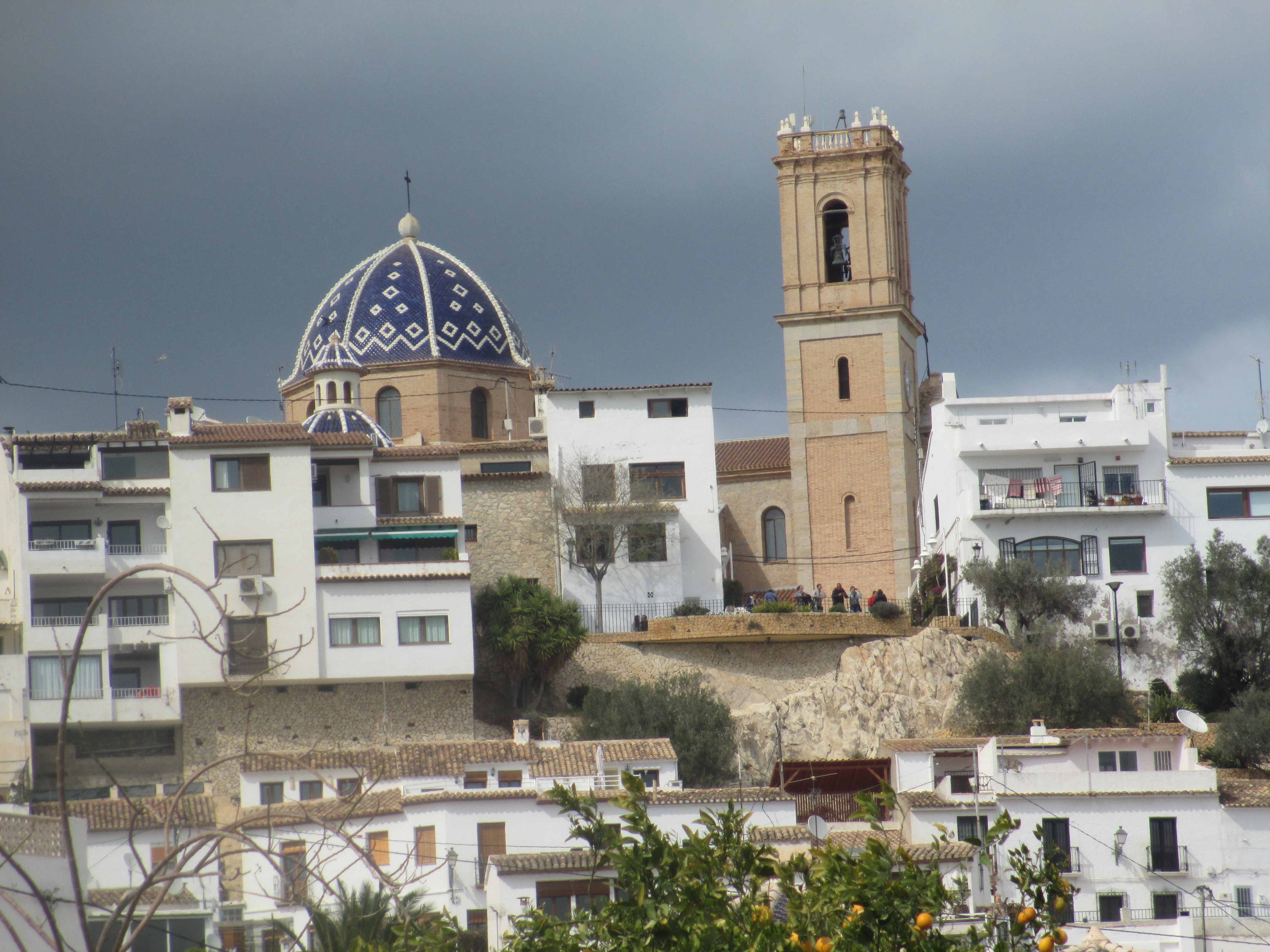
Altea on a rare cloudy day
Today I got up at the crack of noon. It’s not something I do every day, but it is a luxury I relish after those late Spanish nights out with friends. Yesterday, I had two Norwegian friends over to my house for a traditional American dinner, something they asked if I would do. Here in Altea, in the Costa Blanca area of central Mediterranean Spain, it is sometimes difficult to source some typical American food ingredients, but it makes for a fun challenge. When I wanted to make authentic Jamaican Jerk chicken and could not find habañero peppers, David, a chef and co-owner of my favorite local bar, AlteArte, volunteered to buy some for me at a commercial food market for restaurants. AlteArte is a local mojiteria (bar specializing in making mojitos) and arts bar.
After our American dinner, Daniel, one of my invited guests, was hosting his monthly movie night at AlteArte, so we took the short walk to it in the center of the historic old town at the top of the hill. We stayed late enjoying the busy, convivial atmosphere. The prior week Daniel had me to his house for a traditional Norwegian dinner. Both he and his roommate each created their unique regional specialty dishes. Being from north of the Arctic Circle, Daniel’s dish was roast pork with crackling skin. Delicious! I love the opportunities to meet new friends with whom I can exchange our different cultural traditions. Another particularly memorable experience I have had was when a Nepalese family invited me to their house for a delicious, homemade meal at their home. It was my first time eating traditional, homemade Nepalese food, and afforded me the opportunity to get to know more about their lives and culture in Nepal.
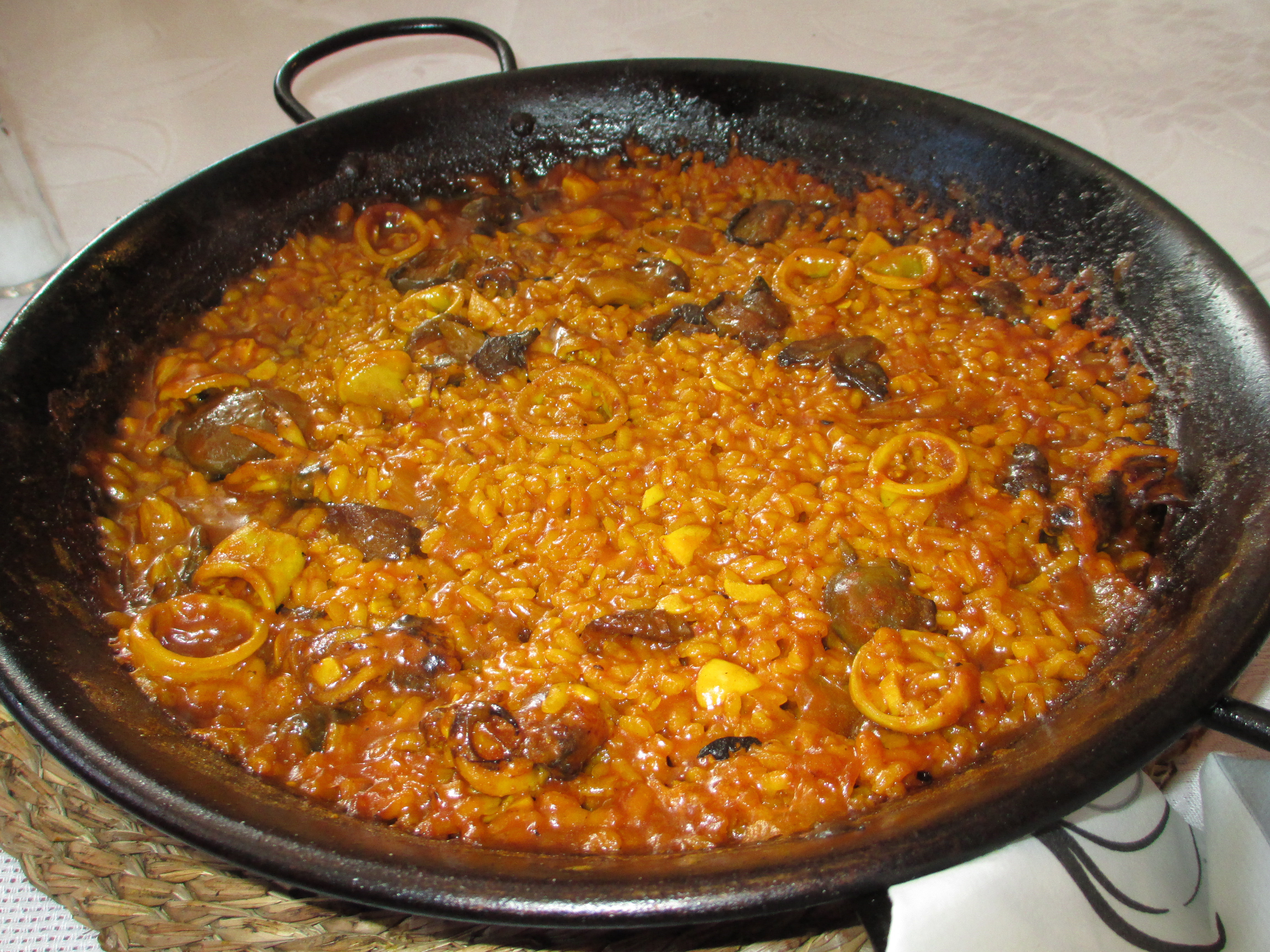
Seafood paella
There are always challenges when trying to re-create and share American traditions to my friends in my new home country, Spain. However, mostly I embrace the new cultural and food customs here. Jamones (various types of ham and pork products) are a Spanish favorite, served simply as thin slices or often as an ingredient in many dishes, like steamed clams with pieces of ham. I have even found ham in the usually vegetarian gazpacho blended soup and in steamed clams. There is an incredible bounty of fresh fish and seafood from the local Mediterranean. I enjoy spontaneous daily forays to local bars where, in the evening, I get a free tapa with my glass of wine for as little as 1, 20€ ($1.32.) Inevitably, I encounter friends with whom I enjoy genial conversation.
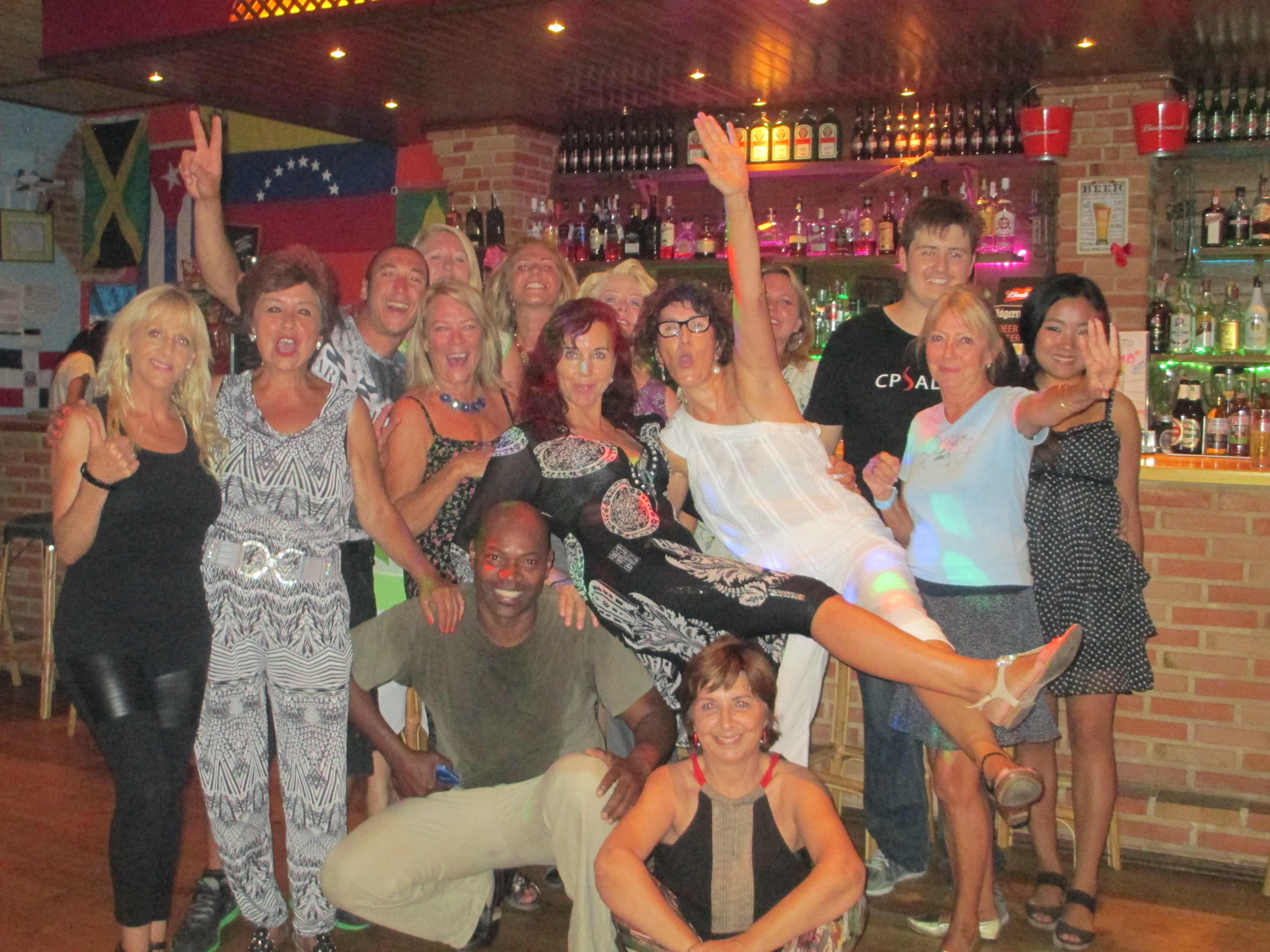
Bar Cuba
Although I was an avid live music fan when I lived in the Central Coast of California, here in Altea Spain, there are many diverse activities, including the many regional Spanish festivals, live music, in addition to the time spent celebrating new cultural experiences with friends. One of my regular favorites is going with friends to Bar Cuba, for salsa and other types of Latin dancing to live music by Rafa, a friend who is originally from Venezuela. Bar Cuba is co-owned by Raúl and Nikki; Nikki is a friendly, competent businesswoman who originally hails from Jamaica. Other nights she schedules salsa and other Latin dance classes, karaoke, televised soccer games (fútbol), and specialty international dinners. Living in Spain allows me to enjoy traditional Spanish festivities, as well as experience cultural experiences from the variety of ex-pats who live here.
With the low cost of living in the Costa Blanca, I no longer have to work, and can focus on friends and fun. The Spanish are known for their many festivals, which offer spectacle and fun. Where I lived in California, it was nearly impossible to function without a car.

Moros y Cristianos festival
Here in Spain, I relish no longer having to have a car. I walk to all of my local activities, or take convenient, efficient, inexpensive public transportation to nearby towns, with unexpected health benefits. Instead of finding it difficult to even arrange a short monthly get together with a friend in California, here in Altea, rarely does a day go by where I don’t meet up with friends, whether planned or spontaneous. It is sometimes hard for me to believe that I live in one of the most beautiful villages in Spain, with such an inexpensive cost of living, and fulfilling quality of life.


Experiential travel emphasizing local culture, food and music
How I went from working as a writer in New York City to co-owning a bar in Spain
My journey around the world
Travel inspiration, stories, photos and advice

 Starr Treks