Archive | Bars RSS feed for this section

Remembering a San Diego Music Icon: Ella Ruth Piggee

23 Jan

I  had recently been reminiscing about some of my talented musician friends in California, both from San Diego and on the Central Coast. I feel fortunate that I can go on YouTube or on my IPod to watch and listen to them perform. I was already planning on revisiting some of these musicians on my blog and Facebook, either with new articles or by reproducing prior articles from my blog or other sites where I have published. The recent deaths of a number of music icons have led me to expedite those plans. Over the next several months, I will be featuring musicians, both deceased and alive.

Ella Ruth Piggee was an incredibly popular, charismatic singer in San Diego for nearly ten years before her tragic passing due to cancer in 1988. I am always on a quest to find great live music, with my favorites being R&B, jazz, funk, standards, Latin, and classical. In my quest in that regard, in 1978, I was told about Ella Ruth Piggee, who was then performing at a bar in East San Diego, in an economically-challenged area. I first saw her perform at the Black Frog to a predominantly African-American crowd. I was blown away by her vocal talent, her ability to connect with the audience, and her great sense of humor. Anyone who ever regularly went to see Ella Ruth perform knew if you sat in one of the tables near the stage that you would be subject to her chiding, anything from the type of socks you were wearing to mentioning that in spite of having the best seat in the house you have hardly ordered any drinks. Then she would let out one of her loud, infectious laughs.


Over time, Ella Ruth and I became very good friends, and it was always a delight to hear her perform or to spend social time with her. Early on, she sang with Bruce Cameron (trumpet, cornet and flugelhorn) and Hollis Gentry III (saxophones and flute). Carl Evans, Jr. (keyboards) and Hollis (who were also friends of mine,), went on to be two of the founders of hugely internationally successful jazz-funk/fusion band with Latin influences, Fattburger. Unfortunately, they both suffered premature deaths due to health issues, as well. Ella Ruth sang, “Make That Dream Come True” on Fattburger’s Good News album, which I believe was released in 1987 shortly before her death. The song was also featured on the Best of Fattburger released in 1992.


Typically, Ella Ruth’s Talk of the Town band would play instrumentals for the first half the set and then she would finish the set with R&B, jazz and pop vocals. In my opinion, this form of music sets featuring both instrumentals and vocals gave those in the audience unfamiliar with jazz exposure to it, which helped to increase interest in instrumental and vocal jazz in San Diego. Ella Ruth finished every song with her signature spontaneous, creative scat. Over time, she became a very popular entertainer throughout San Diego, including the venerable Crossroads in downtown, The Triton in East San Diego and Cardiff, Chuck’s Steakhouse in La Jolla, the Catamaran on Mission Bay, and many more.


While the world class instrumental musicians sometimes changed, Ella Ruth was the main draw for a diverse San Diego audience, which can be seen in her various YouTube videos. I thank all of the caring musicians who took time to upload some of her performances, including Cecil Mc Bee, Jr. (bassist) and Tony Barnwell (keyboard and vocals.)


Ella Ruth was originally from Des Moines Iowa and had also lived in Omaha Nebraska. As I had also lived in Nebraska, and did my undergraduate degree in Omaha, we also had that connection. I arrived back in San Diego in 1978, around the time she did. When I was a poor starving graduate student in San Diego, Ella Ruth would sometimes treat me to a traditional Nebraska, Italian-style steakhouse. In spite of her charismatic on-stage persona, Ella Ruth was a very private person. After performances, she frequently cooked spaghetti at her home for the band, and Midwestern-style fried chicken especially for me, the best ever. Whenever I asked her for the recipe, she told me it was just flour, salt and pepper, which I never believed. I was also pleased to have the opportunity to spend extra time with her during the time she stayed with me when she was looking for a new place to live.


Ella Ruth’s longtime friend, Mitch Manker plays trumpet, flugelhorn and pocket horn on the posted YouTube video. Like Ella Ruth, Mitch also came from Des Moines to San Diego, following his stint as first chair trumpet for Ray Charles. Also featured in the posted video is Michael Evans (drums), Jeff Snider (guitar), and Michael Thompson (keyboard.) Keep in mind these recordings are over 30 years old, and the technology for informally recording live music at clubs back then was limited.

Not long before she became ill, Ella Ruth recorded a “demo tape,” a copy of which she gave to me with her personal handwriting of the songs she recorded. Hollis is clearly the saxophonist. I have been unable to figure out who is the fantastic keyboard player, in spite of asking a number of her musical contemporaries, so if anyone out there thinks they may know, I can send you a digital copy of the recording. I have been in contact with the San Diego Museum of Jazz to whom I plan to donate the tape.



Six Easy Steps for Bringing Pets to Spain

3 Jan
Pepper at beachside concert in Altea

Pepper at beachside concert in Altea

Bringing pets to the European Union (E.U.) from the U.S. is much easier than what it once was. No longer are there long required quarantines. However, in non-E.U. countries, the policies can be different. For the United Kingdom, there is a four month quarantine. Finland, Ireland and Malta also have their own pet import regulations. The following reflects the current requirements for up to five dogs, cats, and/or ferrets coming to an E.U. country from the U.S. As governmental regulations can change, it is advisable to check the website for the USDA APHIS (U.S. Department of Agriculture, Animal Plant Health Inspection Service.) Then click on the “Live Animals,” and enter your EU destination. For Canadians, the regulations are similar. Up to date guidelines for exporting pets from Canada to the EU can be found on the website: “Canadian Food Inspection Agency under “non-commercial export of dogs, cats, and ferrets to the EU.”


  1. As far out from your desired departure date, check with individual airlines regarding their pet transport policies. Start by checking their websites, and then speak with an actual airline representative to get the specifics. Weigh your animal to determine whether they are eligible for travel in the cabin, under the seat in an airline-approved carrier. The weight allowed includes the pet, carrier and anything else placed in the carrier. Including his carrier, my dog, Pepper, was just at or slightly above the weight limit allowed by many airlines, so I found an airline with a more generous 8 kg. /17 pounds limit. Also, some types of dogs are not permitted, in which case you can consider a pet relocation service. There are different policies for very young, unvaccinated pets. Airlines charge varying rates for transporting pets, so take that into consideration during your research. Check to see if there are periods of time they do not transport animals in the cargo hold due to expected inclement or extreme weather. Some airlines don’t take pets via cargo in hot months as they have had animals die. If your pet will be in the cargo hold, consider booking during months that are traditionally temperate. Make sure the carrier purchased meets the airline’s regulations. Carriers or crates must afford the animal to move around, and typically have an absorbent cushion or rug with adequate ventilation. A carrier with wheels will make moving your pet through the airport far smoother. Because there are so many different airline regulations, costs, weight limits, etc., when deciding on an airline, I made a written grid to record each airline’s policies for easy comparison.
  2. Book your flight as soon as possible to guarantee a spot for your pet. Make sure the pet has a reservation. During the three times, I flew back and forth between California to the E.U. I was charged for my pet when I checked in at the airport. If you will be using other ground transportation once you arrive, such as a train, bus or car rental, check their pet transport policies. The first time, I brought my dog from Madrid to Alicante via train, and the second time directly to the Alicante airport via plane.
  3. Well in advance of your travel date, get your pet used to the carrier or crate. In the beginning, put the pet in it with a toy and snack. As s/he gets comfortable, leave the pet in the carrier when you leave home. Take your pet in the carrier on walks and in the car to get used to motion. For pets who will transported in the hold, it is especially important to get them used to being in their crate and moving.
  4. Well in advance of your scheduled flight, find a veterinarian who is certified and experienced in pet relocation to your scheduled EU destination. I strongly recommend meeting with the vet for an initial session to make sure s/he is qualified and experienced in completing all of the required steps within the tight timeframes necessary. Make sure the vet has the correct form (ANNEX II) and has previously completed them. If your pet is not already had a microchip inserted, this is an ideal time to do it. Let the vet know it is for travelling to an EU country. For EU countries, it must be an ISO 15 digit microchip, either 11784 or 11785. After the chip is placed, the pet must have a rabies vaccine, even if it already has a valid rabies vaccine. The rabies vaccine can be on the same day the animal is chipped or at a later date. This rabies shot must be administered at least 21 days before your flight departs. I did not understand that my dog needed to get a new rabies shot, nor did my vet inform me at the time of the dog being chipped. Thus I had to delay my departure date which resulted in a several hundred dollar change fee. During your initial appointment with the vet, I recommend having the vet do a physical to make sure there won’t be any last minute health issues. I also got him to prescribe a slightly sedating medication for the long flight. If you get a calming medication, make sure it is not contraindicated for flights, as was the first medication my dog was prescribed by a less experienced vet. Some airlines do not permit dogs to be sedated. Since my dog was flying in the cabin, I felt it would be in his best interest to take a sedating pill since he would be in his carrier for 12 to 15 hours, and I would be able to monitor him. Twice I gave him a trial of the pill before departing to make sure there were no adverse side-effects.
  5. The vet has to fill out the ANNEX II form about 12 to 15 DAYS before departure. Then that form has to be mailed or taken by hand to your local USDA office, for certification. You have to enter the EU country within 10 days of the USDA certification, which is a very tight timeframe. This means that you should schedule the final vet exam and paperwork completion, at an early enough hour to allow you to get it to an overnight mail service. Make sure to check the USDA website for the mailing address for your region, mandatory fees which you must include, and include a return overnight mailing document with your address. Keep in mind some “overnight” mail services do not deliver on the week-ends.
  6. Prior to departure date, check for pet relief areas at the airports which you will be using. Some have indoor pet areas. For example, at the LAX airport international terminal in Los Angeles, near the business lounge, was a pet play and relief center with artificial grass. Arrive at the airport at least three hours in advance of your scheduled departure. About four hours prior to checking in, feed and provide water for your pet, and play to get them tired. At the airport, let the pet relieve himself one more time. Put the pet in the crate which in advance you have supplied with a “pet potty pad,” empty water dish, and cherished toy. Make sure the crate door is securely closed. Keep the pet paperwork handy in the pocket of the in-cabin pet carrier, or for a checked crate, somewhere else easily accessible. The pet must remain in the carrier in the airport and during the flight. If you have an airline transfer and there is no inside pet area, if you go outside, you will have to go back through security screening. Make sure to allow enough time in case of long lines.

Once you are to your new EU home destination, find a good vet by asking local ex-pats who demonstrate attentive and caring behavior toward their pet. Ask around, and eventually, you will start to hear one or more of the same names recommended. Unless you are fluent in the language of your new country, make sure the vet can speak English. Introduce your pet and yourself to your new vet, instead of waiting for an emergency. At your initial appointment, find out about local health issues, get any vaccines or preventative medicines for your new country, a dog name tag with your local phone number, and a European pet passport (which is legally required.) Then, get out and explore your new home. Most eateries in Spain are dog-friendly.

Pepper saying goodbye to my son, Spencer, who was returning to California

Pepper saying goodbye to my son, Spencer, who was returning to California

Top Ten: Tasty Tapa Trail

6 Dec

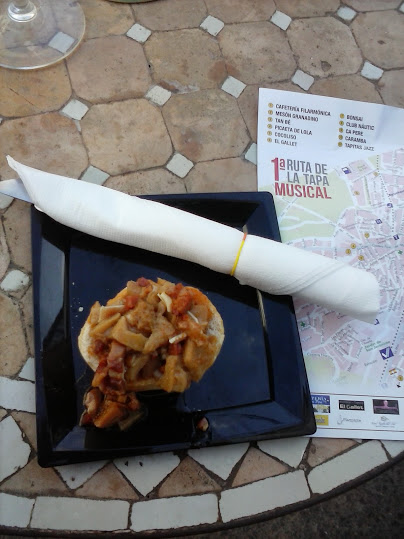
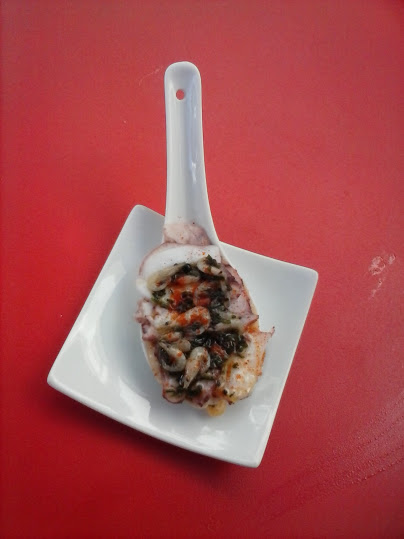
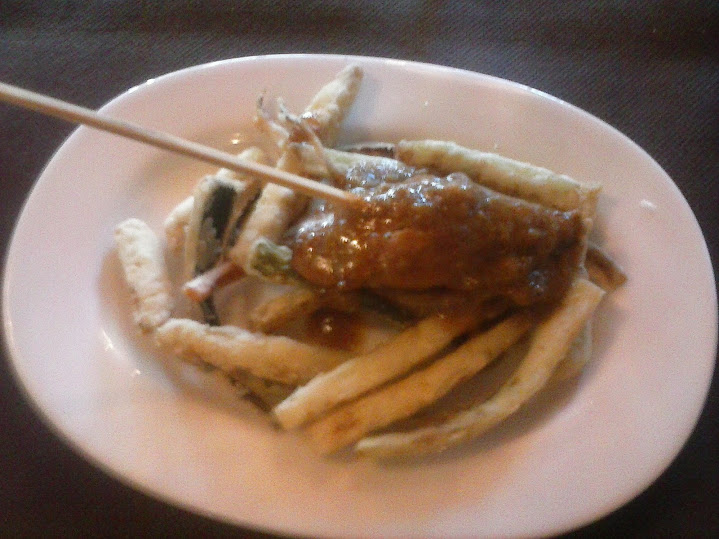
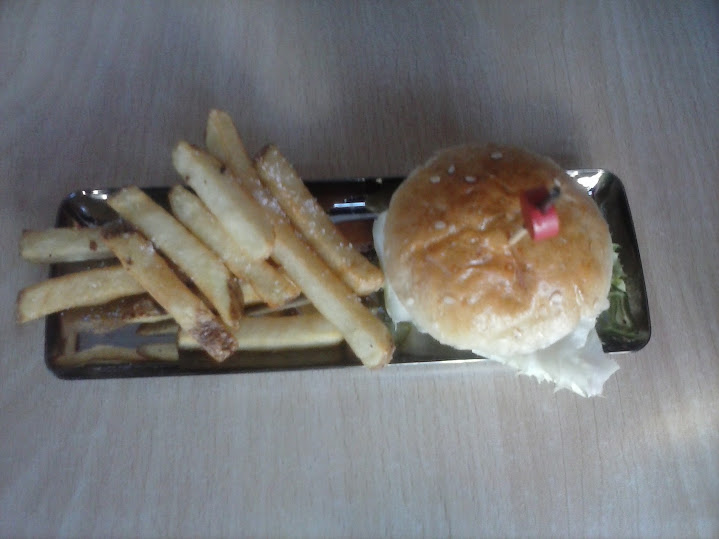
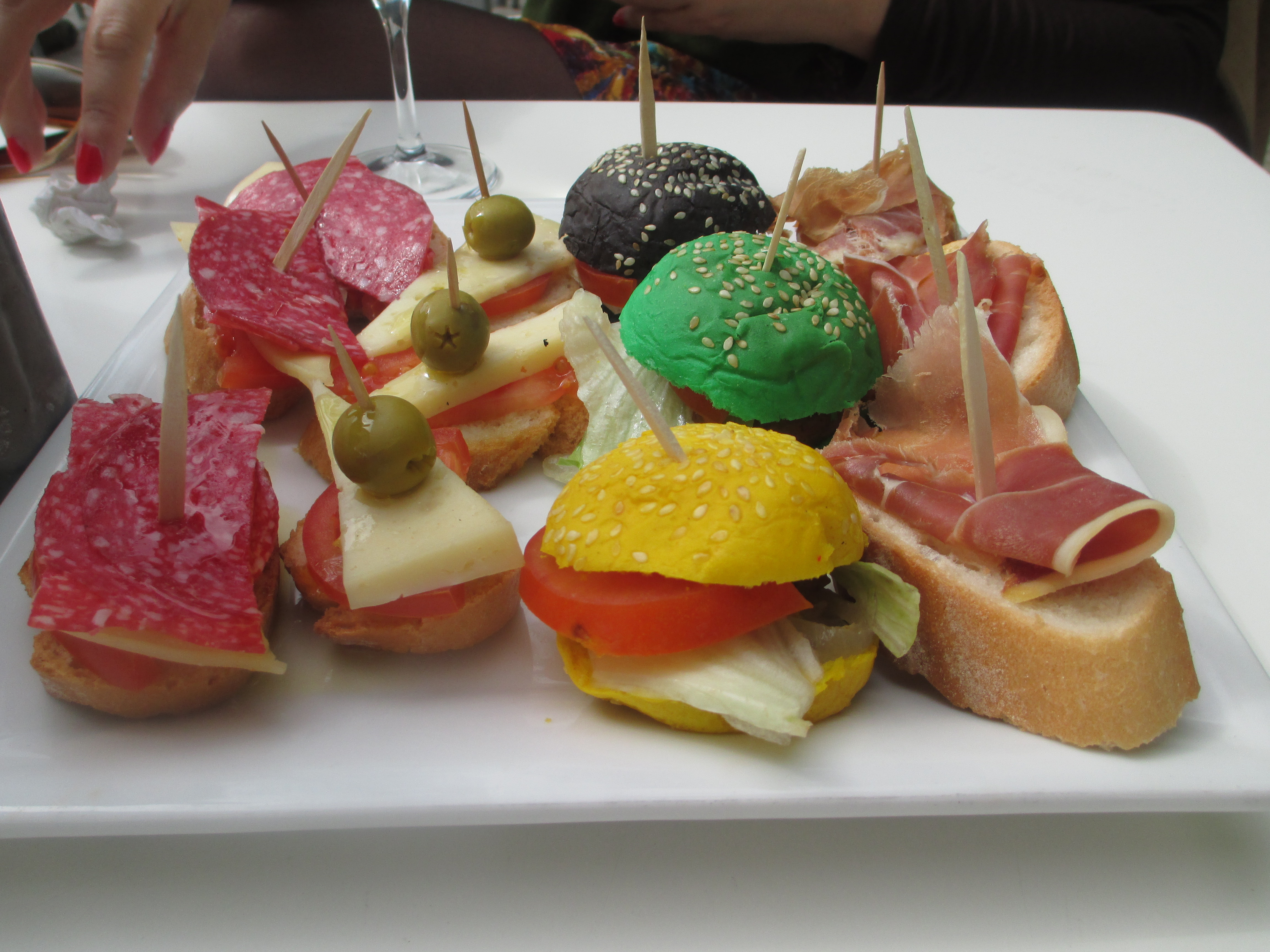
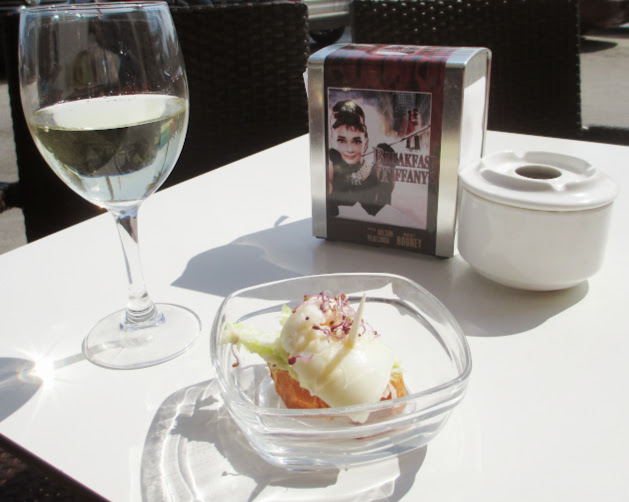
This week I took advantage of a local Altea tapa trail. In conjunction with the local Societat Filharmonica Alteanese (Valenciana for Philharmonic Society of Altea), 11 local restaurants participated a the Primera Ruta de la Tapa Musical. Each restaurant, except one,  offered two creative, musically-inspired, tapas, for 2,50 Euros and included a glass of wine. Here are the photos of each, (except for one which did not have their tapa available.) The descriptions under the photos list the name of the restaurant, and their description of the tapa. Interestingly, the information was only offered in the local dialect, Valenciana, which I am gradually learning to read. Please feel free to ask me for any translations.

tapitas

Tapitas Jazz: Callos a la Asturiana


Picaeta de Lola: Sinfonia del Mar: Carpaccio de pulpo con vinagreta de camarones y cebollino

Picaeta de Lola: Sinfonia del Mar: Carpaccio de pulpo con vinagreta de camarones y cebollino


El Gallet: Albóndigas Cordobesas

El Gallet: Albóndigas Cordobesas

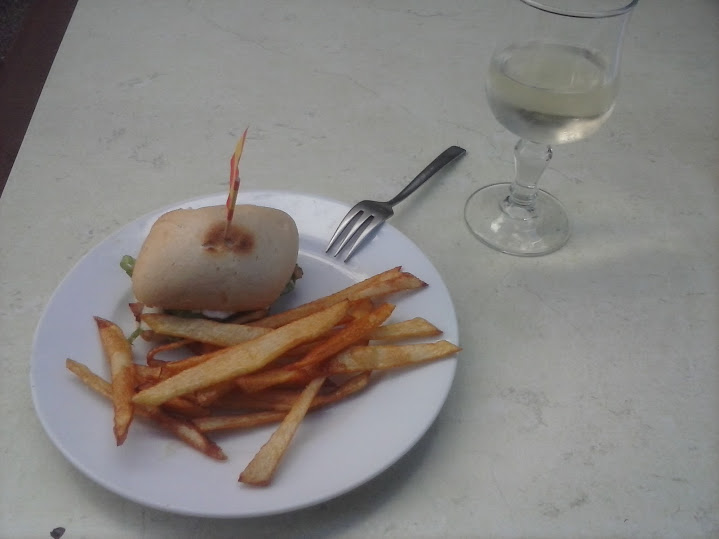
Tan Bé: Acorde al bar será una mini hamburguesa en formatge de cabra i pebrera carmelizada

Tan Bé: Acorde al bar será una mini hamburguesa en formatge de cabra i pebrera carmelizada

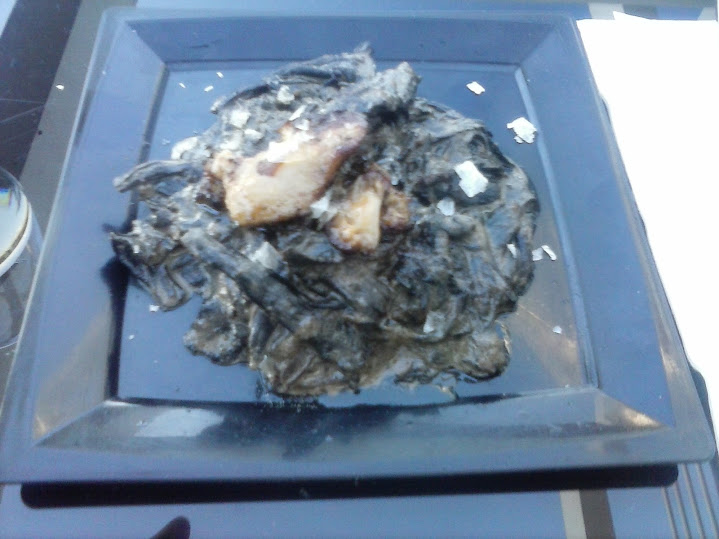
Restaurant Can Tapetes Del Port: Montadito de foie arrebossat amb festucs I tompetes de la mort a la crema. (Tastes better than it looks!)

Restaurant Can Tapetes Del Port: Montadito de foie arrebossat amb festucs I trompetes de la mort a la crema. (Tastes better than it looks!)

Mesón Granadino: Rondeau Granadino: Pulguita de jamon al horno con lechuga y cebolla

Mesón Granadino: Rondeau Granadino: Pulguita de jamon al horno con lechuga y cebolla

Caramba: Radiohead: Montadito de carpaccio de ternera karma police

Caramba: Radiohead: Montadito de carpaccio de ternera karma police

Ca Pere: Piano de coca, con lomo de orza, emulsion de comino, cebolla encurtida a ajo negro

Ca Pere: Piano de coca, con lomo de orza, emulsion de comino, cebolla encurtida a ajo negro

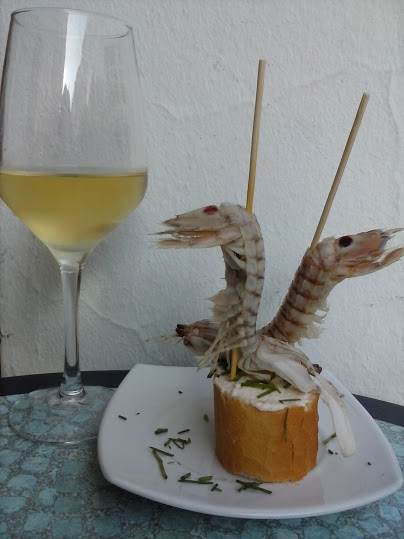
Bonsai: Fagot: Galera

Bonsai: Fagot: Galera

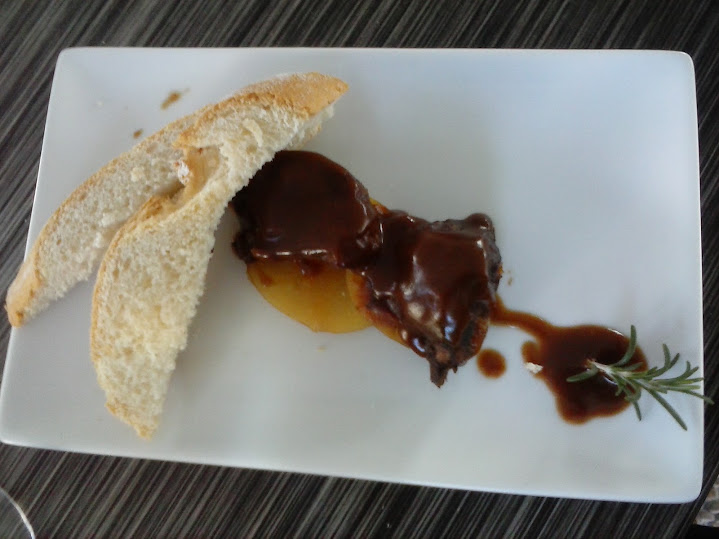
Cocoliso: Clave de Sol: Carrilleras al vino de jerez (patata panadera, carrillera, salsa española especias)

Cocoliso: Clave de Sol: Carrilleras al vino de jerez (patata panadera, carrillera, salsa española especias)


Top 10 Things to See and Do In Valencia Spain

21 Sep

Valencia is a feast for the senses. In another post, I displayed photos of the many stimulating scenes that gave me a feel for this vibrant historical city. The city of Valencia, and the once “Kingdom of Valencia” offer a rich, complex history with Valencia has one of the largest historical centers in Spain. Exploring Valencia from my adopted home town of Altea Spain made the drive to Valencia approximately one hour. Here are my top ten picks to see.

  1. Valencia was settled as a Roman colony in 138 BC on the strategic location of an island in the Turia River, which runs to the Mediterranean. The Turia River, which was subject to flooding the city, was diverted after a major flood in 1957, and the now-named Gardens of Turia river bed is a lengthy multi-use sunken garden with pathways, playground, gardens, fountains, athletic track, cafes, concert venue and more. Allow adequate time to meander through all or part of its nine kilometers.
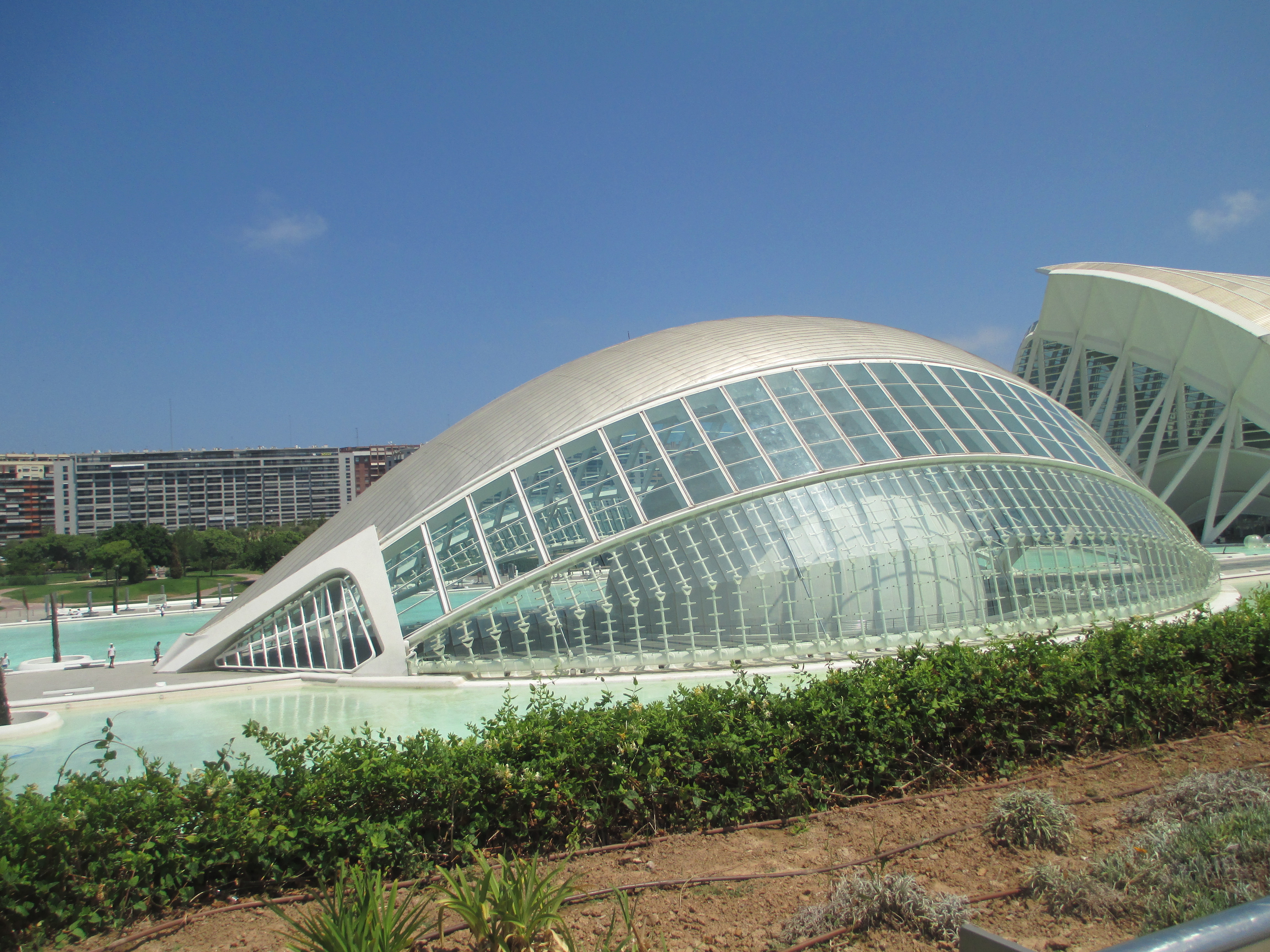
  2. Toward the east end of the Gardens of Turia is the modern, architecturally astonishing City of Arts and Sciences, whose structures were inspired by animal skeletons. It houses an IMAX theatre, Europe’s largest aquarium, science museum, and opera house. Valencia offers a whopping 45 museums, so do research the various sites to find ones (or none) that fit your interests.

    City of Arts and Sciences

    City of Arts and Sciences

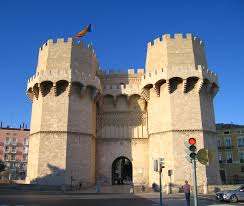
  3. The iconic pentagon-shaped Gothic Torres de Serranos (Serrano Towers) were built starting in 1392, and are the last remaining vestiges of the defensive walls that surrounded Valencia. The Towers are the historical entry point into the Valencia’s old town city centre. A hike to the top affords the visitor interesting views of the historical interior, with the reward of a panoramic view of Valencia from the top.

    Serrano Towers

    Serrano Towers

  4.  In the city centre is the Cathedral of Valencia, a 13th century church built on what were previously sites of an early religious temple and later an 8th century mosque. A chalice dating back to the first century is believed by many experts as the most probable chalice to be the true Holy Grail, used in the Last Supper. El Miguelete, the emblematic Gothic bell tower, next to the Cathedral, where there is another opportunity for spectacular vistas of the city, if you are willing to tackle the 207 step winding staircase.
  5. Valencia was widely known for its textile production and mercantile trade, and to that end, the La Lonja de le
    Ceiling of La Lonja de la Seda, originally painted blue with gold stars

    Ceiling of La Lonja de la Seda, originally painted blue with gold stars

    Seda, (the Silk Exchange) was built starting in 1482. This lavish and beautifully designed Gothic building is now a UNESCO World Heritage Site. Professional- and self-guided tours are available, as well as a free audiovisual 20 minute film about the site.

  6. Near the Silk Exchange is The Mercado Central (Central Market). Built in 1914, it has one of Europe’s largest and oldest indoor markets, with a dizzying array of fresh produce, fish and seafood, many varieties of land animals, and some common regional foods, as well as rare items. It houses a popular indoor eatery, which offers creative dishes.
  7. Make sure to try some of Valencia’s unique dishes. “True” Paella traditionally consists of only a special local rice (typically bomba), green beans, rabbit or chicken, snails and saffron, although many other types are available. It is best when freshly prepared but does take about 30 minutes, well worth it. Or try the fideuá which is similar to paella, but made with small curved hollow noodles instead of rice.
    Vegetables at Central Market

    Vegetables at Central Market

    Horchata is a popular local drink made of sugar, water and tiger nuts, the tiger nuts being introduced by the Arabs during their occupation in the 8th to 13th centuries.

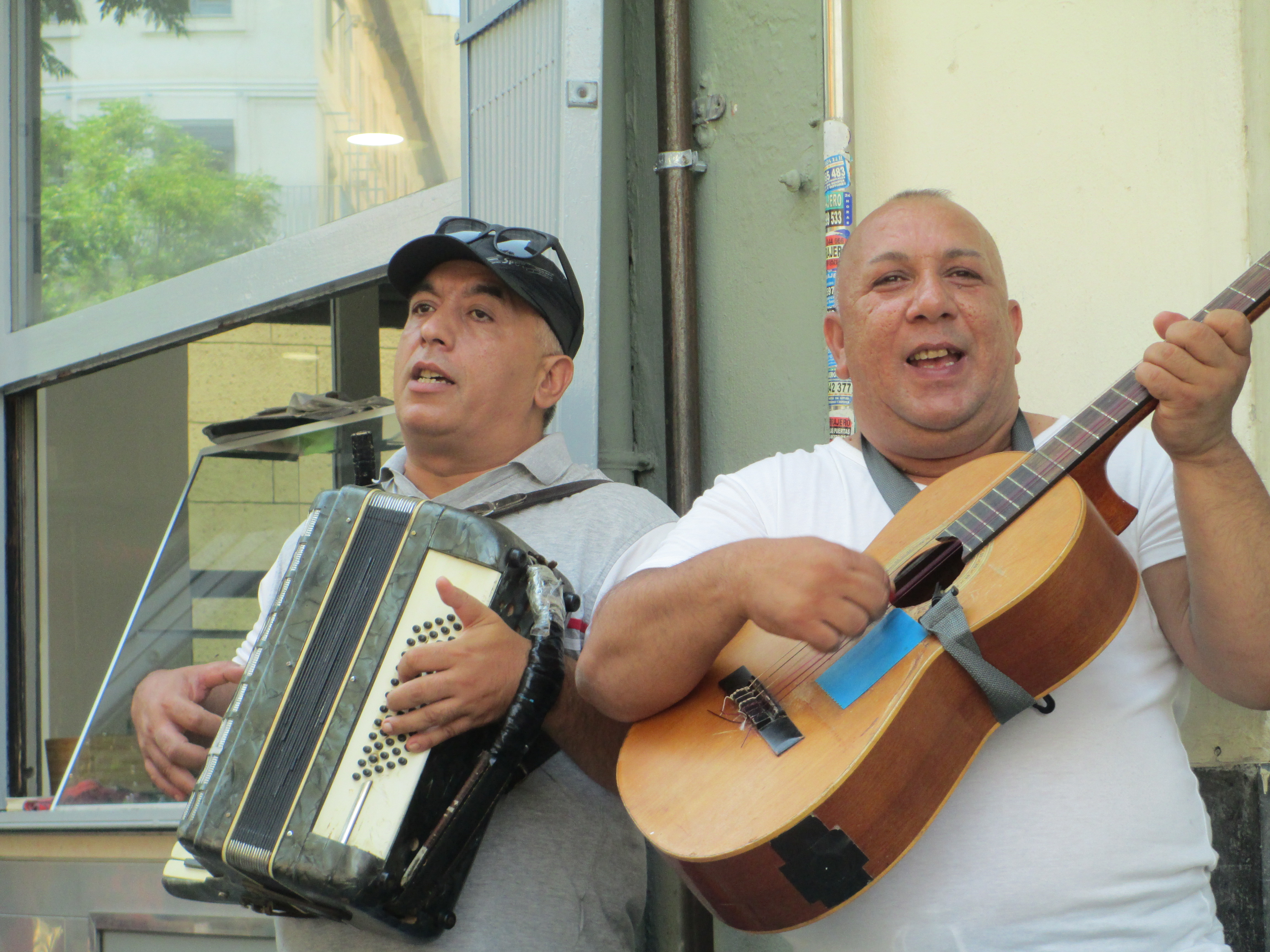
  8. As a die-hard music fan, I am always looking for great live music, which is plentiful in Valencia, especially in the historic Barrio del Carmen. Head to Calle de Cabelleros (or Carrer de Cavallers, in the local dialect) for music in the bars and on the streets. (Keep in mind that both Castilian Spanish and regional Valenciana are spoken, so words may be different, but almost everyone speaks the more widely known Castillian Spanish.) In 2012, the Boston-based Berklee College of Music, widely respected as the best school for jazz, opened a campus in Valencia, and offer periodic performances. Check their website for a list of performances.

    IMG_1208

    Street Musicians

  9. Like every town in Spain, Valencia loves its festivals, the best known of these being Las Fallas. The five day festival in mid-March commemorating St. Joseph which has many components includes neighborhood groups making large, elaborate paper mâché satirical caricatures, which are set on fire accompanied by extremely loud fireworks. A number of the events feature locals in the traditional dress of Valencia, a spectacular cultural sight. However, the festival can be crowded, exceptionally noisy and overwhelming to some. You need to book lodging well in advance for this festival.
  10. And of course, being on the Mediterranean, Valencia has fantastic beaches, including three “blue flag” beaches, those worldwide given top ratings for quality, services and environment. However, I think there are better ways to spend one’s time in Valencia. (Save the blue flag beach visits for other venues in Spain, which currently has the most in the world.)

Tails from Altea Spain

13 Apr
pepper2

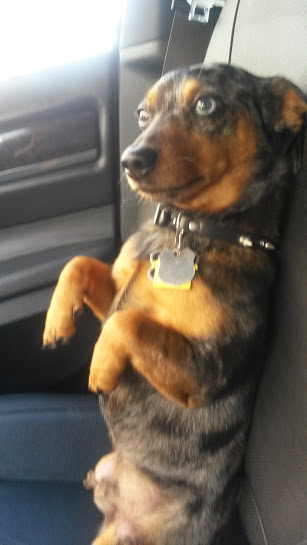
Check out my different colored eyes

So I finally get to offer my observations on this move to and life in Altea, Spain. I might add that I was promised I could put my two-cents in some time ago, but it has been several years before this has come to fruition.

It was confusing with all of the moves I have had to endure, first my original owner, Robbie (son of my current owner) abandoned me to pursue a career as a chef. Besides the lengthy hours he worked, he also apparently felt compelled to spend considerable time doing cross-fit and training for competition weight lifting. I am still not thrilled about this abandonment, but apparently it paid off for him as he received many favorable reviews in such publications as the LA Times, LA Magazine, Zagat, with Belcampo being one of ten top best new restaurants in 2014 by Bon Appetit Magazine as part of Downtown Central Market in Los Angeles. I got to go to his restaurant twice. Even though they don’t allow dogs, I pretended I was a service dog. I was so excited to see him! Then I was whisked off again by my new owner/mama for more changes.

This is me in mama's car before we moved to Spain

This is me in mama’s car before we moved to Spain

We ended up living in a place very different than where we lived on the Central Coast of California. The people here speak a different language, but I have learned about ten words in Spanish, such as ven (come,) muevete (move,) siéntate (sit,) and Pimienta (the translation of my name Pepper.) Many people greet me by name here; I am way more popular than my mama. People are intrigued by my two different color eyes: azul (blue) and marron (brown), and my dapple color. They also are amused when I sit up on my hind legs; they think I look like a Meer cat.

She takes me almost everywhere except when she puts on those black clothes and tells me she is going to Zumba and will be back soon. It feels like forever, especially after the uncertainty all of the changes have given me. When she goes out for a meal, I patiently (usually) sit under the table waiting for my reward from what she ate. Yum!

DanielandPepperr

Daniel and me at his 40th birthday party at Altearte

Like her, I am becoming more social. I now excitedly great her friends, sometimes surprising her and them with my new enthusiastic attempts at kissing them, as opposed to my prior indifference. I enjoy our longs walks every day, usually at least one down to the beach, and the other to the top of the hill where the iconic church is (but we are not attending church.) However, we have fun with our friends in the evening. One of our good friends, Daniel (a native of Norway) celebrated his 40th birthday at one of our local favorite bars, Altearte.

Yesterday, we met up with my new dog friend, Pogo, and his parents, Karen and Barry who recently moved here from Costa Rica (although they are originally from Canada.) We had an outdoor lunch with them and mama’s friend originally from nearby Valencia, Nina. Then we went to the neighboring town, Albir, which has the second highest population of Norwegians, after Norway, so Nina could deliver a birthday gift to a girlfriend. En route, she saw a friend, a former talented sculptor of wood, who sadly suffered a stroke and can’t do his art or speak anymore, but my owner thought the sparkle in his eyes over a drink revealed a glimpse of his former charisma and talent. The owner of the Los Angeles café, also a friend of Nina, presented them with a colorful plate of tapas. After they were done, “claro,” (“of course,” in Spanish), I got my just desserts or should I say tapas. (And, yes, my mama knows the phrase was originally just deserts.)IMG_0840

IMG_0768

Rafa at Club Cuba in Albir for Sunday evening salsa

It was already after the start of Sunday Cuba salsa dancing in Albir, and mama wanted to show the place to Nina. So that is where she goes when she leaves me on Sunday evening. When Rafa was initially playing some low key music, Nina loudly requested Cuban music, and he obliged. The only trouble was that they kept leaving me under the table alone so they could go dance. I guess it was better than being home alone. Then Nina drove us home where we went directly to bed after a fun- and wine-filled day. I burrow per my dachshund heritage, although I find it a little more challenging to sleep here due to traffic and people who talk way louder than I am used to.

It is quiet now during the three to four hour siesta, so I am going to take advantage of this time for a nap, before going for my evening routine of incessant ball chasing; I am ready for her to repeatedly tell me, “Dáme la pelota” (Give me the ball.) All in all, I like it pretty well here, which is good since my original owner, Robbie, is now going to be very busy at his new job at Saison, one of only four three star Michelin star restaurants in San Francisco. I just hope he and his brother Michael visit soon; here they are enjoying themselves in Belize with their brother Spencer and mama while I was left at Canterbury Tails doggie hotel. At least, Spencer will be visiting me next month.20150116_134409

More Food Porn from Altea Spain

15 Mar
IMG_0304

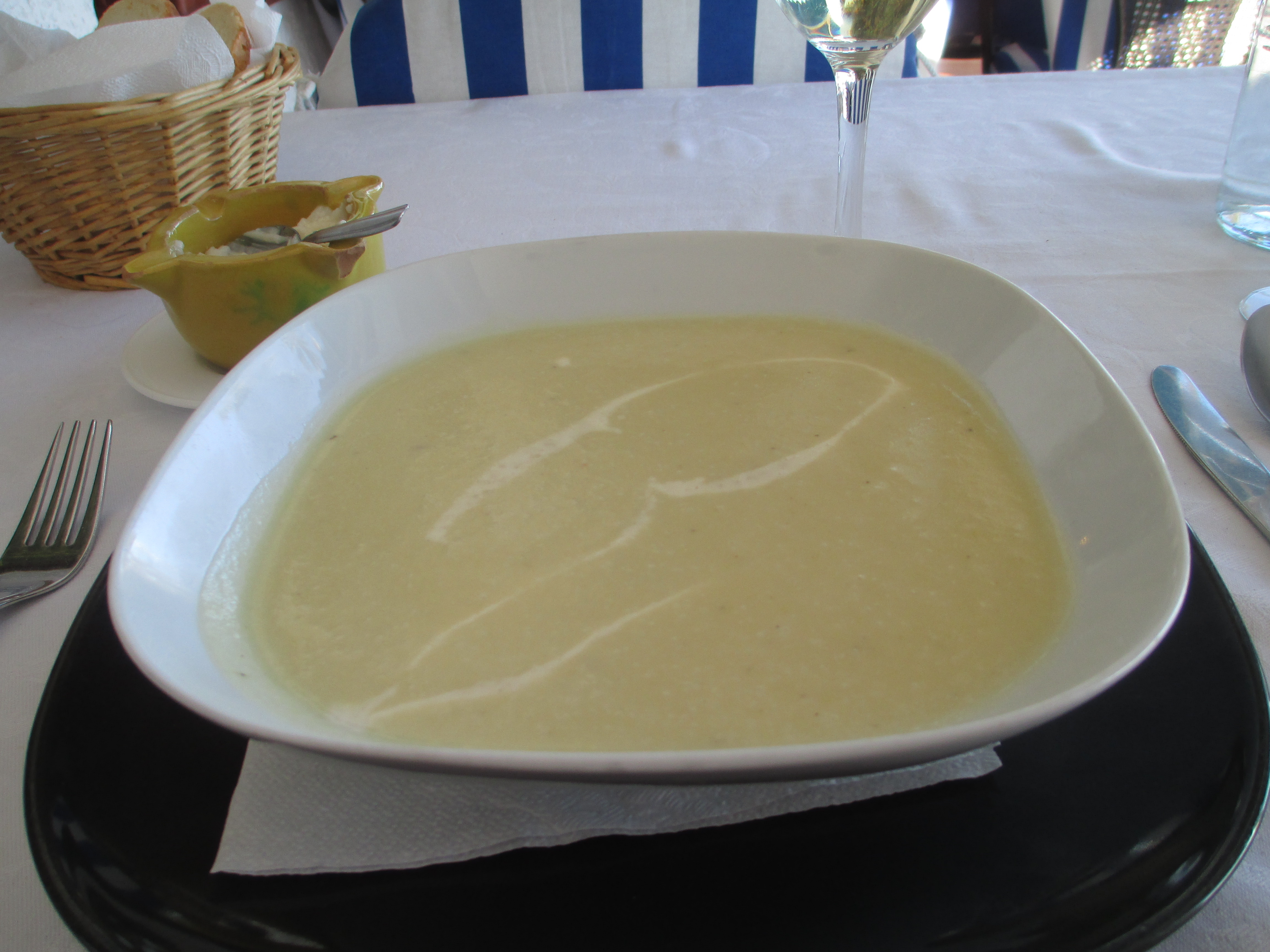
Sopa de puerros (leek soup)

IMG_0338

Paella con bandas (paella with calamari)

IMG_0337

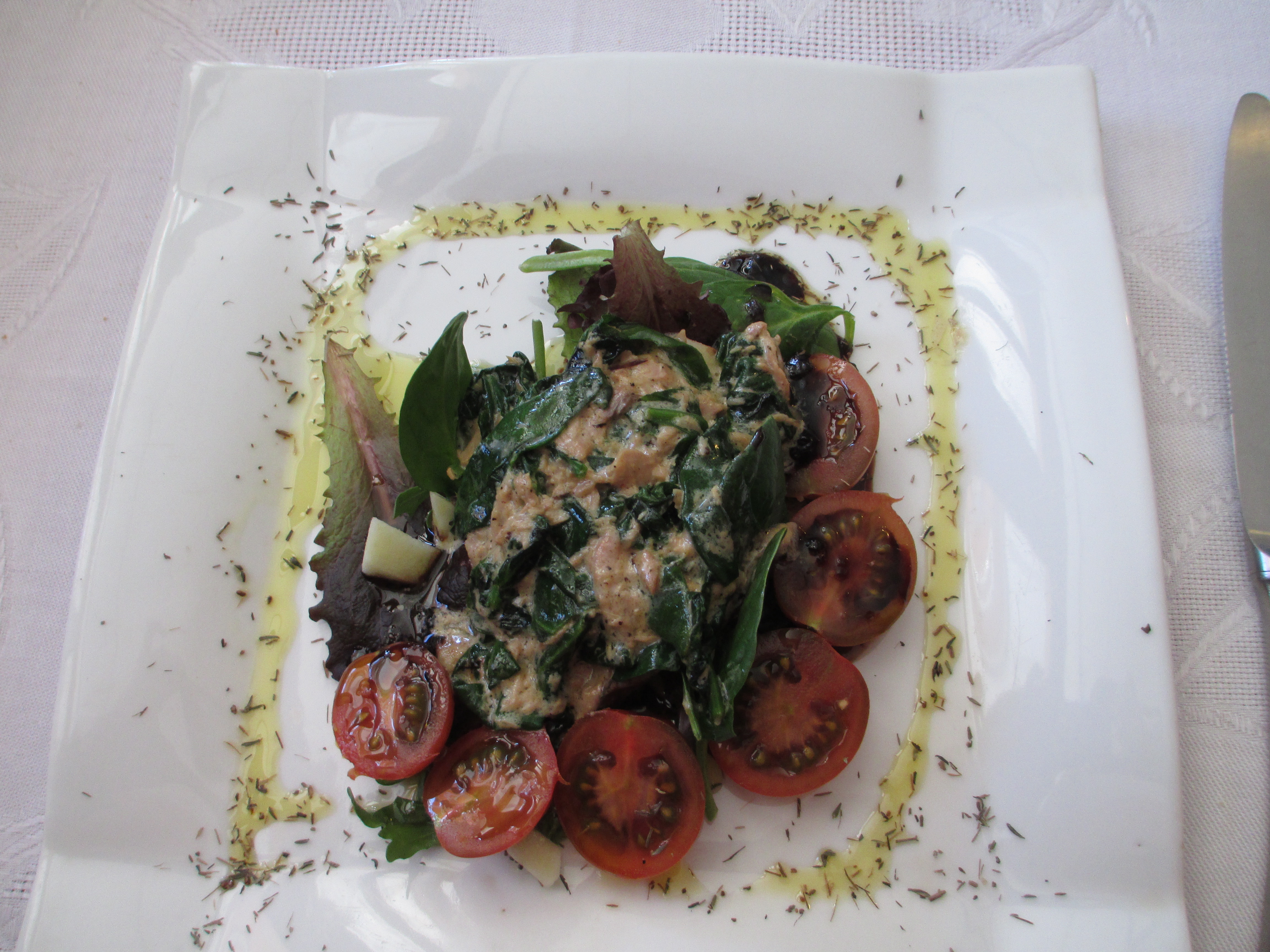
Enselada de tomates (salad of tomatoes)

IMG_0335

Almejas marinera (clams mariner-style)

IMG_0371[1]

Alcochofas a la parilla (grilled baby artichokes)

IMG_0370[1]

Enselada de puerros con jamon (Leek salad with ham)

IMG_0367[1]

Tripa en salsa (tripe in sauce)

IMG_0354[1]

canonigos, huevos con queso y jamon (cononigos (round green leaf herb), eggs with cheese and ham). Also typical bread served with grated tomato with olive oil

IMG_0357[1]

rabo de toro (oxtail)

IMG_0398[1]

pan y alioli (bread with Spanish version of aioli which has no egg). Note the container for the alioli can also be used as an ashtray. More about that on my humorous look at rules for smoking in Spain to be posted soon.

IMG_0400[1]

Chopitos (fried small baby calamari)

IMG_0403[1]

lenguado meuniere (sole meuniere)

IMG_0408[1]

Sole meuniere “after.” Don’t be afraid to tackle eating or cooking a whole fish!

IMG_0409[1]

Flan (a rare time I ate dessert)

IMG_0330

It was a dark and stormy night…


Adventures in Dining in Altea Spain

13 Mar
Za-vhu-Rw0KrgpGbsf9rKgna5tYGGiSH7RSw4Trjki0=w630-h503-no

Tapa with egg and garnish 13 Mar ’15

“Pigs ears?” he asked in Spanish, apparently to be sure I knew what I was ordering when I pointed to one of the tapas trays. I admit I wasn’t 100 percent sure what they were when I ordered them, but every tapa I had ever eaten at beachside Fronton Playa in Altea (Spain) was spectacular. I grew up eating my fair share of offal, so I am game for trying just about anything. On this particular visit, I decided to order a couple of tapas, so I could get more than the typical small tapa bites. Along with the pig ears, I had some small breaded and fried octopus “pulpo” tentacles, which were tender, which is not always the case at many local eateries. The friendly owner reminds me of Danny Devito. On most visits, I order a “vino,” which is accompanied by a creative, tasty tapa, which is included in the inexpensive 1,50 €  IMG_0392


20140702_190936

Valentina in Casco Antiguo


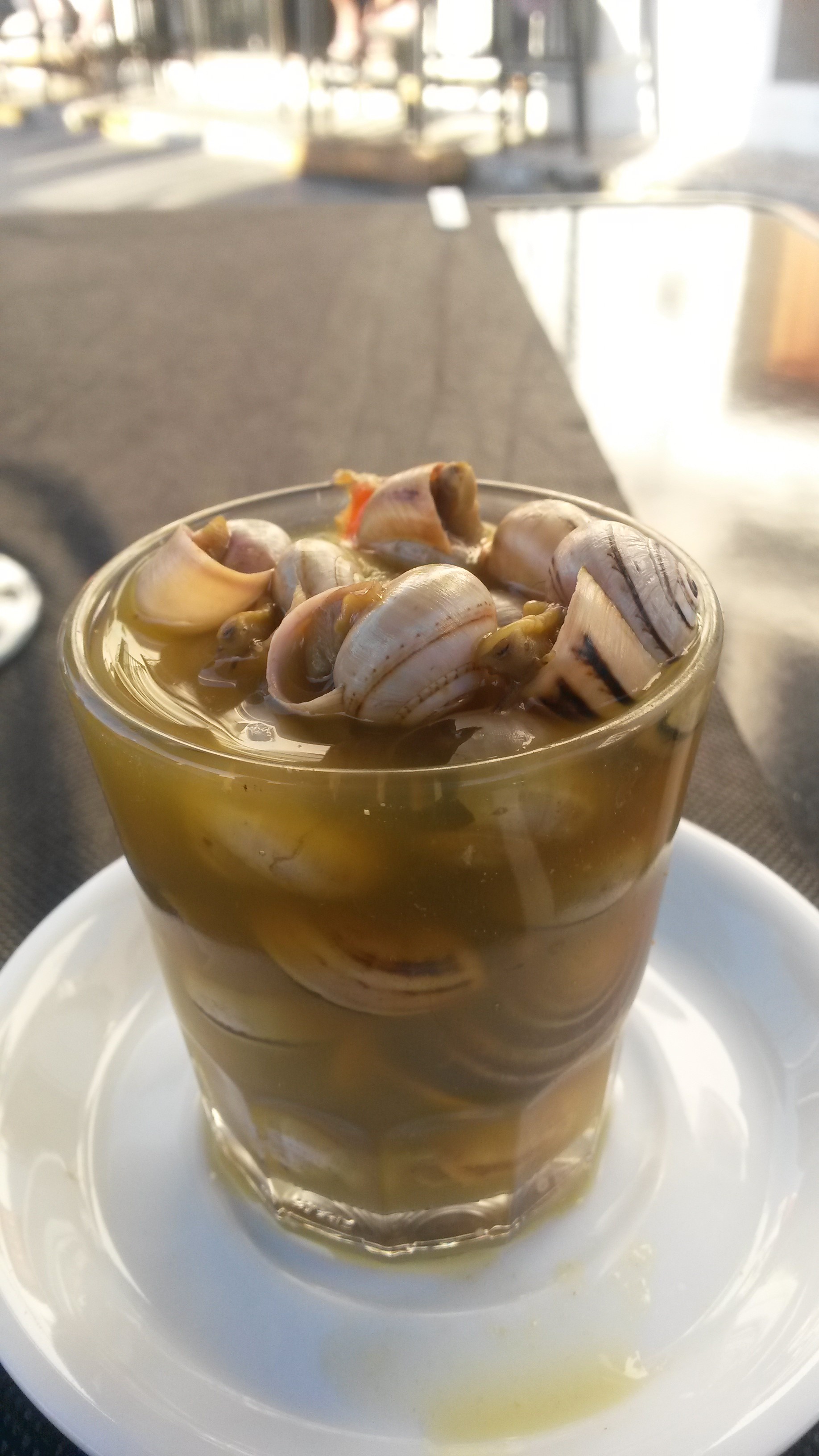
Valentina is another of my favorite tapas places where I have had interesting food forays. Andrea and his family hail from Puglia (Italy), but have lived here in Spain for many years. Andrea’s girlfriend, who is the chef, makes creative and delectable food. On one occasion, a darling two-year old girl repeatedly chanted, “Caracoles,” as she waited for the small snails to be prepared and served. She ate them like a pro. On several occasions, Andrea has brought me a tapa that he would not serve to everyone. One memorable tapa was something with a texture similar to tofu but with a meaty taste, saying he knew I would eat it. When I inquired as to what it was, he smiled and replied coagulated chicken blood. My son, Robbie, an executive chef in at Belcampo, a well-reviewed restaurant in Los Angeles specializing in their own humanely and sustainably raised animals, asked me to find out how it was made. 20140522_201050On one of the occasions I ordered something from the menu I had “Milhojas de pulpo y gula del Norte,” octopus with baby eels.


Dining in Spain is almost always a great adventure. I am an avid fish and seafood lover, and there is seldom a day that goes by when I haven’t had several of the many creatures available in the local Mediterranean waters. I am constantly trying new items from the sea including things we may have one of in California, like calamari. Here the calamari are large rings, about the size of onion rings, and often cooked by breading and frying. I find them too tough. Then there are “chopitos,” whole baby calamari with ink sacks intact, which are best when fried with a light almost-panko like crispness. Sepia is a cousin of sorts of calamari, which is larger and thicker, and is often grilled and served with a green “marinera” sauce, mariner’s sauce, not to be confused with the Italian tomato sauce, “marinara.” I have found some foods to not be worth the effort involved in trying to eat them. After a recent intense Zumba class, I went to a local tapas bar, regularly patronized by cordial smoking, drinking “abuelas” (grandmas) and their grandbabies, (and I mean no disrespect but it is very different than when I lived in San Luis Obispo county, California, where they were the first place to outlaw indoor smoking or smoking near food service.) At the café, I was told the grill had been turned off, but the fryer was working, so I ordered “patatas bravas” (spicy fried potatoes, which are not spicy if someone eats habanero sauce like I do), and fried fish. Note to self: check the type of fish before ordering. They were sardines and other equally small fish, which with my knife skills, yielded few consumable morsels. And the incredible number and quality of bivalves! Almejas (clams), berberechos (smaller clam-like content, with a scallop taste), the itsy bitsy tellinas (too much work), razor clams, mussels, oysters, gooseneck barnacles, and more.IMG_0380


The grocery markets are filled with seemingly endless displays of fish and seafood: fresh, frozen, and canned (which are viewed as another great way to access seafood as opposed to American’s frequent opinions that canned food is of suspect quality.) For a foodie like me, the grocery and fresh food markets are intoxicating with their fresh and novel ingredients. As I was photographing the vast displays of fresh fish and seafood at a regular local grocery market, Mercadona, a female fishmonger admonished me from taking more photos. So here I will include a partial sample of the store’s offerings, and the selection of frozen and canned fish and seafood is even larger. (If you read Spanish and the words don’t look familiar, that is because the official language here in the Valenciana Community is “Valenciana,” but more about that surprise to me at another time.) If you look at the trays of fresh items from the sea, it is apparent that many home cooks are adept at using fresh whole fish and other types of seafood.IMG_0378


quaileggsI thought I hit the jackpot when I recently walked into a local market and found a beautiful dozen little quail eggs, for 0,90 €, less than the American equivalent of $1.00. On today’s cooking television shows, they showed how to make livers with “sangre” (blood) over a fire in the hearth, and “coda de cordero,” typical recipes from other parts of Spain. The food options here are inspirational, and I am eager for my two boxes of kitchen cooking supplies to arrive here from my former home in California. Those are the only things I had shipped here, (along with a few family and travel) mementos, which speaks to my priorities.

You can find my many restaurant, as well as other reviews, on Trip Advisor, as well as my map of the hundreds of places I have travelled.

IMG_0397

View walking home after tapas today


Why I Left “The Happiest Place in America” to move to Spain

6 Mar


altea

Hallmark photo of Altea

When I told people of my intention to abandon my lucrative professional career as a forensic psychologist in California and leave the San Luis Obispo area to move to Spain, I got one of two reactions. They either thought I was nuts or they were envious. In either case, they asked why I would leave the area that has been touted by Oprah Winfrey, National Geographic, U.S. News and numerous others, to be the best place to live in the United States, if not the world.

IMG_0314

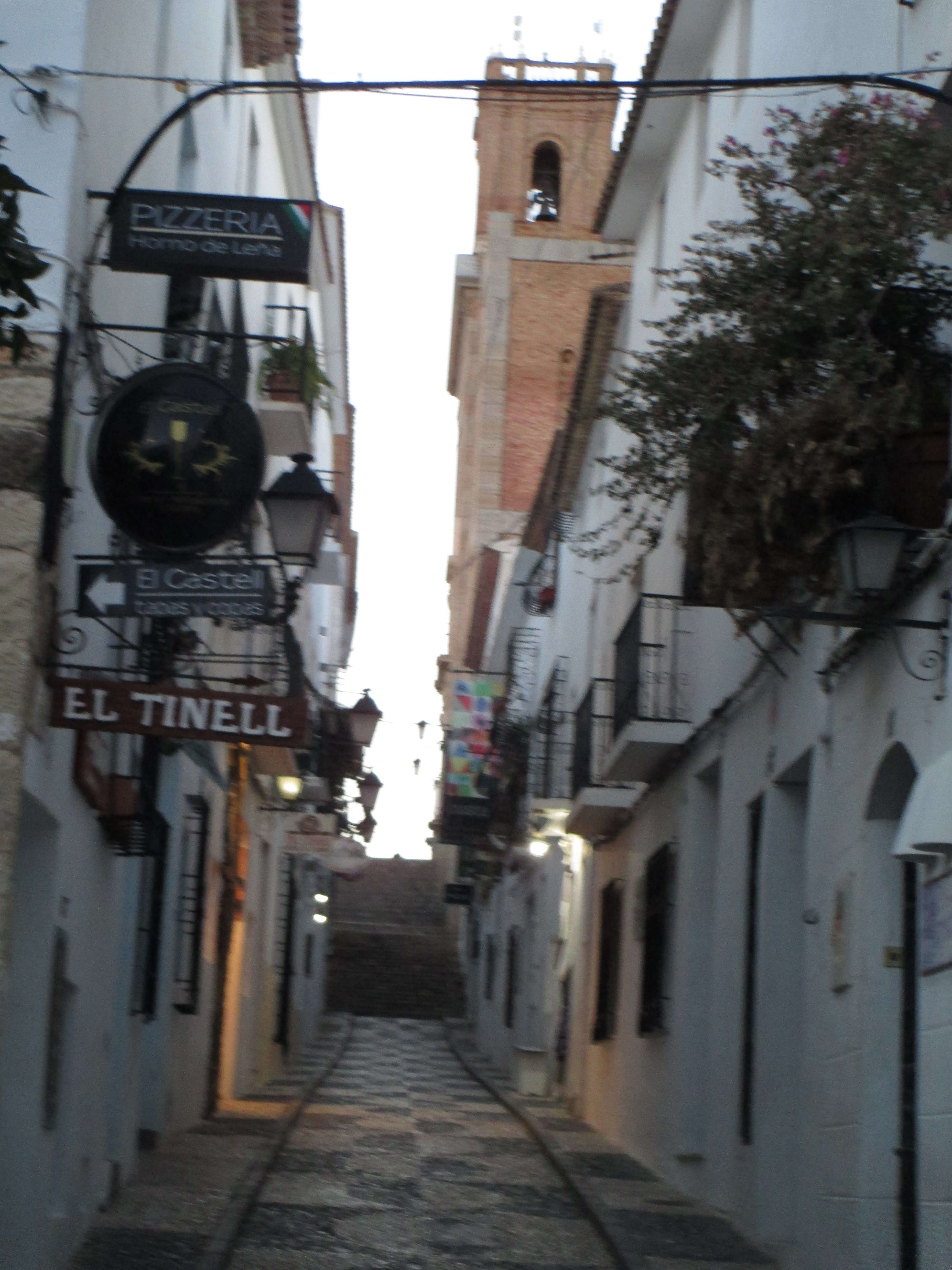
Casco Antiguo (Old Town) Altea

My decision was based on a combination of factors that were sometimes difficult for me to explain, or perhaps more aptly, for them to understand. The quality of life in my small, picturesque beachside town of Altea (consistently rated as one of the top 10 most beautiful villages in Spain) far surpasses the stress and money-driven culture to which I had become accustomed. Life here and in many parts of Spain are driven first and foremost by family. One commonly sees multi-generational families strolling along the beachfront esplanade, dining or drinking together (often until very late at night), and fathers and grandfathers confidently and lovingly caring for the family babies and children (with no women in sight.) Spanish people work to live and generally are not consumed with a desire for wealth or material things. Besides family, friends, food and fun are valued. It didn’t take me long to appreciate this simpler, but more fulfilling existence.

Before I moved to Spain, I had a busy, in retrospect, too busy, career as a forensic psychologist specializing in the evaluation of and testimony as an expert on Sexually Violent Predators. As my third and youngest son was approaching high school graduation, I realized I was tired of working so hard to maintain our upscale lifestyle including our 3500 square foot home on a French-inspired fully landscaped acre, an expensive car, and the cost associated with living in a highly desirable area. After being the sole breadwinner and parent to my three boys for over 25 years, I wanted a change to a simpler, better quality life. For me, that meant Spain.

IMG_0305

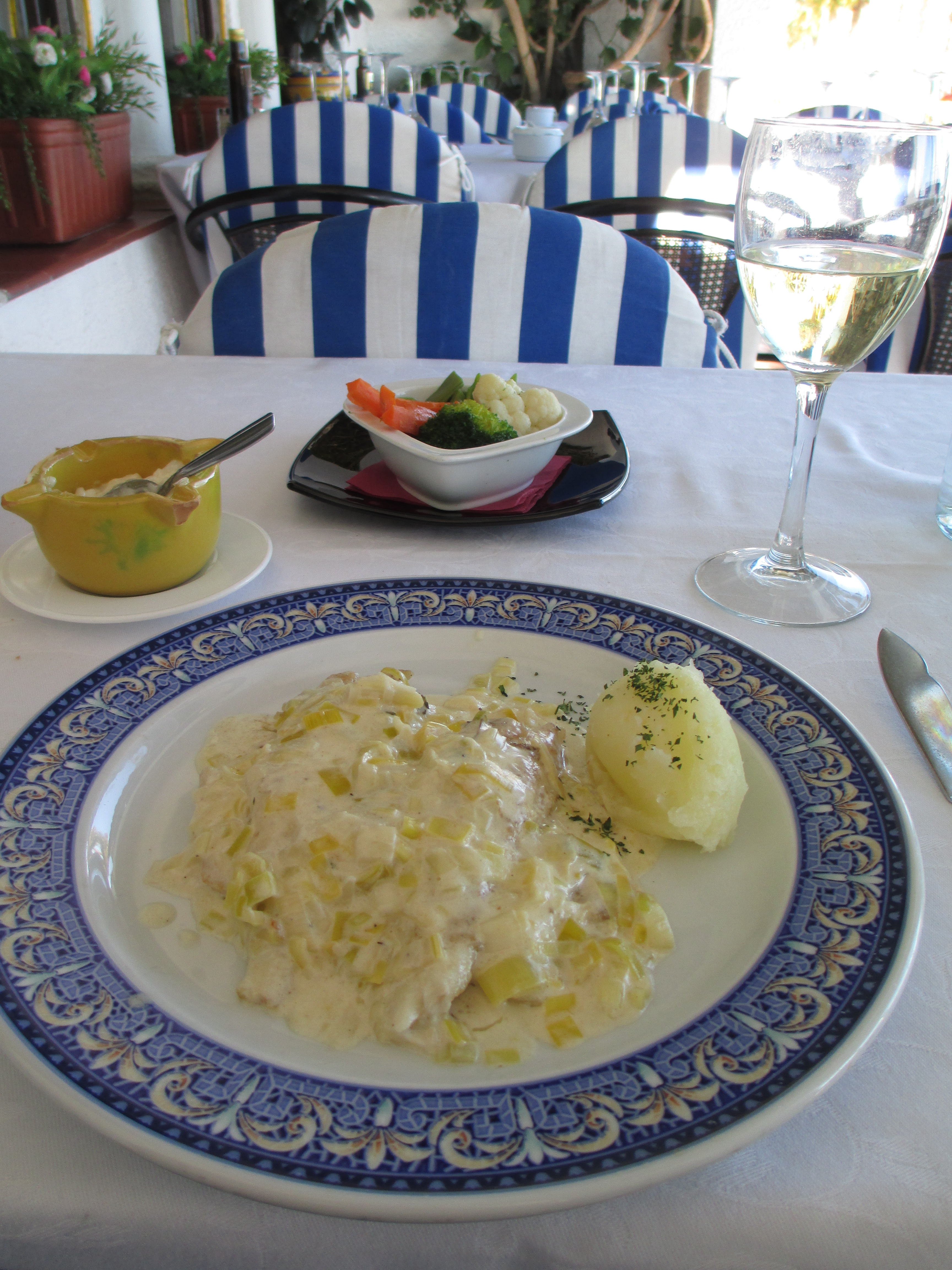
Fish with leek sauce at local beachside restaurant

My wanderlust had led me to travel to almost 40 countries, and while I had frequently fantasized about moving to Italy, France or Spain, I never really thought I would do it. When I reminded my youngest son of my plan to sell the house when the youngest graduated high school, he was less than pleased and would have liked to stay forever. The month before he was to graduate, I put the house on the market and I had accepted an offer only six days later. I felt pangs of guilt and he was none too happy to have to negotiate final exams, senior graduation activities, and moving all at the same time. Once I had put the house for sale, I interviewed three companies for my estate sale and selected the most experienced with the lowest commission rates. I sold everything from the pool table, to the grand piano and every bit of furniture, except the items I had promised to my sons and the few pieces of kitchenware and children’s mementos I planned to ship to Spain.

View from my place after sunset

View from my place after sunset

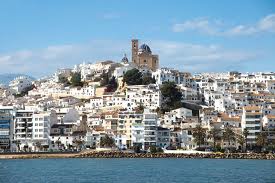
Even though I had previously travelled to Spain, it was to larger cities, not the type of quaint village I so desired. So I took the unorthodox approach of diligently researching all of my requirements on the internet which included a picturesque village on the Mediterranean, temperate weather, music and dance events, and no need for a car. Thus when I arrived in Altea, it was the first time I had been there. It was more beautiful and magical in person than photos could portray. At the top of the hill is the Altea’s iconic cathedral with its royal blue domes decorated with white ceramic tiles. The plaza on which it sits is the site for many of Altea’s festivals. Below, the white buildings cascade down from the top of the hill, in a manner reminiscent of a Greek village.

IMG_0327

View of Calpe from Altea beach at sunset

While there are many things I love about Spain, as anyone who has lived there knows, the bureaucracy is atrocious. If you need to conduct any official Spanish governmental business, expect to have to return multiple times to accomplish even a small task, and be prepared to be given different instructions each time. A case in point was my visa, which I did eventually receive after negotiating the inconsistent, and sometimes impossible, requirements. However, the details of that endeavor would take a whole, separate article!

Concurrently, I began diligent, daily practice of Castilian Spanish, as I only spoke basic Mexican Spanish. One of the things that attracted me to Spain was that I would be able to speak the language by the time I was ready to move there in an estimated year and a half while getting my affairs in order. I was in for a big surprise when I found out the primary language in Altea is Valenciana, similar to Catalan. Once in Spain, I readily made friends with locals, from Spain and many other countries, and honed my Spanish with practice each evening over drinks and tapas. I found it far easier to make friends in Spain than where I had been living in California for the past nearly 30 years. When I would head out for my evening at one of my customary places, I was typically greeted with, “¿Vino blanco?,” as the friendly waiters anticipated my usual white wine. A decent glass of house wine, white, red or rosé, is typically around 2€, and sometimes includes a tapa; beer is even less and these prices are at oceanfront spots frequented by locals and tourists, so prices can be even lower if one goes to places where there are primarily locals. While enjoying my wine and the view of the turquoise Mediterranean, I sometimes end up conversing with someone, and often we end up exchanging contact information or agreeing to meet on another occasion.

IMG_0330

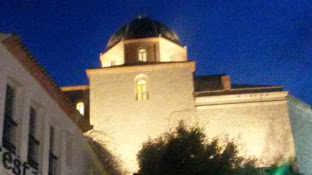
View of Altea church at dusk

I wanted to test drive my town and neighborhood before renting or buying. I first stayed at a vacation rental I found on the web. This allowed me to live in Casco Antiguo, (old town,) like a local, and decide which particular area met my needs before settling on a permanent spot. In the northern Costa Blanca where I live, there are one or two bedroom apartments, some furnished, for as low as 300 Euros, which is currently about $340. Less expensive rentals are available away from the beach and the historic old town or if you go to the towns more inland.

Meals can be an incredibly good deal, as well. Many restaurants offer a “Menu del Dia” from which you can order two courses, and get bread with alioli (the Spanish version of aioli), a beverage (wine, beer, soda or bottled water), and either a dessert or coffee generally for around 10 to 13€. I was surprised that I quickly adapted to the Spanish tradition of having a larger, late lunch, and then later skipping dinner or having a tapa. This is very economical and resulted in the unexpected benefit of losing weight.

IMG_0317

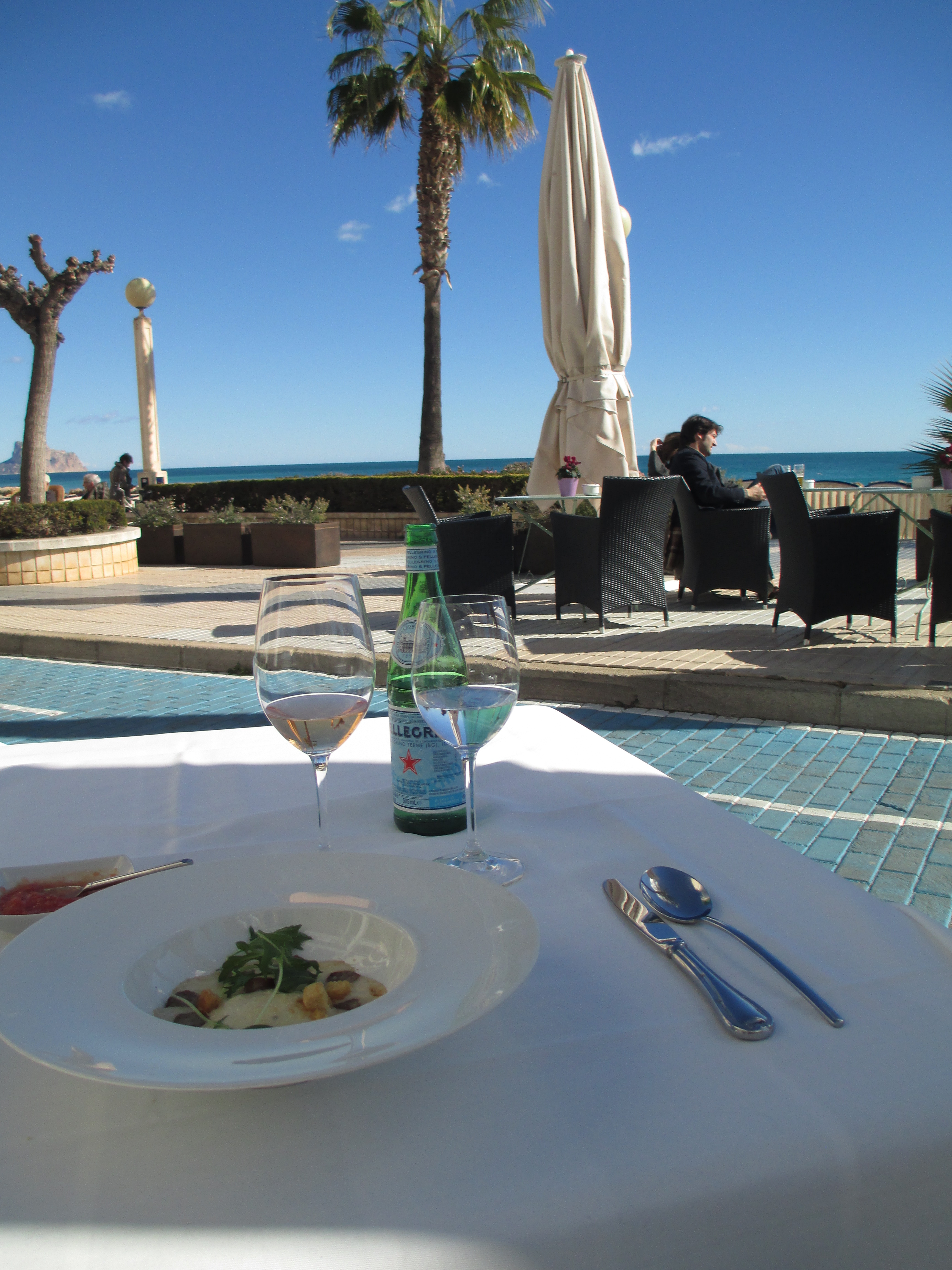
Beachside dining with Calpe in the distance

fill my days with Zumba and other dance classes,  a typical late and long Spanish lunch (almost always eating one of the many delicious fish or seafood choices), taking my dog to play at the new dog park, going home for a siesta or household tasks, and then heading out for an evening drink where I would meet up with friends to talk and dance, often well past midnight. On Sundays my Cuban friends and I head for live Cuban music at a bar which has a vibrant international crowd. My dream of a simple, fulfilling life has been realized.

Stay tuned for interesting and fun accounts of my time in Altea and beyond.


Swan’s Songs

25 Nov
Mike Swan

Mike Swan

Although he did not realize it at the time, playing with the Lester Lanin Orchestra at the royal wedding of Prince Charles and Lady Diana was one of the highlights of Mike Swan’s professional music career. This was one of a number of international music venues where Mike performed that had a formative influence on his varied musical repertoire. Presently, Mike performs his entertaining and diverse songs on bass guitar and vocals at La Bellasera Hotel in Paso Robles, California, on Thursday evenings with guitarist Adam Levine and Judy Philbin.

Mike always loved music and started playing the cornet in elementary school, and then went on to play the French horn in high school. He developed an interest in Dixieland music; when he and some friends formed a Dixieland band and could not find a banjo player, Mike borrowed a tenor banjo from family friends. Then he used a book to teach him to tune it and play basic chords. Once he got to the respected Reed College in Portland, he studied philosophy but continued his banjo playing by joining a “jug band.” During this time in college when folk music was big, he started playing the guitar, and later began playing bass guitar.

He left school to move to the San Francisco Bay area where he played banjo in a trio at the North Beach’s “Red Garter” which featured Dixieland music. Mike described the music they played as “cornball sing alongs” dating from the 1890’s through the Great American Songbook era. In 1967, the owner, Jack Dupen, offered Mike a job at the New York City Red Garter. Moving to New York with its 13 degree weather during the 1967 Christmas/New Year’s holidays was “like running away to the circus,” Mike joked. He also did some stints at the Red Garter’s Niagara Falls and Florence, Italy outposts, and subsequently started playing for competitor “My Father’s Mustache” where he led the band for two years.

Mike realized that if he wanted to continue to make a living playing music he would have to become a better guitar player and singer, and to that end he began studying with talented professional musicians in New York City. He honed his skills and expanded his repertoire which included jazz and ragtime. He learned songs in Italian, Swedish, German, and Hebrew/Yiddish which he performed at special events. The venues in which he performed expanded to private “society” parties for affluent patrons, Jewish celebrations, a private Aegean cruise, and Claridge’s in London while there for the royal wedding. When asked to share an interesting or fun experience, he related that they when he was playing with the Lester Lanin Orchestra they had a gig in Gstaad Switzerland, the second night the venue was at Eagle Ski Chalet which necessitated transporting their equipment by ski lifts. The themed party was pre-revolutionary Russian, for which attendees and musicians donned period costumes.

Besides his musical career, Mike also did corporate and IT work to help pay for raising his children and their college. In 2006, Mike said he and his wife were tired of their corporate work and the hectic pace of living in New York City. He stated, “Like a salmon swimming upstream,” they decided to return to California. They settled in northern San Luis Obispo County where Mike’s brother was living. Taking a break from music, Mike helped his brother with his import business. Then he received a call from a local Dixieland band which needed a banjo player, and with that, he became involved in the local music scene.

Mike is presently working on two CDs, having completed his first CD in “the early 2000’s” which consisted of a trio with him on banjo, along with a tuba and mandolin. Besides his weekly appearances at La Bellasera Hotel, he plays at many wineries where he jokingly described his function as “sonic wallpaper.” He also plays with Jazz in the Vines, and at private parties. He has been playing solo for hospice patients which he described as “rewarding.”  For more information on Mike and his performance schedule, go to http://mike-swan.com.

HAPPILY SINGING THE BLUES

27 Sep
Ted Waterhouse

Ted Waterhouse

Under the hot August sun in the expansive outdoor beer garden at the Barrel House Brewing Company, Ted Waterhouse was setting up for the weekly Thursday evening Real Blues Jam. The Barrel House Brewing Company is at the very south end of Paso Robles, California. He has gathered a group of talented local musicians who start the event by “jamming,” with Ted leading on guitar and vocals. Then musicians in the audience have an opportunity to sit in and play on the stage which is on the bed of an old, rusted truck.

Ted has become a regular fixture in the California’s Central Coast music scene since arriving here in 1980, after receiving his Bachelor’s degree in Anthropology. He didn’t initially intend to support himself as a musician. When he realized that to use his anthropology degree he would have to be an academician, he changed course.

At age 10, Ted said he started playing the guitar after his mother, a school teacher, took it up. Ted’s early formative influences were folk singers, other “American roots music” and Delta and Chicago blues. Living in the Los Angeles area, he was able to see some of the living contemporaries of Mississippi blues legend Robert Johnson including Lightnin’ Hopkins, Rev. Gary Davis, and Mississippi John Hurt.

In the 1970’s, unenamored with arena rock and disco, Ted expanded his music portfolio with “old jazz,” and swing jazz. Later he added honky tonk, country, varying styles of bluegrass and Western swing.  In 1973, Ted got his prized 1963 Stratocaster electric guitar on which he likes to play bottleneck slide. When he first got it, not knowing any better, he said he refinished it. Lately Ted had been playing his Telecaster, a sort of cousin to the Stratocaster. He also enjoys playing his resonator guitar, which is an acoustic guitar whose sound is produced by a spun metal cone instead of a wooden sound board.

Ted’s eclectic musical tastes are evident in the songs he writes and the different bands he puts together.  In The Blue Souls feature Ted and Debra Windsong on harmonica and vocals playing rockabilly, blues, and original songs. The Swingin’ Doors plays honky tonk and Western swing. Other groups Ted has had include the Hot and Cool Orchestra, Catalina Eddy and the Breeze, Viper Six who perform danceable swing jazz tunes primarily from the 1930’s and‘40s. Ted said he was excited about his new group Terraplane, the band’s name a take on the old Robert Johnson blues song Terraplane Blues. Chris Anderson will be playing keyboards. Ted related that this will be the first time he has had a regular keyboard player in one of his bands.  The incredible Jim Stromberg will be on percussion and vocals. He emphasized that songwriting is an important part of what he does.

In addition to the Barrel House Brewing Company, Ted enjoys playing in other venues including the Otter Rock Café in Morro Bay, Avila Bay Club, Atascadero Folk Festival, Live Oak Music Festival, Shell Café in Pismo Beach and wineries. To get on Ted’s mailing address for upcoming events, email him:  edcat@aol.com.

Courtesy: www.slocoastjournal.com