Archive | Spain RSS feed for this section

Sant Joan Festival in Altea Spain

26 Jun

BOOM BOOM BOOM. The sounds outside were so loud as to cause my dog, Pepper, to run to hide under the bed. I peered out of my window which affords a view of the cathedral at the top of Altea’s old town, where I was surprised to see fireworks midday. The fireworks signaled the start of the day’s Sant Joan Festival.

IMG_1051

Waiting to be doused with water at Sant Joan festival in Altea

Sant Joan Festivals are very popular in Spain, particularly in the Province of Valencia where I live, as well as in Catalan-speaking areas, and Galicia. Sant Joan is the Valenciana and Catalan languages way of saying Saint John. The Sant Joan festival in Alicante is Spain’s largest, and one of Alicante’s most important festival. The festivals occur around June 23, the day of Sant Joan, typically with numerous days of activities that vary with the location.

In Alicante, there are large “Ninot” characters that are set on fire, much like the famous “falles” festival in Valencia in March. The Ninot are amusing parodies of famous people or politicians made of wood, cardboard, mud, and other items. This year’s Alicante festival occurs for four days. There are noisy early morning (for Spain) wake-ups, parades, costumes, music and many more activities.
IMG_1025

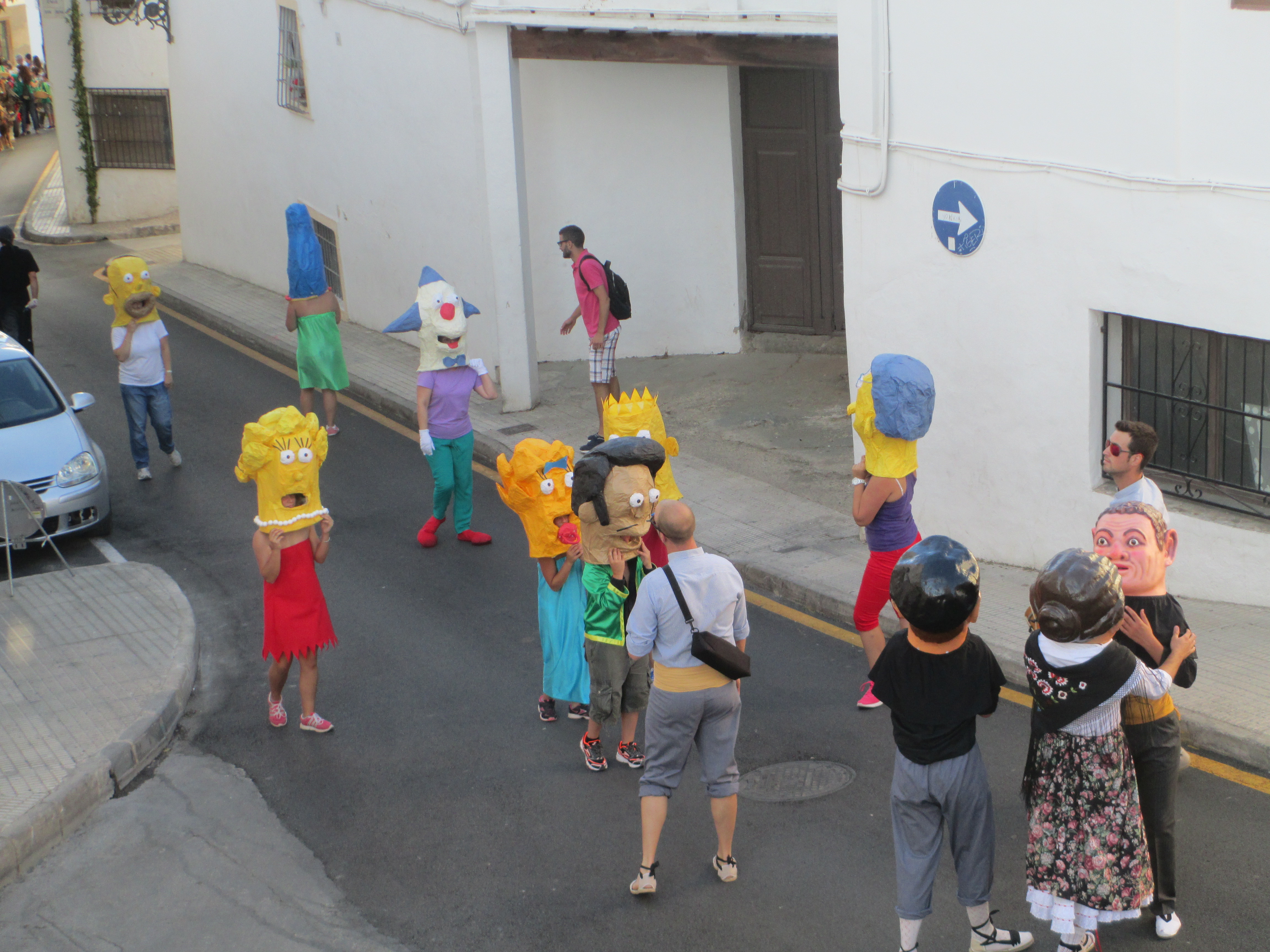
Sant Joan parade with masks

In my town of Altea, when I first heard about the impending festival, I had no idea what to expect. My initiation to the festival was the booming fireworks midday, followed later by a parade of locals with cartoon character heads. There have been three early morning wake-ups by noisy participants yelling, playing instruments, and more fireworks. My apartment is on the street where all the local parade participants go as they head up the hill to the cathedral in Altea’s main plaza. One afternoon, there was a huge pan of traditional paella cooked in the plaza for all to sample. One midnight during the festival, people wade into the ocean. After all, St. John is remembered for baptizing Jesus.

This festival requires stamina. The first group of parade participants, which included many musicians, continued to march and perform for more than 12 hours. During the second afternoon parade, the noisy participants of all ages wore torn t-shirts and were soaking wet as they made their way up the hill. There were two groups, each carrying a tall tree, many drinking from large jugs or other vessels of wine, while the people watching on from their apartments above dump and spray water on the giddy participants.


IMG_1865

Raising the tree


Once done with the procession, in the plaza the trees are hoisted to stand erect. Men attempt to climb the tree as high as possible onto the unstable trees to tie on their ripped t-shirt. An ambulance was waiting nearby for anyone who might fall. However, I think it is nearly as dangerous for the women who wear spindly high heel shoes while walking on the uneven, rocky plaza surface, or dancing when the late night band plays.
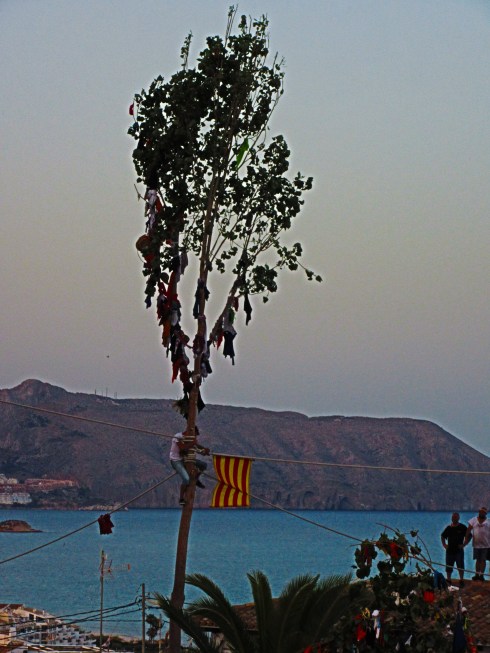
 

IMG_1901

Climbing the tree to tie on a flag

Today, Sunday, parade participants wore traditional costumes while trekking up the hill to the accompanying music followed by a “solemn” mass. There are numerous activities scheduled including more music processions. (Altea music schools for youth and a professional school for adults so music is always a prominent part of any festival.) There will be more fireworks, and in the plaza another giant communal paella, and disco music starting at 11:00 p.m.


What has been your favorite festival experience in Spain?

Three Days in Enchanting Granada

24 Apr
IMG_1757.jpg

The Alhambra


As previously arranged, the last Muslim ruler in Spain, Boadbil, reluctantly handed over the key to the spectacular Alhambra to the Spanish monarchy on January 1, 1492. No matter how much I have read about the Alhambra, I was still gobsmacked by it, from its size and beauty, intricate carvings, water features, gardens and the overall grand, but tranquil, enchanting ambience. By 1238, with the taking of Cordoba from the Moors, the Spanish “Reconquista” had regained all of Spain with the exception of Granada. Under a peace agreement with the Spanish monarchy, Granada flourished. Under Moorish rule, the site of the Alhambra was used as a fortress, and in the 13th century the Nasrid Dynasty began building the Alhambra complex. Any attempt to provide an accurate portrayal of the Alhambra will be woefully inadequate in describing its unique architecture and beauty. The Generalife, the nearby country gardens and buildings on the Alhambra’s northern area are perched higher, resulting in a cooler, inviting respite for the Nasrid rulers and their associates. A view of the snow-capped Sierra Nevada, Spain’s tallest mountain range, can be enjoyed from the Generalilfe. I recommend the tour of both the Alhambra and Generalife, which takes around 4 ½ hours. Be sure to purchase your tickets well in advance as tickets are often sold out, arrive early, and wear comfortable walking shoes and bring shade from the sun.


IMG_1722.jpg

Palace of Charles V


After more than 250 years of rule under the Moors, King Fernando and Queen Isabel fought to restore Granada to Spain, which they succeeded in doing on January 1, 1492. The Alhambra was spared from the usual destruction and/or conversion to Christian buildings, which makes it a unique attraction. However, their grandson, Charles V, built a palace in the Renaissance style within the walls of the Alhambra, which makes for an odd, but interesting juxtaposition to the Moorish designs. This building houses museums of Spanish-Islamic Art and Bella Artes (Fine Arts.)


IMG_1740

Albaicín and El Sacromonte

The Albaicín is the Moorish old city, which faces and provides one of the many fantastic views of the Alhambra. The Albaicín has a jumble of narrow streets and historic homes called Carmenes, the latter which consist of external high walls to provide privacy and internal fountains, patios and inviting living spaces. The Albaicín church of San Nicolas is a popular destination, and its plaza affords panoramic views. In the hills just above the Albaicín is the El Sacromonte, the caves where gypsies live and perform flamenco shows.


In 1523, work began on Granada’s Cathedral, which is massive and opulent, featuring both Gothic and Renaissance architecture created by a series of several architects during the 181 years during which it was constructed. It is one of the largest Cathedrals in Europe. It has a gold and white interior and features a circular capilla mayor (sanctuary) with five naves and multiple chapels. Its stained glass dome, large chorale books, and huge pipe organs are also noteworthy. Adjacent and joined to the Cathedral is the Capilla Real, the Royal Chapel, which was built for the royal monarchs between 1506 and 1521. It houses an ornate grille enclosing the altar and the marble sculptures of Fernando and Isabel, their daughter, Juana La Loca and her husband Felipe el Hermoso. Their coffins lay in the crypt below the marble figures. Both facilities offer works of famous artists.


Plaza Nueva is the oldest square in Granada, and a good place for a beverage, tapa and people-watching. One of my favorite spots is Bodega Catañeda, a rustic, authentic tapas spot for local jamones (hams), creative dishes, and sherry. There are many eateries serving authentic Moroccan and Arabic food. Granada is fairly compact, so walking or taking a cab are the best options for getting around.


IMG_1761

Bodegas Castaneda

Since moving to Spain, I have happily taken advantage of the opportunity to explore the country’s diverse and unique attractions, including many UNESCO world heritage sites. For this special venue in Granada, I splurged and stayed at the 14th century Parador within the walls of the Alhambra. In Spain, a parador is a historic or scenic building which the Spanish government has converted into an inn or hotel. The parador at the Alhambra has been described as the best or one of the best in Spain. Queen Isabel and King Fernando were initially buried on the site, while the Royal Chapel was being built in Granada as their final resting place. The parador was a former monastery built on orders of the royal monarchs on a site which was originally a mosque. This parador provides an inviting, tranquil respite after exploring the Alhambra and the City of Granada, and its intriguing history and delicious local foods.


Alluring Alicante: Top Stops

4 Apr
Alicante with Santa Barbara Castle on the hill

Alicante with Santa Barbara Castle on the hill

Living in the beautiful, low-cost Mediterranean area of Spain known as the Costa Blanca offers many advantages, not the least of which is the opportunity to travel to enticing, affordable historical and cultural places in the country. Since moving to the Costa Blanca, I have been enjoying nearby venues, all within about an hour’s drive. Almost everything in Alicante is centrally located, so no vehicle is needed once you arrive, although local trams are available if one wants to explore outlying areas.


The cosmopolitan area, now known as Alicante, has been inhabited over 7000 years, with periods of rule by the Greeks, Phoenicians, Carthaginians, Romans, Visigoths, and Moors. One of the iconic sites visible from much of the city of Alicante is the hilltop Santa Bárbara Castle, which dates back to the period of Muslim rule starting in the 8th century. It was named for the saint day on which Castilian forces captured it on December 4, 1248. Over the centuries it endured many captures and bombardments, and was sometimes used as a prison. After a period of disuse, it was opened to the public. Entry is free, but there is a small fee to use the elevators to get to the top, or one can walk to the top. The panoramic view is spectacular.


Alicante Barrio

Alicante Barrio

Located near the Santa Bárbara Castle, is El Barrio, “the Old Quarter,” which features narrow pedestrian streets, with colorful homes and flowers, a photographer’s delight. There are numerous interesting historic buildings including St. Mary’s Church, built between the 14th to 16th centuries on top of a former mosque. Its ornate baroque façade and interior are a worthwhile stop. The Ayuntamiento (Town Hall) is a baroque building located behind the Explanada Park. Besides the beautiful architecture of the exterior, inside there are historic archeological remains, the famous “blue room,” a chapel, and cota cero, a reference point inside the building from where the height of sea levels throughout Spain can be measured.


El Barrio also has shops and stores featuring everything from handmade crafts to luxury brands. Leather manufacturing is a major industry in the Alicante area, so inexpensive quality leather products are widely available.


alicante-axplanade

Iconic Explanada

Alicante is well-known for its regional cuisine. There are many dining options, from informal to formal including traditional tapas to innovative gourmet tapas, paellas, fish and seafood, as well as other types of regional Spanish and international cuisines. For foodies, a visit to the Mercado Central will delight the senses with abundant displays of fresh and unique offerings. There are places to purchase prepared food in the market, and cafes just outside. Another area offering quality cuisine is in the marina area, which can be reached by taking a stroll down the Explanada de España, which is the palm-lined walkway along the Mediterranean. It is paved with six and a half million marble floor mosaic tiles laid in such a way as to create a wave-like appearance; many consider this one of the most beautiful beachside walkways in Spain.


Spaniards love friends, family, fun, and festivals. To that end, in both the Old Town and in the Marina areas, there are many inviting sidewalk cafes for socialization and rejuvenation during the day, and lively bars or discotheques where people party until the early morning hours.


Prices for a nice hotel typically start around 70€; an apartment or vacation rental may be even less expensive with two or more bedrooms, kitchenette, common living areas and laundry facilities; most beverages including wine, beer, water, and soda for around 2€; and menu del dias (two or three course special menu of the day for as low as 10€.)

Bringing Pets to Europe

27 Feb
Pepper

Pepper prior to move

Bringing pets to the European Union (E.U.) from the U.S. is much easier than what it once was. No longer are there long required quarantines. The United Kingdom has relaxed their requirements and no longer have quarantine requirements. https://www.gov.uk/bringing-food-animals-plants-into-uk/pets-and-other-animals Non-E.U. countries, the policies can be different. Finland, Ireland and Malta also have their own pet import regulations. The following reflects the current requirements for up to five dogs, cats, and/or ferrets coming to an E.U. country from the U.S. As governmental regulations can change, it is advisable to check the website for the USDA APHIS (U.S. Department of Agriculture, Animal Plant Health Inspection Service.) Then click on the “Live Animals,” and enter your EU destination. For Canadians, the regulations are similar. Up to date guidelines for exporting pets from Canada to the EU can be found on the website: Canadian Food Inspection Agency under “non-commercial export of dogs, cats, and ferrets to the EU.”


  1. As far out from your desired departure date, check with individual airlines regarding their pet transport policies. Start by checking their websites, and then speak with an actual airline representative to get the specifics. Weigh your animal to determine whether they are eligible for travel in the cabin, under the seat in an airline-approved carrier. The weight allowed includes the pet, carrier and anything else placed in the carrier. Including his carrier, my dog, Pepper, was just at or slightly above the weight limit allowed by many airlines, so I booked on airlines with a more generous 8 kg. /17 pounds limit, including Swiss Air, Alitalia, and Iberia. Since my last flight which was in early 2015, several of the major carriers have increased their in cabin weight allowance to be 17 or 20 pounds. Also, some types of dogs are not permitted, such as snub nose dogs, in which case you can consider a pet relocation service. There are different policies for very young, unvaccinated pets. Airlines charge varying rates for transporting pets, from $50 to over $500, so take that into consideration during your research. Check to see if there are periods of time they do not transport animals in the cargo hold due to expected inclement or extreme weather. Some airlines don’t take pets via cargo in hot months as they have had animals die. If your pet will be in the cargo hold, consider booking during months or times that are typically temperate: morning or evening in the summer and midday in the winter. Also, direct (non-stop) flights are better for pets. Make sure the carrier purchased meets the airline’s regulations. Carriers or crates must afford the animal to move around, and typically have an absorbent cushion or rug with adequate ventilation. A carrier with wheels will make moving your pet through the airport far smoother. Because there are so many different airline regulations, costs, weight limits, etc., when deciding on an airline, I made a written grid to record each airline’s policies for easy comparison.
  2. Book your flight as soon as possible to guarantee a spot for your pet as they have a limit to how many pets can be on a flight. Space availability for pets is also determined by the type of aircraft, cabin and seating. Make sure your pet has a reservation. During the three times, I flew back and forth between California to the E.U. I was charged for my pet when I checked in at the airport. If you will be using other ground transportation once you arrive, such as a train, bus or car rental, check their pet transport policies. The first time, I brought my dog from Madrid to Alicante via train, and the second time directly to the Alicante airport via plane.
  3. Well in advance of your travel date, get your pet used to the carrier or crate. In the beginning, put the pet in it with a toy and snack. As s/he gets comfortable, leave the pet in the carrier when you leave home. Take your pet in the carrier on walks and in the car to get used to motion. For pets who will transported in the hold, it is especially important to get them used to being in their crate and moving.

    Pepper in transport crate

    Pepper in transport crate

  4. Well in advance of your scheduled flight, find a veterinarian who is certified and experienced in pet relocation to your scheduled EU destination. I strongly recommend meeting with the vet for an initial session to make sure s/he is qualified and experienced in completing all of the required steps within the tight timeframes necessary. Make sure the vet has the correct form (ANNEX II) and has previously completed them. If your pet is not already had a microchip inserted, this is an ideal time to do it. Let the vet know it is for travelling to an EU country. For EU countries, it must be an ISO 15 digit microchip, either 11784 or 11785. After the chip is placed, the pet must have a rabies vaccine, even if it already has a valid rabies vaccine. The rabies vaccine can be on the same day the animal is chipped or at a later date. This rabies shot must be administered at least 21 days before your flight departs. I did not understand that my dog needed to get a new rabies shot, nor did my vet inform me at the time of the dog being chipped. Thus I had to delay my departure date which resulted in a several hundred dollar change fee. During your initial appointment with the vet, I recommend having the vet do a physical to make sure there won’t be any last minute health issues. I also got him to prescribe a slightly sedating medication for the long flight. If you get a calming medication, make sure it is not contraindicated for flights, as was the first medication my dog was prescribed by a less experienced vet. Some airlines do not permit dogs to be sedated. Since my dog was flying in the cabin, I felt it would be in his best interest to take a sedating pill since he would be in his carrier for 12 to 15 hours, and I would be able to monitor him. Twice I gave him a trial of the pill before departing to make sure there were no adverse side-effects.
  5. The vet has to fill out the ANNEX II form about 12 to 15 days before departure. Then that form has to be mailed or taken by hand to your local USDA office, for certification. You have to enter the EU country within 10 days of the USDA certification, which is a very tight timeframe. This means that you should schedule the final vet exam and paperwork completion, at an early enough hour to allow you to get it to an overnight mail service. Make sure to check the USDA website for the mailing address for your region, mandatory fees which you must include, and include a return overnight mailing document with your address. Keep in mind some “overnight” mail services do not deliver on the week-ends.
  6. Prior to departure date, check for pet relief areas at the airports which you will be using. Some have indoor pet areas. For example, at the LAX airport international terminal in Los Angeles, near the business lounge, was a pet play and relief center with artificial grass. Arrive at the airport at least three hours in advance of your scheduled departure. About four hours prior to checking in, feed and provide water for your pet, and play to get them tired. At the airport, let the pet relieve himself one more time. Put the pet in the crate which in advance you have supplied with a “pet potty pad,” empty water dish, and cherished toy. Make sure the crate door is securely closed. Keep the pet paperwork handy in the pocket of the in-cabin pet carrier, or for a checked crate, somewhere else easily accessible. The pet must remain in the carrier in the airport and during the flight. If you have an airline transfer and there is no inside pet area, if you go outside, you will have to go back through security screening. Make sure to allow enough time in case of long lines.
  7. Once you are to your new EU home destination, find a good vet by asking local ex-pats who demonstrate attentive and caring behavior toward their pet. Ask around, and eventually, you will start to hear one or more of the same names recommended. Unless you are fluent in the language of your new country, make sure the vet can speak English. Introduce your pet and yourself to your new vet, instead of waiting for an emergency. At your initial appointment, find out about local health issues, get any vaccines or preventative medicines for your new country, a dog name tag with your local phone number, and a European pet passport (which is legally required.) Then, get out and explore your new home.

    Pepper (aka "Pimienta" in Spanish) at outdoor beach concert

    Pepper (aka “Pimienta” in Spanish) at outdoor beach concert

Six Easy Steps for Bringing Pets to Spain

3 Jan
Pepper at beachside concert in Altea

Pepper at beachside concert in Altea

Bringing pets to the European Union (E.U.) from the U.S. is much easier than what it once was. No longer are there long required quarantines. However, in non-E.U. countries, the policies can be different. For the United Kingdom, there is a four month quarantine. Finland, Ireland and Malta also have their own pet import regulations. The following reflects the current requirements for up to five dogs, cats, and/or ferrets coming to an E.U. country from the U.S. As governmental regulations can change, it is advisable to check the website for the USDA APHIS (U.S. Department of Agriculture, Animal Plant Health Inspection Service.) Then click on the “Live Animals,” and enter your EU destination. For Canadians, the regulations are similar. Up to date guidelines for exporting pets from Canada to the EU can be found on the website: “Canadian Food Inspection Agency under “non-commercial export of dogs, cats, and ferrets to the EU.”


  1. As far out from your desired departure date, check with individual airlines regarding their pet transport policies. Start by checking their websites, and then speak with an actual airline representative to get the specifics. Weigh your animal to determine whether they are eligible for travel in the cabin, under the seat in an airline-approved carrier. The weight allowed includes the pet, carrier and anything else placed in the carrier. Including his carrier, my dog, Pepper, was just at or slightly above the weight limit allowed by many airlines, so I found an airline with a more generous 8 kg. /17 pounds limit. Also, some types of dogs are not permitted, in which case you can consider a pet relocation service. There are different policies for very young, unvaccinated pets. Airlines charge varying rates for transporting pets, so take that into consideration during your research. Check to see if there are periods of time they do not transport animals in the cargo hold due to expected inclement or extreme weather. Some airlines don’t take pets via cargo in hot months as they have had animals die. If your pet will be in the cargo hold, consider booking during months that are traditionally temperate. Make sure the carrier purchased meets the airline’s regulations. Carriers or crates must afford the animal to move around, and typically have an absorbent cushion or rug with adequate ventilation. A carrier with wheels will make moving your pet through the airport far smoother. Because there are so many different airline regulations, costs, weight limits, etc., when deciding on an airline, I made a written grid to record each airline’s policies for easy comparison.
  2. Book your flight as soon as possible to guarantee a spot for your pet. Make sure the pet has a reservation. During the three times, I flew back and forth between California to the E.U. I was charged for my pet when I checked in at the airport. If you will be using other ground transportation once you arrive, such as a train, bus or car rental, check their pet transport policies. The first time, I brought my dog from Madrid to Alicante via train, and the second time directly to the Alicante airport via plane.
  3. Well in advance of your travel date, get your pet used to the carrier or crate. In the beginning, put the pet in it with a toy and snack. As s/he gets comfortable, leave the pet in the carrier when you leave home. Take your pet in the carrier on walks and in the car to get used to motion. For pets who will transported in the hold, it is especially important to get them used to being in their crate and moving.
  4. Well in advance of your scheduled flight, find a veterinarian who is certified and experienced in pet relocation to your scheduled EU destination. I strongly recommend meeting with the vet for an initial session to make sure s/he is qualified and experienced in completing all of the required steps within the tight timeframes necessary. Make sure the vet has the correct form (ANNEX II) and has previously completed them. If your pet is not already had a microchip inserted, this is an ideal time to do it. Let the vet know it is for travelling to an EU country. For EU countries, it must be an ISO 15 digit microchip, either 11784 or 11785. After the chip is placed, the pet must have a rabies vaccine, even if it already has a valid rabies vaccine. The rabies vaccine can be on the same day the animal is chipped or at a later date. This rabies shot must be administered at least 21 days before your flight departs. I did not understand that my dog needed to get a new rabies shot, nor did my vet inform me at the time of the dog being chipped. Thus I had to delay my departure date which resulted in a several hundred dollar change fee. During your initial appointment with the vet, I recommend having the vet do a physical to make sure there won’t be any last minute health issues. I also got him to prescribe a slightly sedating medication for the long flight. If you get a calming medication, make sure it is not contraindicated for flights, as was the first medication my dog was prescribed by a less experienced vet. Some airlines do not permit dogs to be sedated. Since my dog was flying in the cabin, I felt it would be in his best interest to take a sedating pill since he would be in his carrier for 12 to 15 hours, and I would be able to monitor him. Twice I gave him a trial of the pill before departing to make sure there were no adverse side-effects.
  5. The vet has to fill out the ANNEX II form about 12 to 15 DAYS before departure. Then that form has to be mailed or taken by hand to your local USDA office, for certification. You have to enter the EU country within 10 days of the USDA certification, which is a very tight timeframe. This means that you should schedule the final vet exam and paperwork completion, at an early enough hour to allow you to get it to an overnight mail service. Make sure to check the USDA website for the mailing address for your region, mandatory fees which you must include, and include a return overnight mailing document with your address. Keep in mind some “overnight” mail services do not deliver on the week-ends.
  6. Prior to departure date, check for pet relief areas at the airports which you will be using. Some have indoor pet areas. For example, at the LAX airport international terminal in Los Angeles, near the business lounge, was a pet play and relief center with artificial grass. Arrive at the airport at least three hours in advance of your scheduled departure. About four hours prior to checking in, feed and provide water for your pet, and play to get them tired. At the airport, let the pet relieve himself one more time. Put the pet in the crate which in advance you have supplied with a “pet potty pad,” empty water dish, and cherished toy. Make sure the crate door is securely closed. Keep the pet paperwork handy in the pocket of the in-cabin pet carrier, or for a checked crate, somewhere else easily accessible. The pet must remain in the carrier in the airport and during the flight. If you have an airline transfer and there is no inside pet area, if you go outside, you will have to go back through security screening. Make sure to allow enough time in case of long lines.

Once you are to your new EU home destination, find a good vet by asking local ex-pats who demonstrate attentive and caring behavior toward their pet. Ask around, and eventually, you will start to hear one or more of the same names recommended. Unless you are fluent in the language of your new country, make sure the vet can speak English. Introduce your pet and yourself to your new vet, instead of waiting for an emergency. At your initial appointment, find out about local health issues, get any vaccines or preventative medicines for your new country, a dog name tag with your local phone number, and a European pet passport (which is legally required.) Then, get out and explore your new home. Most eateries in Spain are dog-friendly.

Pepper saying goodbye to my son, Spencer, who was returning to California

Pepper saying goodbye to my son, Spencer, who was returning to California

10 Best Images of Moros Y Cristianos Festival Altea: Entrada Mora

8 Nov

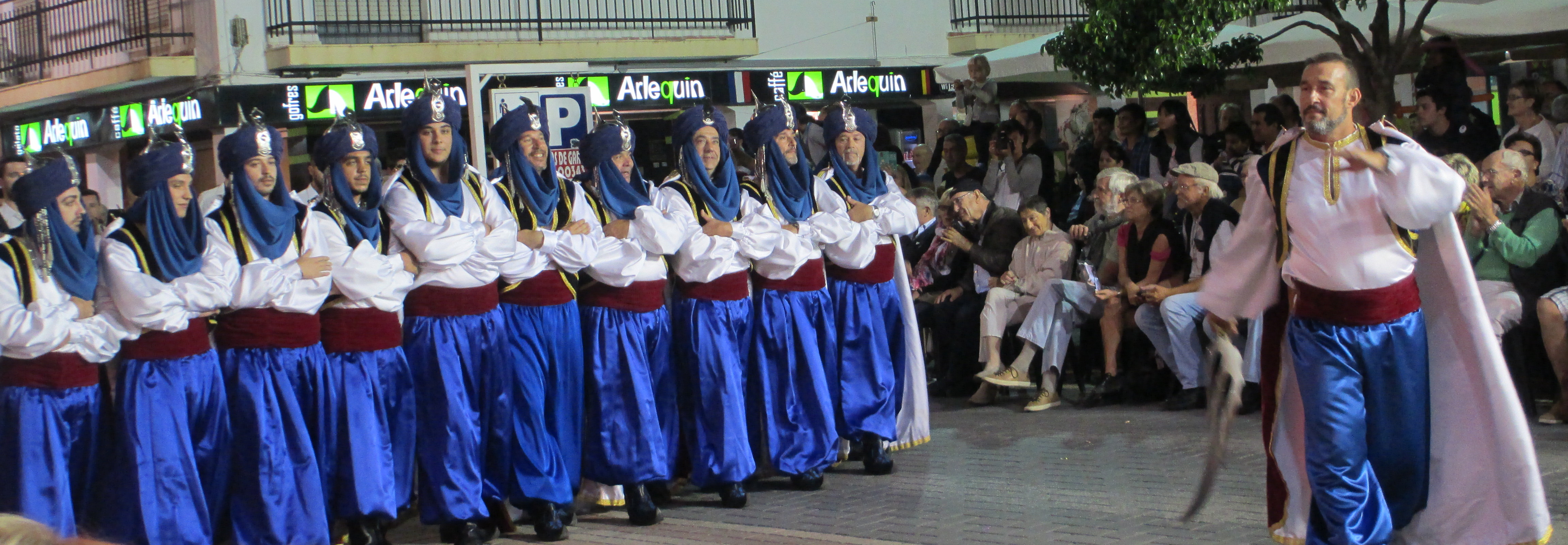
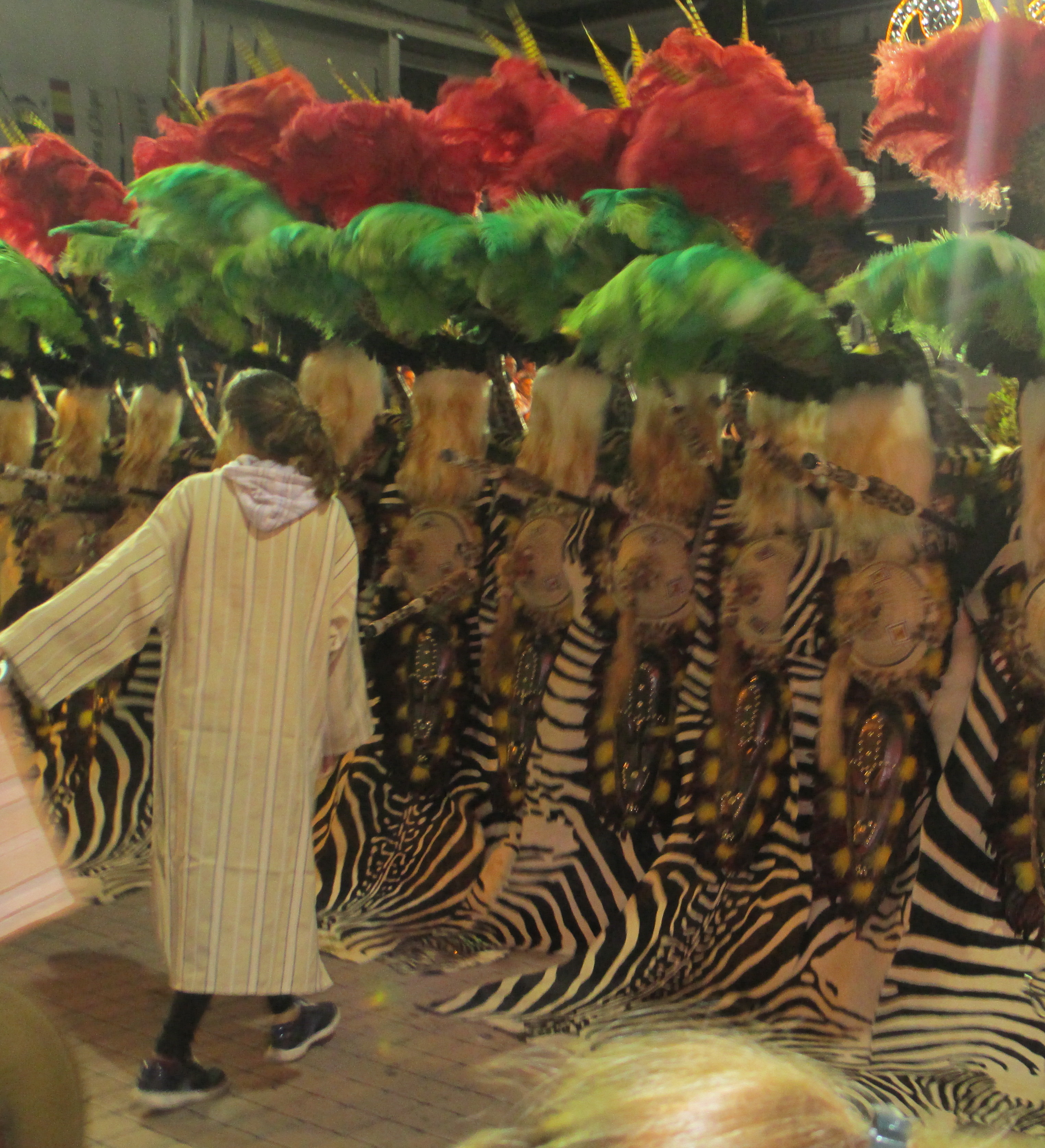
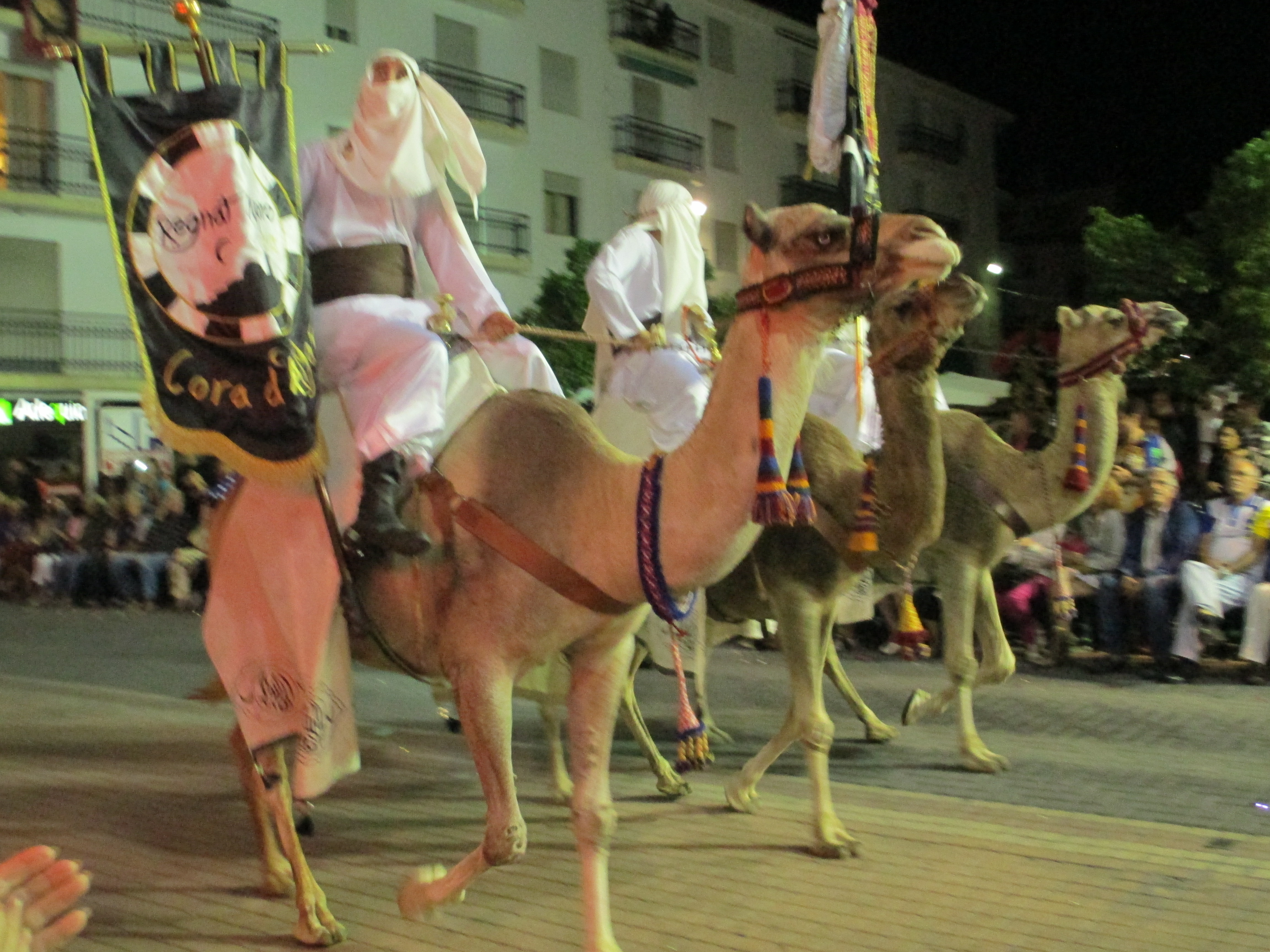
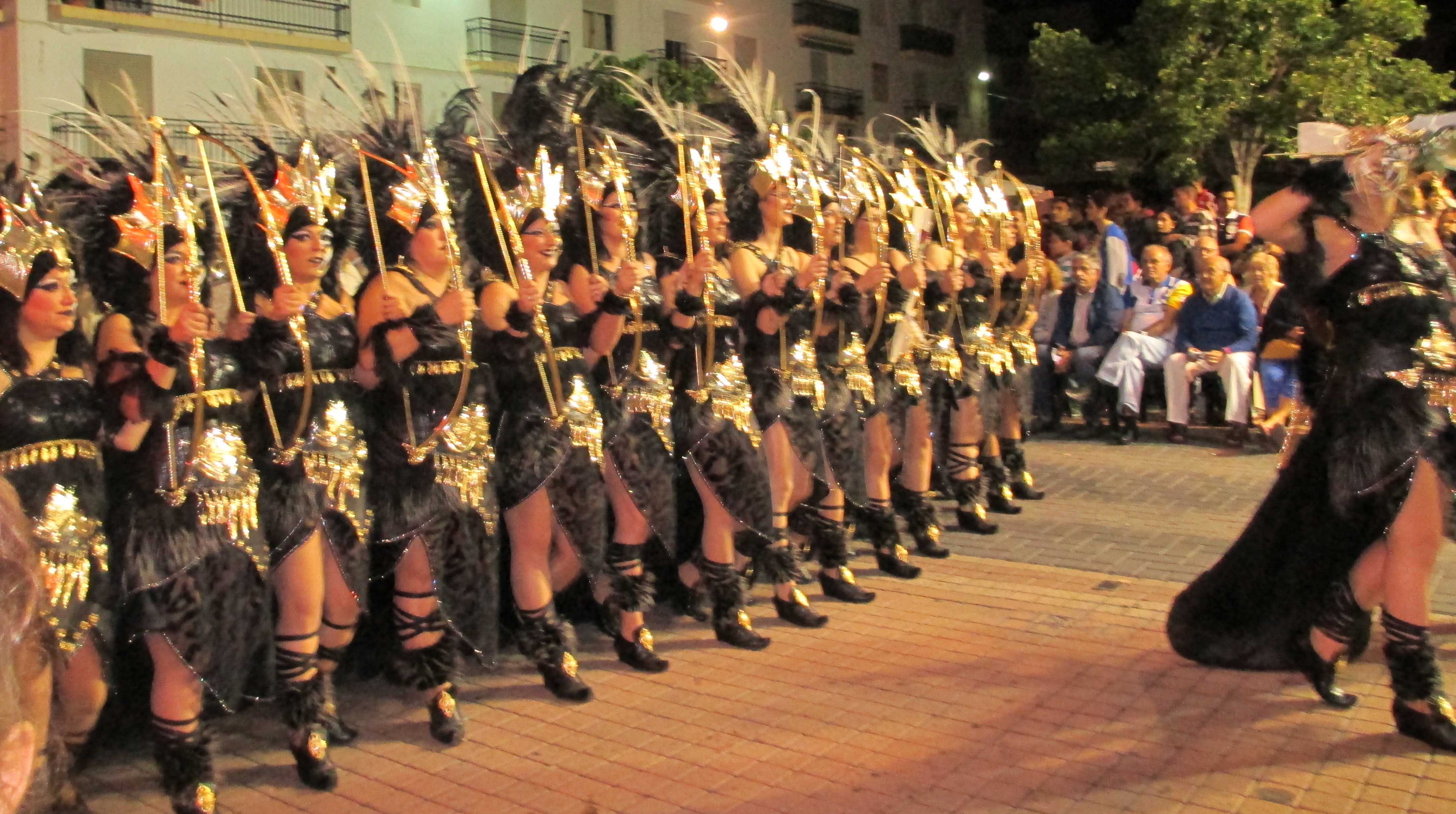
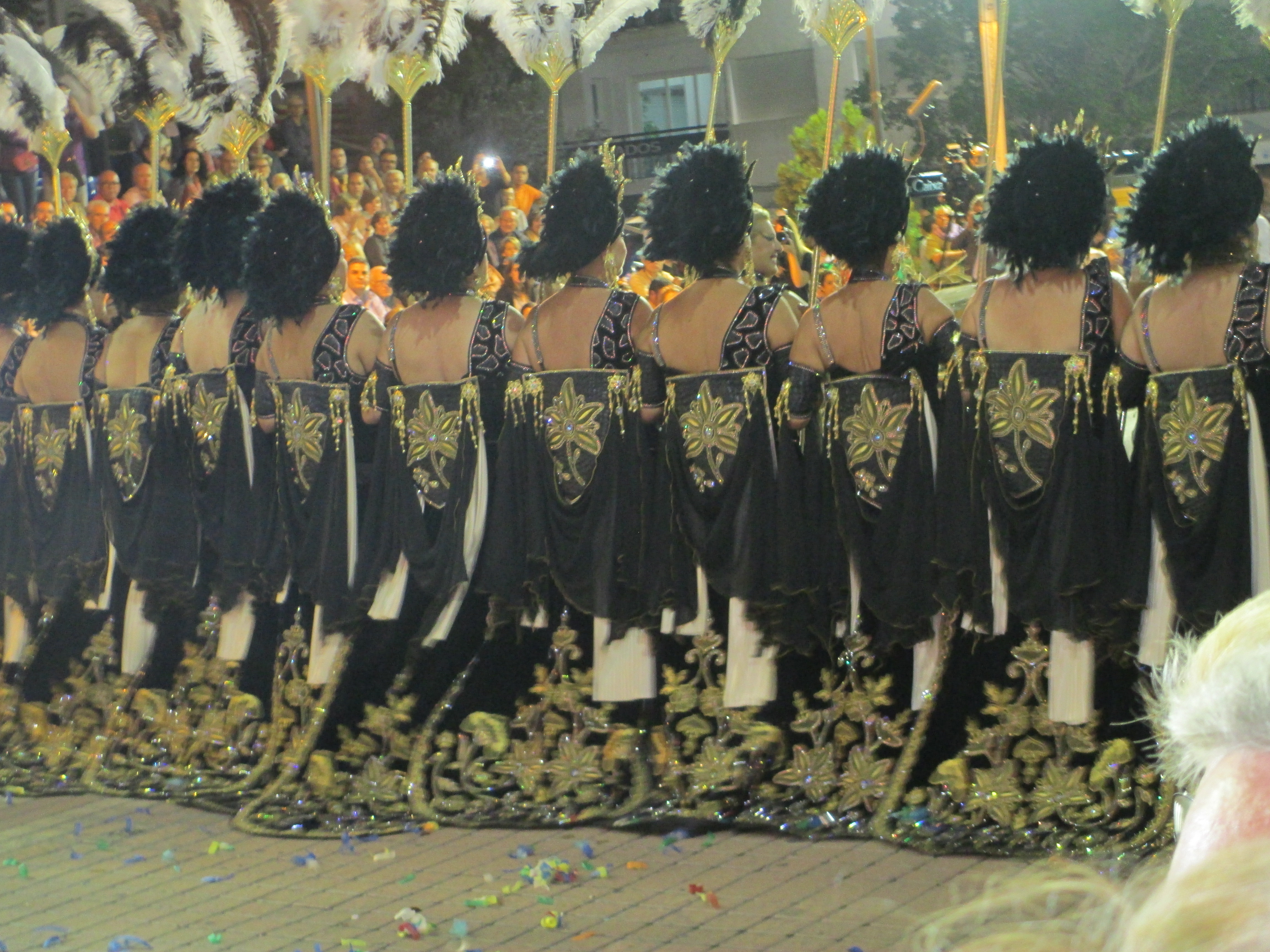
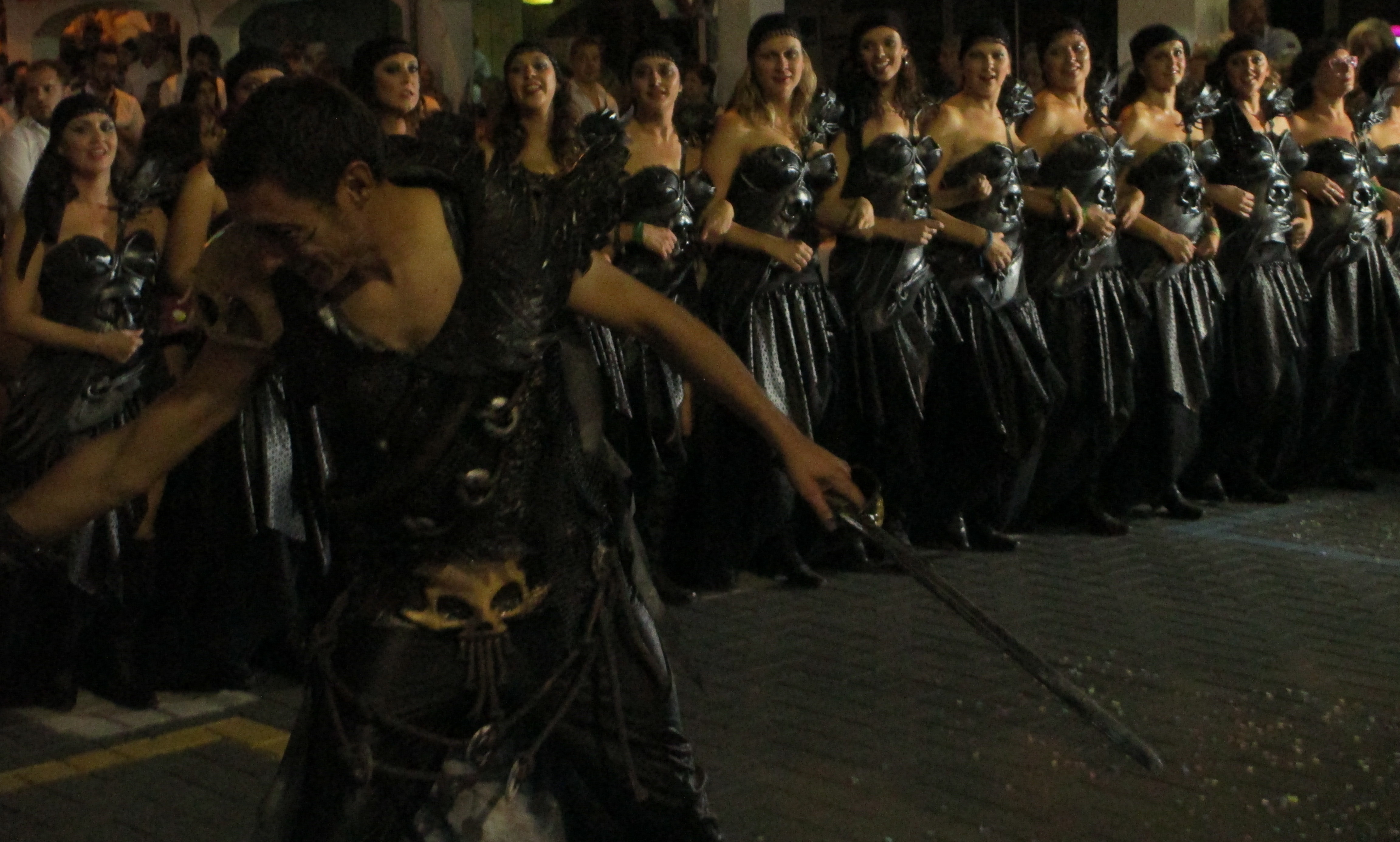
In my two prior posts, I blogged about one of Altea’s most celebrated holidays, Moros y Cristianos. As promised, this blog post will focus on the highlight of the festival, the Entrada Mora, the spectacular parade of the “Moors.”

IMG_1524_1

IMG_1527

IMG_1530

IMG_1543_1

IMG_1551

IMG_1554

IMG_1555_1

IMG_1569_1

IMG_1571

IMG_1584

Entrada Cristiana (Christian Parade Entry): Altea

25 Oct

In my last post, I gave a brief summary of the annual Moros y Cristianos  festival, and showed some of the opening day festivities.  This post will feature a few photos from Entrada Crsitiana, and next post Entrada Mora.

IMG_1465

IMG_1502A_1

IMG_1475

IMG_1466

IMG_1477

IMG_1482

IMG_1485_1

IMG_1504

IMG_1503

Spain: Travelling and Living Challenges

6 Oct
Moros y Cristianos: Altea 2015

Moros y Cristianos: Altea 2015

Life sometimes gets in the ways of one’s plans, or should I more aptly say, my plans. I intended to post about some of the interesting places I have visited near my home in Altea, Spain, during the week visit of my middle son, Michael, but with a few anticipated and unanticipated events, I felt more compelled to blog on the vagaries of the past couple of weeks.

I have found that if things can go wrong in Spain, they often do. Serendipitously, my son, Michael was arriving on the same day as my computer generated appointment was to get my fingerprints done at the National Police in Alicante to finish the steps for securing my first renewal visa. (For details on my experience with the visa process, see my posts: https://starrtreks.com/2015/07/09/how-to-apply-for-non-lucrative-visa-for-spain-as-us-citizen-bucking-the-trend/.https://starrtreks.com/2015/07/26/patience-and-tenacity-requirements-for-obtaining-a-spanish-residential-visa/; .https://starrtreks.com/2015/08/09/you-must-be-kidding-steps-to-get-a-spanish-visa/

More Moros y Cristianos

More Moros y Cristianos

Since he was arriving into Alicante on a Tuesday, on the same day as I had to go for my huellas (fingerprints) and delivering my photo for my Spanish residential visa, I booked a rental car. It took about a half hour on the local bus to nearby Benidorm, where I was able to book the car for 48 hours for only 38€, far less than what it would have cost if I rented in my little town of Altea. As it was the biggest festival of the year in Altea, Moros y Cristianos, lasting many days, many streets were closed and parking spaces were limited. Probably the only benefit to being disabled is having a handicap placard for one’s vehicle. Even then, it was difficult to find a space for the rental car. After a long search, I finally found a spot. Just to be sure, I made sure the word, minusválido, meant handicap parking; it did. I had a bad feeling about the parking spot, which was confirmed when I went to retrieve the car the next morning at 7:30 a.m. to drive to Alicante for my 8:50 appointment. The rental car was gone. I had no time to try to find it, so I walked about a half mile to the downtown taxi stand, where there were no taxis; it was far too early for most people to be out and about.

When I saw one of the ever-present street cleaners (with a shovel and plastic bucket to pick up litter,) in Spanish, I told him of my predicament and need to be in Alicante for my appointment to renew my visa. He kindly summoned a taxi via phone. I did arrive on time, for a fee of about 85€.

I had an uneasy feeling while waiting for my turn with the staff, having gone through so many errant trips to the local Oficina de Extranjería (Immigration and Naturalization Office) in Altea. However, in this case, all went smoothly, and I the worker commented on how fluent my Spanish was for being in Spain about a year, even sharing his observation with his colleague. (There are many ex-pats living in the Costa Blanca who don’t know more than two words.)

I had originally planned to take the now unavailable rental car to the Alicante airport to retrieve my son, but obviously could not. In the meantime, on his side, the phone app he had set up would not work to contact me. He finally called from a pay phone, and I advised him to take a cab and pick me up at the National Police, and then we would head back to Altea. That went well, for costing another 85€. I am supposed to retrieve my renewal residential visa somewhere around the first of November of this year, a mere four months before it expires for the year. Then I get to start this process all over again.

After he settled in by place for a bit, we headed to the police station to try to figure out what happened to my rental car. In the meantime, I tried to stop at several copy shops to scan and send some important papers, but they were closed for a fourth straight day, this day to recover from the festival partying from the prior week. To abbreviate the part of the story about retrieving the rental car, I was told by the local police that I was in a specifically reserved spot for a handicap vehicle. In Spanish, I replied I have travelled to many countries and never encountered this. Placidly, he told me it would be 136€ to get the car released. What he didn’t say was that I needed to retrieve the car immediately, that there are no regular staff on site, so it took three tries before I was able to retrieve the car, just in time to return it to the rental agency, although with a quick side trip to historic Guadalest.

Michael and I had a fabulous time with friends, and day trips to Guadalest, Denia, Albir and even Benidorm, which I typically detest. (More about those destinations and the Moros y Cristianos festival in future posts.) Naturally, getting the Beniconnect Bus from Altea to the Alicante airport was fraught with snafus, mostly the lack of staff answering the phone, and simply disconnecting after 20 to 30 rings. By persistence, and multiple ways of contacting them, we got a departure time late on the evening before his scheduled departure. Ever the dapper dresser, Michael turned many a head as he headed for the bus.

Michael leaving Altea en route to London

Michael leaving Altea en route to London

I love Spain, except for how difficult it is most of the time to get anything in the government and in businesses done efficiently and the first time. For me, this is (sometimes) a good lesson in patience. My advice remains: plan on at least three visits to accomplish your task, and if it is any less, celebrate!

Top 10 Things to See and Do In Valencia Spain

21 Sep

Valencia is a feast for the senses. In another post, I displayed photos of the many stimulating scenes that gave me a feel for this vibrant historical city. The city of Valencia, and the once “Kingdom of Valencia” offer a rich, complex history with Valencia has one of the largest historical centers in Spain. Exploring Valencia from my adopted home town of Altea Spain made the drive to Valencia approximately one hour. Here are my top ten picks to see.

  1. Valencia was settled as a Roman colony in 138 BC on the strategic location of an island in the Turia River, which runs to the Mediterranean. The Turia River, which was subject to flooding the city, was diverted after a major flood in 1957, and the now-named Gardens of Turia river bed is a lengthy multi-use sunken garden with pathways, playground, gardens, fountains, athletic track, cafes, concert venue and more. Allow adequate time to meander through all or part of its nine kilometers.
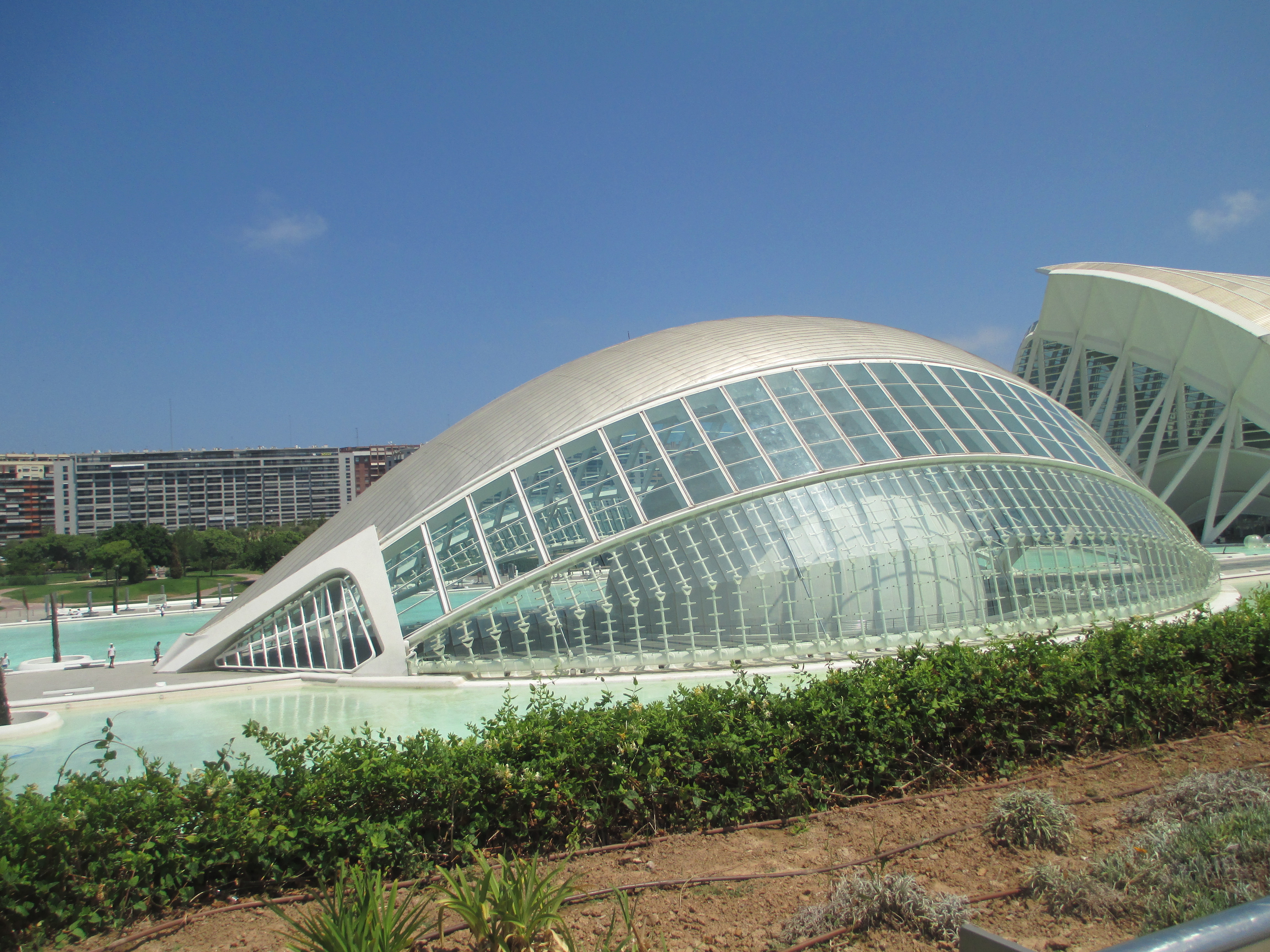
  2. Toward the east end of the Gardens of Turia is the modern, architecturally astonishing City of Arts and Sciences, whose structures were inspired by animal skeletons. It houses an IMAX theatre, Europe’s largest aquarium, science museum, and opera house. Valencia offers a whopping 45 museums, so do research the various sites to find ones (or none) that fit your interests.

    City of Arts and Sciences

    City of Arts and Sciences

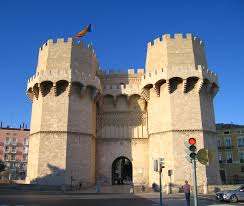
  3. The iconic pentagon-shaped Gothic Torres de Serranos (Serrano Towers) were built starting in 1392, and are the last remaining vestiges of the defensive walls that surrounded Valencia. The Towers are the historical entry point into the Valencia’s old town city centre. A hike to the top affords the visitor interesting views of the historical interior, with the reward of a panoramic view of Valencia from the top.

    Serrano Towers

    Serrano Towers

  4.  In the city centre is the Cathedral of Valencia, a 13th century church built on what were previously sites of an early religious temple and later an 8th century mosque. A chalice dating back to the first century is believed by many experts as the most probable chalice to be the true Holy Grail, used in the Last Supper. El Miguelete, the emblematic Gothic bell tower, next to the Cathedral, where there is another opportunity for spectacular vistas of the city, if you are willing to tackle the 207 step winding staircase.
  5. Valencia was widely known for its textile production and mercantile trade, and to that end, the La Lonja de le
    Ceiling of La Lonja de la Seda, originally painted blue with gold stars

    Ceiling of La Lonja de la Seda, originally painted blue with gold stars

    Seda, (the Silk Exchange) was built starting in 1482. This lavish and beautifully designed Gothic building is now a UNESCO World Heritage Site. Professional- and self-guided tours are available, as well as a free audiovisual 20 minute film about the site.

  6. Near the Silk Exchange is The Mercado Central (Central Market). Built in 1914, it has one of Europe’s largest and oldest indoor markets, with a dizzying array of fresh produce, fish and seafood, many varieties of land animals, and some common regional foods, as well as rare items. It houses a popular indoor eatery, which offers creative dishes.
  7. Make sure to try some of Valencia’s unique dishes. “True” Paella traditionally consists of only a special local rice (typically bomba), green beans, rabbit or chicken, snails and saffron, although many other types are available. It is best when freshly prepared but does take about 30 minutes, well worth it. Or try the fideuá which is similar to paella, but made with small curved hollow noodles instead of rice.
    Vegetables at Central Market

    Vegetables at Central Market

    Horchata is a popular local drink made of sugar, water and tiger nuts, the tiger nuts being introduced by the Arabs during their occupation in the 8th to 13th centuries.

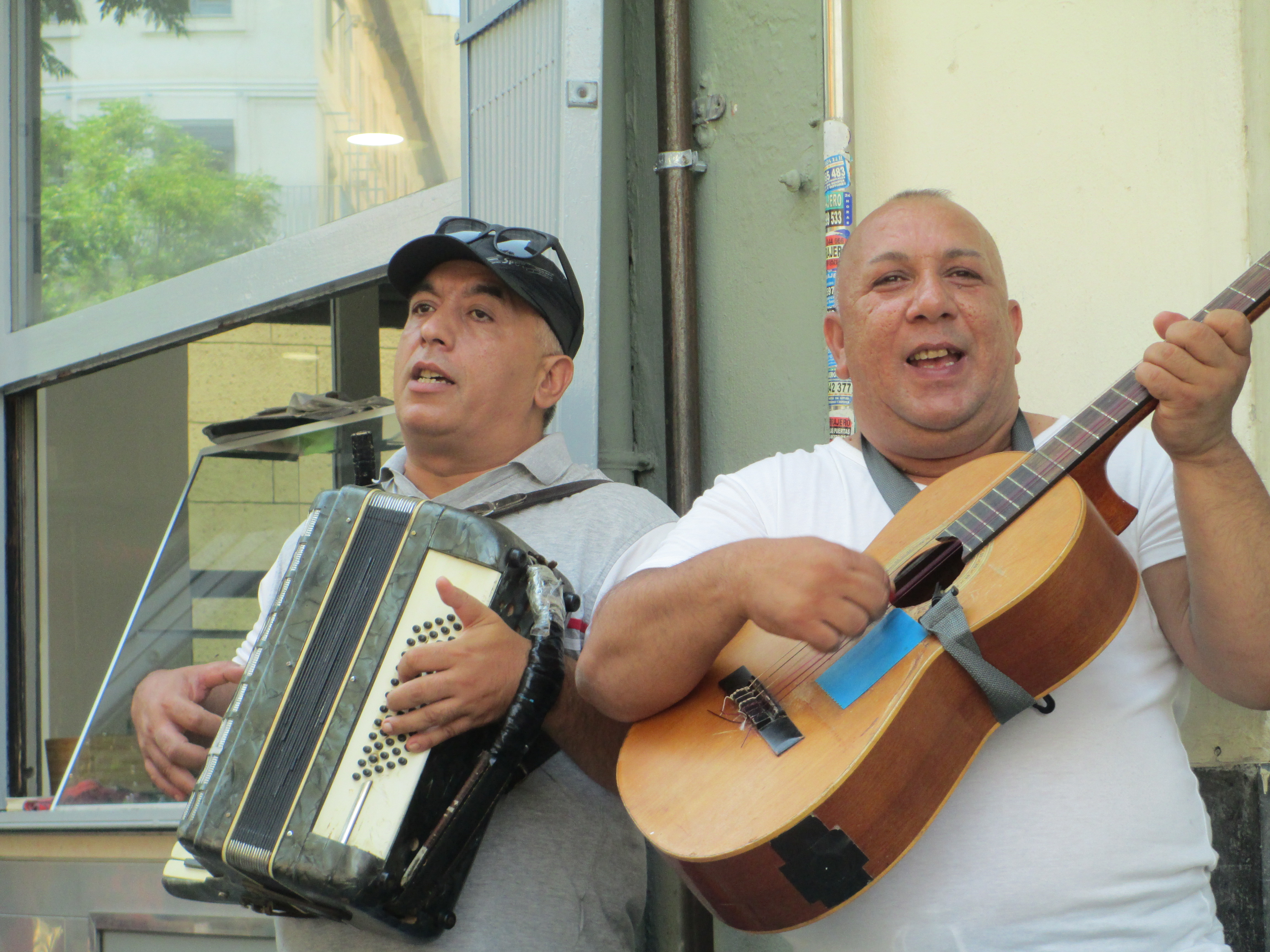
  8. As a die-hard music fan, I am always looking for great live music, which is plentiful in Valencia, especially in the historic Barrio del Carmen. Head to Calle de Cabelleros (or Carrer de Cavallers, in the local dialect) for music in the bars and on the streets. (Keep in mind that both Castilian Spanish and regional Valenciana are spoken, so words may be different, but almost everyone speaks the more widely known Castillian Spanish.) In 2012, the Boston-based Berklee College of Music, widely respected as the best school for jazz, opened a campus in Valencia, and offer periodic performances. Check their website for a list of performances.

    IMG_1208

    Street Musicians

  9. Like every town in Spain, Valencia loves its festivals, the best known of these being Las Fallas. The five day festival in mid-March commemorating St. Joseph which has many components includes neighborhood groups making large, elaborate paper mâché satirical caricatures, which are set on fire accompanied by extremely loud fireworks. A number of the events feature locals in the traditional dress of Valencia, a spectacular cultural sight. However, the festival can be crowded, exceptionally noisy and overwhelming to some. You need to book lodging well in advance for this festival.
  10. And of course, being on the Mediterranean, Valencia has fantastic beaches, including three “blue flag” beaches, those worldwide given top ratings for quality, services and environment. However, I think there are better ways to spend one’s time in Valencia. (Save the blue flag beach visits for other venues in Spain, which currently has the most in the world.)

You Must Be Kidding: Steps to Get a Spanish Visa

9 Aug

This is the third in a series of three posts on getting my initial non-lucrative residential (or retirement) visa to reside in Spain. After many challenges with both the initial application at the Spanish consulate in San Francisco, and completing the remaining requirements once in Spain, I finally received the actual visa three and a half months after arriving in Spain.

Based on my experience of the seeming indecipherable or changing requirements to get my initial Spanish visa, in the fall of 2014, I started looking into the requirements for my first visa renewal. I used the identical forms and letters for documenting the required financial ability to support oneself with their specified minimum amounts, and medical insurance. However, when I went to the local Oficina de Extraneria, office where foreigners process visas, after several hours wait, the worker curtly told me that my financial documents were not originals and not “autorizdo.” When I asked what that was or how to do that, she just kept repeating the word. I was also told that my medical insurance, which had qualified the prior year, was the incorrect type, that it was a tourist medical insurance, not that for a resident.

I was concerned about meeting the deadline for the visa reapplication, but the worker told me I had up to 60 additional days to complete the requirements. I later saw online that the deadline was up to 90 days past the expiration date of the visa.

For the financial documentation, I asked my California financial advisor, to get the letter he had written about my finances and income, notarized. As well, I asked my California banker to print an original bank statement and notarize it. I had my financial advisor mail them expedited. When the original and notarized documents arrived two days later, I took them for official translation. By then, I was within a few days of the additional 60 days to submit all paperwork. I didn’t want to take the chance of missing the deadline if the online 90 day extension was incorrect.

When I returned to the Oficina de Extraneria, I feared the requirements would be changed, as is not uncommon in dealing with Spanish government workers. In addition to the newly minted financial documents, I brought the other required documents. When I contacted my medical insurance company, they insisted their medical coverage met the Spanish visa requirement, so I brought it (with official Spanish translation). I was pleased when told that the documents met their requirements, with the possible exception of the insurance. However, they indicated they would submit the documentation and if the government did not find the insurance to be acceptable I would be notified.

Several weeks later, I received a registered letter from the Spanish government saying I needed to get qualifying medical insurance. I went online to try to find qualifying medical insurance. While I speak decent conversational Spanish, I did not feel equipped to deal with the intricacies of making sure the insurance met all of the requirements, so I called a company who had English advertisements for medical insurance. When I called, the woman who answered did not speak English. After I asked, she put on an English-speaking colleague who was helpful. He got my information and told me a representative from the specific company that met my needs would be contacting me. I was surprised when I received the call that the caller and none of her colleagues spoke any English.

After laboring through the application process in Spanish, printing out and filling forms which had to be scanned and returned, and sending a copy of my NIE card, I was told I needed to submit my bank name and account number for billing purposes. I do not yet have a Spanish bank, but I offered to pay the policy in full. That was unacceptable to their policy. Thus I had to start over and I had been given a short time by the Spanish authorities to submit qualifying medical insurance. I found a local insurance “seguros” English-speaking broker who was able to secure qualifying medical insurance with the required zero deductible/no co-pay. I could either pay monthly through a Spanish bank account or the full annual amount, so I did the latter. I returned to retrieve the actual policy a week later, which fortunately was in Spanish. I then went to the Oficina de Extraneria where I submitted the original policy, the required copy, and the whole insurance book. After a discussion between two of the workers, they decided the insurance qualified. Hurray!

I then proceeded to contact the original insurer that the Spanish government said did not qualify so I could cancel that policy to receive a refund. They asked me to send the documentation from the Spanish government saying their policy did not qualify. After several communications, I told them it didn’t matter if they thought their policy qualified if the Spanish government would not accept it. I finally got a refund.

Several weeks after submitting the insurance documentation, I got a letter saying my renewal was approved, that I needed to go online to schedule an appointment, and they provided yet another required payment to be submitted before retrieving the actual visa. The payments have to be made at a bank only on a limited number of days of the month within a very narrow range of hours. My appointment is set for the very end of September, again in somewhat distant Alicante. At that time, I believe I will be submitting my photos and being fingerprinted again, which means it will likely be another 30 to 45 days (as it was the first time) before I actually can retrieve my visa. Once I receive my visa, which will likely be in early November, it will be set to expire in a little more than four months.

And one final recent frustration in the dealing with the Spanish bureaucracy…I had my son send a box of personal items to my home in Spain. One prior shipment was a fiasco. When I received the usual demand from the Spanish post office to name the contents, provide a receipt for the contents or provide and swear their value, I honestly told them, they had no monetary value and were only gifts, souvenirs, and very old personal items. In spite of sending them this response, they kept dogging me with the same request, to which I gave them the same answer. I learned this week that the returned the box to the U.S. I have yet to find out where or if is completely lost. Surely, it cost them more time and money to do this than to forward the box to me. Ridiculous.

Anyone else had similar problems with the Spanish bureaucracy?