Archive | Altea RSS feed for this section

Costa Blanca Spain: Quality European Living at Affordable Prices

10 May
Iconic View of Altea

Iconic View of Altea

The Costa Blanca area of Spain is often overlooked by North American as an ex-pat living option. While less familiar than the more well-known Costa Brava and Costa del Sol, the Costa Blanca offers a more temperate climate. It is an area of approximately 120 miles of Mediterranean coastline in the province of Alicante. In the month of August, highs average around 84 degrees Fahrenheit and in January around 52 degrees, with total rain about 14 inches annually.

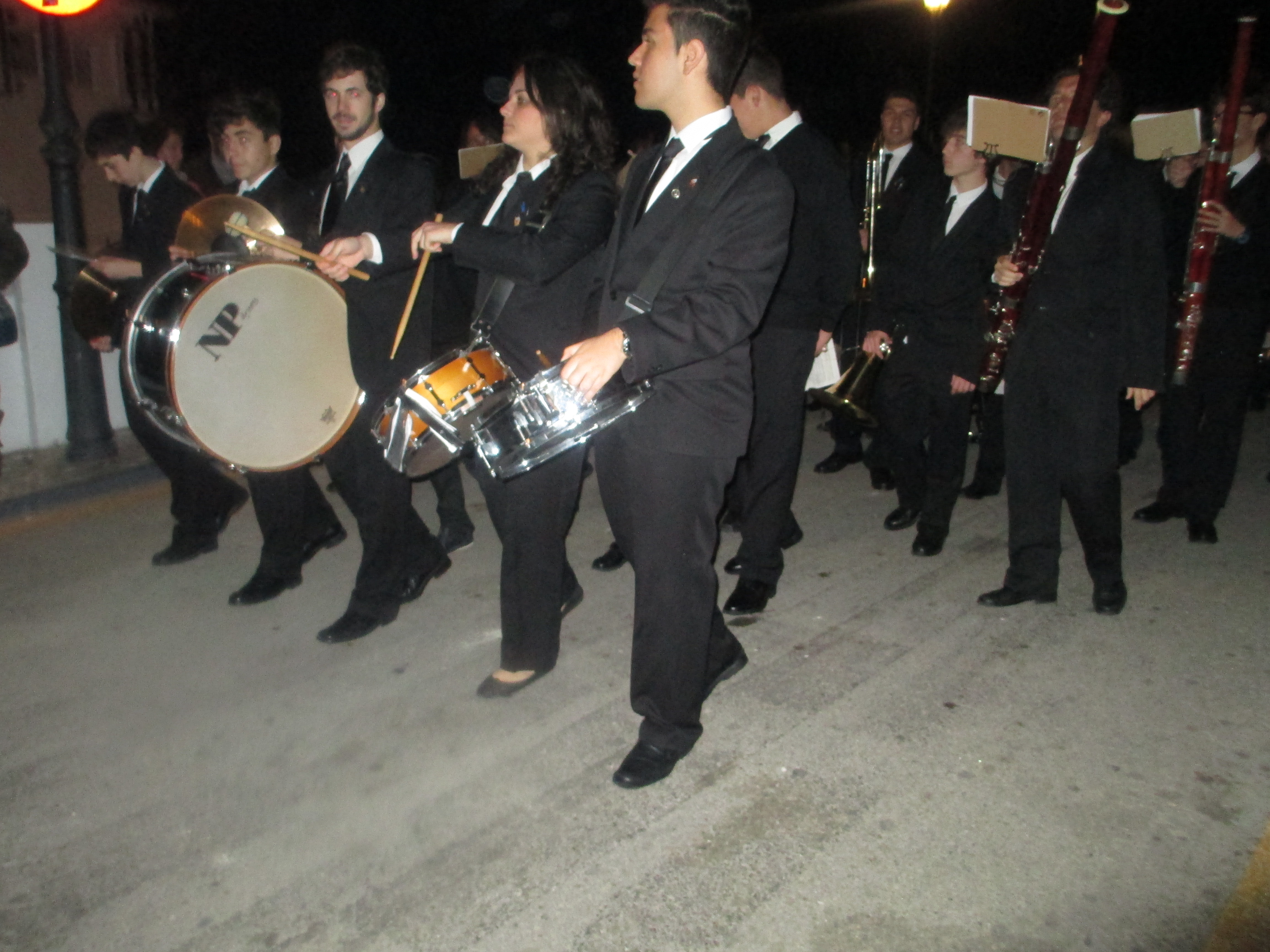
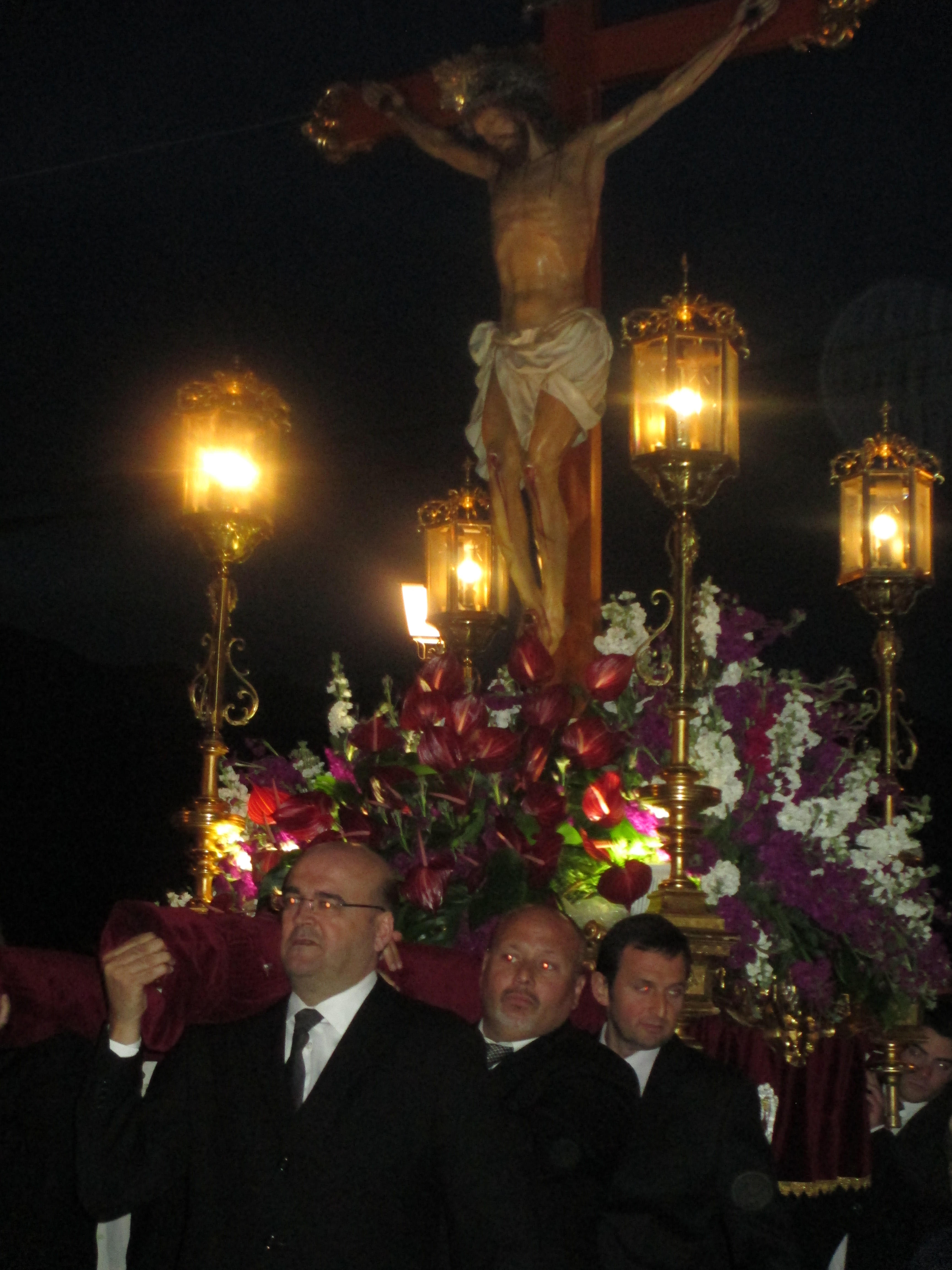
Besides the great weather, the area has many other inviting features. European culture with contemporary music, opera, symphony, ballet and other forms of dance, visual arts are widely available. There are many famed Spanish festivals here, including Easter week (Semana Santa), and Moros y Cristianos. Alicante is in the Valencian province, with Valencia being the third largest city in Spain, where there is the famed unique City of Arts and Sciences complex which houses museums of several sciences and the arts, Las Fallas (featuring elaborate paper mâché statues often with characters that reflect pop culture which are ultimately set aflame in their numerous neighborhoods) and the nearby La Tomatina (infamous tomato throwing festival.) Many Spanish are avid sports fans, as participants or spectators, particularly for soccer; bike, car and boat races, basketball, ocean activities and more.
IMG_0494 (2)

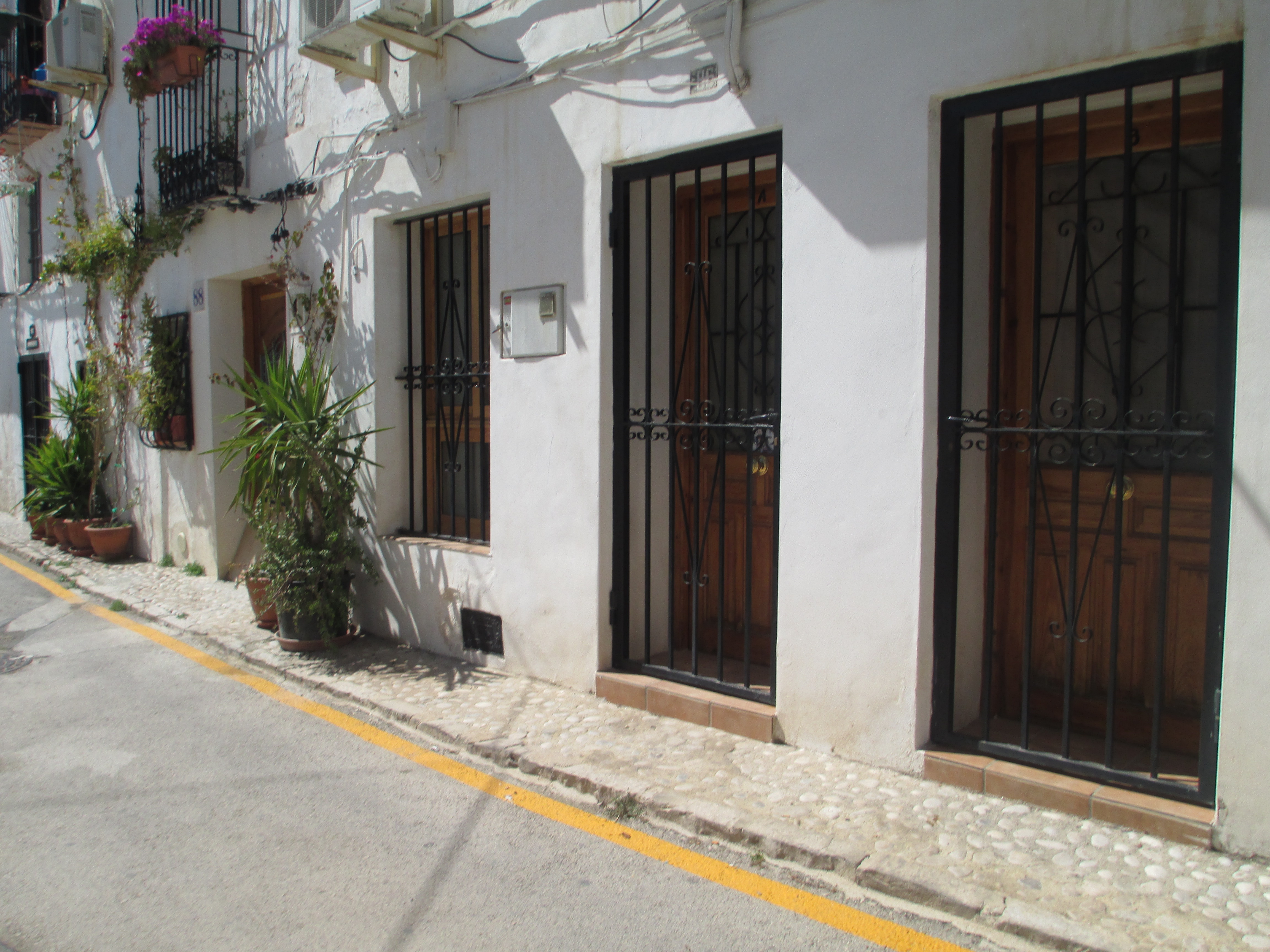
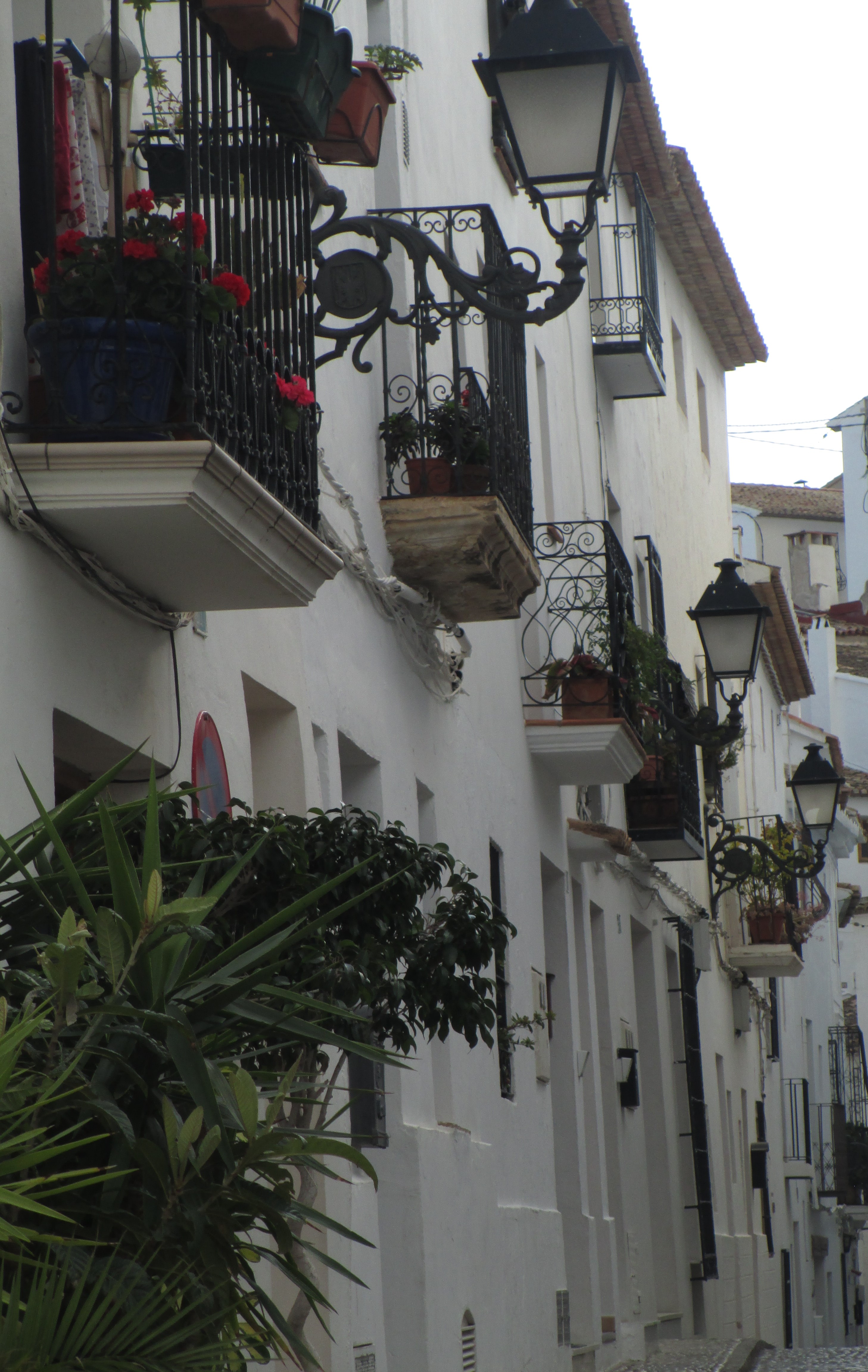
Typical street in Altea’s Casco Antiguo

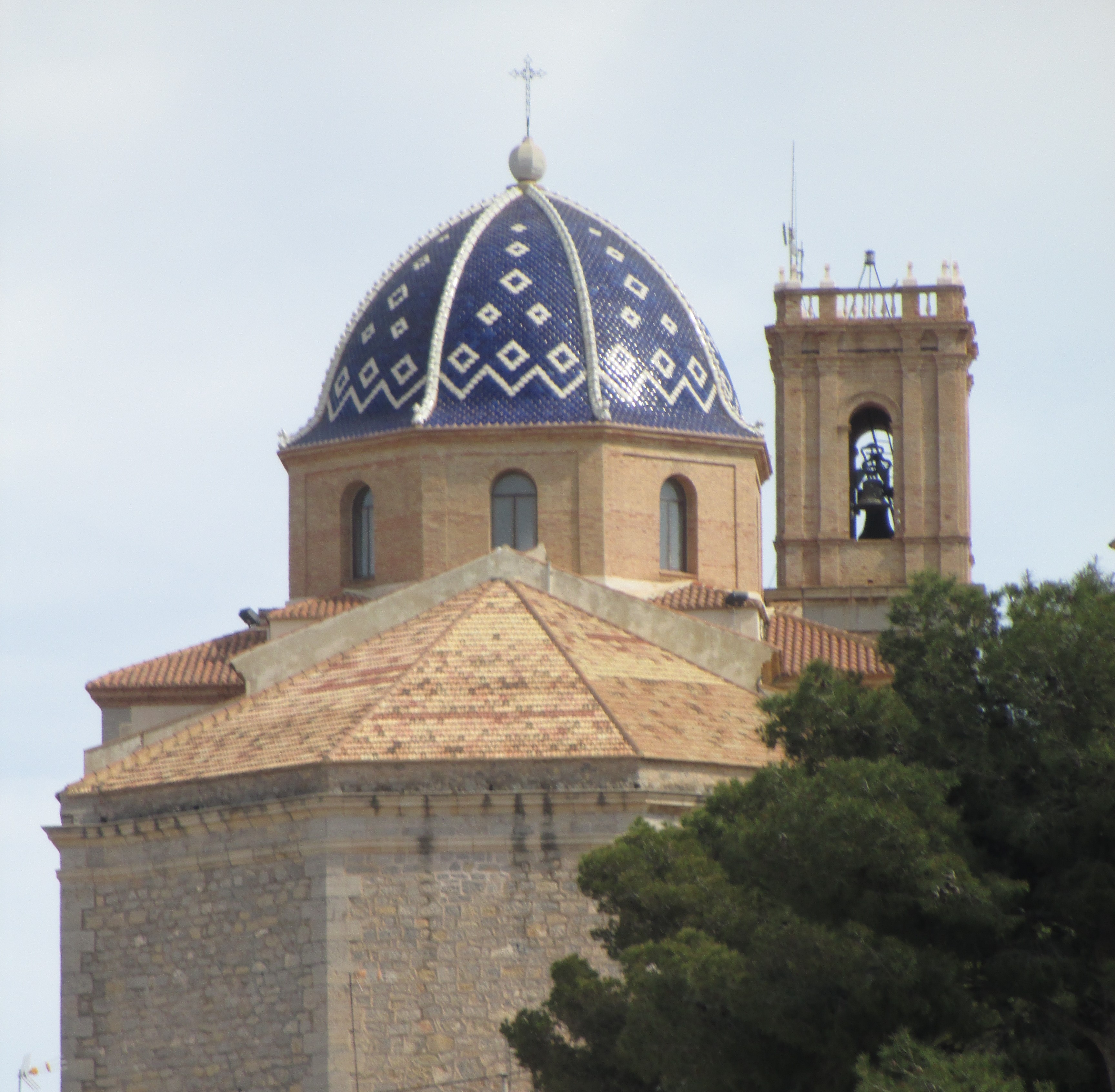
Besides the many coastal communities, there are numerous charming inland towns in the hills, valleys and plains which have castles, ancient ruins, historic buildings, caves, and parks and other nature attractions. Many local words and names such as those beginning with “al” or “ben” are Moorish in origin. The influence of the occupation by the Moors from 718 AD to 1492 is still visible in the terraced hillsides, and numerous orange trees. Each town on the Costa Blanca has its own distinctive charm. Altea is considered the “cultural capital” of the Valencian region and is also known for its iconic hilltop church with shiny blue cupola and white tiles. Villajoyosa has distinctive differently brightly-colored seaside homes, which were intended to guide fishermen back to their specific abode. The provincial capital of Alicante is a sophisticated and historic city, with a stylish promenade area featuring cafes and upscale stores, a large marina and beach area, and the Santa Barbara Castle sitting atop the Mount Benacantil. Elche is home to a grove of about 200,000 palm trees, which have been designated as a UNESCO World Heritage Site. Benidorm is a popular spot for people wanting a lot of activities, and is party central for many European vacationers. Its two beaches are consistently rated as among the best in the world.

IMG_0606

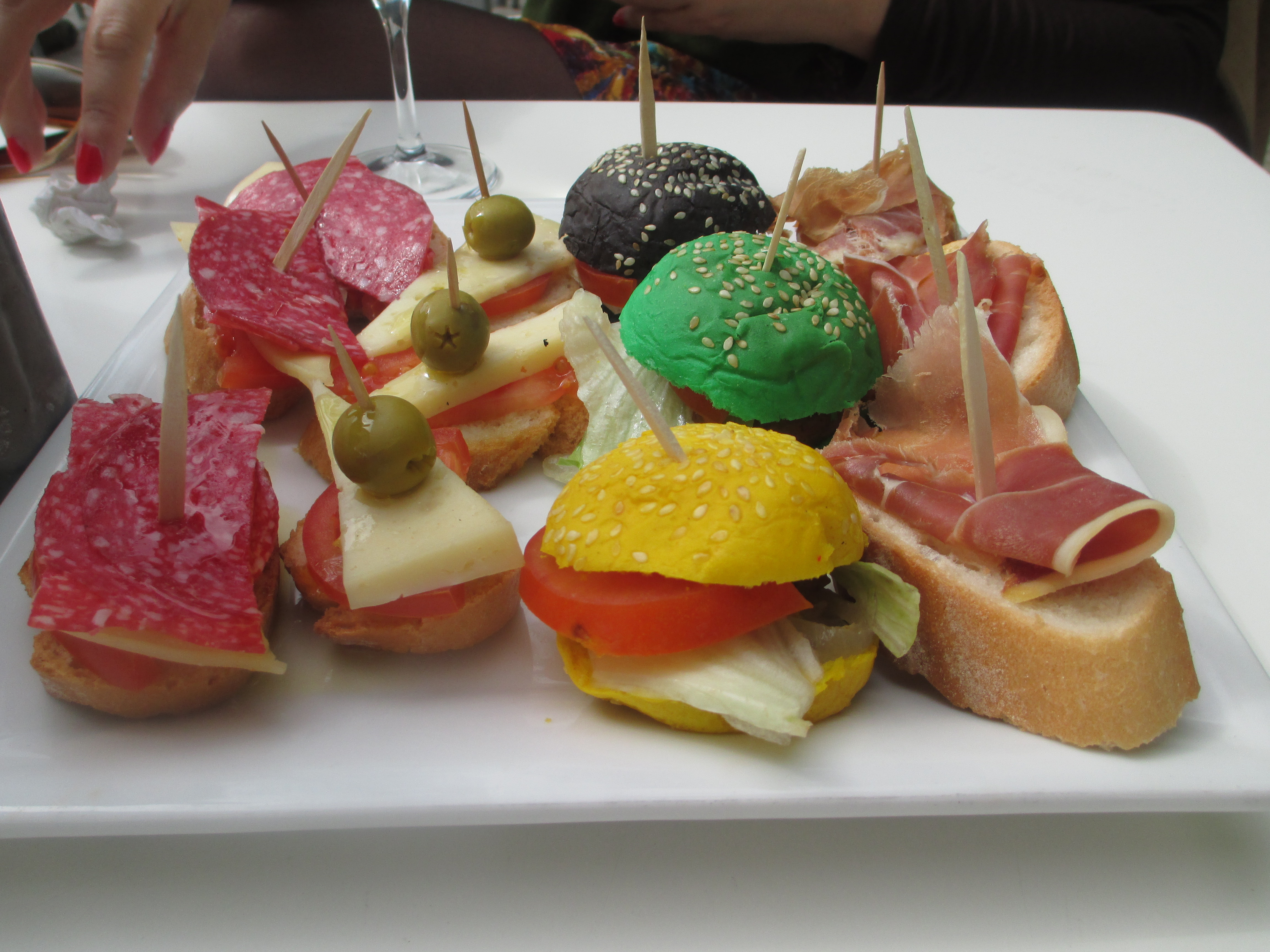
Sample of delectable (free) tapas served with beverage

The cost of living is surprisingly affordable given all that the area has to offer. For example, rents in Altea range from 325 to 350€ per month for a one-bedroom apartment or studio, and 400€ plus for a large three bedroom. In Elche one can find a 300€ three-bedroom apartment that is centrally located. The Costa Blanca offers ample apartments or homes for sale for under 100,000€, and some under 50,000€. Because of the unique characteristics of each town, it can be advantageous to stay in the widely available, affordable vacation rentals while test-driving a town or even a neighborhood. Several websites, which feature both real estate rentals and sales, can be accessed before visiting the area.

IMG_0429

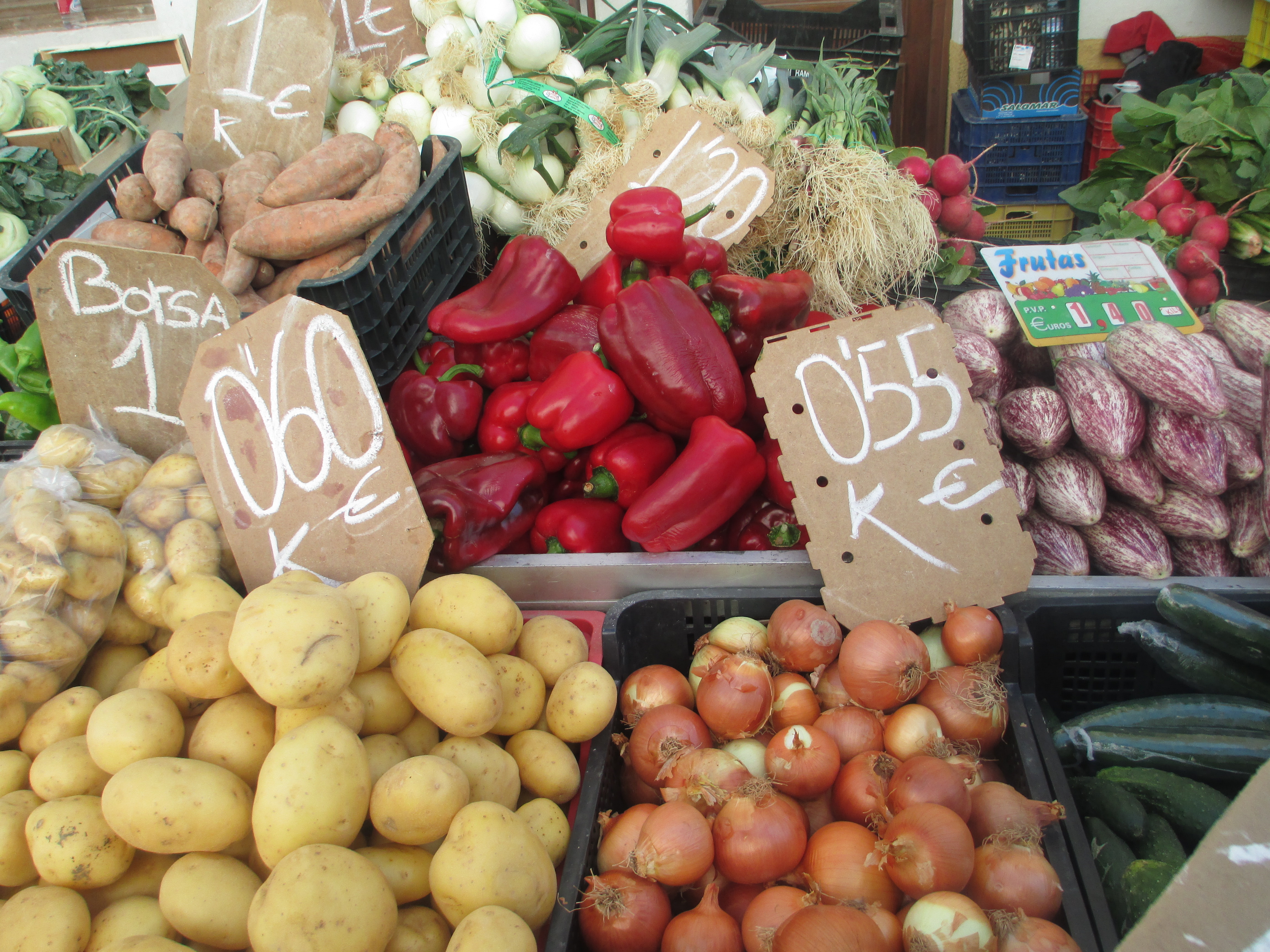
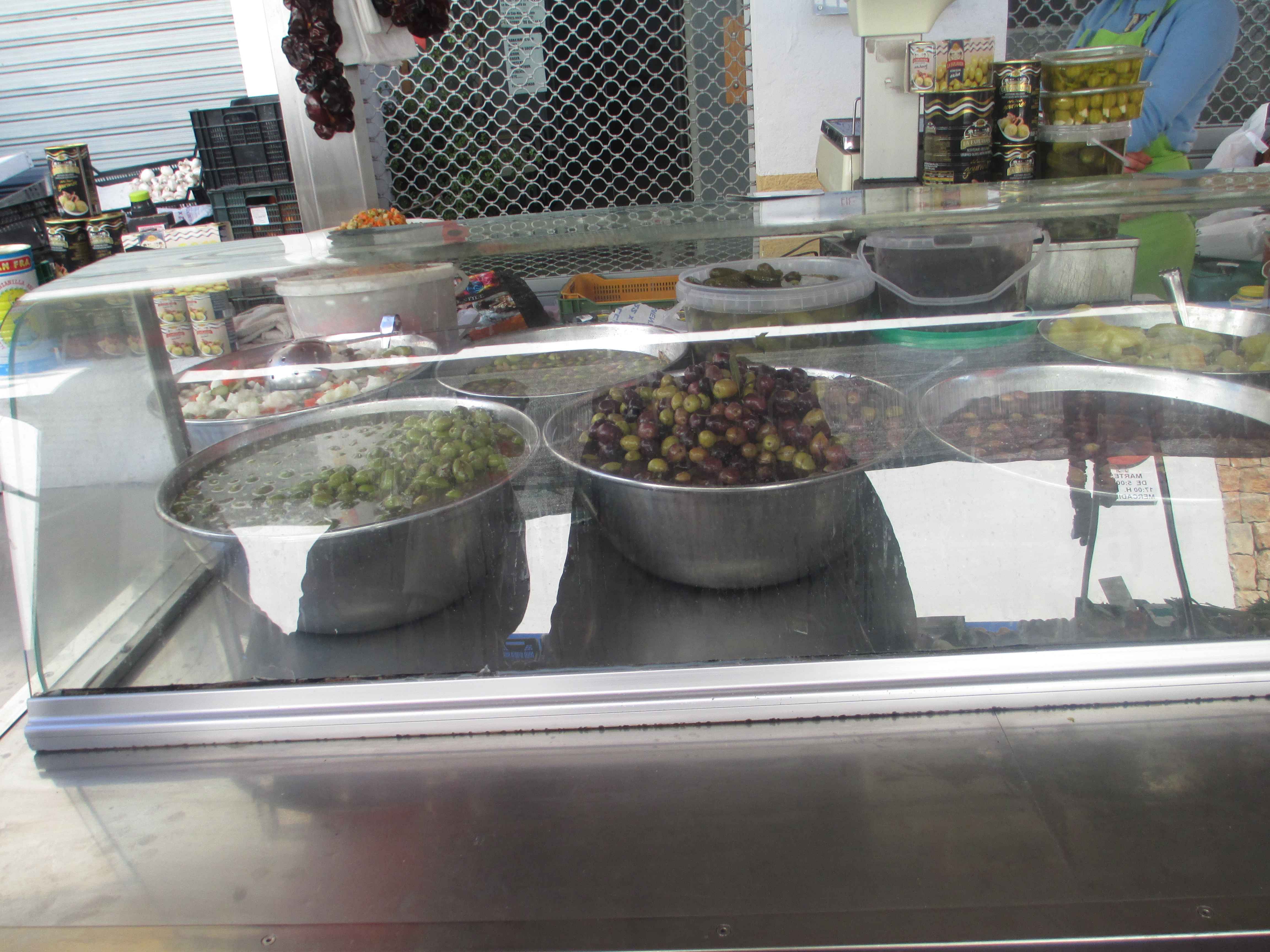
Bounty of Local Crops at Farmer’s Market

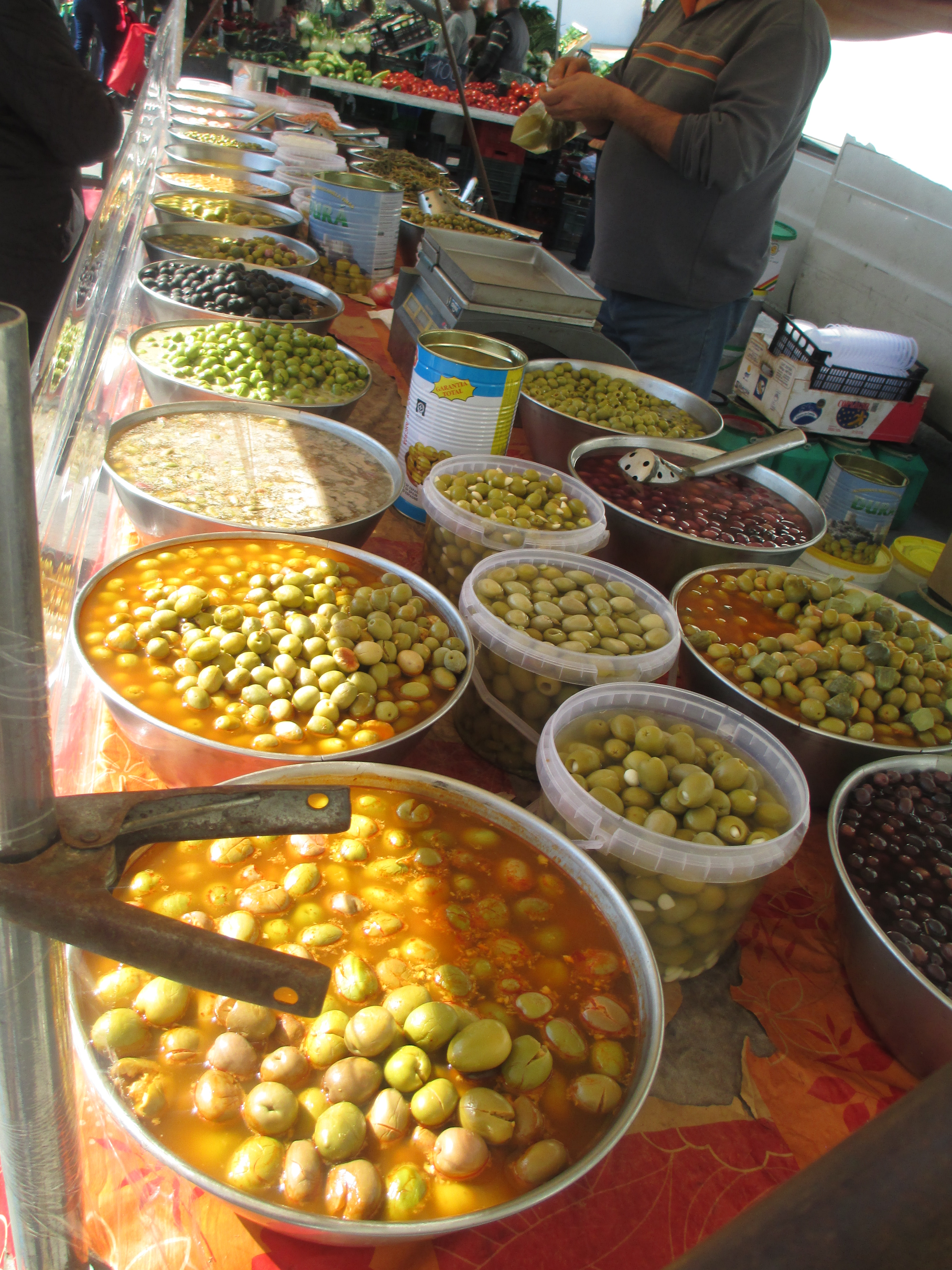
Olives, olive oil, wine, local fruits and vegetable, and the bounty of the Mediterranean are diet staples, and, of course, Spain’s ubiquitous jamones (hams.) Food is generally inexpensive. Most towns have a weekly farmer’s market where there is dizzying display of colorful flowers, fruits and vegetables. At restaurants, in many towns, there is a menu del dia (typically a two or three course meal, with bread, beverage, dessert or coffee) at a nice beachside restaurant cost between 10 to 14 €, and less if one goes to places less upscale or frequented by locals. A glass of wine or small beer (“caña”) can be found for under 2€, which includes a tapa.

The area has many European ex-pats, including British, German, Norwegian and Dutch. That makes for a supply of English-speaking medical professionals. Medical treatment are good quality and prescriptions tend to be significantly less expensive than in the U.S.

Many people do not have cars, instead walking or riding a bike. There is good and inexpensive public transportation on the Costa Blanca, with clean timely buses, and a tram that runs from the northern most town of Denia to Alicante. In Alicante, one can access the national railway system including high-speed trains, and the modern and efficient airport, the sixth busiest in Spain. One person can comfortably live on 1000€ a month or two for 1500€, which includes rent, food, utilities, public transportation and entertainment.
Mailing Mishaps and More

25 Apr

After almost two months, I finally received the second box of items I had mailed to me here in Altea Spain after I had gotten a permanent apartment. As I previously detailed, in preparation of the move from California’s Central Coast to Spain, I sold my large house and all its contents, with the exception of family keepsakes, a few travel souvenirs, and my most cherished kitchen items. It is not worth shipping most things, but I am quite attached to certain pans, my kitchen knives and the wooden block that holds them. To that end, before coming to Spain, I packed two boxes; I brought two large suitcases with me on the plane. That was all.


IMG_0875 (2)

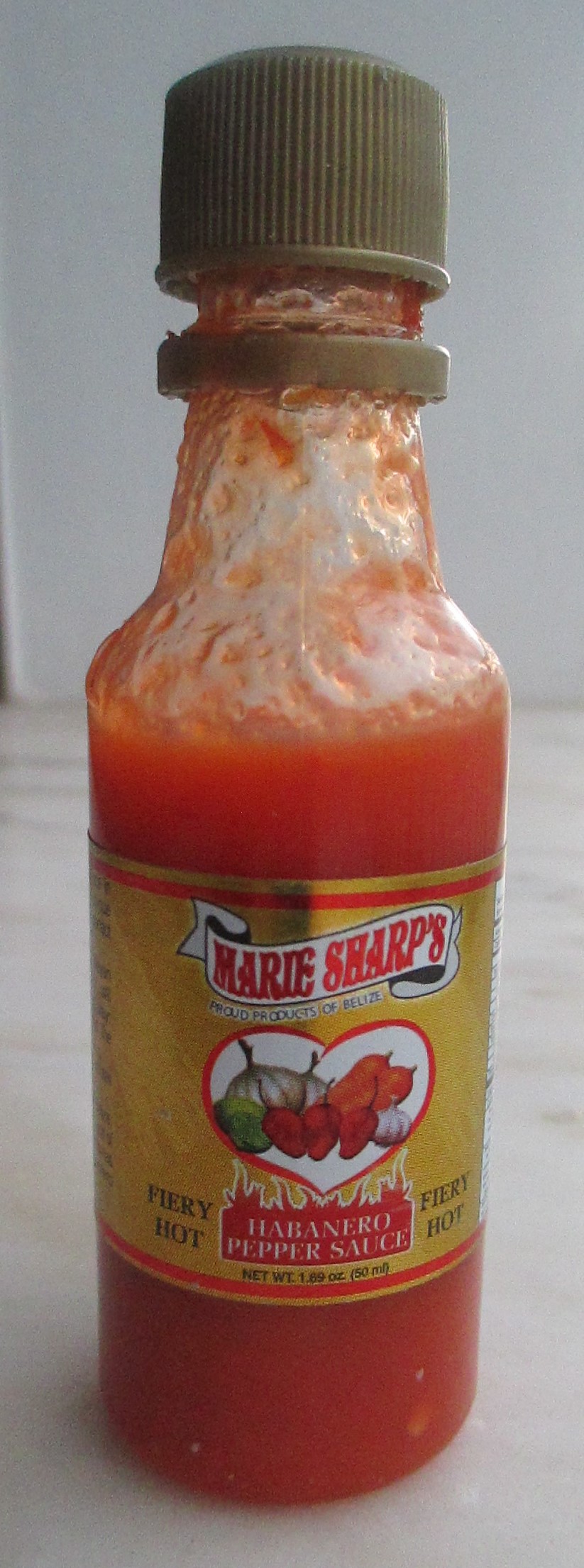
Marie Sharp’s

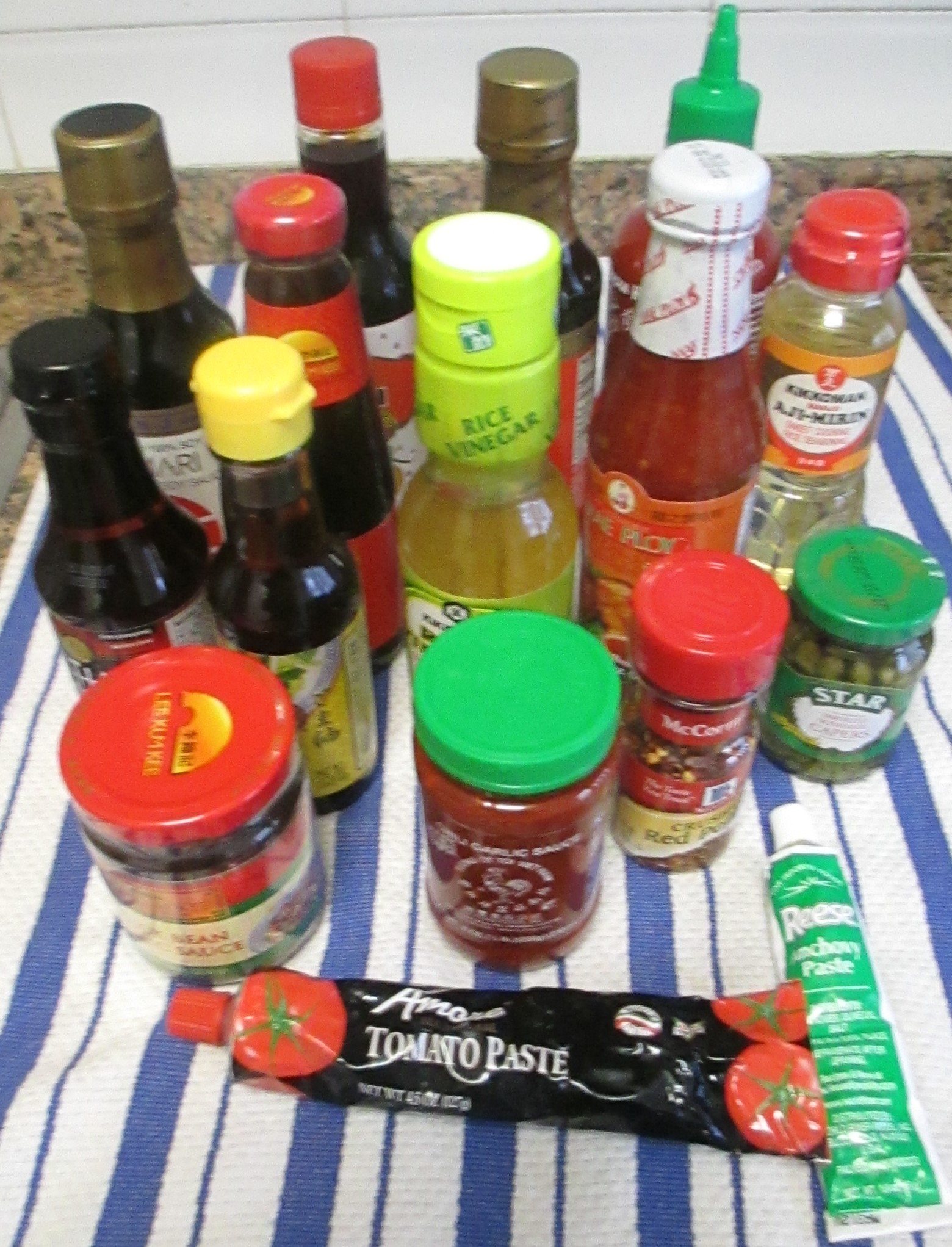
Before the second box was packed, I decided to purchase spices and condiments I could not find here in Altea. Most of these were Asian, like fish sauce, black bean garlic sauce, sriracha, sambal, and surprisingly, crushed red chili flakes. Spanish food is seldom spicy, and I crave that taste profile so much that I carry a small bottle of the world’s most delicious hot sauce, Belizean Marie Sharp’s habanero pepper sauce in my purse.


Besides the outrageous shipping rate for mailing my box, (over $300), after several weeks, I feared it was lost as I had heard nothing, and the first box had come quicker, (not quick, mind you.) When the first box arrived, it was gaping open and the postal worker asked me to help carry the box as it was heavy. What??!! A few items were broken and missing-I now only have three of the “big five” animals from my collection from my safari in Africa. Given the shape of the box, I was surprised more items weren’t broken.


With regard to the second box, I finally received a letter from the Spanish post office demanding I download forms from their website, fill them out regarding the exact contents of the box, and provide receipts for the items. In Spanish, I tried to explain that most items were personal and old, with the exceptions of the condiments I could not get here. I subsequently received a demand of about 55€ for tax and other fees to get the box released. That is about the same cost of the condiments. If I had taken off the seals, I may have avoided this fiasco, but I had been worried, they might think I was transporting contents other than what was listed on the bottles. If they were opened, they would spoil, so I left the seals intact so as not to raise any suspicions. After a few more weeks after paying the fee, I received notice my box was now being sent to customs. So I paid the fees, but could still have customs deny my delivery? Such are the frustrations of adjusting to the Spanish bureaucracy.


Taxed condiment and spices

The box finally arrived yesterday. Once again, the postal worker asked me to help carry it. No dolly in sight. The box had been resealed, but once open it was evident the contents had been randomly thrown into it. Even the knives were not put back into their wooden block, protruding every which way. And since I am accident prone, it was inevitable that I would get cut. At least it wasn’t too deep. Once the bleeding stopped, I was able to unpack the contents, wash the dishes as well as the Provençal style napkins and hot pads, and Williams Sonoma t-towels. I experienced the simple joy at having those cheerful Provençal bright blue backgrounds punctuated by vibrant yellow lemons, as well as the thick, quality t-towels.


Now inspired to cook, I decided to make a Caesar salad, as I now had anchovy paste (which I find easier than fresh anchovies) and my immersion blender. I mashed together the garlic, anchovy paste, mustard, egg yolk, and then prepared to gradually blend in the oil. When I turned on the blender, I heard an electrical cracking sound from the outlet, and the blender would not work. That wasn’t all. There was no electricity in my apartment at all. I had used other American appliances with electrical converters without any problems until now. I only hoped I could figure out how to get the electricity back working. I remembered during one of my apartment tours that when the electricity wasn’t working, the realtor went to a small metal box on the wall near the entry door to turn on the electricity. I repeated what I had seen her do, and after flipping all the switches to the same direction, electricity was restored. In every house I have ever owned in California, whether old or new, all the electricity circuit breakers are located outside at very inconvenient spots outside and in the back of the house, making for difficulty in locating or fixing when it is dark or inclement weather. I think the Americans could take a lesson from the Spanish…at least in this regard.


I had difficulty getting the salad dressing to thoroughly blend without the assistance of the hand blender, but it still was tasty, along with the perfectly cooked boiled and peeled eggs, with their perfect soft bright golden orange yolks, with nary a trace of green around them. I am still surprised when I go to a restaurant, and egg yolks are covered with an unappetizing green outer layer. It is incredibly easy to make them without that hideous green. If you don’t know how, let me know, and I will post it. Hint: the key is bringing the water to a boil, shutting heat off, then adding the eggs and covering for the time needed to cook them to your liking.


IMG_0610

Altea

The arrival on the second box allowed me to get my piso (apartment) up and running in full. I had already covered the gold velour couch and two matching chairs with fundas de sofa (couch and chair covers blue with a little background gold keeping with the Provençal and Spanish color theme) and I covered the pink shellacked side board with Provençal table cloths, blue with lemons, of course.) The same pink shellacked headboard and bedside desks “adorned” my bedroom, so I bought neutral sheets and comforter, and bedcover with a touch of pink to bring the room together. The mattress provided was not to my liking, and given how much time is spent sleeping, I splurged and bought a mattress from an upscale hotel chain, on whose beds I have always slept well. It was well worth it. My apartment here in Altea does not begin to compare with the home or furnishings California, but I am quite content here. The neighborhood, views and people can’t be beat.


IMG_0205 (2)

Pepper: local celebrity

And now Pepper and I am heading out to buy a new immersion blender in the hopes of rehabilitating my pathetic Caesar dressing, and then heading to the beach for the beautiful weather and view, a tasty two course menu del dia, and later cavorting with friends.

Challenges and Affirmations on Moving to Spain

15 Apr
IMG_0469 (2)

View from my window of husband tying his wife’s shoe

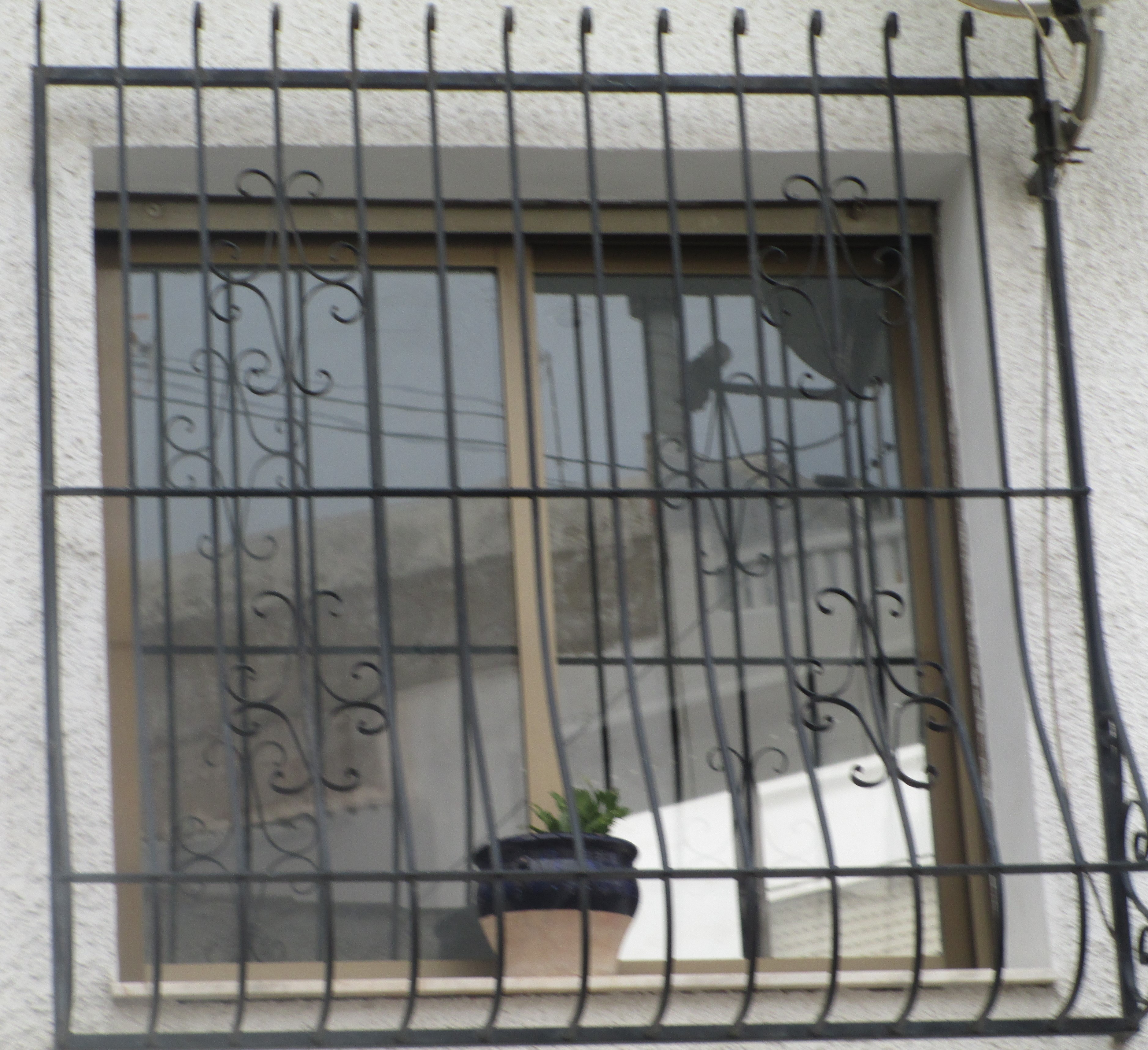
Of course it rained today. As I said in an earlier post, since I no longer have a car on which to rain after I wash it, it seems like whenever I wash my laundry and hang it out to dry, it rains. On a positive note, the rain gives me a head start on cleaning the black window grates that adorn my windows. While cleaning them, I observed a husband lovingly tying his wife’s shoe.

The rain reminds me of a puzzling observation. Here in Altea (Spain), many of the newer sidewalks are mad of lovely, shiny white tiles, but when it rains, everyone walks in the streets because they are as slick as ice. When growing up in Nebraska, while it seemed everyone else would glide for fun along the icy sidewalks, I would walk with extreme caution yet was the only one who fell. So I am not taking any chances here.

IMG_0849 (2)

My now clean black ornamental window grate

The rain seemed to reflect my most recent mood in dealing with what I thought would be the simple task of paying for my cell phone/internet/television channels. Initially, I could not get service because I did not have a Spanish bank account, even though I had credit cards and a local residential residency card. The local “Movistar” representative spent several weeks trying to get me service. Just after the service was finally confirmed, the installers arrived within a two hours and very quickly and efficiently got all three services up and running. I didn’t get a bill for almost two months, and when I did, I went to the local Movistar office to pay the bill. I couldn’t pay there; I had to either pay at the bank (huge line) or the post office, yes, the post office. I successfully paid the first meager bill of 6.24 Euros, and was surprised at how easily it went at the post office.

Just afterwards, I started getting text and phone messages on my cell that service would be suspended if I did not make a payment of 30 some Euros. I had not received a bill, so I went to the Movistar office and was advised to go to the post office or bank to pay. Long story short, without a bill, I did not have the account number to pay it, as it seems that there are different account numbers for the cell and internet/tv. So today the whole of my day will be devoted to trying to find an account number for the latter. Frustrated, I realized there was nothing more that I could do today, especially given the approaching close of the banks and post office and the close of businesses for the three hour siesta.

I decided to head for a locals café for an inexpensive menu del dia, only 8 Euros, where they place a newly opened bottle of wine on your table from which one can drink as much as one wants. En route, I heard a man addressing me. When I turned around, he handed me the 55 Euros and prior Movistar bill, which had fallen out of my pocket, where I had stuffed it after leaving the bank in frustration. This act of kindness caused my mood to suddenly improve.

IMG_0853

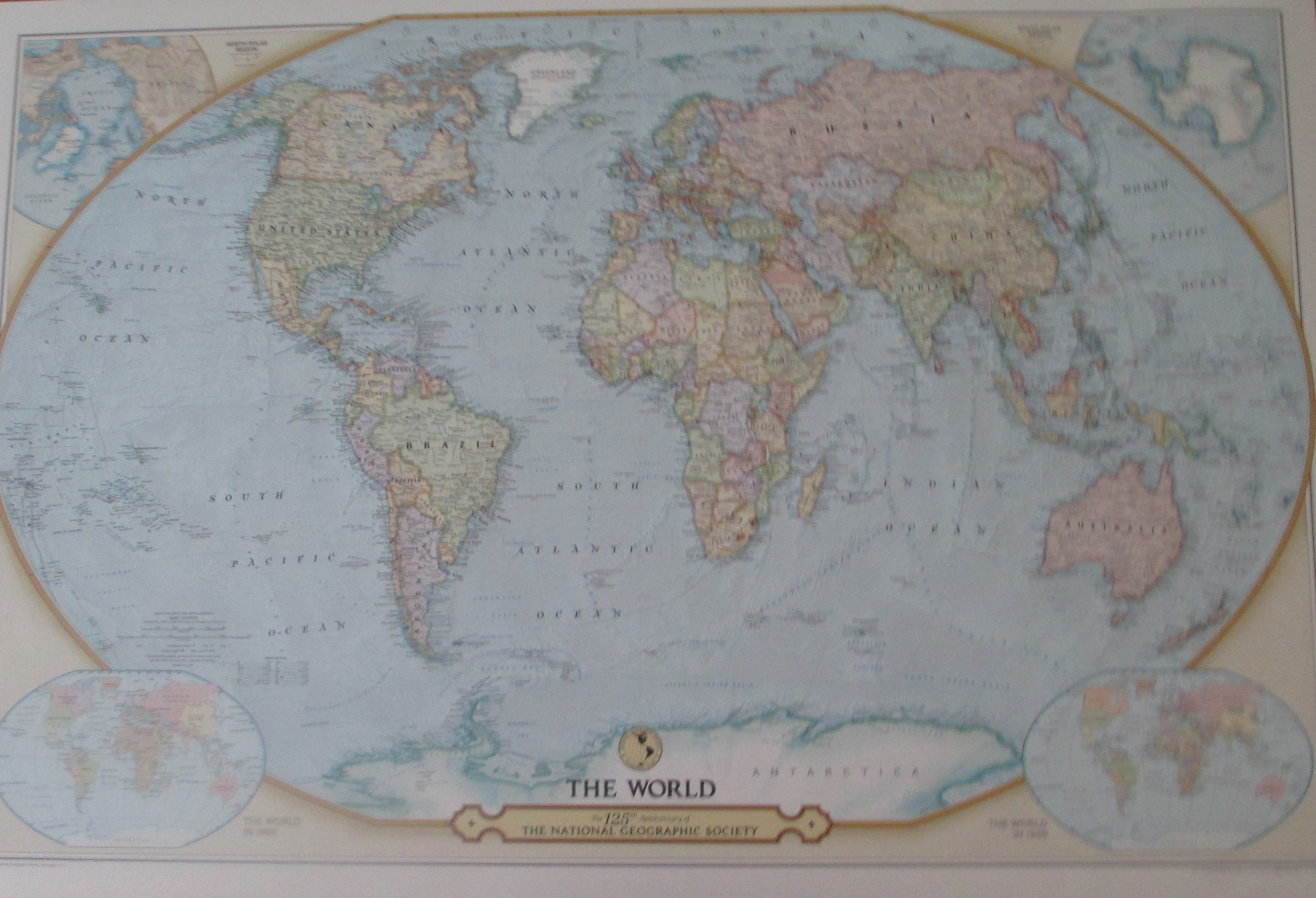
Newly arrived National Geographic World map

Then, as I type this, I had a serendipitous delivery of the 125th National Geographic world map I ordered from Amazon in Spain. I admit I am a nerdy “cartophile.” All three of my adult sons are similarly disposed. Before ordering, I checked to make sure it was current by looking for the youngest country, South Sudan, on the map. This delivery and the anticipation of spending time with my new map has temporarily eased my bill paying distress. Living in Spain, it seems best to order from a Spanish company as I learned when I asked my son to add some condiments and spices to one of the two boxes I had shipped here from California. These were items that I have been unable to find where I live in Altea, like red chili flakes, Vietnamese fish sauce, tamari, etc. I thought it best to leave them sealed so as not to cause any suspicion about their contents, but that assumption ran afoul when I received a demand to provide a detailed list of the contents with a receipt for the value so they could tax me on the imported items. I did not have a receipt, so estimated the cost to be 2 to 3 Euros for about 15 to 20 items. I do not understand why, but I had to pay a total fee of over 50 Euros to get them to deliver my package, but almost two months since it was mailed, I have yet to see it.

U.S. taxes are due today. I have been unsuccessful at having my son forward my 1099s needed for filing my taxes, but found out that if living overseas, one is granted an automatic 60 day extension. I only hope I read that right.

IMG_0673 (2)

The sun comes out to shine on the iconic Altea church

However, these challenges and pleasures are all part and parcel of transitioning to a new country. They are lessons is patience, humility, and thankfulness. And the rain just stopped.

Tails from Altea Spain

13 Apr
pepper2

Check out my different colored eyes

So I finally get to offer my observations on this move to and life in Altea, Spain. I might add that I was promised I could put my two-cents in some time ago, but it has been several years before this has come to fruition.

It was confusing with all of the moves I have had to endure, first my original owner, Robbie (son of my current owner) abandoned me to pursue a career as a chef. Besides the lengthy hours he worked, he also apparently felt compelled to spend considerable time doing cross-fit and training for competition weight lifting. I am still not thrilled about this abandonment, but apparently it paid off for him as he received many favorable reviews in such publications as the LA Times, LA Magazine, Zagat, with Belcampo being one of ten top best new restaurants in 2014 by Bon Appetit Magazine as part of Downtown Central Market in Los Angeles. I got to go to his restaurant twice. Even though they don’t allow dogs, I pretended I was a service dog. I was so excited to see him! Then I was whisked off again by my new owner/mama for more changes.

This is me in mama's car before we moved to Spain

This is me in mama’s car before we moved to Spain

We ended up living in a place very different than where we lived on the Central Coast of California. The people here speak a different language, but I have learned about ten words in Spanish, such as ven (come,) muevete (move,) siéntate (sit,) and Pimienta (the translation of my name Pepper.) Many people greet me by name here; I am way more popular than my mama. People are intrigued by my two different color eyes: azul (blue) and marron (brown), and my dapple color. They also are amused when I sit up on my hind legs; they think I look like a Meer cat.

She takes me almost everywhere except when she puts on those black clothes and tells me she is going to Zumba and will be back soon. It feels like forever, especially after the uncertainty all of the changes have given me. When she goes out for a meal, I patiently (usually) sit under the table waiting for my reward from what she ate. Yum!

DanielandPepperr

Daniel and me at his 40th birthday party at Altearte

Like her, I am becoming more social. I now excitedly great her friends, sometimes surprising her and them with my new enthusiastic attempts at kissing them, as opposed to my prior indifference. I enjoy our longs walks every day, usually at least one down to the beach, and the other to the top of the hill where the iconic church is (but we are not attending church.) However, we have fun with our friends in the evening. One of our good friends, Daniel (a native of Norway) celebrated his 40th birthday at one of our local favorite bars, Altearte.

Yesterday, we met up with my new dog friend, Pogo, and his parents, Karen and Barry who recently moved here from Costa Rica (although they are originally from Canada.) We had an outdoor lunch with them and mama’s friend originally from nearby Valencia, Nina. Then we went to the neighboring town, Albir, which has the second highest population of Norwegians, after Norway, so Nina could deliver a birthday gift to a girlfriend. En route, she saw a friend, a former talented sculptor of wood, who sadly suffered a stroke and can’t do his art or speak anymore, but my owner thought the sparkle in his eyes over a drink revealed a glimpse of his former charisma and talent. The owner of the Los Angeles café, also a friend of Nina, presented them with a colorful plate of tapas. After they were done, “claro,” (“of course,” in Spanish), I got my just desserts or should I say tapas. (And, yes, my mama knows the phrase was originally just deserts.)IMG_0840

IMG_0768

Rafa at Club Cuba in Albir for Sunday evening salsa

It was already after the start of Sunday Cuba salsa dancing in Albir, and mama wanted to show the place to Nina. So that is where she goes when she leaves me on Sunday evening. When Rafa was initially playing some low key music, Nina loudly requested Cuban music, and he obliged. The only trouble was that they kept leaving me under the table alone so they could go dance. I guess it was better than being home alone. Then Nina drove us home where we went directly to bed after a fun- and wine-filled day. I burrow per my dachshund heritage, although I find it a little more challenging to sleep here due to traffic and people who talk way louder than I am used to.

It is quiet now during the three to four hour siesta, so I am going to take advantage of this time for a nap, before going for my evening routine of incessant ball chasing; I am ready for her to repeatedly tell me, “Dáme la pelota” (Give me the ball.) All in all, I like it pretty well here, which is good since my original owner, Robbie, is now going to be very busy at his new job at Saison, one of only four three star Michelin star restaurants in San Francisco. I just hope he and his brother Michael visit soon; here they are enjoying themselves in Belize with their brother Spencer and mama while I was left at Canterbury Tails doggie hotel. At least, Spencer will be visiting me next month.20150116_134409

This Week in Altea in Photos

7 Apr

IMG_0673IMG_0652IMG_0645IMG_0683IMG_0684 IMG_0696IMG_0729IMG_0718IMG_0713IMG_0710IMG_0739IMG_0750

The Importance of…Speaking Spanish or is it Valenciano?

5 Apr
beach sign

Can you read this sign at the beach play structure in Altea Spain? Neither can I and I speak (Castillian) Spanish.

I thought it was important to be able to speak decent Spanish before I moved here. I spoke some Mexican/Latin American Spanish, but the pronunciation and some of the words are different. To that end, I used a computer program to learn Spanish, which included feedback on whether or not my pronunciation was correct. Whenever I encountered a native Spanish speaker, which in my birth state of California, was frequent, I would practice my fledgling language skills. I tried to practice Spanish on a daily basis, which included watching the 24 hour news from Spain.
When I arrived, my Spanish was still somewhat halting, but did improve with regular daily interactions in Spanish. What I did not anticipate was that the official language of my village Altea is Valenciano. What? I had never even heard of that language. It is similar to Catalan, and Castillian Spanish, with some words and letters that are French. Many words here end in consonants. The word for the number eight is the same as in French, huit, whereas it is ocho in Spanish.

IMG_0759

Street signs in “Valenciana”

However, Valenciano is clearly distinct, as I found out when trying to negotiate my way through the already confusing Spanish bureaucracy. Before one can get a residency card (after an already lengthy application in one’s country of origin,) upon arriving in Spain, one has to find a residence and then register it with the local Ayuntamiento (town government), which here is Ajuntament. Well, those two words were similar enough that I could figure them out, although not the ticket dispenser at the Ajunament where you first have to select the task you are there to do before you can get a number to get in the correct line. As well, I have found undecipherable some of the other writings I have encountered including those on public signs which are often only in Valenciano. I only recently realized Poble Antic meant Old Town and that mercat is market.  Altea’s economy relies heavily on tourism, with many Spanish and other European visitors, and it is highly doubtful that most of them can read the signs that are in Valenciano, unless one is from Catalan. This leads me to another interesting observation.

My initial sense was that the people who are native to the Valenciano region are not exactly warm bedfellows with their Catalan countrymen just to the north. In fact, when one goes to make a withdrawal from a local ATM machine, there are choices of several European languages and Spanish languages of Valenciano, Galego, Euskera (Basque), Castillano, but not Catalan. Admittedly, I am no expert, and “Catalan/Valencian” are listed together as official languages in Spain, but I think it is no mistake that the word Catalan is not listed on the local ATMs.

I subsequently learned that there is a Valenciano language controversy, which is too lengthy to discuss here. Some claim Catalan and Valenciano are the same language. There is a fear by some Valencian people of losing their culture and language to their northern neighbors, especially in light of their bid for independence.

The people here are understandably proud of their local culture and foods, which includes many variations on paellas and rice dishes, (they are different and only a very narrow list of ingredients is a real paella), the bounty of the sea, and, of course, cheeses and many types of jamon. Like many older folks, many of the older natives with whom I have spent time or observed, are not interested in trying new cuisines. When my Cuban friend had a birthday party for her boyfriend, he and his friends did not want to try her Cuban rice and beans, baked pork, and fried plantains, which were deliciosos.

IMG_0610

Altea Spain

In spite of the local pride, I am surprised how most people I have encountered here are fans of “Barça” (Barcelona fútbol/soccer team) rather than the Valencian team. There are also many local natives who are Real Madrid fans. I asked one of those native men, Pepe, who is 68, about the lack of popularity of ValenciaCF (the third most successful Spanish team,) and his response in Spanish was basically, “You like what you like.”

I recently used my first Valenciano word, Carrer, which is Calle in Castillian Spanish, (“street” in English,) when giving my address. Further complicating the local language issue for me is that there are a significant number of Moorish words used, including many words that begin with “Al” and “Ben,” with Altea falling into this category. Fortunately, everyone I have encountered speaks Castillian Spanish, so the problem is mainly when dealing with public signs and official documents. I am pleased to be able to carry on conversations in Castillian Spanish. After a flamenco dance class, I ran into the teacher and we had a 30 minute conversation in Spanish, primarily about dancing, but also about what prompted her move from Extremadura region of Spain to Altea. The ability to carry on an extended conversation was very rewarding.

In closing, my observations are my own, and are not intended to provide an academic discourse.

Household Challenges In Altea Spain

29 Mar
IMG_0621

Typical garden display on patio

Most people who know me well will say I am a good home cook and was a good parent to my three sons (no comments, boys), but I have had no luck with plants, whether indoors or outdoors. And it isn’t for wont of trying. I dutifully planted pallets of colorful pansies, poppies and many other varieties of flowers every spring, only to have them all die. I had similarly bad “luck” with my attempts at growing house plants, even managing to kill numerous cacti. One time, from a high-end mail-order garden company, I ordered a monthly flower which was to be delivered in a ready to bloom, but I managed to kill every one of them. Most never even bloomed. They were guaranteed, but I doubted the company would believe that not one had survived.

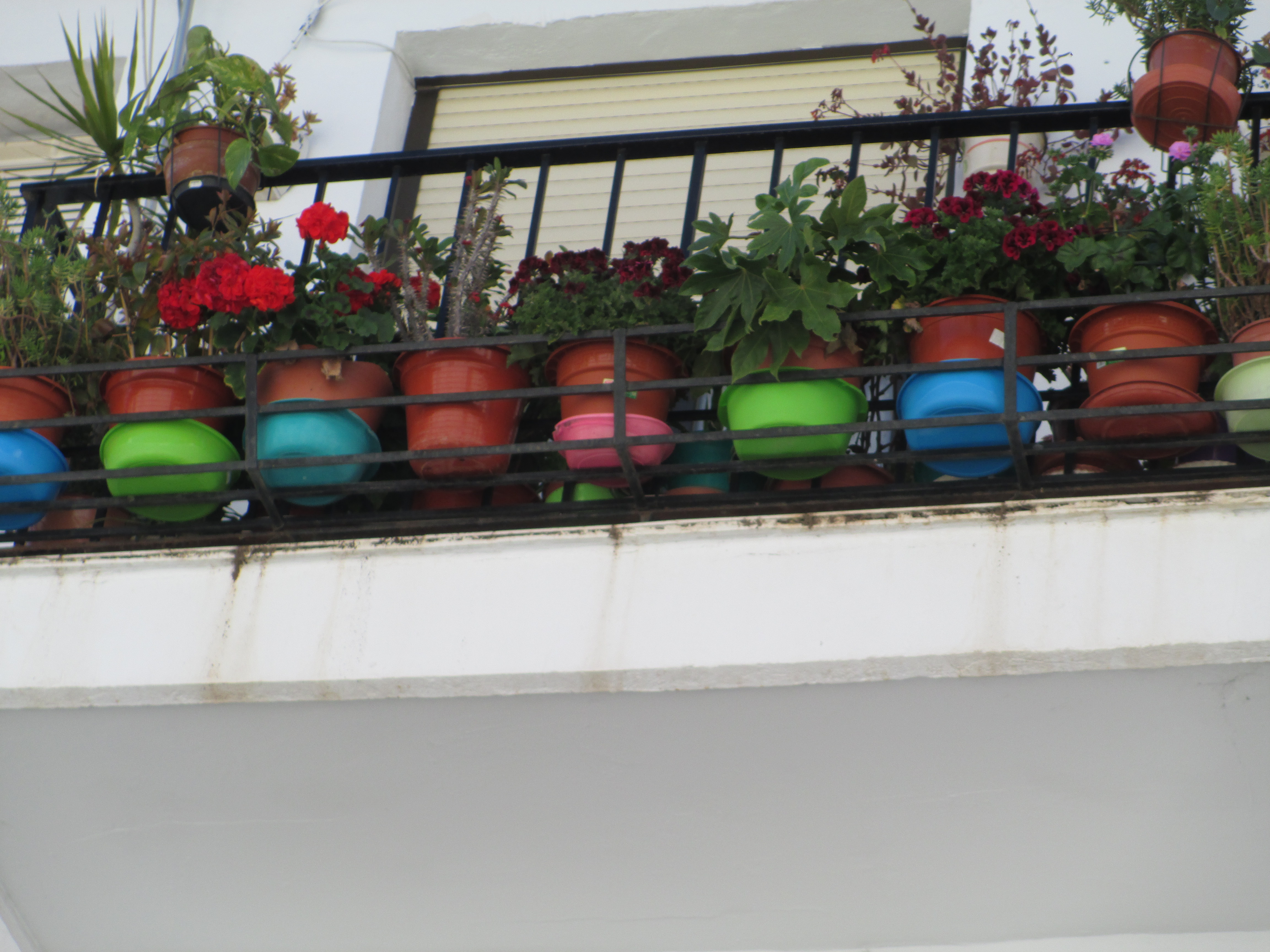
So when I moved to Spain, I decided I would take another stab (perhaps the wrong word) at growing plants. The windows of my “piso” (apartment) and many homes here have large marble ledges covered by black ornamental grates where people often put plants. I also have a long, narrow outdoor patio, and people here often hang plants from the metal fence enclosure. The verdant displays of plants and the colorful cascading flowers were inspiring. After buying supplies for my new apartment, I had been given two free plants from a local sundry store. Since the plants were still alive after a month, I bought some potting soil, a single hanging wire basket for my balcony railing and a plastic pot in which to put one plant and the other to go in the pot on my windowsill. I was not going to invest the time and money to buy the long plant holders, which hold multiple plants until I had some success. Mother Nature smited me by sending howling wind and rain the night after I had planted and hung the balcony. When I went the next morning to hang my laundry (more about that challenge in a moment), my poor little plant was uprooted, laying on its side after all the soil in which it was buried blew all over my porch and the street and cars below my second floor balcony. I did repot it, but the dirt is still evident on its leaves as I fear touching the plant any more than absolutely necessary.

IMG_0554

Laundry drying off my outdoor patio (sans undergarments)

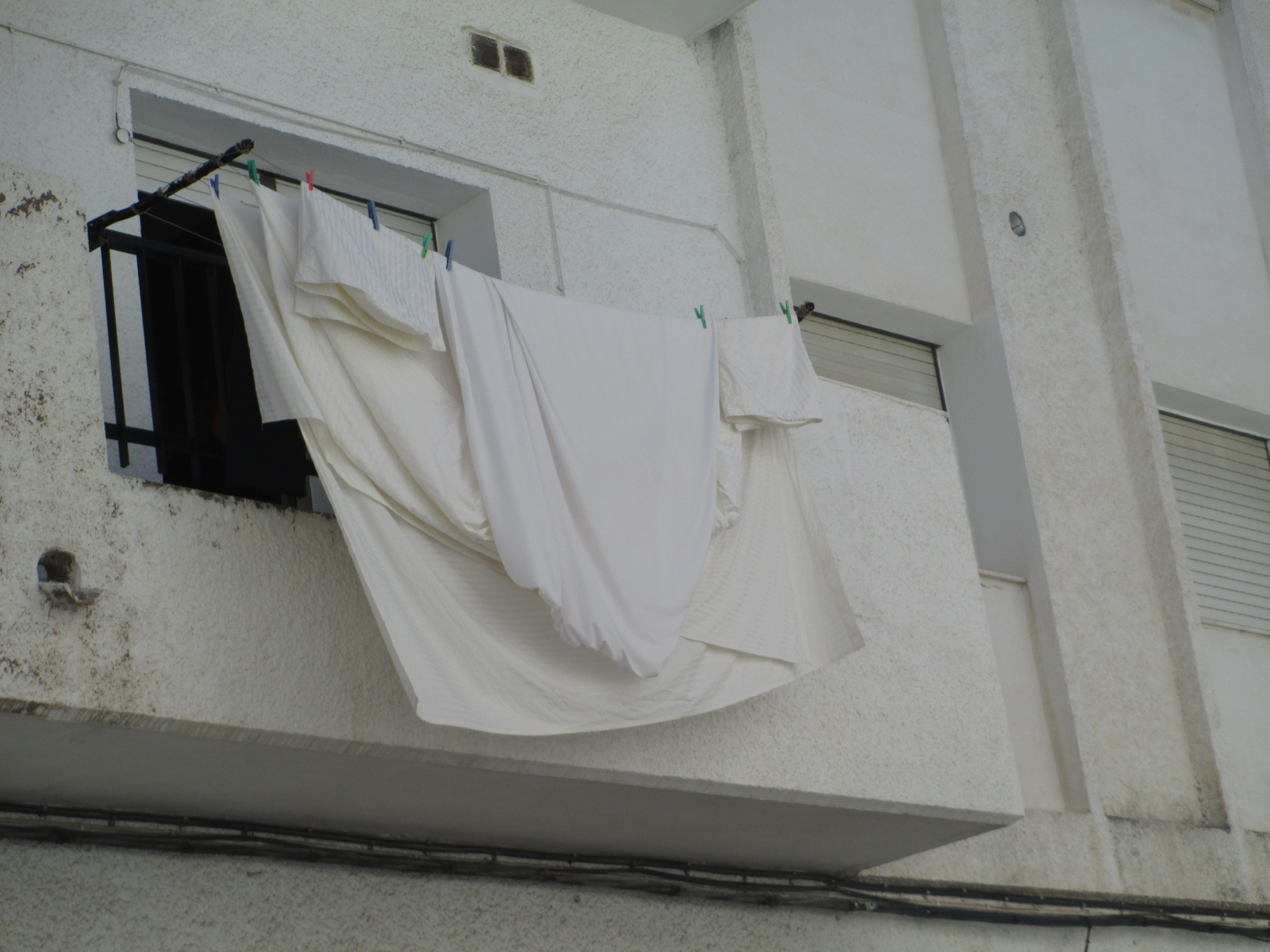
Now on to the unexpected laundry challenges. When I first arrived in Spain, I learned that few people have dryers, and instead hang their laundry either on lines off their balconies or windows, or on a standing metal folding stand which can be opened to hang laundry indoors or on the street outside one’s first floor dwelling. Wash machines are typically in the kitchen, but I scored and have mine in a small separate utility room. Before getting my apartment, I rented several vacation apartments, so I have had the opportunity, if you can call it that, to use a variety of wash machines; they are all small and take an incredibly long-time to complete a wash cycle, two to three hours. Nonetheless, the first couple of times I did laundry, I found hanging the laundry on the portable metal stand quaint, reminiscent of a simpler time. I remembered the heady fresh smell of sheets I had once hung outside to dry when I was a teen-ager and was looking forward to revisit that experience. The first couple of times went well, just enough to lull me into complacency and cause me to fail to anticipate the problems that could and did arise, or should I say fall. In fact, at first the laundry seemed to dry quicker outside than in a mechanical dryer.

IMG_0572

The small “sidewalk” to the right of the plant was where I had to put the laundry stand to dry my clothes in my first apartment.

My first vacation rental was on the first floor on a busy street, so the laundry rack was placed on the incredibly narrow uneven, cobblestone “sidewalk.” Both the uneven surface and wind, on different days, were the culprits in the toppling of my laundry. Wet clothes laying on a street where there are many cars, pedestrians and dogs does not bode well for having clean clothes. When I got my own apartment, there was both a metal laundry rack on the patio and laundry lines hanging off my balcony, both rusted. We are on the Mediterranean, after all. I purchased a small roll of metal line covered with plastic that looked perfect for the job of stringing new clothesline. The seemingly simple task of changing the laundry line was anything but. I had difficulty getting the old rusted line off, and sadly, it took me hours just to string the five new clotheslines. I should have paid more attention in Boy Scouts as to how to tie a secure knot. Wait, I wasn’t in Boy Scouts. Maybe that was my problem. Long story short, I inconsistently strung up each one trying to make them as taunt as possible, but ultimately was only marginally successful. But I was proud that I had accomplished that task. I soon found out there were other unanticipated laundry challenges, such as getting used to your underwear hanging outside for everyone to see, wind blowing your laundry off the line on the street below, unexpected rain saturating your clothes, and trying to accurately predict how long it would take to complete a wash cycle (it seems variable) so as to get the clothes hung before leaving, and anticipating how long would be needed to get things dry before night. On one occasion, the sheets were on the line when the weather suddenly turned foul, causing me to quickly bring them inside and try to dry them in front of a small space heater. At close to midnight, they were dry so I could make the bed. I felt a small sense of success over Mother Nature who, since I sold my car can no longer rain on it, instead seems to make it rain every time I hang laundry out to dry.

Visual Collage of Altea Spain This Week

29 Mar
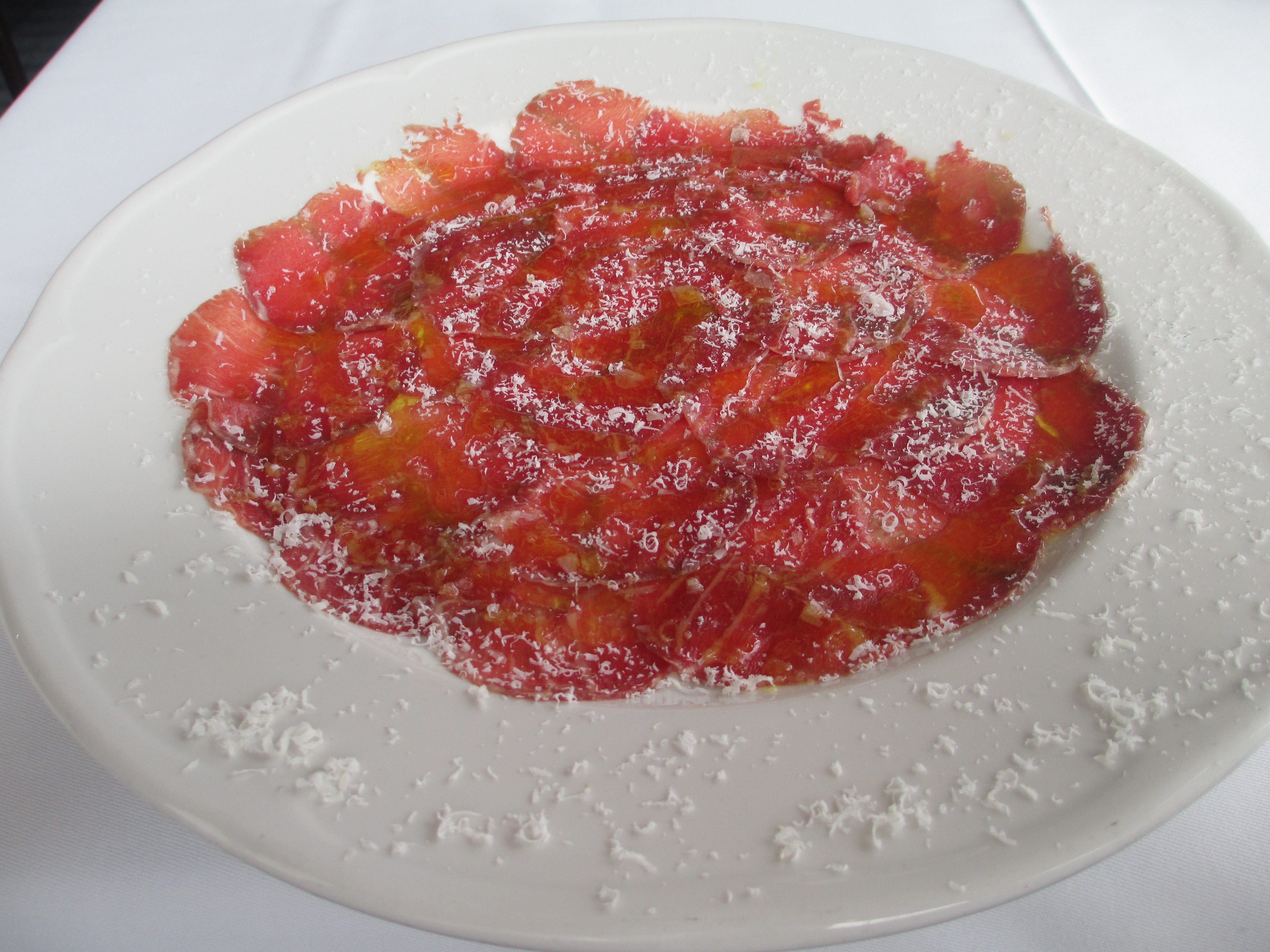
Carpaccio: El Bodegon de Pepe

Carpaccio: El Bodegon de Pepe

IMG_0457

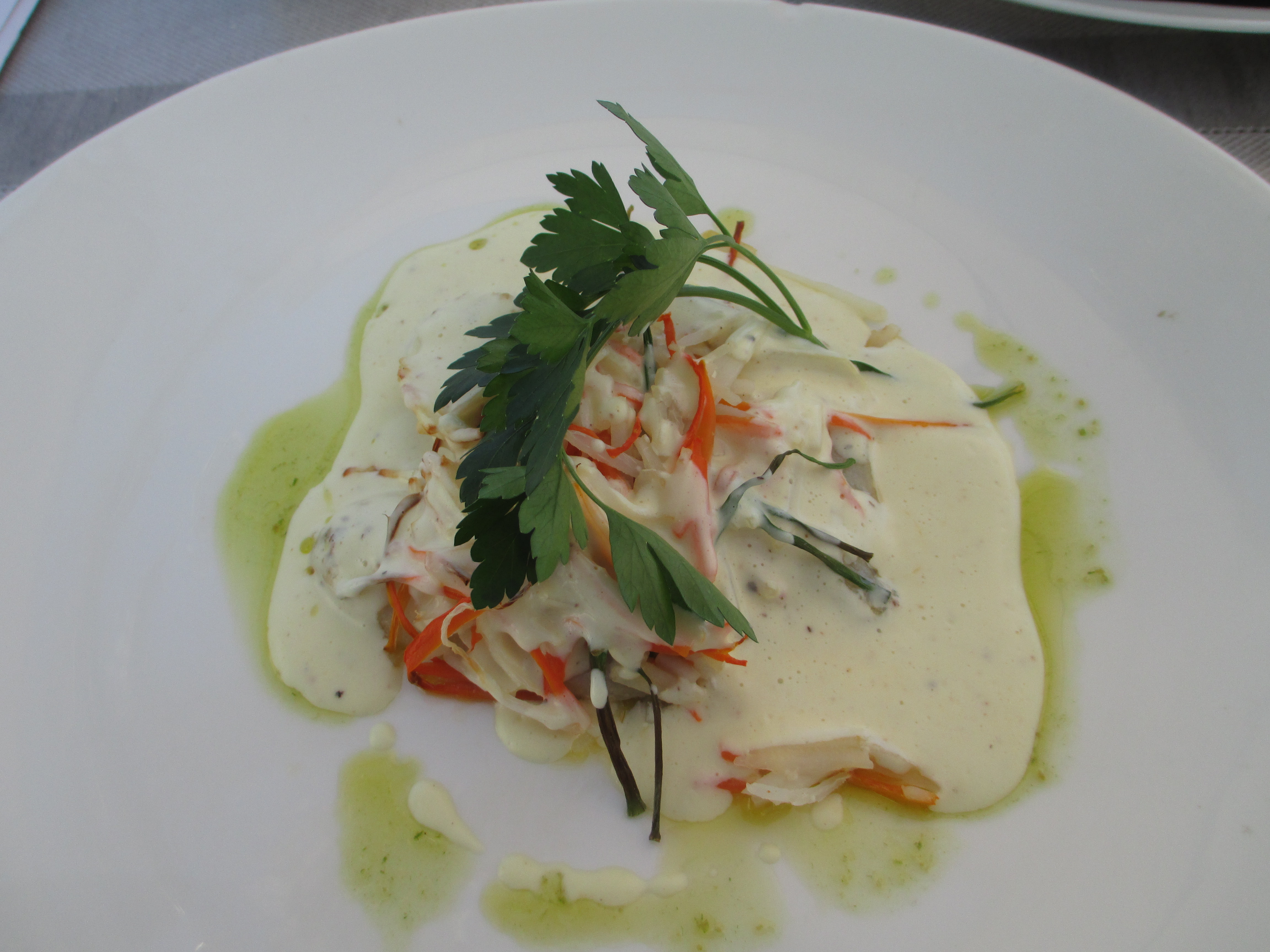
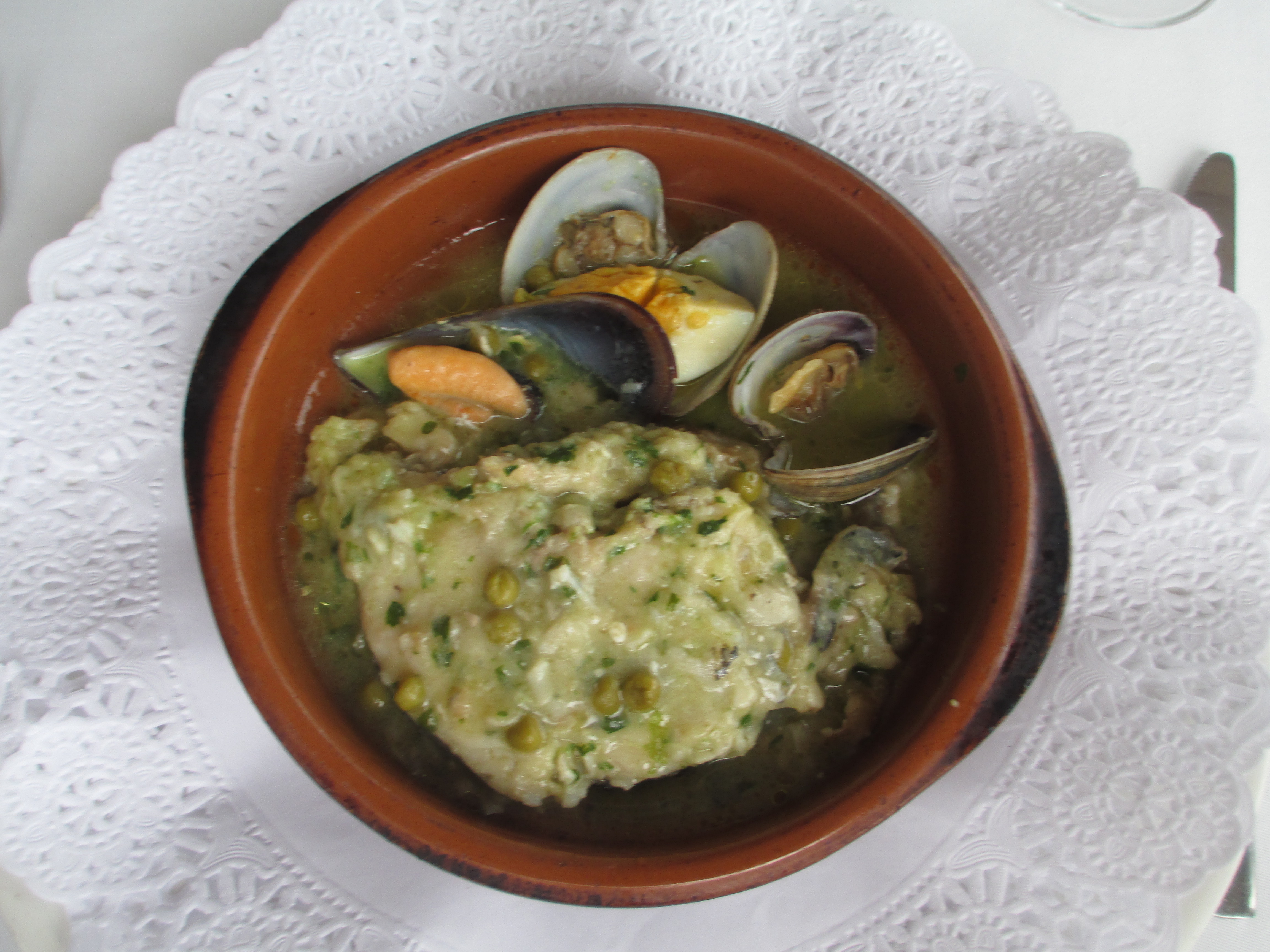
Fish with mussels and clams

IMG_0606

Tapas at Playa Fronton

IMG_0481

Door on Carrer Sol

IMG_0464

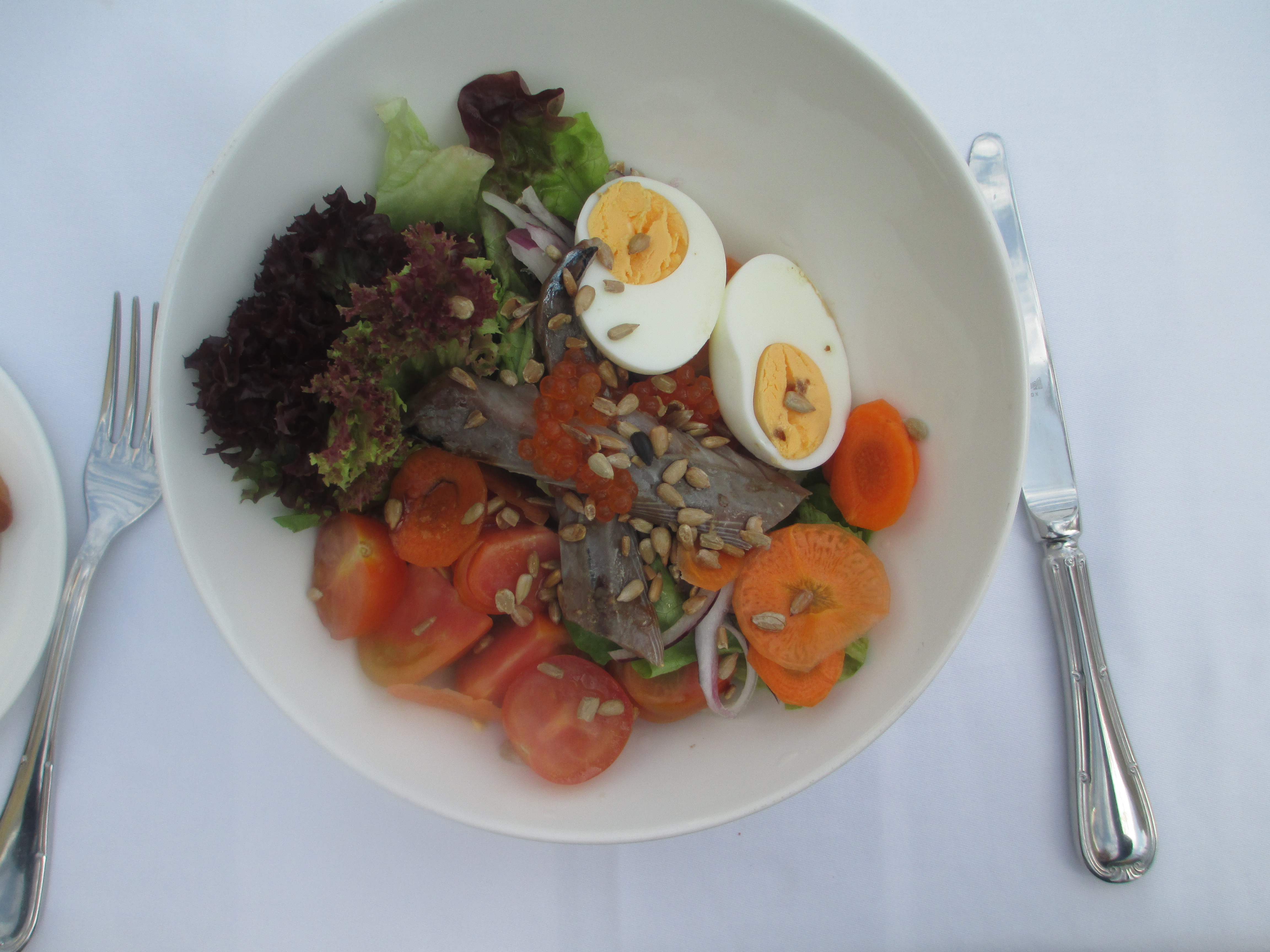
Ensalada mixta

IMG_0506

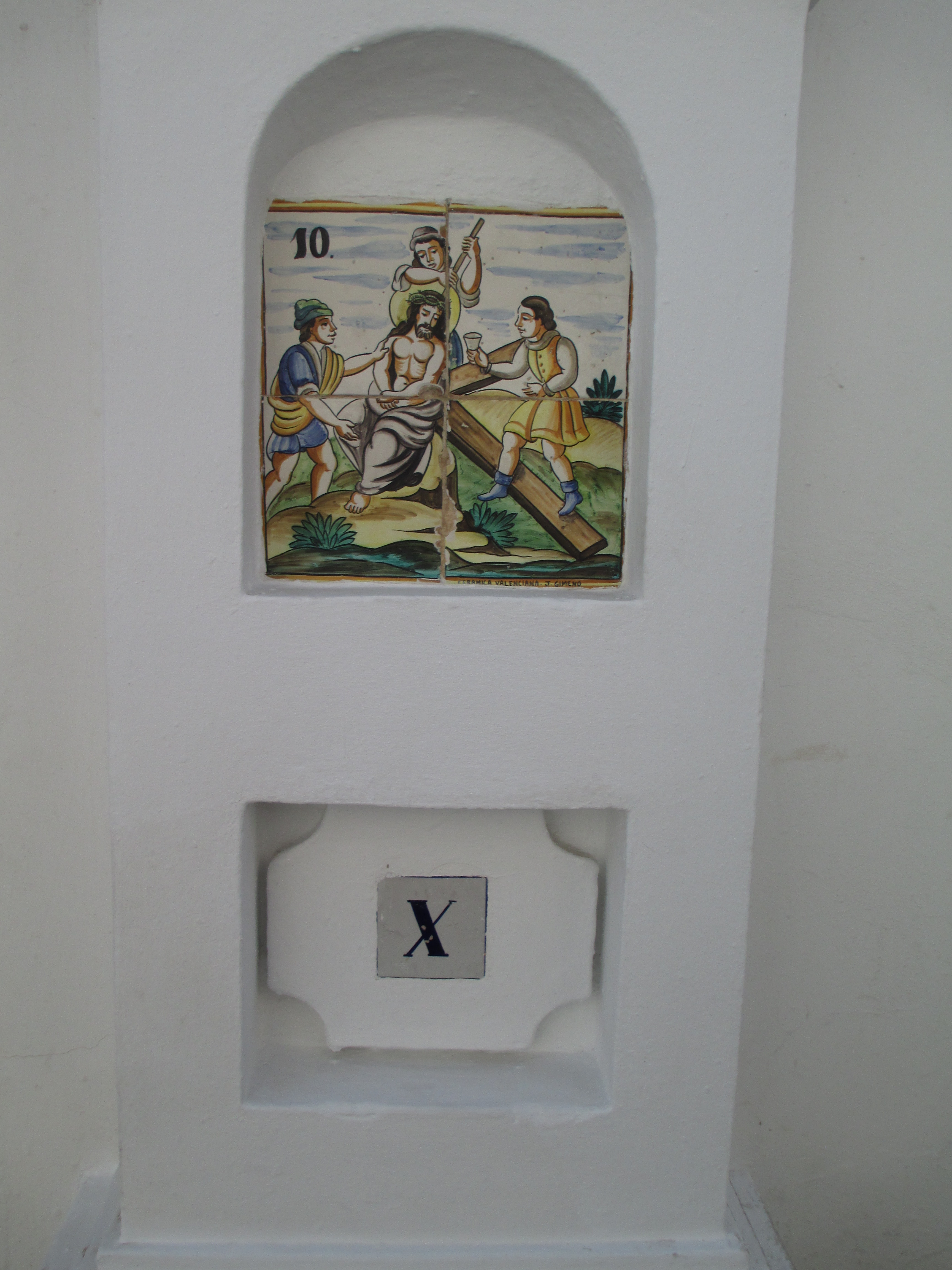
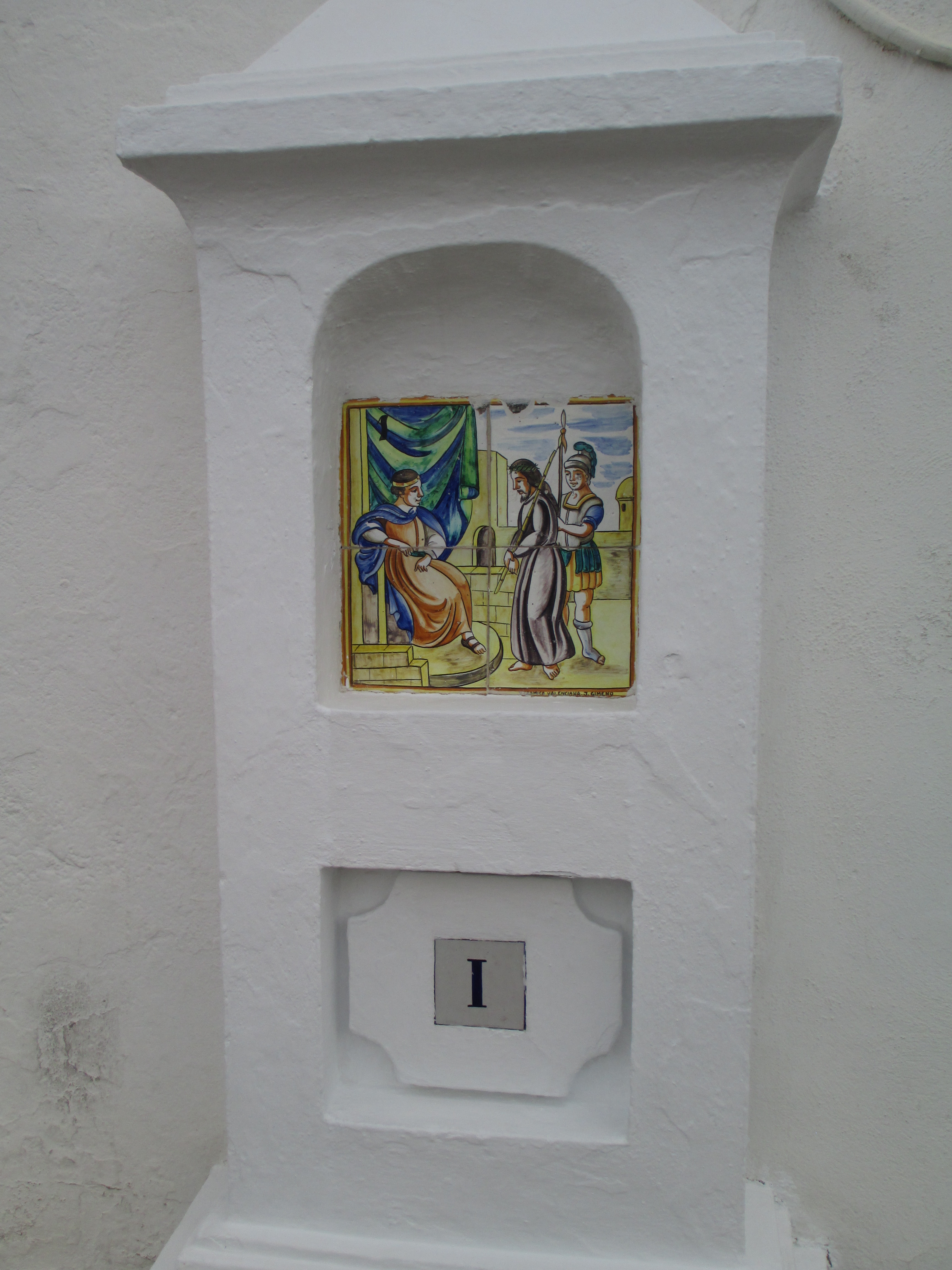
First station of the cross

IMG_0635

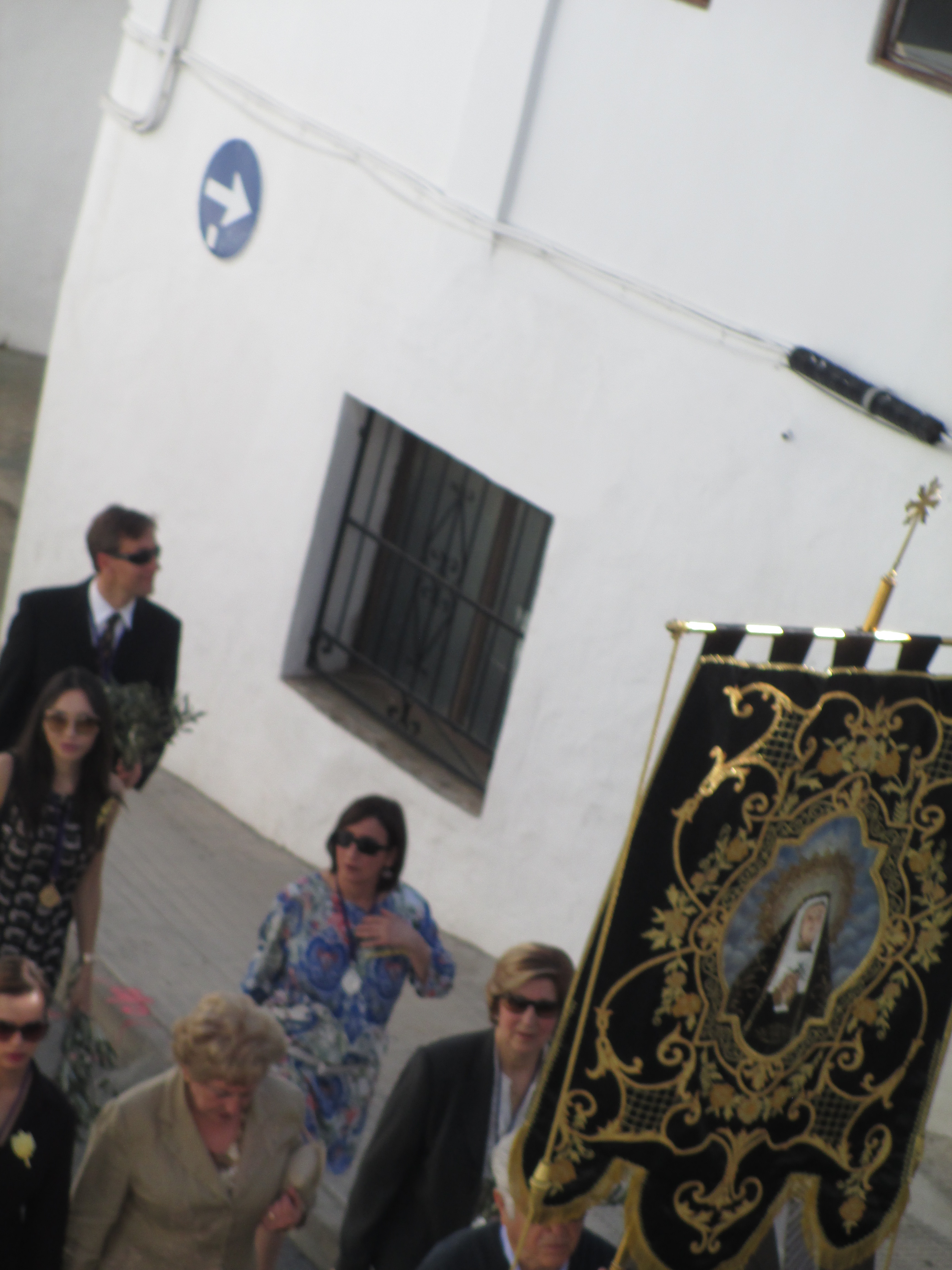
Part of Palm Sunday procession from my apartment window

IMG_0468

El Castell pizza: best in Altea

IMG_0610

View of Casco Antiguo from my friends’ Barry and Karen’s apartment


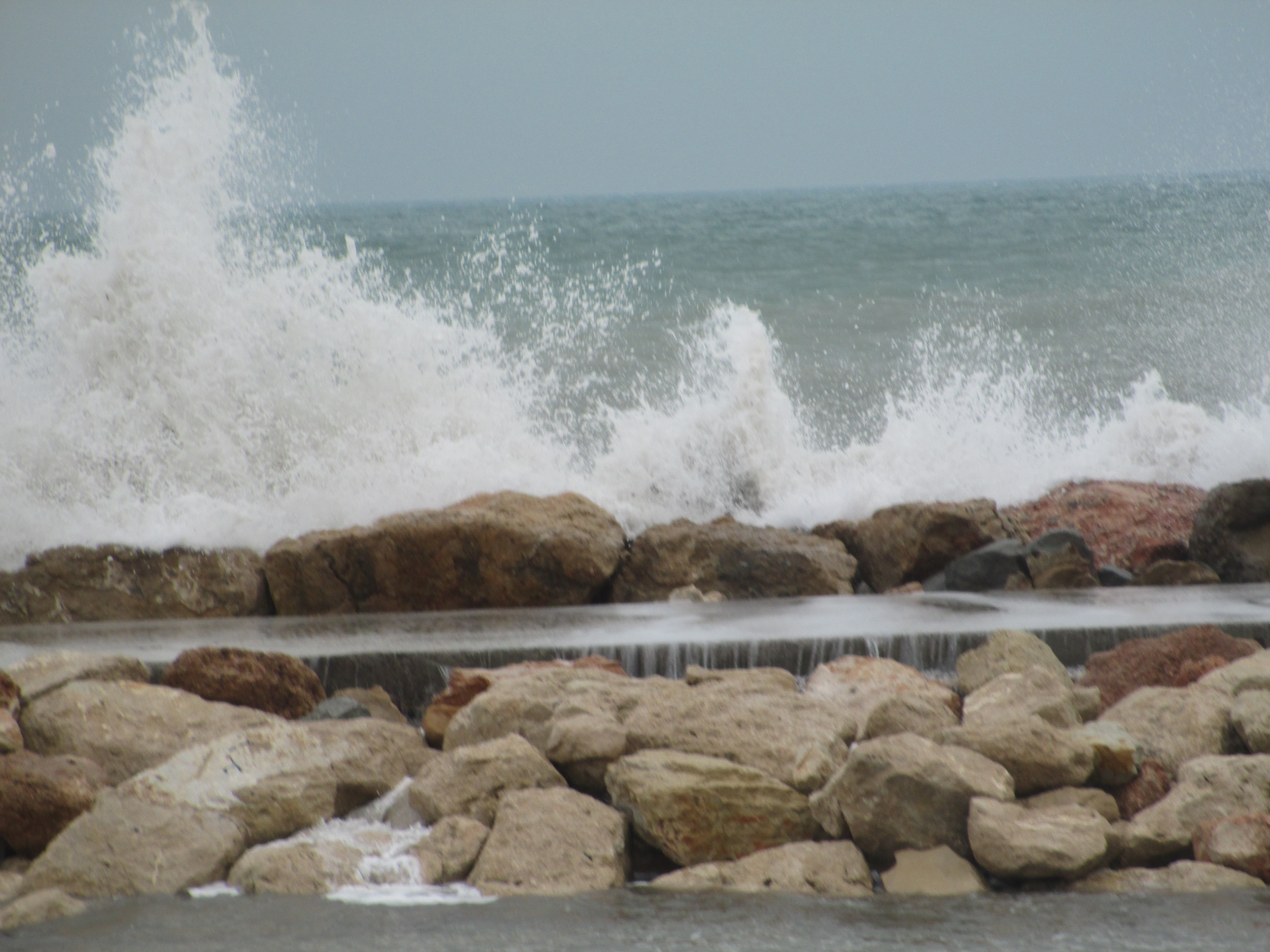
High waves on windy day

High waves on windy day

Food photos from Altea Spain

22 Mar
IMG_0422

Flowers at market


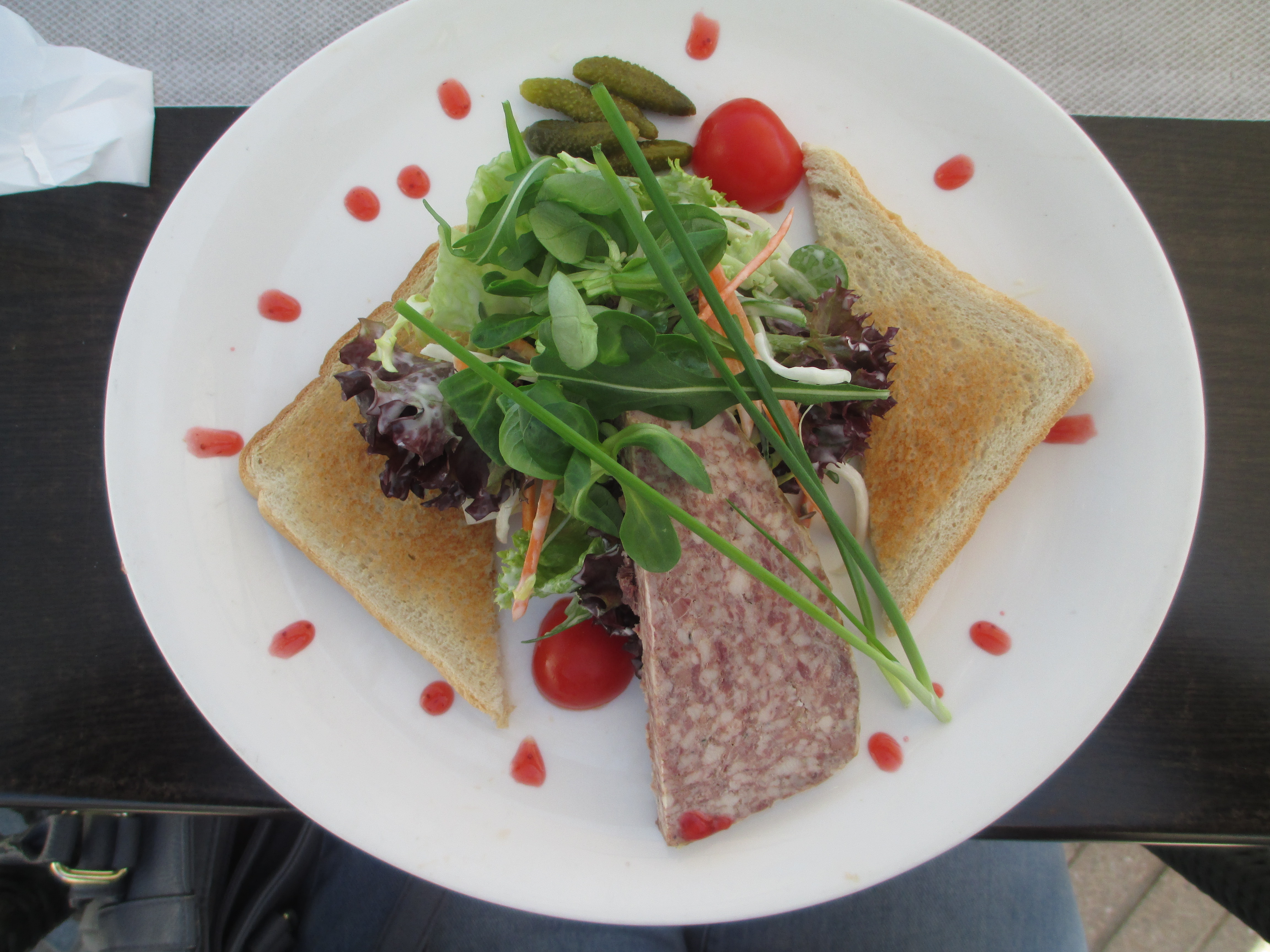
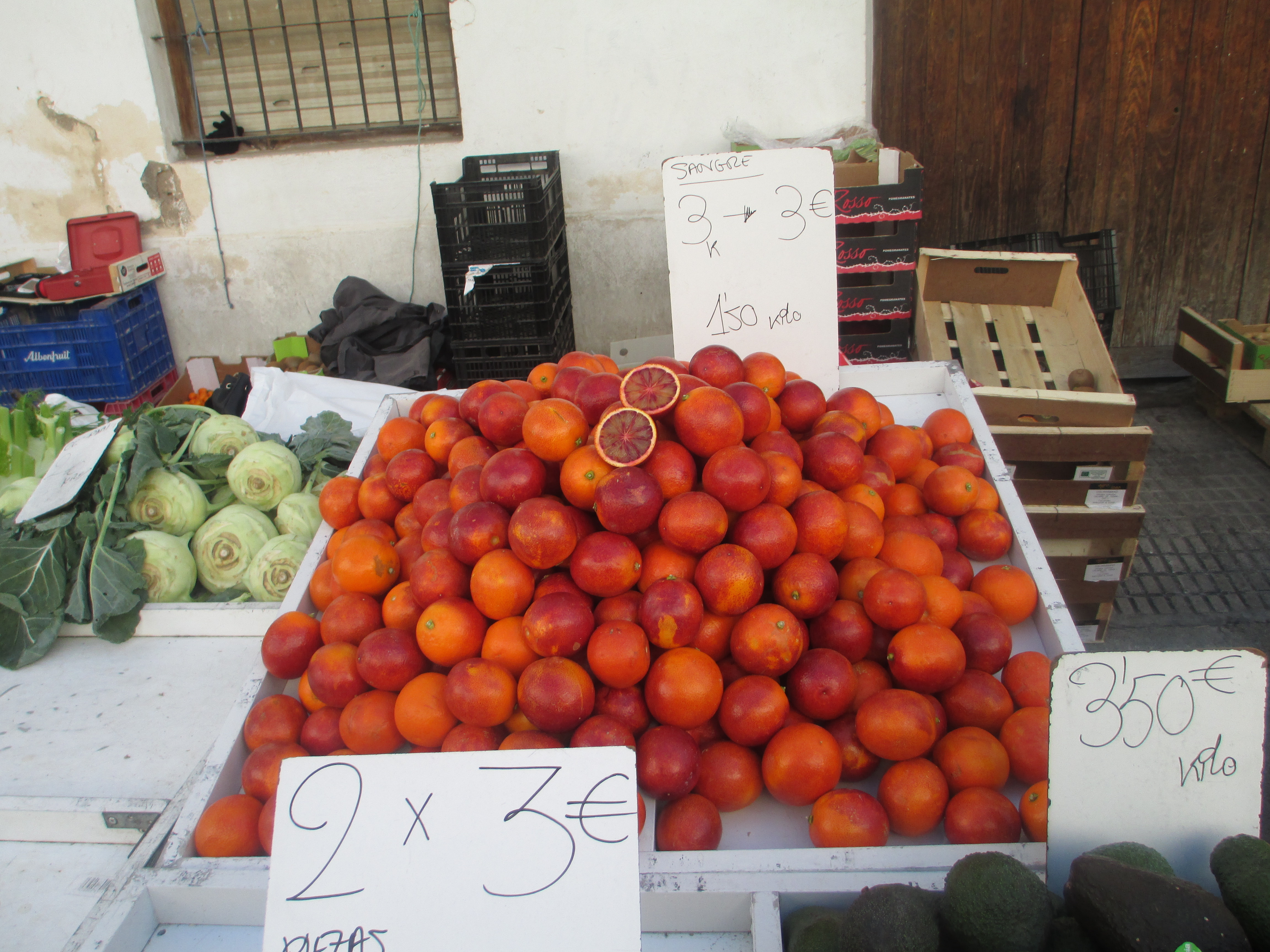
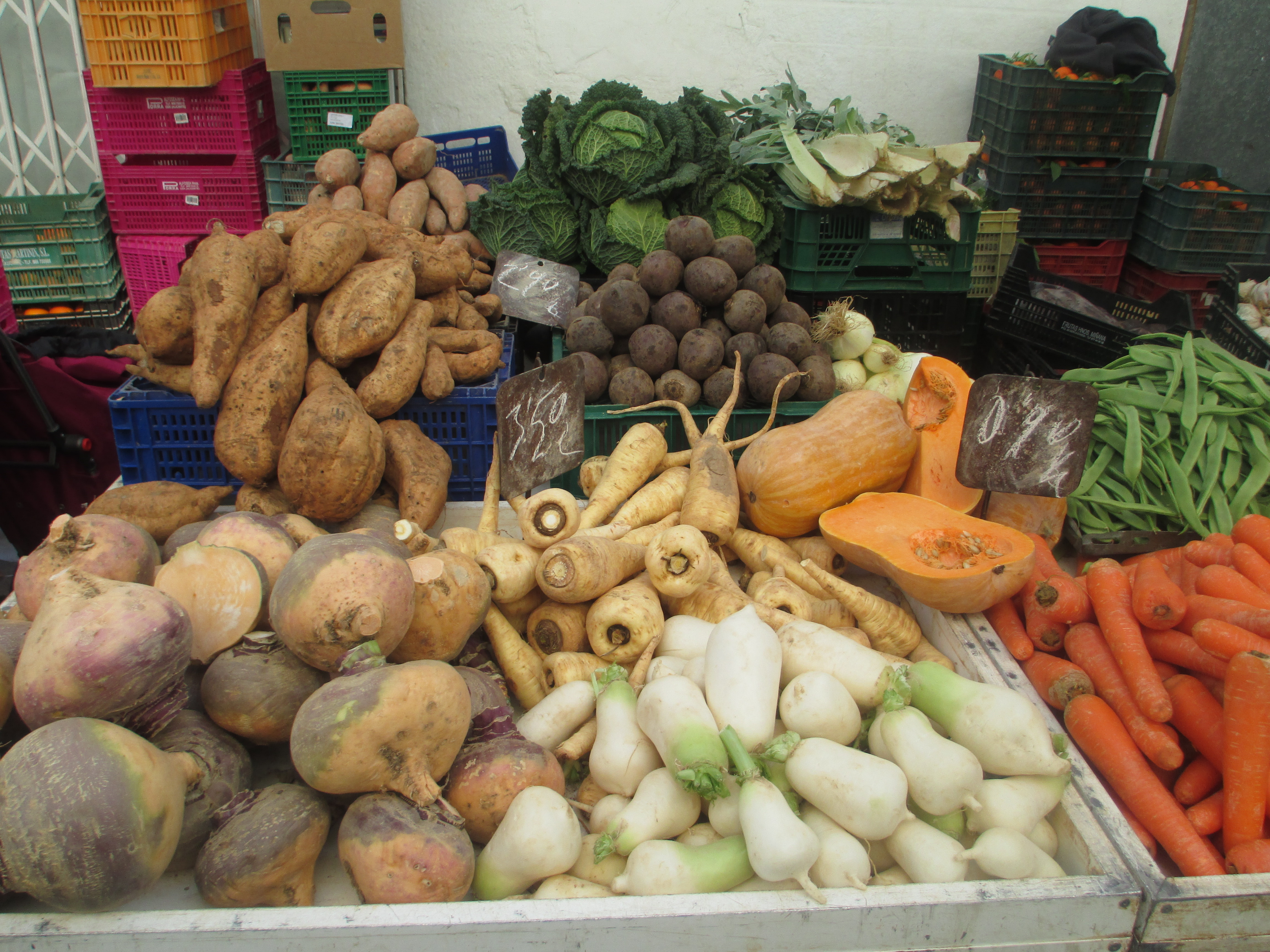
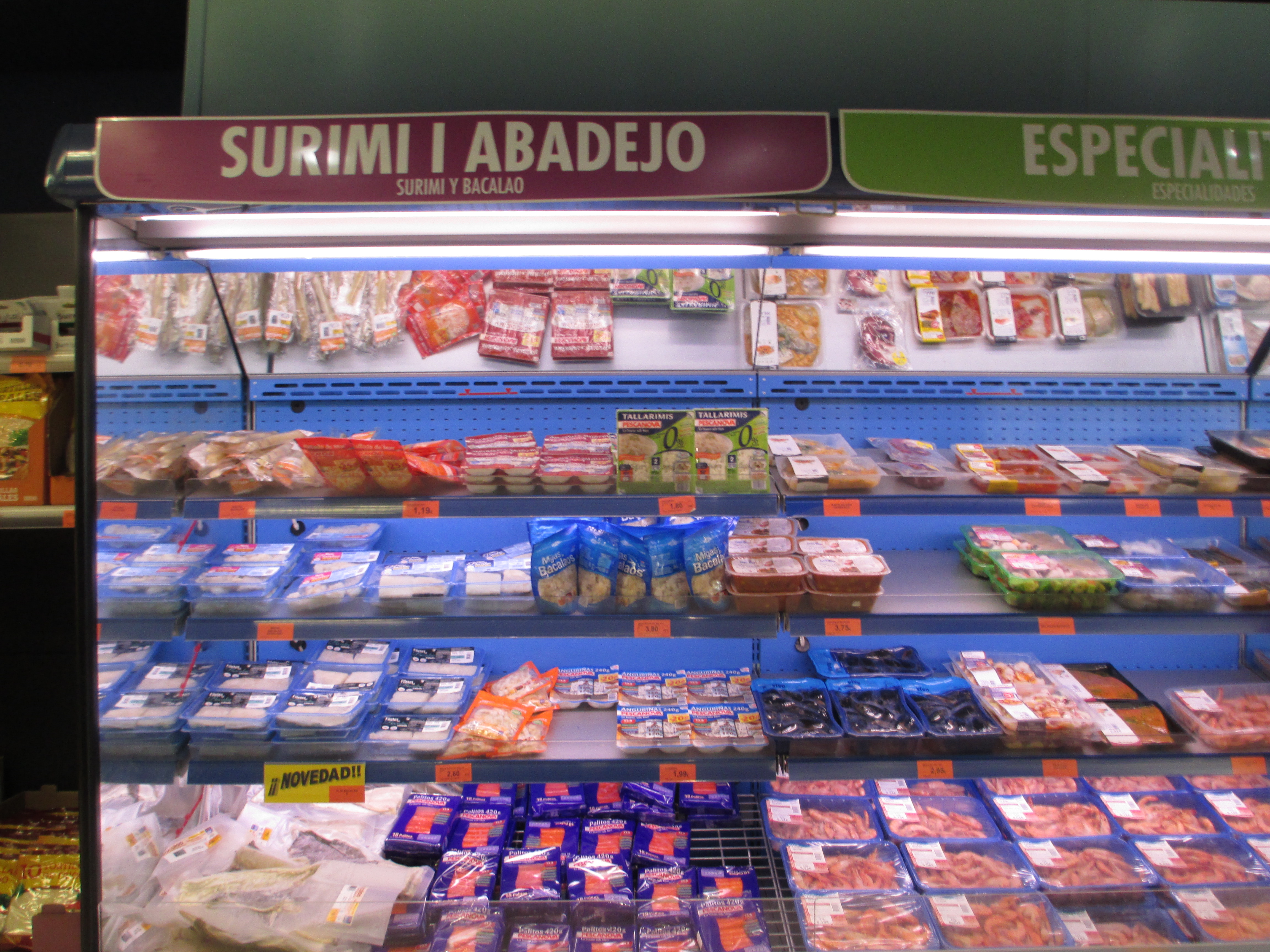
Spain is well-known for its culinary excellence, but perhaps less well understood is how regional the food is. For example, when we were in Toledo, the offerings included suckling lamb, suckling pig, quail, partridge which are available in that area. Here in Altea, located in the province of Valencian on the coast of the Mediterranean, the focus is naturally on fish, seafood and the bounty of local fruits and vegetables. There is a significant presence of typical French fare including baguettes, crepes, and pate, and Italian items including pasta and pizza. In this post, I will feature photos of some of the local products including from the weekly farmer’s market and local supermarket.

IMG_0431

IMG_0425

IMG_0429

IMG_0428

IMG_0433

IMG_0432

IMG_0435

IMG_0441

IMG_0438

IMG_0437

IMG_0376

IMG_0381

IMG_0375

IMG_0373


Party…Spanish style!!

19 Mar
IMG_0447

Party paella being prepared

Yesterday was a stellar day in that I was invited to the birthday fiesta of the “novio,” (boyfriend) of my good friend, Carmen, whom I have known for about a year. She came to Altea about a year ago, and now lives with Pepe in the adjacent town of La Nucia. Since La Nucia is slightly inland, the houses are more likely to be single-family detached homes, often on large plots of land in the undulating countryside which harbors fruit trees and other vegetation, horses, and other scenic pastoral sites. Although very close to my town of beachside Altea, it has considerably different feel.

Since I (proudly) no longer own a car, Pepe picked me up and drove to his “estancia” (ranch.) En route, he explained that he lived in Altea when he was young, but has been living in La Nucia for 40 years. Upon arrival, he gave me a tour of the house, outbuildings which housed two separate barbecues, and many fruit trees. I laughed as I recognized that the blue granite counters he had in his kitchen were the same as I had installed at my former house in California.

IMG_0445

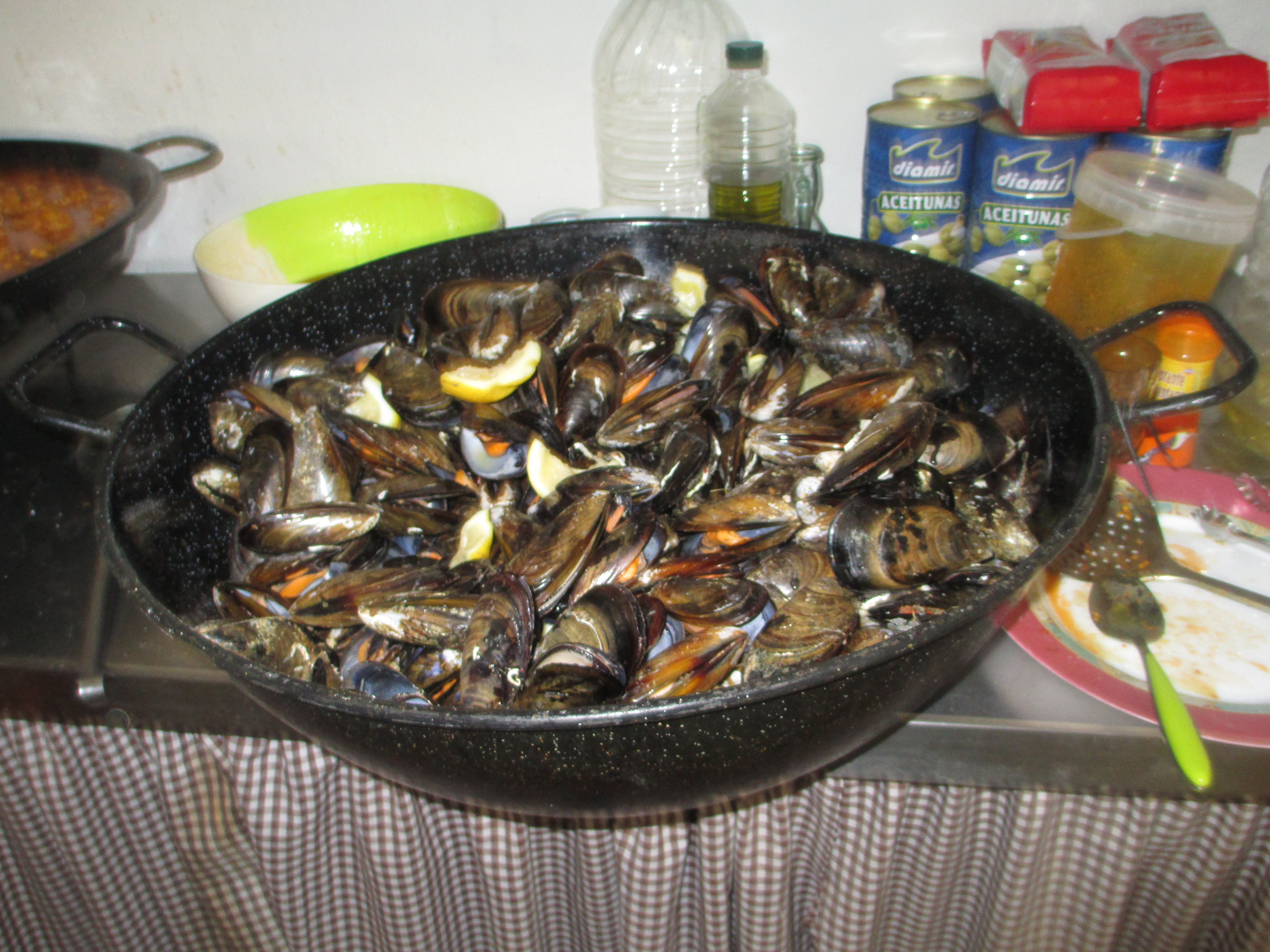
Mejillones (mussels) being cooked

Carmen, who is Cuban, was busy cooking dishes from her nascent land, including rice with black beans, pork (which had incredibly crispy delicious skins), and “tostones” (fried plantains.) Although I am not usually a fan of plantains, these were excellent. I watched as she pounded them a little flat and then fry them in oil. I rescued one batch from burning when she left the room to greet some newcomers. The following day (today as I write this,) when we spontaneously met for lunch and I told her how much I liked them when I usually don’t, she said she first soaks them in vinegar.

After her cooking creations were bundled for transport on party day, we took the short drive up the hill to the large outbuilding where the fiesta was to occur. Typical of this area, were two huge pans, one of paella and the other of mejillones (mussels) being expertly prepared by two local women. Paella, after all, is originally from Valencia, and Altea is part of the Communitat Valenciana (as they say in the local Valenciana dialect.)

IMG_0444

Carmen helping with the party preparation

Of course, there were the typical cheeses and cured meats available, with loaves of fresh baguettes (as common here as on my many trips to France,) free-flowing wine and beer. With the mussels and paella, several large mixed salads lightly dressed were served in the middle of the lengthy table.

The promise of Cuban music for dancing was frustrated by the lack of cooperation of the equipment brought for that purpose, but Pepe backed up his car to the large open doors of the building and cranked up his Cuban tunes. Rei, a local salsa teacher, got (almost) everyone up shaking their groove things. The multi-cultural assembly including locals, Columbians, Cubans, a Norwegian and others made for a great experience including the chance to practice my Spanish and find new dance friends for the weekly Sunday Cuban/salsa music at Club Cuba in nearby Albir.

Toward the end of the birthday party, they served what was the best dessert I have ever had, and even one of my best desserts ever (although I am not much of a sweet eater.) It was vanilla custard between layers of thin, crispy puff pastry like a mille-feuille (Napolean) but with fresh fruit on top.IMG_0450 As it was time to leave, leftovers and lemons from Pepe’s trees were offered to take home. I was driven home with my large, gorgeous lemons in hand, feeling utterly happy with my new life in Spain. Unfortunately, my photos do not reflect the full revelry of the day as my camera battery crashed but what few I got are shown here.