Archive | Culture RSS feed for this section

Remembering a San Diego Music Icon: Ella Ruth Piggee

23 Jan

I  had recently been reminiscing about some of my talented musician friends in California, both from San Diego and on the Central Coast. I feel fortunate that I can go on YouTube or on my IPod to watch and listen to them perform. I was already planning on revisiting some of these musicians on my blog and Facebook, either with new articles or by reproducing prior articles from my blog or other sites where I have published. The recent deaths of a number of music icons have led me to expedite those plans. Over the next several months, I will be featuring musicians, both deceased and alive.

Ella Ruth Piggee was an incredibly popular, charismatic singer in San Diego for nearly ten years before her tragic passing due to cancer in 1988. I am always on a quest to find great live music, with my favorites being R&B, jazz, funk, standards, Latin, and classical. In my quest in that regard, in 1978, I was told about Ella Ruth Piggee, who was then performing at a bar in East San Diego, in an economically-challenged area. I first saw her perform at the Black Frog to a predominantly African-American crowd. I was blown away by her vocal talent, her ability to connect with the audience, and her great sense of humor. Anyone who ever regularly went to see Ella Ruth perform knew if you sat in one of the tables near the stage that you would be subject to her chiding, anything from the type of socks you were wearing to mentioning that in spite of having the best seat in the house you have hardly ordered any drinks. Then she would let out one of her loud, infectious laughs.


Over time, Ella Ruth and I became very good friends, and it was always a delight to hear her perform or to spend social time with her. Early on, she sang with Bruce Cameron (trumpet, cornet and flugelhorn) and Hollis Gentry III (saxophones and flute). Carl Evans, Jr. (keyboards) and Hollis (who were also friends of mine,), went on to be two of the founders of hugely internationally successful jazz-funk/fusion band with Latin influences, Fattburger. Unfortunately, they both suffered premature deaths due to health issues, as well. Ella Ruth sang, “Make That Dream Come True” on Fattburger’s Good News album, which I believe was released in 1987 shortly before her death. The song was also featured on the Best of Fattburger released in 1992.


Typically, Ella Ruth’s Talk of the Town band would play instrumentals for the first half the set and then she would finish the set with R&B, jazz and pop vocals. In my opinion, this form of music sets featuring both instrumentals and vocals gave those in the audience unfamiliar with jazz exposure to it, which helped to increase interest in instrumental and vocal jazz in San Diego. Ella Ruth finished every song with her signature spontaneous, creative scat. Over time, she became a very popular entertainer throughout San Diego, including the venerable Crossroads in downtown, The Triton in East San Diego and Cardiff, Chuck’s Steakhouse in La Jolla, the Catamaran on Mission Bay, and many more.


While the world class instrumental musicians sometimes changed, Ella Ruth was the main draw for a diverse San Diego audience, which can be seen in her various YouTube videos. I thank all of the caring musicians who took time to upload some of her performances, including Cecil Mc Bee, Jr. (bassist) and Tony Barnwell (keyboard and vocals.)


Ella Ruth was originally from Des Moines Iowa and had also lived in Omaha Nebraska. As I had also lived in Nebraska, and did my undergraduate degree in Omaha, we also had that connection. I arrived back in San Diego in 1978, around the time she did. When I was a poor starving graduate student in San Diego, Ella Ruth would sometimes treat me to a traditional Nebraska, Italian-style steakhouse. In spite of her charismatic on-stage persona, Ella Ruth was a very private person. After performances, she frequently cooked spaghetti at her home for the band, and Midwestern-style fried chicken especially for me, the best ever. Whenever I asked her for the recipe, she told me it was just flour, salt and pepper, which I never believed. I was also pleased to have the opportunity to spend extra time with her during the time she stayed with me when she was looking for a new place to live.


Ella Ruth’s longtime friend, Mitch Manker plays trumpet, flugelhorn and pocket horn on the posted YouTube video. Like Ella Ruth, Mitch also came from Des Moines to San Diego, following his stint as first chair trumpet for Ray Charles. Also featured in the posted video is Michael Evans (drums), Jeff Snider (guitar), and Michael Thompson (keyboard.) Keep in mind these recordings are over 30 years old, and the technology for informally recording live music at clubs back then was limited.

Not long before she became ill, Ella Ruth recorded a “demo tape,” a copy of which she gave to me with her personal handwriting of the songs she recorded. Hollis is clearly the saxophonist. I have been unable to figure out who is the fantastic keyboard player, in spite of asking a number of her musical contemporaries, so if anyone out there thinks they may know, I can send you a digital copy of the recording. I have been in contact with the San Diego Museum of Jazz to whom I plan to donate the tape.
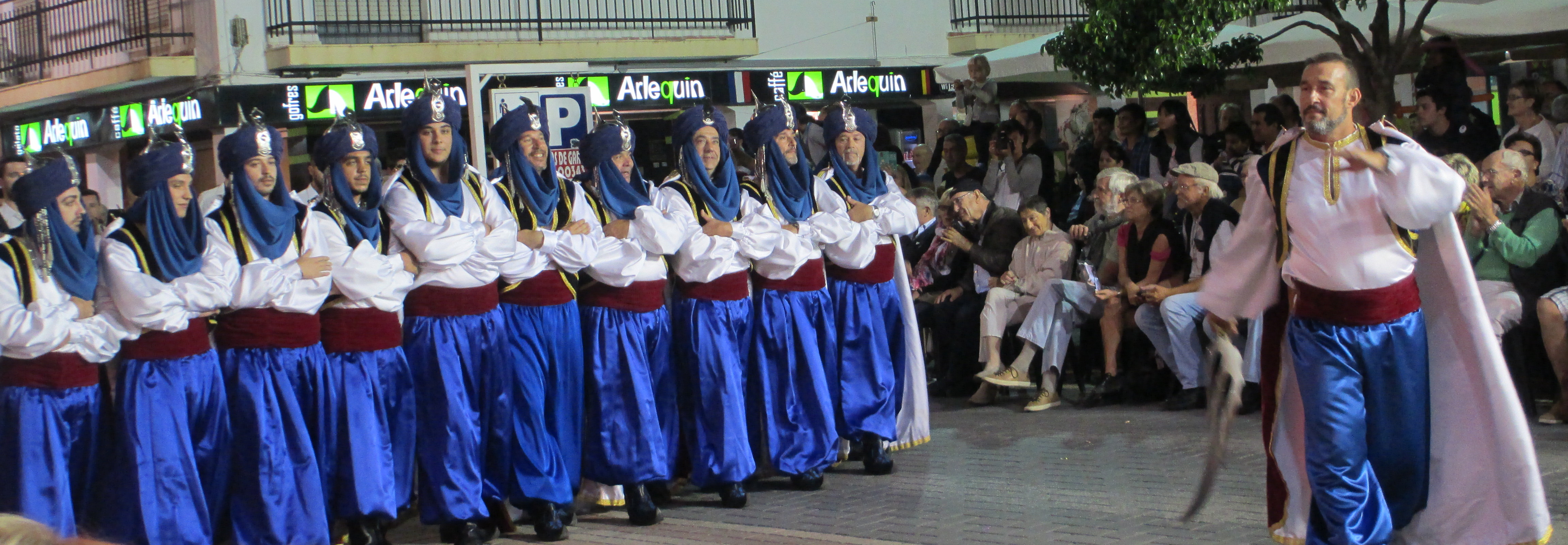


10 Best Images of Moros Y Cristianos Festival Altea: Entrada Mora

8 Nov

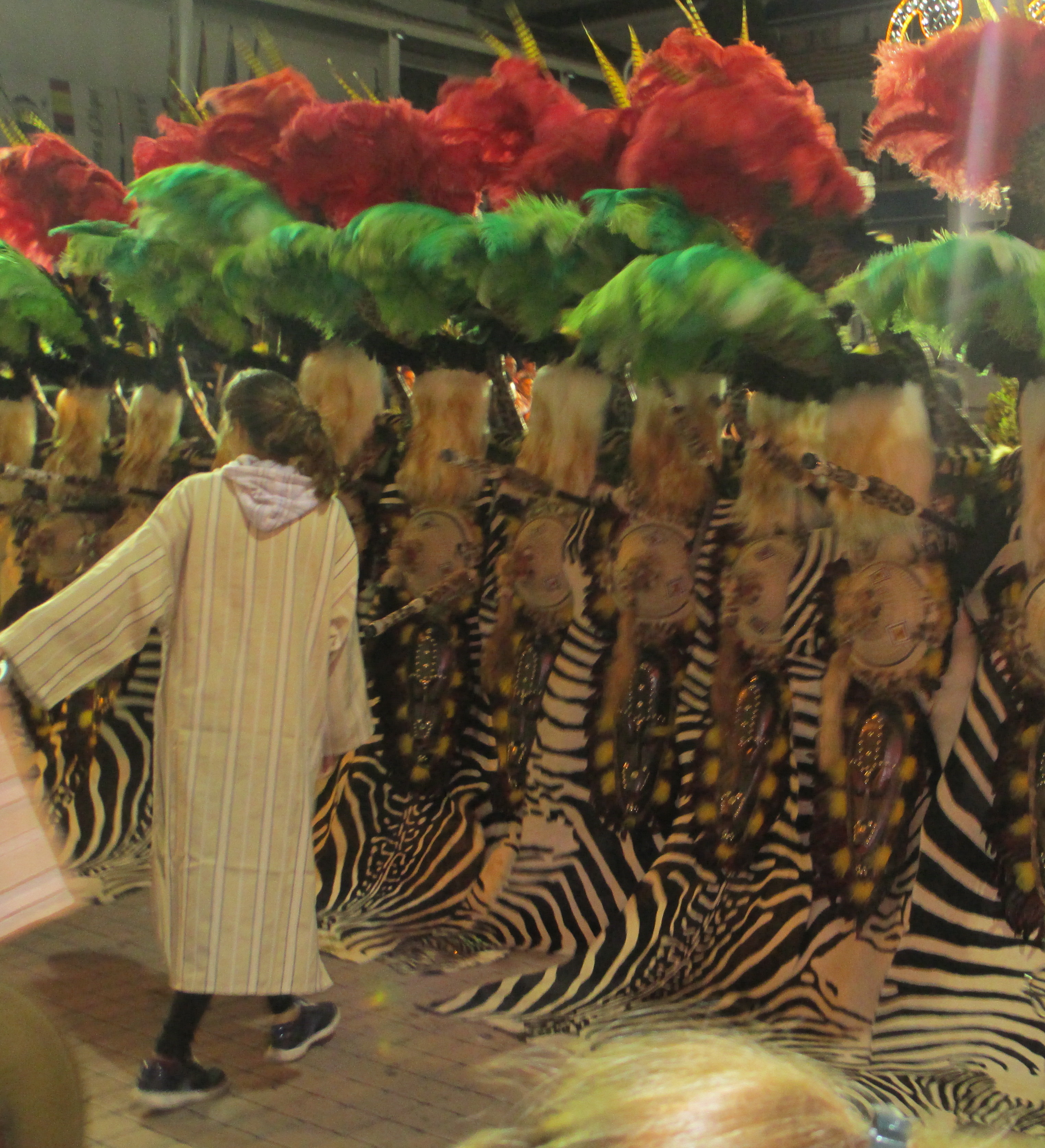
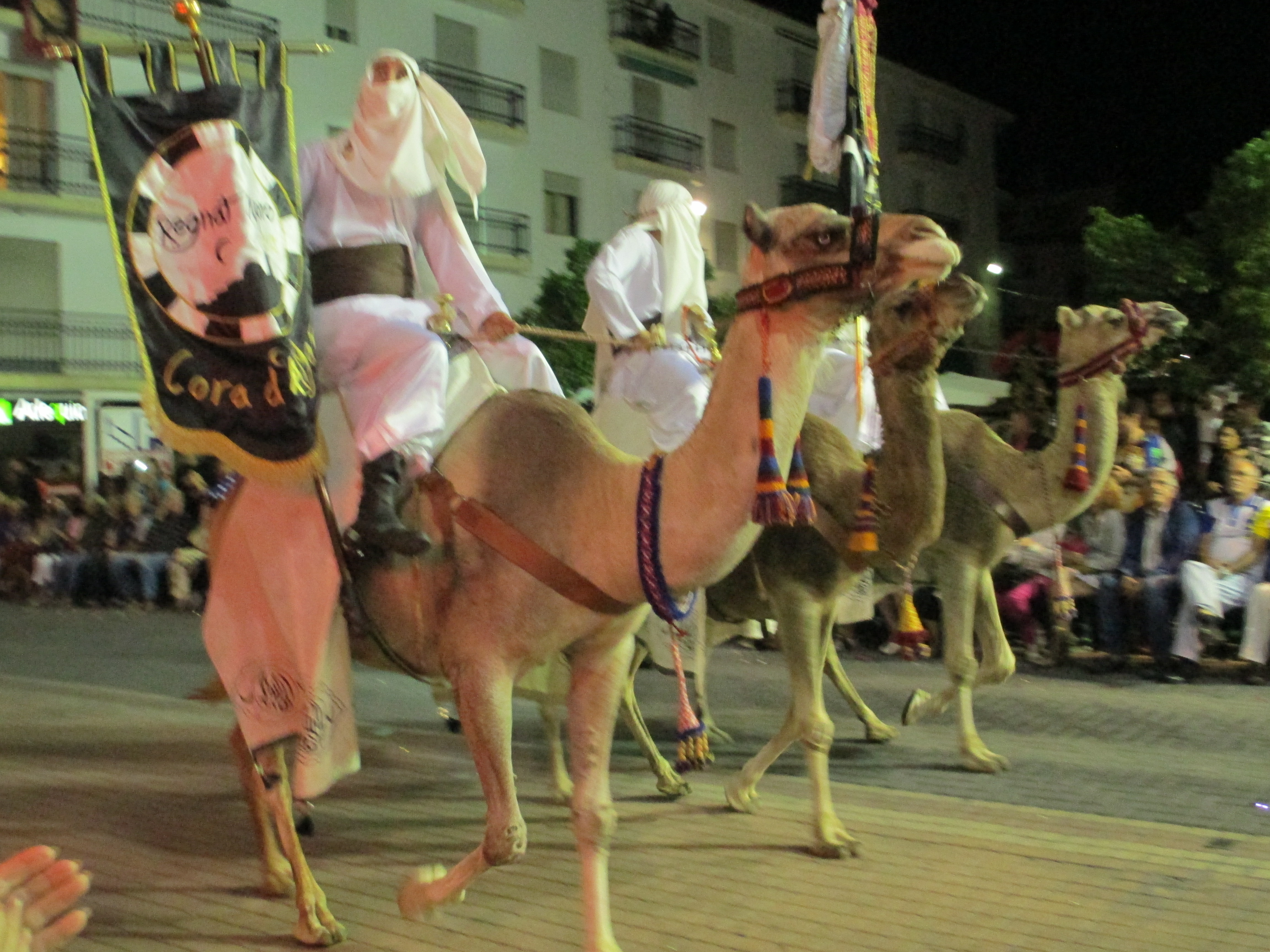
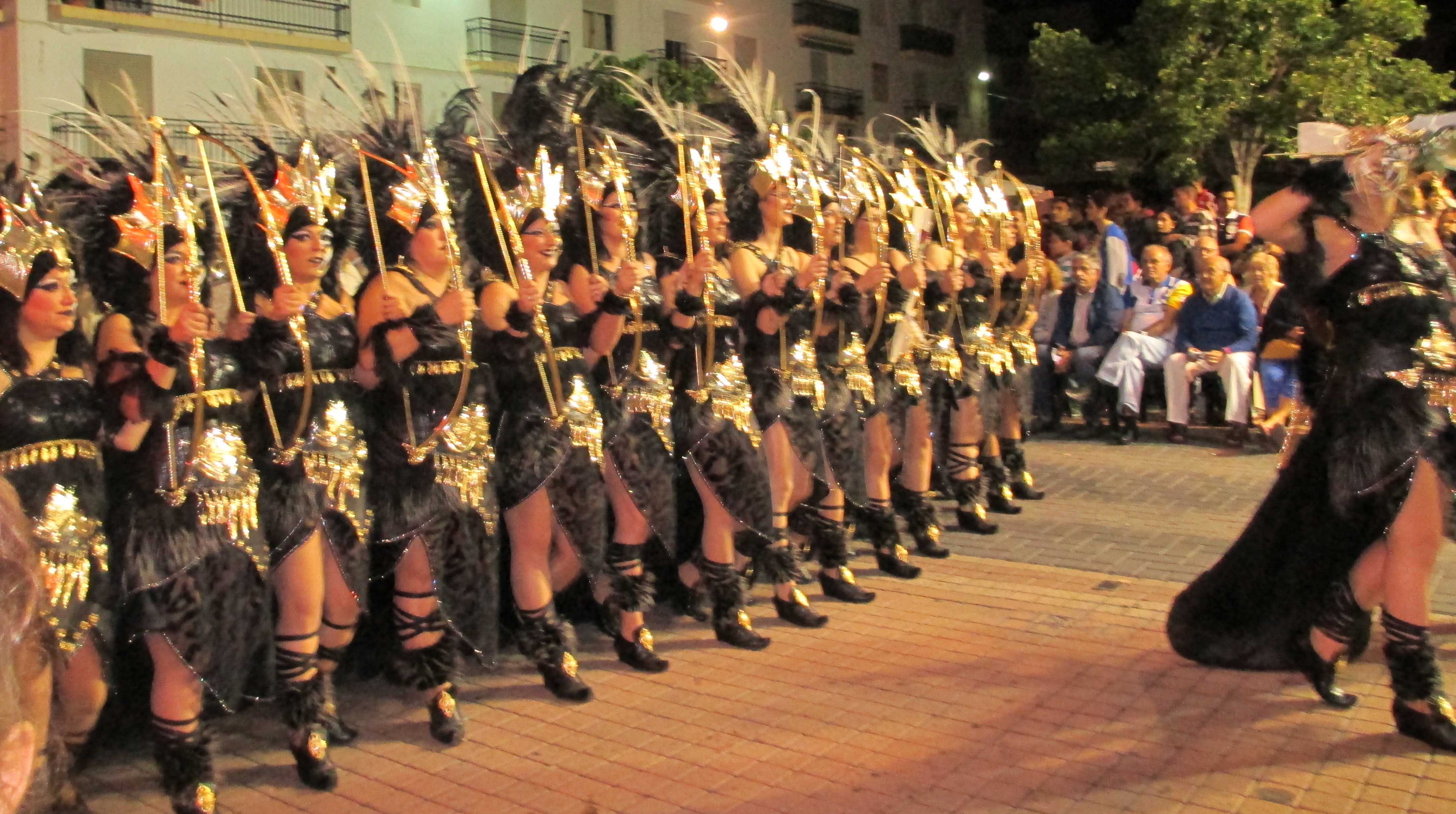
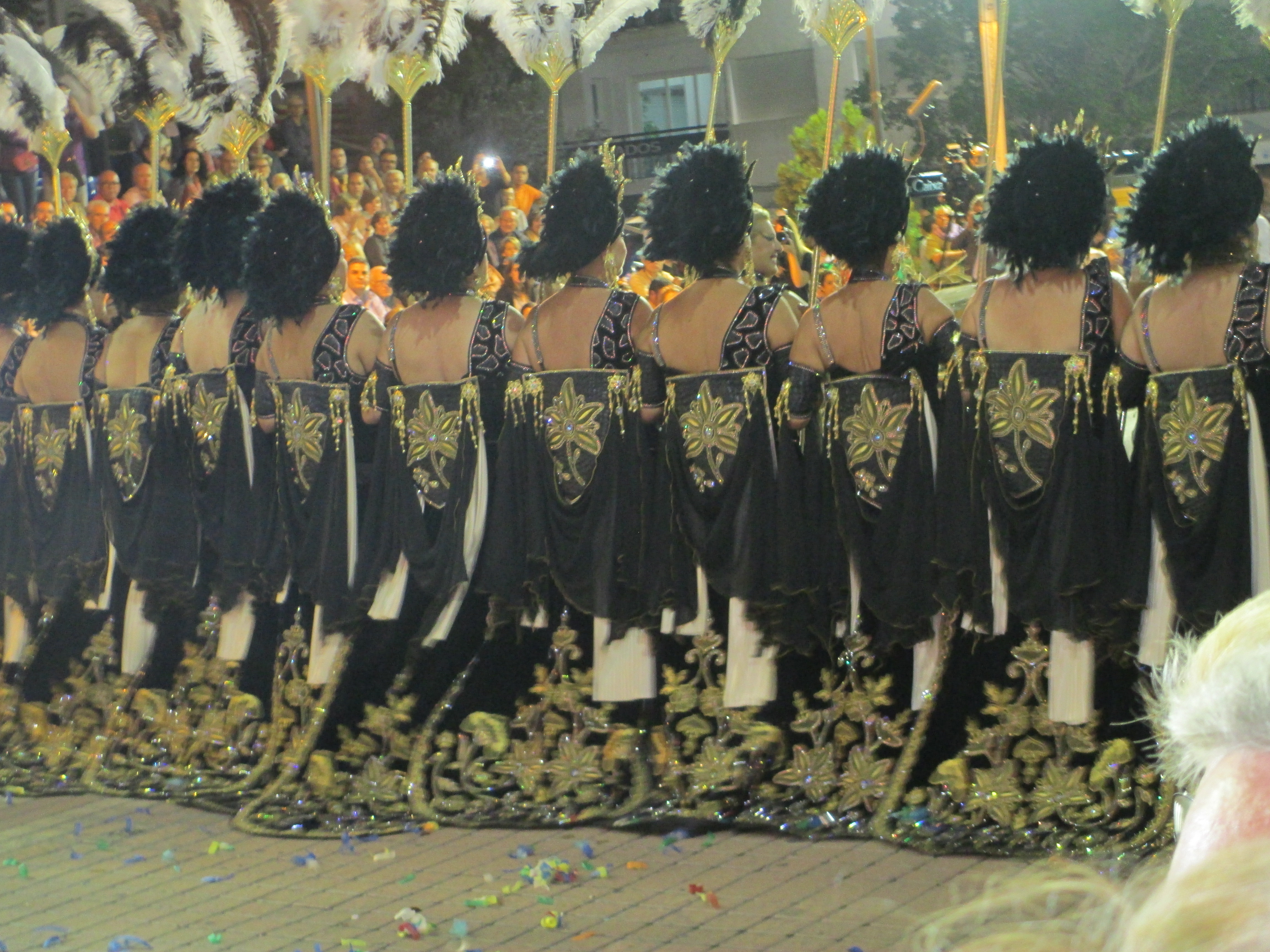
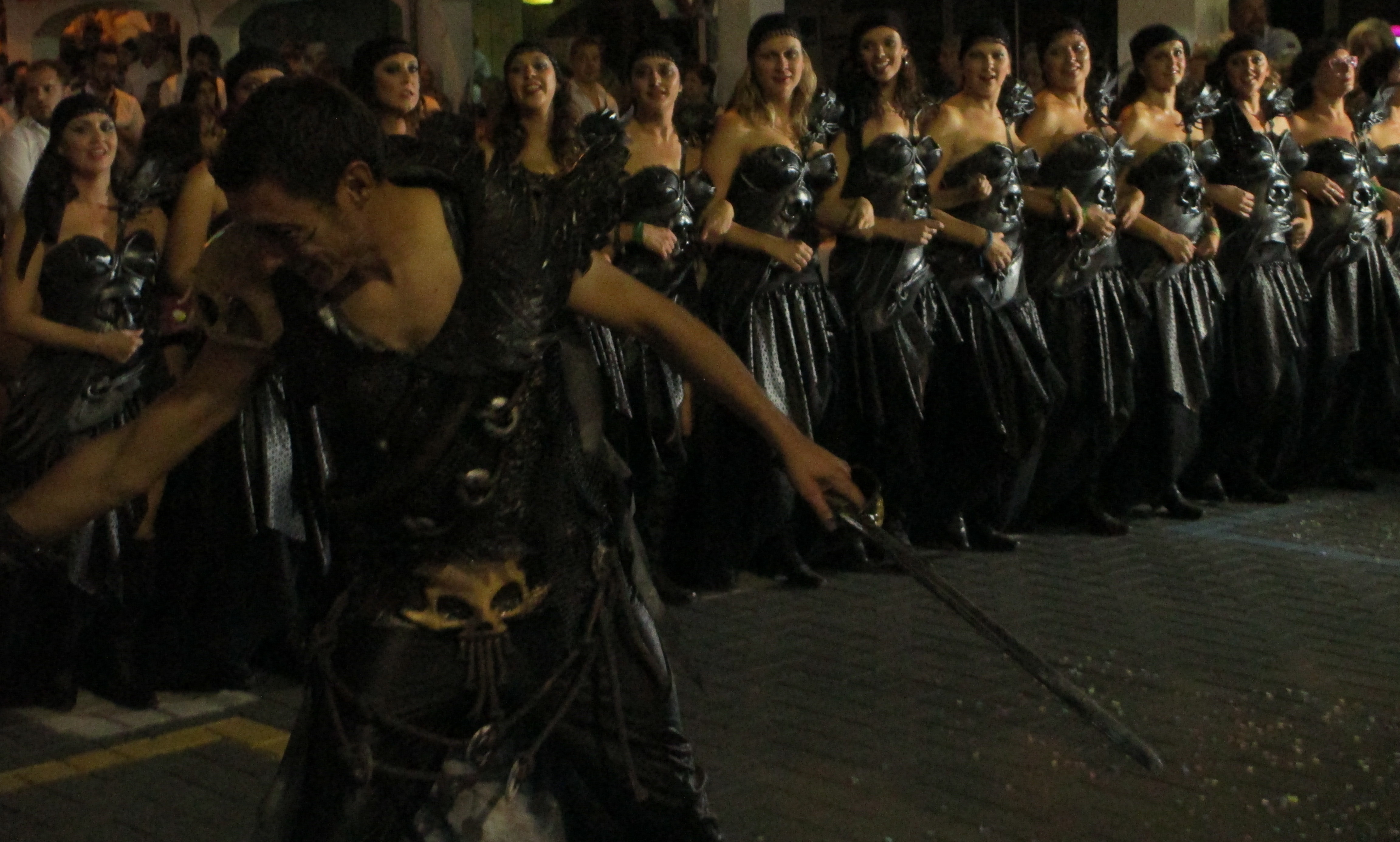
In my two prior posts, I blogged about one of Altea’s most celebrated holidays, Moros y Cristianos. As promised, this blog post will focus on the highlight of the festival, the Entrada Mora, the spectacular parade of the “Moors.”

IMG_1524_1

IMG_1527

IMG_1530

IMG_1543_1

IMG_1551

IMG_1554

IMG_1555_1

IMG_1569_1

IMG_1571

IMG_1584

Entrada Cristiana (Christian Parade Entry): Altea

25 Oct

In my last post, I gave a brief summary of the annual Moros y Cristianos  festival, and showed some of the opening day festivities.  This post will feature a few photos from Entrada Crsitiana, and next post Entrada Mora.

IMG_1465

IMG_1502A_1

IMG_1475

IMG_1466

IMG_1477

IMG_1482

IMG_1485_1

IMG_1504

IMG_1503

Top 10 Things to See and Do In Valencia Spain

21 Sep

Valencia is a feast for the senses. In another post, I displayed photos of the many stimulating scenes that gave me a feel for this vibrant historical city. The city of Valencia, and the once “Kingdom of Valencia” offer a rich, complex history with Valencia has one of the largest historical centers in Spain. Exploring Valencia from my adopted home town of Altea Spain made the drive to Valencia approximately one hour. Here are my top ten picks to see.
  1. Valencia was settled as a Roman colony in 138 BC on the strategic location of an island in the Turia River, which runs to the Mediterranean. The Turia River, which was subject to flooding the city, was diverted after a major flood in 1957, and the now-named Gardens of Turia river bed is a lengthy multi-use sunken garden with pathways, playground, gardens, fountains, athletic track, cafes, concert venue and more. Allow adequate time to meander through all or part of its nine kilometers.
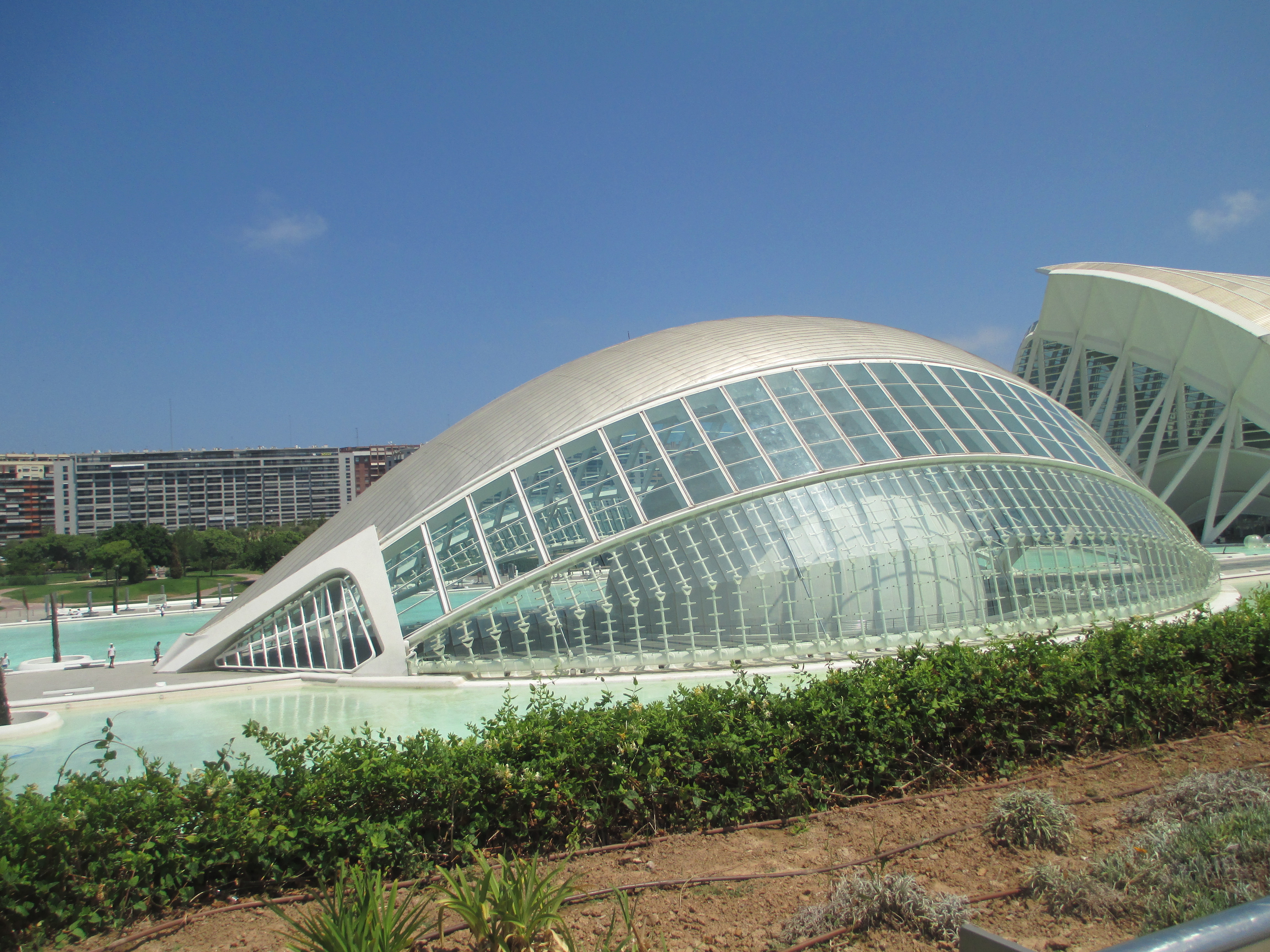
  2. Toward the east end of the Gardens of Turia is the modern, architecturally astonishing City of Arts and Sciences, whose structures were inspired by animal skeletons. It houses an IMAX theatre, Europe’s largest aquarium, science museum, and opera house. Valencia offers a whopping 45 museums, so do research the various sites to find ones (or none) that fit your interests.

    City of Arts and Sciences

    City of Arts and Sciences

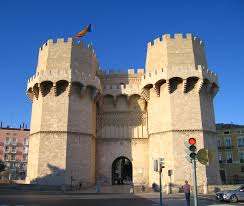
  3. The iconic pentagon-shaped Gothic Torres de Serranos (Serrano Towers) were built starting in 1392, and are the last remaining vestiges of the defensive walls that surrounded Valencia. The Towers are the historical entry point into the Valencia’s old town city centre. A hike to the top affords the visitor interesting views of the historical interior, with the reward of a panoramic view of Valencia from the top.

    Serrano Towers

    Serrano Towers

  4.  In the city centre is the Cathedral of Valencia, a 13th century church built on what were previously sites of an early religious temple and later an 8th century mosque. A chalice dating back to the first century is believed by many experts as the most probable chalice to be the true Holy Grail, used in the Last Supper. El Miguelete, the emblematic Gothic bell tower, next to the Cathedral, where there is another opportunity for spectacular vistas of the city, if you are willing to tackle the 207 step winding staircase.
  5. Valencia was widely known for its textile production and mercantile trade, and to that end, the La Lonja de le
    Ceiling of La Lonja de la Seda, originally painted blue with gold stars

    Ceiling of La Lonja de la Seda, originally painted blue with gold stars

    Seda, (the Silk Exchange) was built starting in 1482. This lavish and beautifully designed Gothic building is now a UNESCO World Heritage Site. Professional- and self-guided tours are available, as well as a free audiovisual 20 minute film about the site.

  6. Near the Silk Exchange is The Mercado Central (Central Market). Built in 1914, it has one of Europe’s largest and oldest indoor markets, with a dizzying array of fresh produce, fish and seafood, many varieties of land animals, and some common regional foods, as well as rare items. It houses a popular indoor eatery, which offers creative dishes.
  7. Make sure to try some of Valencia’s unique dishes. “True” Paella traditionally consists of only a special local rice (typically bomba), green beans, rabbit or chicken, snails and saffron, although many other types are available. It is best when freshly prepared but does take about 30 minutes, well worth it. Or try the fideuá which is similar to paella, but made with small curved hollow noodles instead of rice.
    Vegetables at Central Market

    Vegetables at Central Market

    Horchata is a popular local drink made of sugar, water and tiger nuts, the tiger nuts being introduced by the Arabs during their occupation in the 8th to 13th centuries.

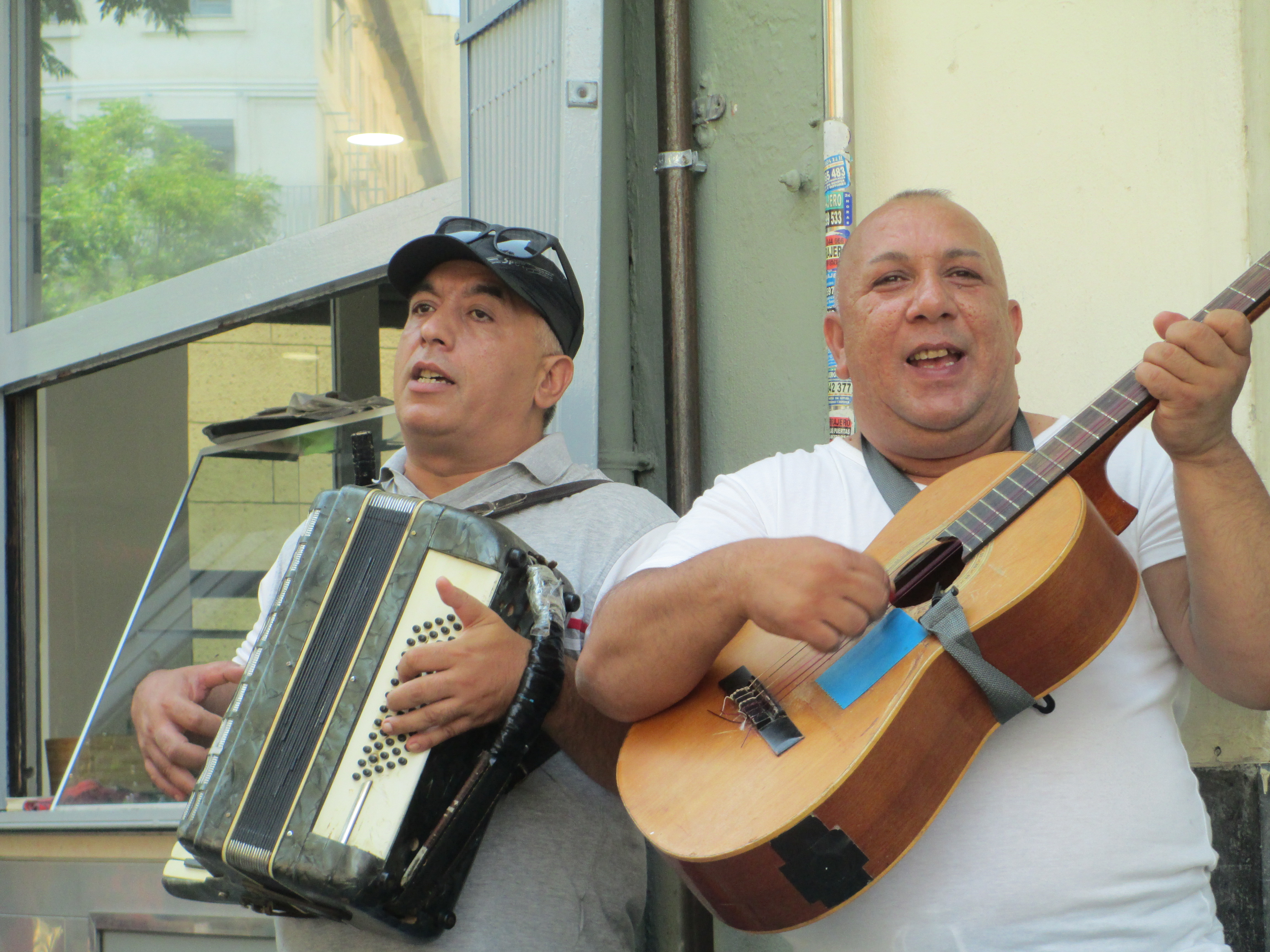
  8. As a die-hard music fan, I am always looking for great live music, which is plentiful in Valencia, especially in the historic Barrio del Carmen. Head to Calle de Cabelleros (or Carrer de Cavallers, in the local dialect) for music in the bars and on the streets. (Keep in mind that both Castilian Spanish and regional Valenciana are spoken, so words may be different, but almost everyone speaks the more widely known Castillian Spanish.) In 2012, the Boston-based Berklee College of Music, widely respected as the best school for jazz, opened a campus in Valencia, and offer periodic performances. Check their website for a list of performances.

    IMG_1208

    Street Musicians

  9. Like every town in Spain, Valencia loves its festivals, the best known of these being Las Fallas. The five day festival in mid-March commemorating St. Joseph which has many components includes neighborhood groups making large, elaborate paper mâché satirical caricatures, which are set on fire accompanied by extremely loud fireworks. A number of the events feature locals in the traditional dress of Valencia, a spectacular cultural sight. However, the festival can be crowded, exceptionally noisy and overwhelming to some. You need to book lodging well in advance for this festival.
  10. And of course, being on the Mediterranean, Valencia has fantastic beaches, including three “blue flag” beaches, those worldwide given top ratings for quality, services and environment. However, I think there are better ways to spend one’s time in Valencia. (Save the blue flag beach visits for other venues in Spain, which currently has the most in the world.)

Nepalese Night

17 May
IMG_0933

Homemade delicious naan

The opportunity to eat Nepalese food for the first time came unexpectedly. After finishing cleaning my piso (apartment), Reetu, invited me to her home that evening for homemade Nepalese food. She inquired as to whether I liked Nepalese food and what time I usually ate dinner. Although I am an adventurous eater when it comes to world cuisines, I had never tried food from Nepal, simply because we did not have any restaurants with that cuisine in the Central Coast of California where I lived. Truth be told, I could have sought out such food in my travels but I had a very bad experience with curry the first time I tried it, and have been put off by the smell of many curries ever since. So with the invitation, I thought I should live by my food motto, “I’ll try anything twice,” (except raw sea urchin.)


Reetu has a lovely countenance and I was particularly warmed by this generous invitation, given the difficulties she, her husband, and their male cousin, were having obtaining employment here in Altea, Spain. Usually I eat a late lunch and no dinner, but on this occasion I waited for the appointed dinner time. Her nine year-old daughter came to escort me to their place which is only a couple minutes’ walk.


After introductions to the two men, we spoke of a number of topics, including the recent devastating earthquakes in Nepal. In Nepal, they lived a short distance outside Katmandu, but owing to the conditions of the road, it took several hours to get to the capital city. Of course, their families were impacted by the earthquakes, with Reetu’s father-in-law taking ill and losing their family home.


By then it was time to eat. The first course was momo, a stuffed pleated dumpling, accompanied by a tomato curry sauce. They were delicious and I had no issue with my curry phobia. I thought that was the meal, but there were two more courses to come. Next was chicken which had been marinated in yogurt, tomatoes, onions, garlic/ginger paste, cumin and coriander, and then cooked. It was served with homemade naan, which was very similar to homemade flour tortillas I got in California and Mexico. They use the naan, like Mexicans and those in the know do with tortillas, by tearing off a small piece and picking up a piece of chicken with it. The last course was aromatic basmati rice, something I regularly make.


IMG_0932

Nepali chicken and naan

As we dined, the family spoke with gratitude about the generous assistance of the Americans in Nepal’s disaster recovery. They also talked with pride about the character of the Nepalese who are kind, hard-working people. Both men are talented chefs, but with Spain’s high unemployment rate and seasonality of restaurant work, it has been difficult for them to find consistent employment. All four had excellent English, and when I asked, they confirmed that they are taught both Nepalese and English from an early age.


As I took my leave, I thanked them for the delicious meal and invitation into their home. Reetu’s daughter likes dogs, including my dog Pepper, so I invited her to come with her mother next time she comes to my house so she could play with the dog. I don’t really need a housekeeper, as I am single and retired, but I am glad to have Reetu.


Costa Blanca Spain: Quality European Living at Affordable Prices

10 May
Iconic View of Altea

Iconic View of Altea

The Costa Blanca area of Spain is often overlooked by North American as an ex-pat living option. While less familiar than the more well-known Costa Brava and Costa del Sol, the Costa Blanca offers a more temperate climate. It is an area of approximately 120 miles of Mediterranean coastline in the province of Alicante. In the month of August, highs average around 84 degrees Fahrenheit and in January around 52 degrees, with total rain about 14 inches annually.

Besides the great weather, the area has many other inviting features. European culture with contemporary music, opera, symphony, ballet and other forms of dance, visual arts are widely available. There are many famed Spanish festivals here, including Easter week (Semana Santa), and Moros y Cristianos. Alicante is in the Valencian province, with Valencia being the third largest city in Spain, where there is the famed unique City of Arts and Sciences complex which houses museums of several sciences and the arts, Las Fallas (featuring elaborate paper mâché statues often with characters that reflect pop culture which are ultimately set aflame in their numerous neighborhoods) and the nearby La Tomatina (infamous tomato throwing festival.) Many Spanish are avid sports fans, as participants or spectators, particularly for soccer; bike, car and boat races, basketball, ocean activities and more.

IMG_0494 (2)

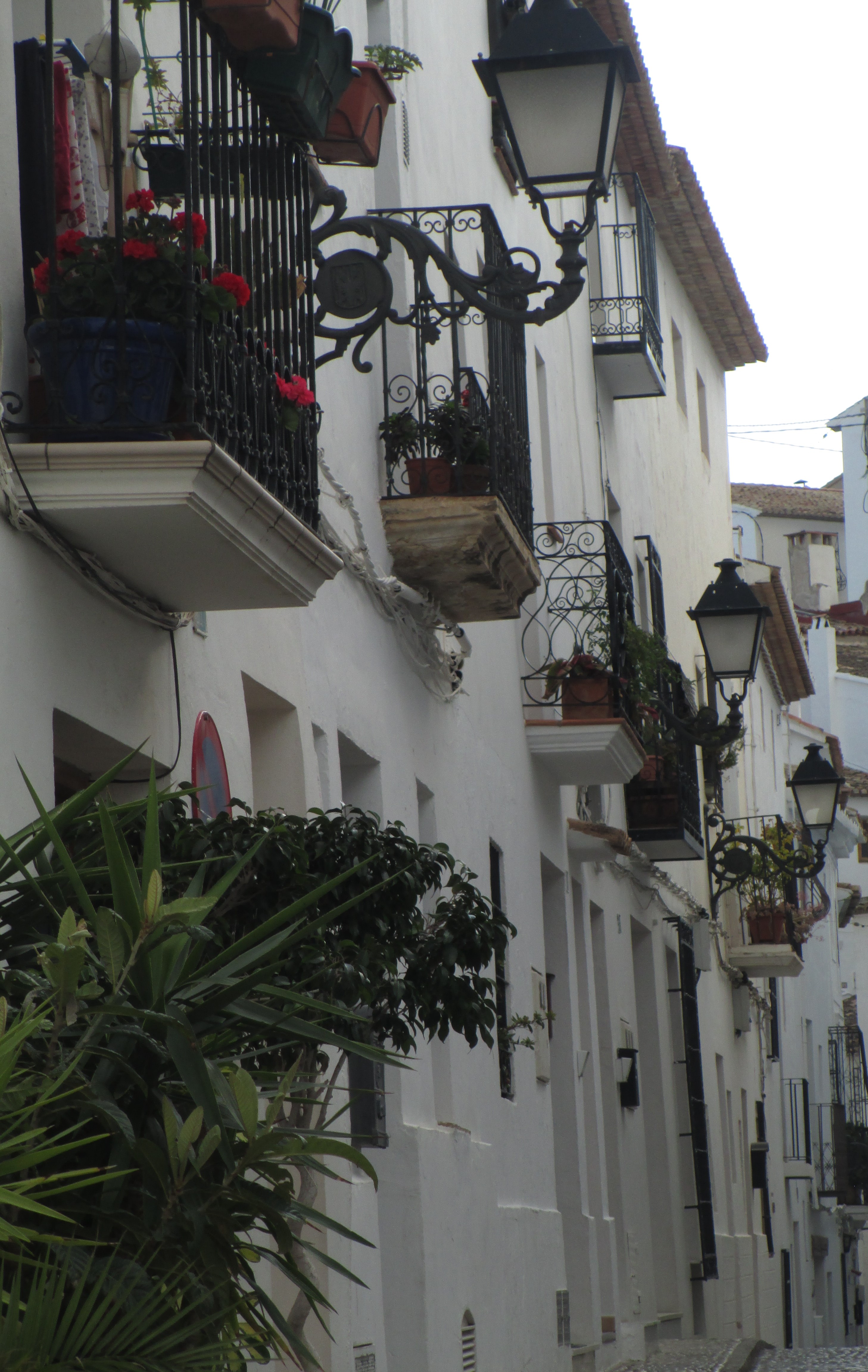
Typical street in Altea’s Casco Antiguo

Besides the many coastal communities, there are numerous charming inland towns in the hills, valleys and plains which have castles, ancient ruins, historic buildings, caves, and parks and other nature attractions. Many local words and names such as those beginning with “al” or “ben” are Moorish in origin. The influence of the occupation by the Moors from 718 AD to 1492 is still visible in the terraced hillsides, and numerous orange trees. Each town on the Costa Blanca has its own distinctive charm. Altea is considered the “cultural capital” of the Valencian region and is also known for its iconic hilltop church with shiny blue cupola and white tiles. Villajoyosa has distinctive differently brightly-colored seaside homes, which were intended to guide fishermen back to their specific abode. The provincial capital of Alicante is a sophisticated and historic city, with a stylish promenade area featuring cafes and upscale stores, a large marina and beach area, and the Santa Barbara Castle sitting atop the Mount Benacantil. Elche is home to a grove of about 200,000 palm trees, which have been designated as a UNESCO World Heritage Site. Benidorm is a popular spot for people wanting a lot of activities, and is party central for many European vacationers. Its two beaches are consistently rated as among the best in the world.

IMG_0606

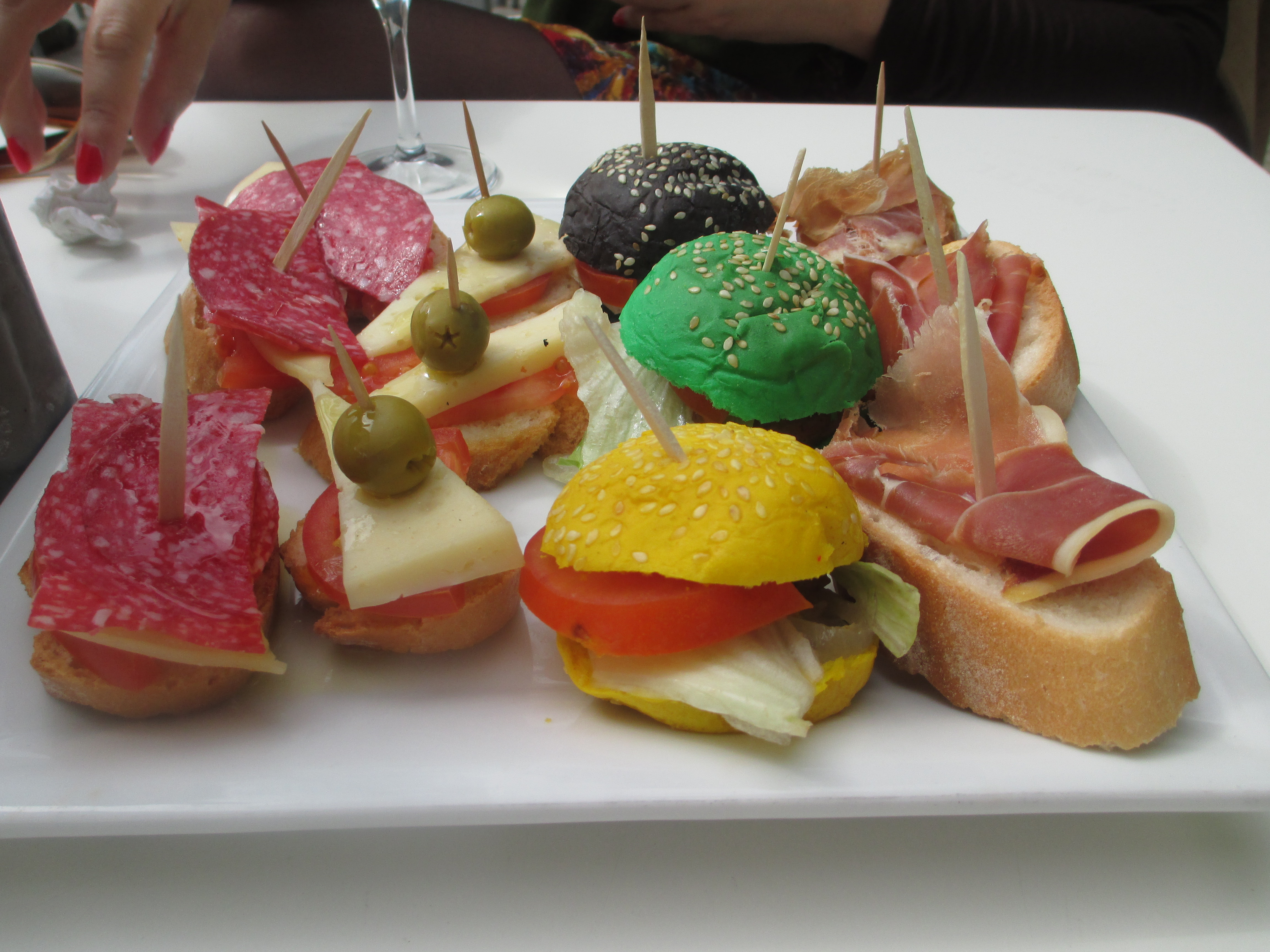
Sample of delectable (free) tapas served with beverage

The cost of living is surprisingly affordable given all that the area has to offer. For example, rents in Altea range from 325 to 350€ per month for a one-bedroom apartment or studio, and 400€ plus for a large three bedroom. In Elche one can find a 300€ three-bedroom apartment that is centrally located. The Costa Blanca offers ample apartments or homes for sale for under 100,000€, and some under 50,000€. Because of the unique characteristics of each town, it can be advantageous to stay in the widely available, affordable vacation rentals while test-driving a town or even a neighborhood. Several websites, which feature both real estate rentals and sales, can be accessed before visiting the area.

IMG_0429

Bounty of Local Crops at Farmer’s Market

Olives, olive oil, wine, local fruits and vegetable, and the bounty of the Mediterranean are diet staples, and, of course, Spain’s ubiquitous jamones (hams.) Food is generally inexpensive. Most towns have a weekly farmer’s market where there is dizzying display of colorful flowers, fruits and vegetables. At restaurants, in many towns, there is a menu del dia (typically a two or three course meal, with bread, beverage, dessert or coffee) at a nice beachside restaurant cost between 10 to 14 €, and less if one goes to places less upscale or frequented by locals. A glass of wine or small beer (“caña”) can be found for under 2€, which includes a tapa.

The area has many European ex-pats, including British, German, Norwegian and Dutch. That makes for a supply of English-speaking medical professionals. Medical treatment are good quality and prescriptions tend to be significantly less expensive than in the U.S.

Many people do not have cars, instead walking or riding a bike. There is good and inexpensive public transportation on the Costa Blanca, with clean timely buses, and a tram that runs from the northern most town of Denia to Alicante. In Alicante, one can access the national railway system including high-speed trains, and the modern and efficient airport, the sixth busiest in Spain. One person can comfortably live on 1000€ a month or two for 1500€, which includes rent, food, utilities, public transportation and entertainment.

Tails from Altea Spain

13 Apr
pepper2

Check out my different colored eyes

So I finally get to offer my observations on this move to and life in Altea, Spain. I might add that I was promised I could put my two-cents in some time ago, but it has been several years before this has come to fruition.

It was confusing with all of the moves I have had to endure, first my original owner, Robbie (son of my current owner) abandoned me to pursue a career as a chef. Besides the lengthy hours he worked, he also apparently felt compelled to spend considerable time doing cross-fit and training for competition weight lifting. I am still not thrilled about this abandonment, but apparently it paid off for him as he received many favorable reviews in such publications as the LA Times, LA Magazine, Zagat, with Belcampo being one of ten top best new restaurants in 2014 by Bon Appetit Magazine as part of Downtown Central Market in Los Angeles. I got to go to his restaurant twice. Even though they don’t allow dogs, I pretended I was a service dog. I was so excited to see him! Then I was whisked off again by my new owner/mama for more changes.

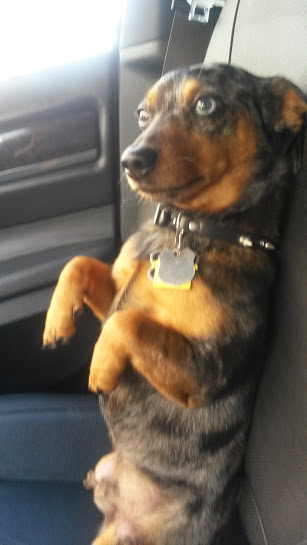
This is me in mama's car before we moved to Spain

This is me in mama’s car before we moved to Spain

We ended up living in a place very different than where we lived on the Central Coast of California. The people here speak a different language, but I have learned about ten words in Spanish, such as ven (come,) muevete (move,) siéntate (sit,) and Pimienta (the translation of my name Pepper.) Many people greet me by name here; I am way more popular than my mama. People are intrigued by my two different color eyes: azul (blue) and marron (brown), and my dapple color. They also are amused when I sit up on my hind legs; they think I look like a Meer cat.

She takes me almost everywhere except when she puts on those black clothes and tells me she is going to Zumba and will be back soon. It feels like forever, especially after the uncertainty all of the changes have given me. When she goes out for a meal, I patiently (usually) sit under the table waiting for my reward from what she ate. Yum!

DanielandPepperr

Daniel and me at his 40th birthday party at Altearte

Like her, I am becoming more social. I now excitedly great her friends, sometimes surprising her and them with my new enthusiastic attempts at kissing them, as opposed to my prior indifference. I enjoy our longs walks every day, usually at least one down to the beach, and the other to the top of the hill where the iconic church is (but we are not attending church.) However, we have fun with our friends in the evening. One of our good friends, Daniel (a native of Norway) celebrated his 40th birthday at one of our local favorite bars, Altearte.

Yesterday, we met up with my new dog friend, Pogo, and his parents, Karen and Barry who recently moved here from Costa Rica (although they are originally from Canada.) We had an outdoor lunch with them and mama’s friend originally from nearby Valencia, Nina. Then we went to the neighboring town, Albir, which has the second highest population of Norwegians, after Norway, so Nina could deliver a birthday gift to a girlfriend. En route, she saw a friend, a former talented sculptor of wood, who sadly suffered a stroke and can’t do his art or speak anymore, but my owner thought the sparkle in his eyes over a drink revealed a glimpse of his former charisma and talent. The owner of the Los Angeles café, also a friend of Nina, presented them with a colorful plate of tapas. After they were done, “claro,” (“of course,” in Spanish), I got my just desserts or should I say tapas. (And, yes, my mama knows the phrase was originally just deserts.)IMG_0840

IMG_0768

Rafa at Club Cuba in Albir for Sunday evening salsa

It was already after the start of Sunday Cuba salsa dancing in Albir, and mama wanted to show the place to Nina. So that is where she goes when she leaves me on Sunday evening. When Rafa was initially playing some low key music, Nina loudly requested Cuban music, and he obliged. The only trouble was that they kept leaving me under the table alone so they could go dance. I guess it was better than being home alone. Then Nina drove us home where we went directly to bed after a fun- and wine-filled day. I burrow per my dachshund heritage, although I find it a little more challenging to sleep here due to traffic and people who talk way louder than I am used to.

It is quiet now during the three to four hour siesta, so I am going to take advantage of this time for a nap, before going for my evening routine of incessant ball chasing; I am ready for her to repeatedly tell me, “Dáme la pelota” (Give me the ball.) All in all, I like it pretty well here, which is good since my original owner, Robbie, is now going to be very busy at his new job at Saison, one of only four three star Michelin star restaurants in San Francisco. I just hope he and his brother Michael visit soon; here they are enjoying themselves in Belize with their brother Spencer and mama while I was left at Canterbury Tails doggie hotel. At least, Spencer will be visiting me next month.20150116_134409

This Week in Altea in Photos

7 Apr

IMG_0673IMG_0652IMG_0645IMG_0683IMG_0684 IMG_0696IMG_0729IMG_0718IMG_0713IMG_0710IMG_0739IMG_0750

The Importance of…Speaking Spanish or is it Valenciano?

5 Apr
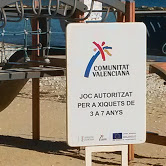
beach sign

Can you read this sign at the beach play structure in Altea Spain? Neither can I and I speak (Castillian) Spanish.

I thought it was important to be able to speak decent Spanish before I moved here. I spoke some Mexican/Latin American Spanish, but the pronunciation and some of the words are different. To that end, I used a computer program to learn Spanish, which included feedback on whether or not my pronunciation was correct. Whenever I encountered a native Spanish speaker, which in my birth state of California, was frequent, I would practice my fledgling language skills. I tried to practice Spanish on a daily basis, which included watching the 24 hour news from Spain.

When I arrived, my Spanish was still somewhat halting, but did improve with regular daily interactions in Spanish. What I did not anticipate was that the official language of my village Altea is Valenciano. What? I had never even heard of that language. It is similar to Catalan, and Castillian Spanish, with some words and letters that are French. Many words here end in consonants. The word for the number eight is the same as in French, huit, whereas it is ocho in Spanish.

IMG_0759

Street signs in “Valenciana”

However, Valenciano is clearly distinct, as I found out when trying to negotiate my way through the already confusing Spanish bureaucracy. Before one can get a residency card (after an already lengthy application in one’s country of origin,) upon arriving in Spain, one has to find a residence and then register it with the local Ayuntamiento (town government), which here is Ajuntament. Well, those two words were similar enough that I could figure them out, although not the ticket dispenser at the Ajunament where you first have to select the task you are there to do before you can get a number to get in the correct line. As well, I have found undecipherable some of the other writings I have encountered including those on public signs which are often only in Valenciano. I only recently realized Poble Antic meant Old Town and that mercat is market.  Altea’s economy relies heavily on tourism, with many Spanish and other European visitors, and it is highly doubtful that most of them can read the signs that are in Valenciano, unless one is from Catalan. This leads me to another interesting observation.

My initial sense was that the people who are native to the Valenciano region are not exactly warm bedfellows with their Catalan countrymen just to the north. In fact, when one goes to make a withdrawal from a local ATM machine, there are choices of several European languages and Spanish languages of Valenciano, Galego, Euskera (Basque), Castillano, but not Catalan. Admittedly, I am no expert, and “Catalan/Valencian” are listed together as official languages in Spain, but I think it is no mistake that the word Catalan is not listed on the local ATMs.

I subsequently learned that there is a Valenciano language controversy, which is too lengthy to discuss here. Some claim Catalan and Valenciano are the same language. There is a fear by some Valencian people of losing their culture and language to their northern neighbors, especially in light of their bid for independence.

The people here are understandably proud of their local culture and foods, which includes many variations on paellas and rice dishes, (they are different and only a very narrow list of ingredients is a real paella), the bounty of the sea, and, of course, cheeses and many types of jamon. Like many older folks, many of the older natives with whom I have spent time or observed, are not interested in trying new cuisines. When my Cuban friend had a birthday party for her boyfriend, he and his friends did not want to try her Cuban rice and beans, baked pork, and fried plantains, which were deliciosos.

IMG_0610

Altea Spain

In spite of the local pride, I am surprised how most people I have encountered here are fans of “Barça” (Barcelona fútbol/soccer team) rather than the Valencian team. There are also many local natives who are Real Madrid fans. I asked one of those native men, Pepe, who is 68, about the lack of popularity of ValenciaCF (the third most successful Spanish team,) and his response in Spanish was basically, “You like what you like.”

I recently used my first Valenciano word, Carrer, which is Calle in Castillian Spanish, (“street” in English,) when giving my address. Further complicating the local language issue for me is that there are a significant number of Moorish words used, including many words that begin with “Al” and “Ben,” with Altea falling into this category. Fortunately, everyone I have encountered speaks Castillian Spanish, so the problem is mainly when dealing with public signs and official documents. I am pleased to be able to carry on conversations in Castillian Spanish. After a flamenco dance class, I ran into the teacher and we had a 30 minute conversation in Spanish, primarily about dancing, but also about what prompted her move from Extremadura region of Spain to Altea. The ability to carry on an extended conversation was very rewarding.

In closing, my observations are my own, and are not intended to provide an academic discourse.

Visual Collage of Altea Spain This Week

29 Mar
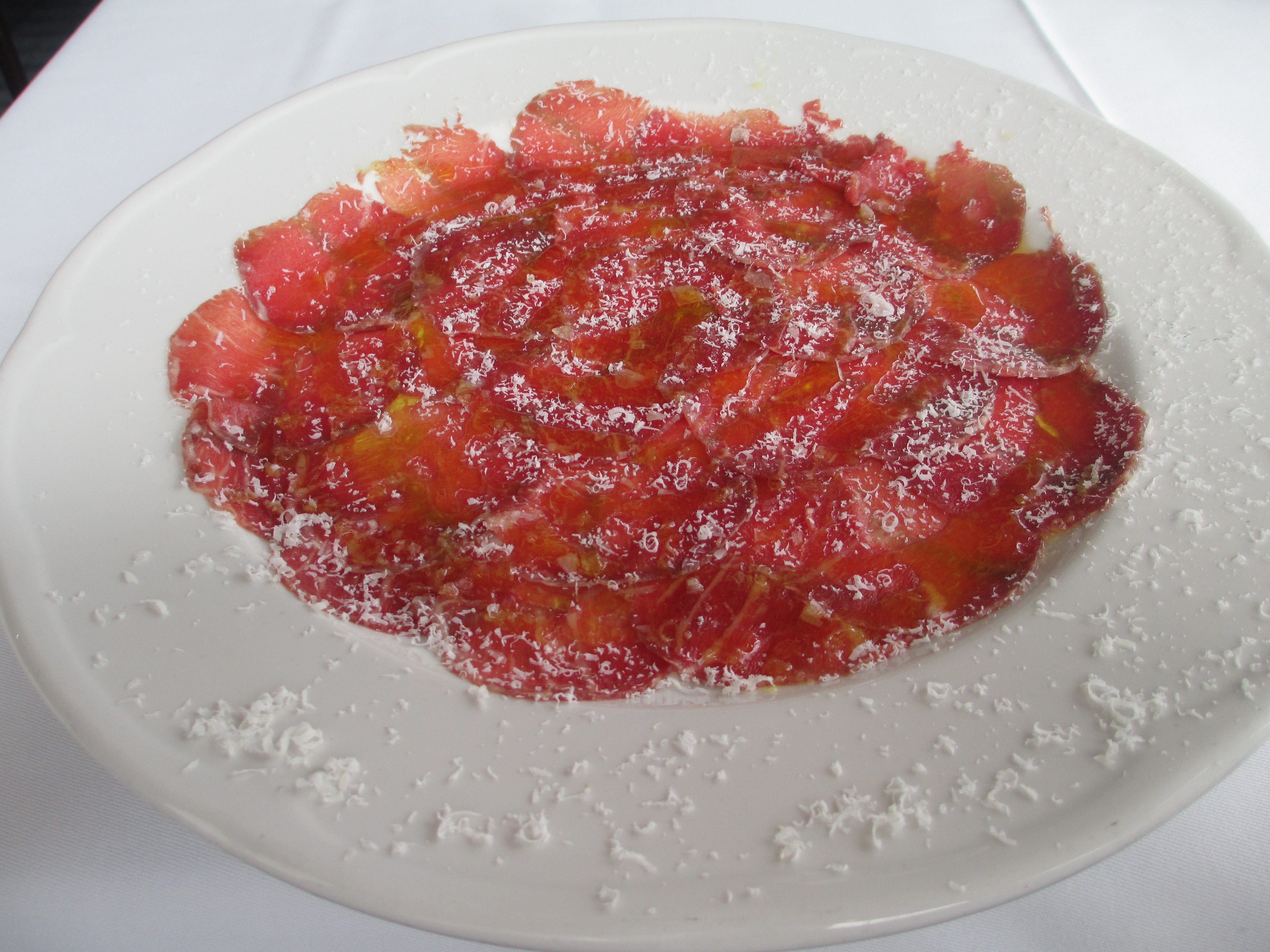
Carpaccio: El Bodegon de Pepe

Carpaccio: El Bodegon de Pepe

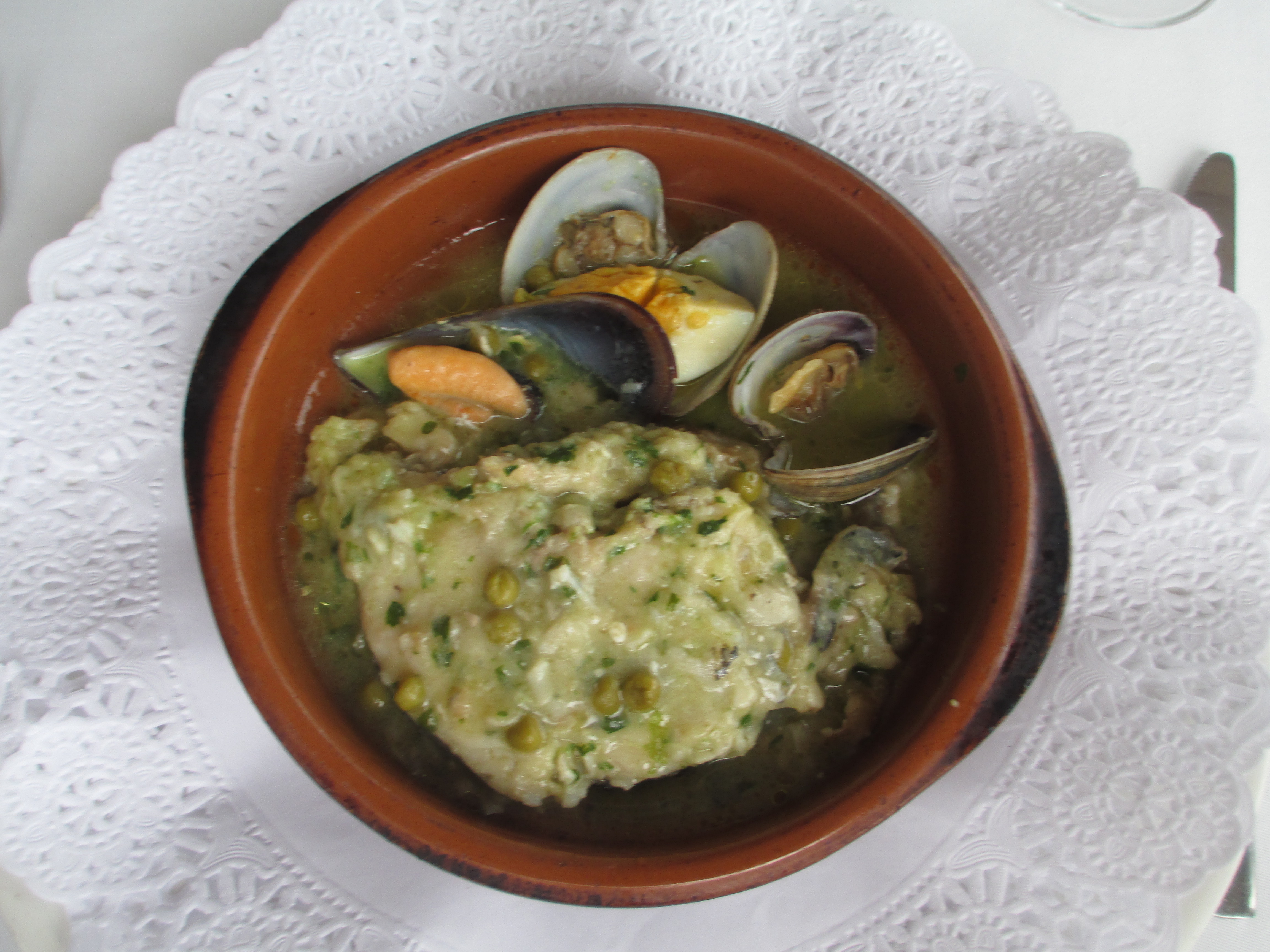
IMG_0457

Fish with mussels and clams

IMG_0606

Tapas at Playa Fronton

IMG_0481

Door on Carrer Sol

IMG_0464

Ensalada mixta

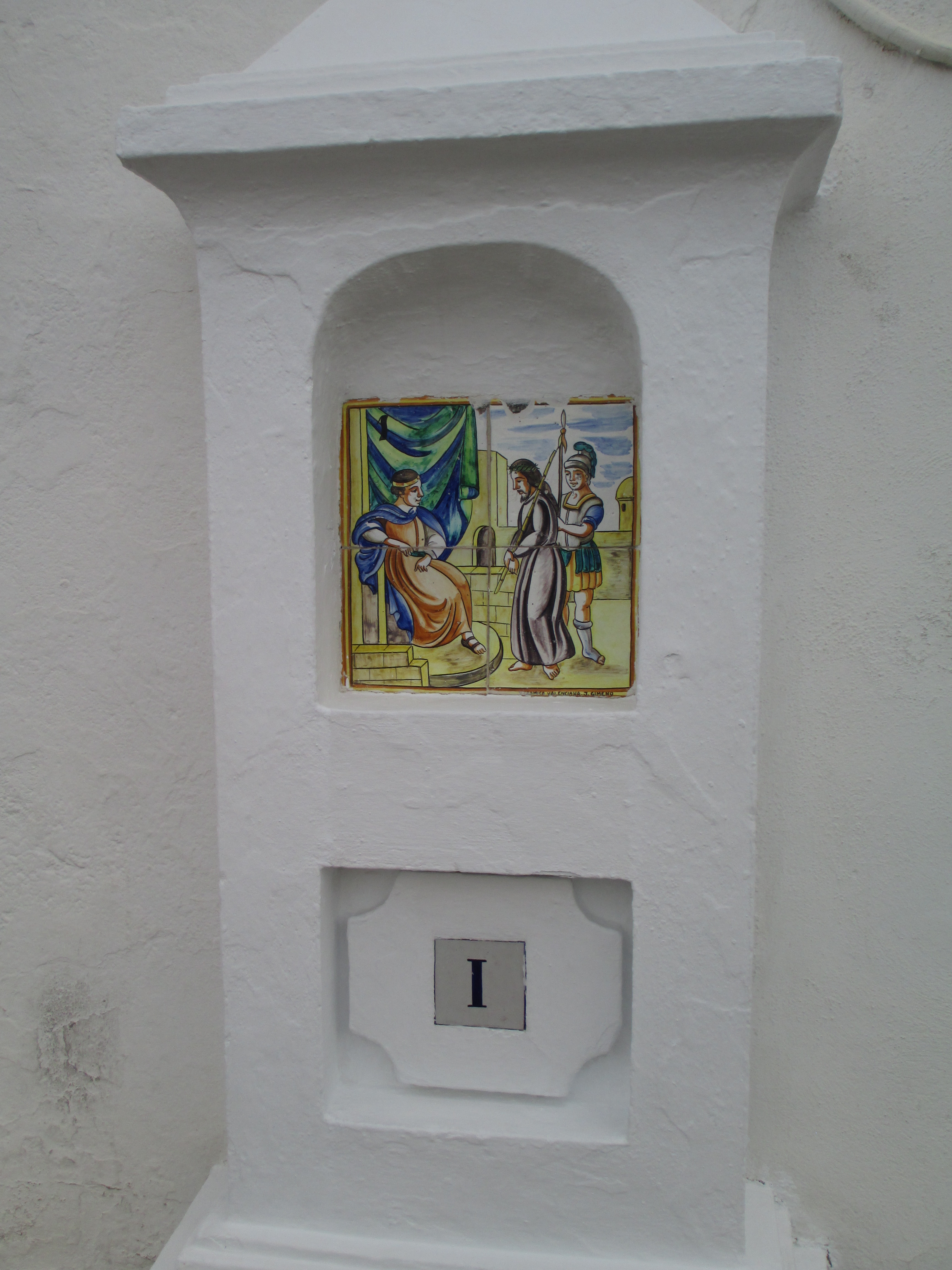
IMG_0506

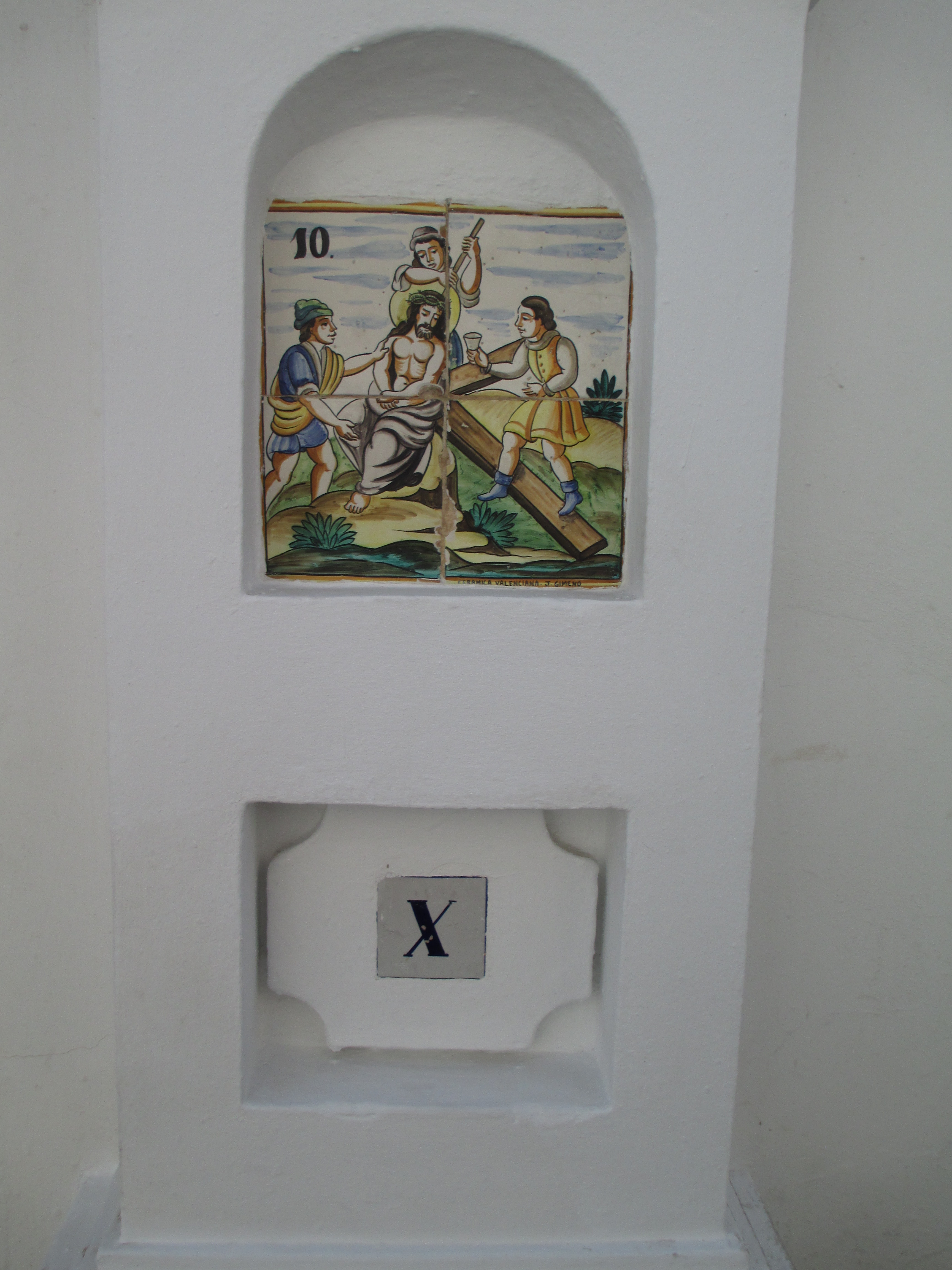
First station of the cross

IMG_0635

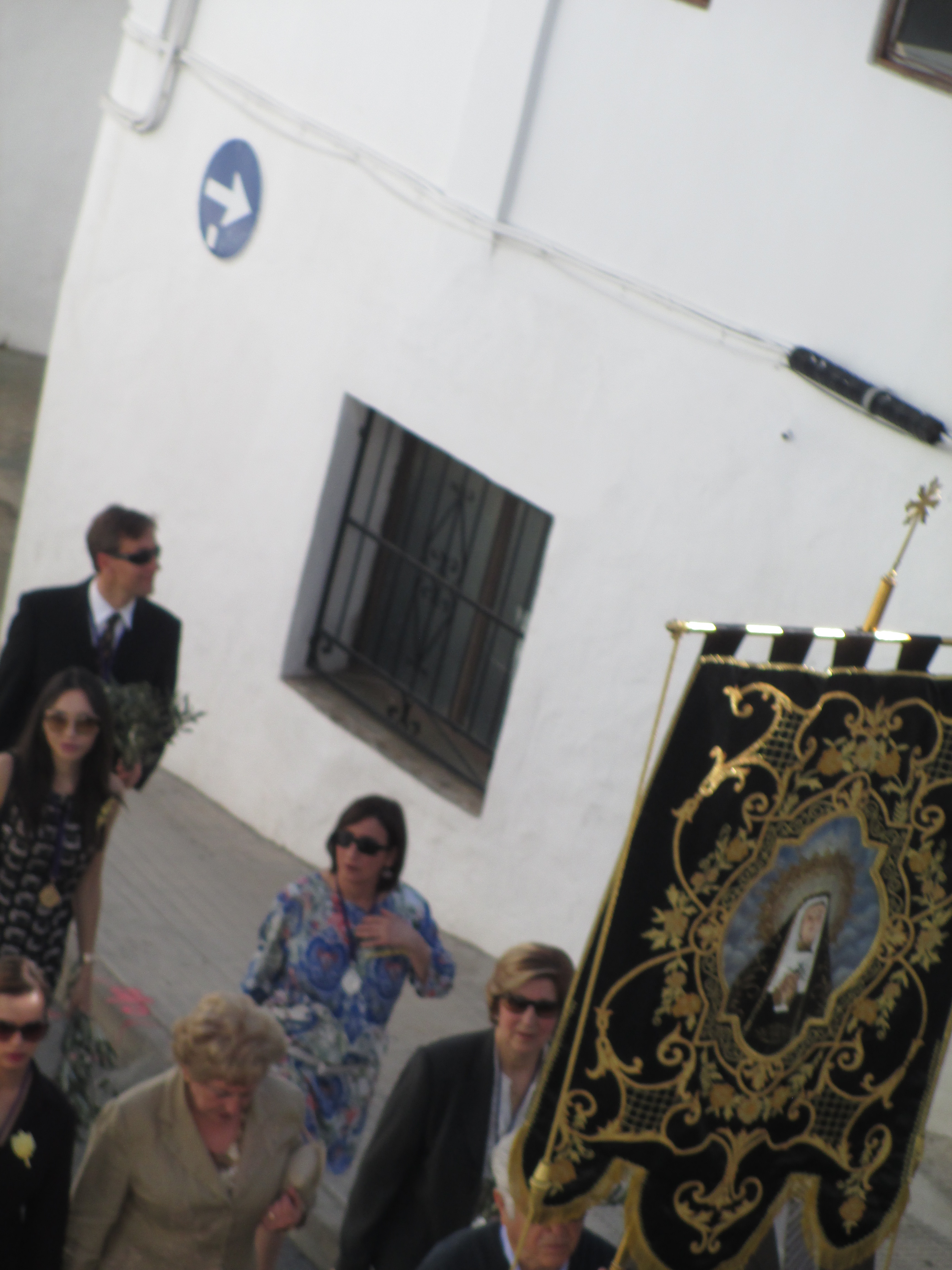
Part of Palm Sunday procession from my apartment window

IMG_0468

El Castell pizza: best in Altea

IMG_0610

View of Casco Antiguo from my friends’ Barry and Karen’s apartment


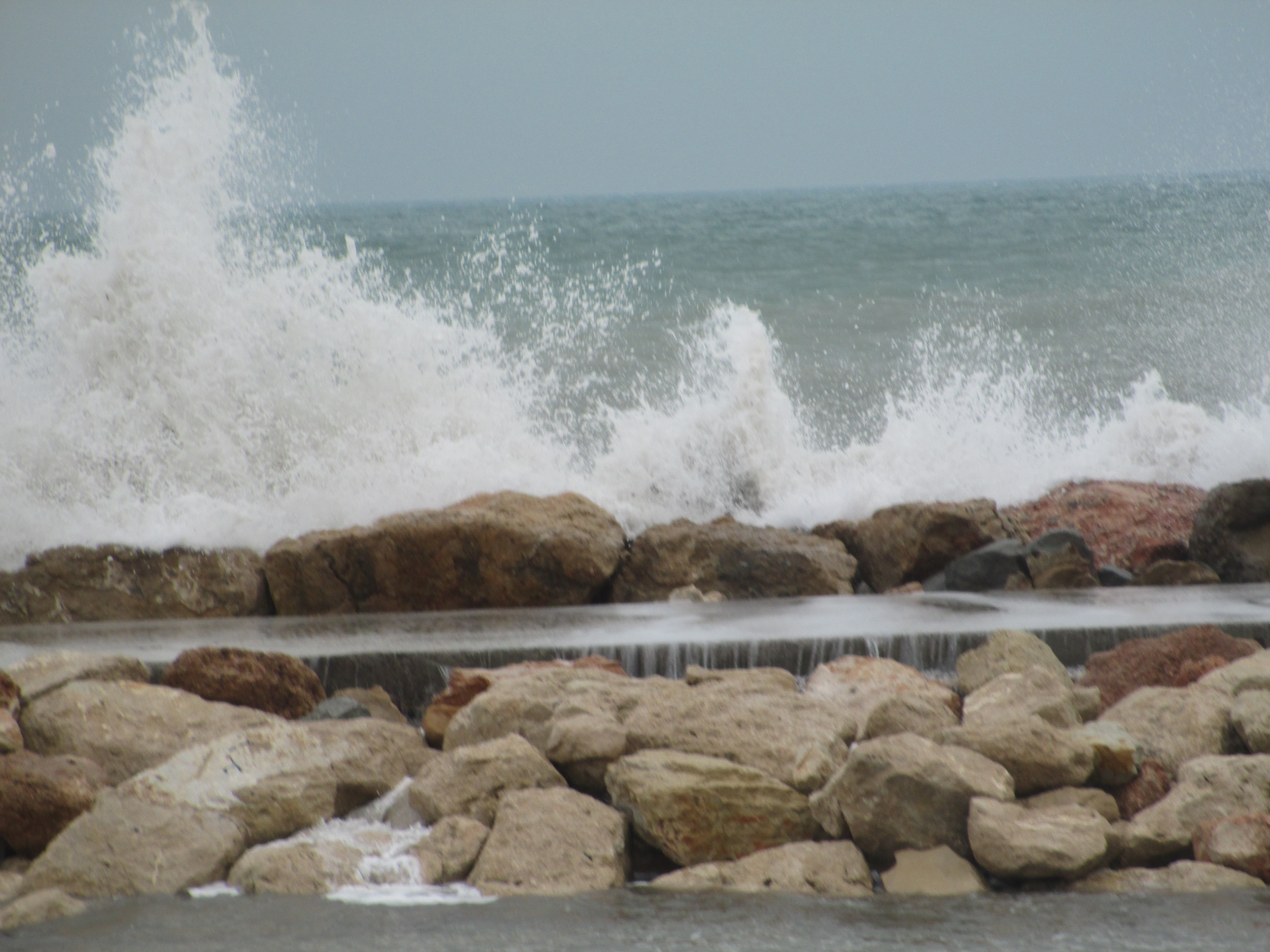
High waves on windy day

High waves on windy day