Archive | March, 2015

Household Challenges In Altea Spain

29 Mar
IMG_0621

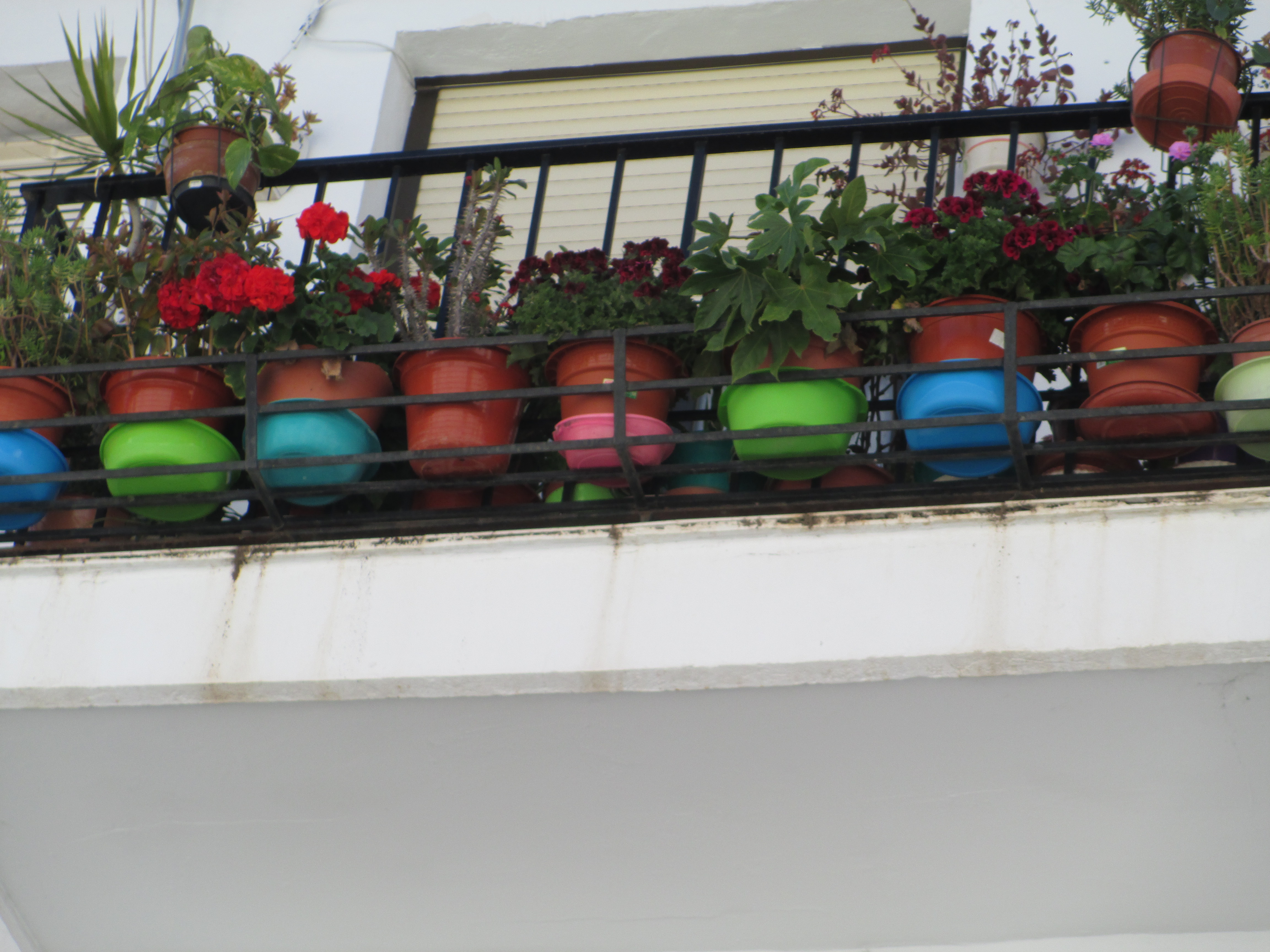
Typical garden display on patio

Most people who know me well will say I am a good home cook and was a good parent to my three sons (no comments, boys), but I have had no luck with plants, whether indoors or outdoors. And it isn’t for wont of trying. I dutifully planted pallets of colorful pansies, poppies and many other varieties of flowers every spring, only to have them all die. I had similarly bad “luck” with my attempts at growing house plants, even managing to kill numerous cacti. One time, from a high-end mail-order garden company, I ordered a monthly flower which was to be delivered in a ready to bloom, but I managed to kill every one of them. Most never even bloomed. They were guaranteed, but I doubted the company would believe that not one had survived.

So when I moved to Spain, I decided I would take another stab (perhaps the wrong word) at growing plants. The windows of my “piso” (apartment) and many homes here have large marble ledges covered by black ornamental grates where people often put plants. I also have a long, narrow outdoor patio, and people here often hang plants from the metal fence enclosure. The verdant displays of plants and the colorful cascading flowers were inspiring. After buying supplies for my new apartment, I had been given two free plants from a local sundry store. Since the plants were still alive after a month, I bought some potting soil, a single hanging wire basket for my balcony railing and a plastic pot in which to put one plant and the other to go in the pot on my windowsill. I was not going to invest the time and money to buy the long plant holders, which hold multiple plants until I had some success. Mother Nature smited me by sending howling wind and rain the night after I had planted and hung the balcony. When I went the next morning to hang my laundry (more about that challenge in a moment), my poor little plant was uprooted, laying on its side after all the soil in which it was buried blew all over my porch and the street and cars below my second floor balcony. I did repot it, but the dirt is still evident on its leaves as I fear touching the plant any more than absolutely necessary.
IMG_0554

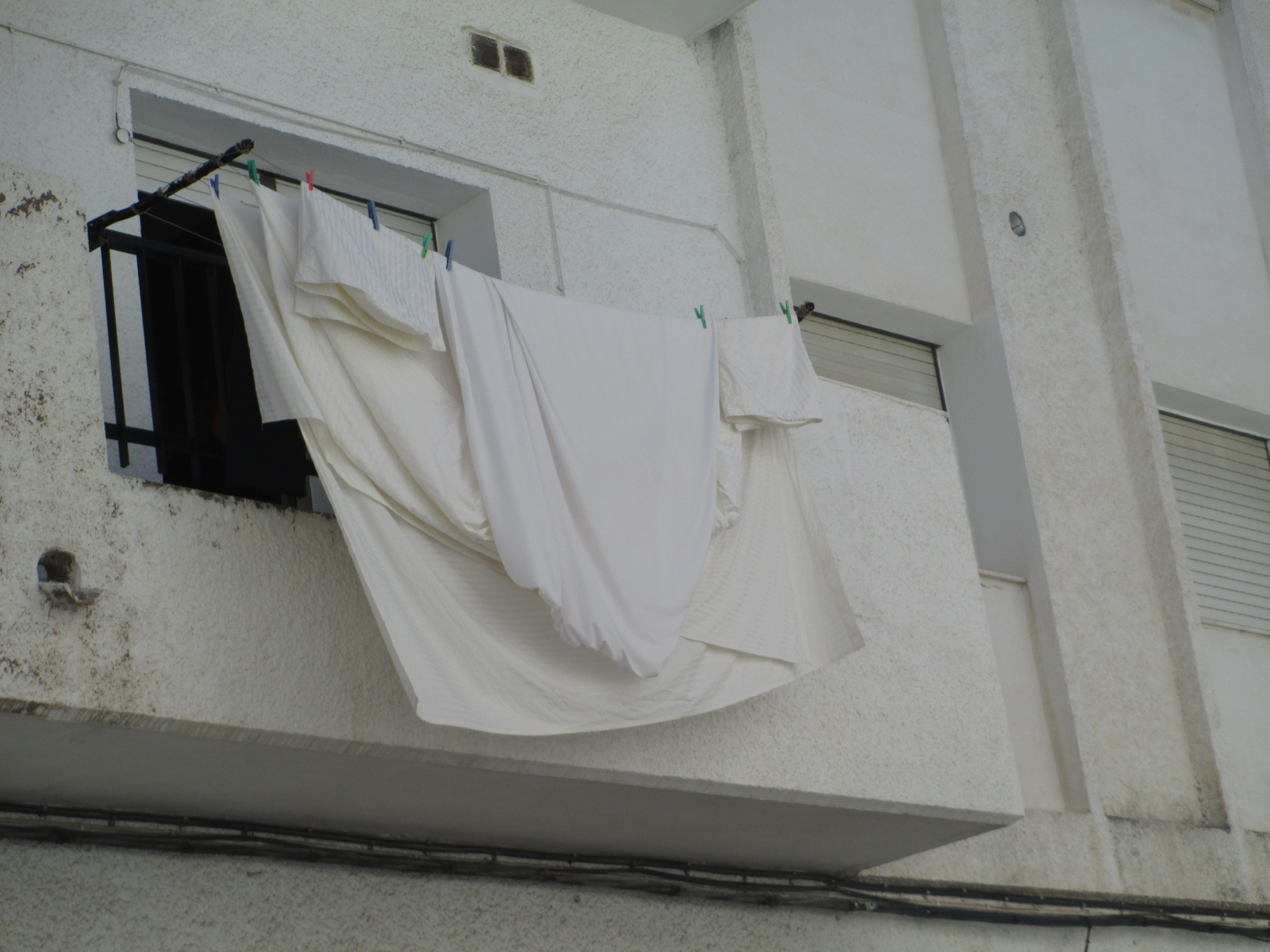
Laundry drying off my outdoor patio (sans undergarments)

Now on to the unexpected laundry challenges. When I first arrived in Spain, I learned that few people have dryers, and instead hang their laundry either on lines off their balconies or windows, or on a standing metal folding stand which can be opened to hang laundry indoors or on the street outside one’s first floor dwelling. Wash machines are typically in the kitchen, but I scored and have mine in a small separate utility room. Before getting my apartment, I rented several vacation apartments, so I have had the opportunity, if you can call it that, to use a variety of wash machines; they are all small and take an incredibly long-time to complete a wash cycle, two to three hours. Nonetheless, the first couple of times I did laundry, I found hanging the laundry on the portable metal stand quaint, reminiscent of a simpler time. I remembered the heady fresh smell of sheets I had once hung outside to dry when I was a teen-ager and was looking forward to revisit that experience. The first couple of times went well, just enough to lull me into complacency and cause me to fail to anticipate the problems that could and did arise, or should I say fall. In fact, at first the laundry seemed to dry quicker outside than in a mechanical dryer.
IMG_0572

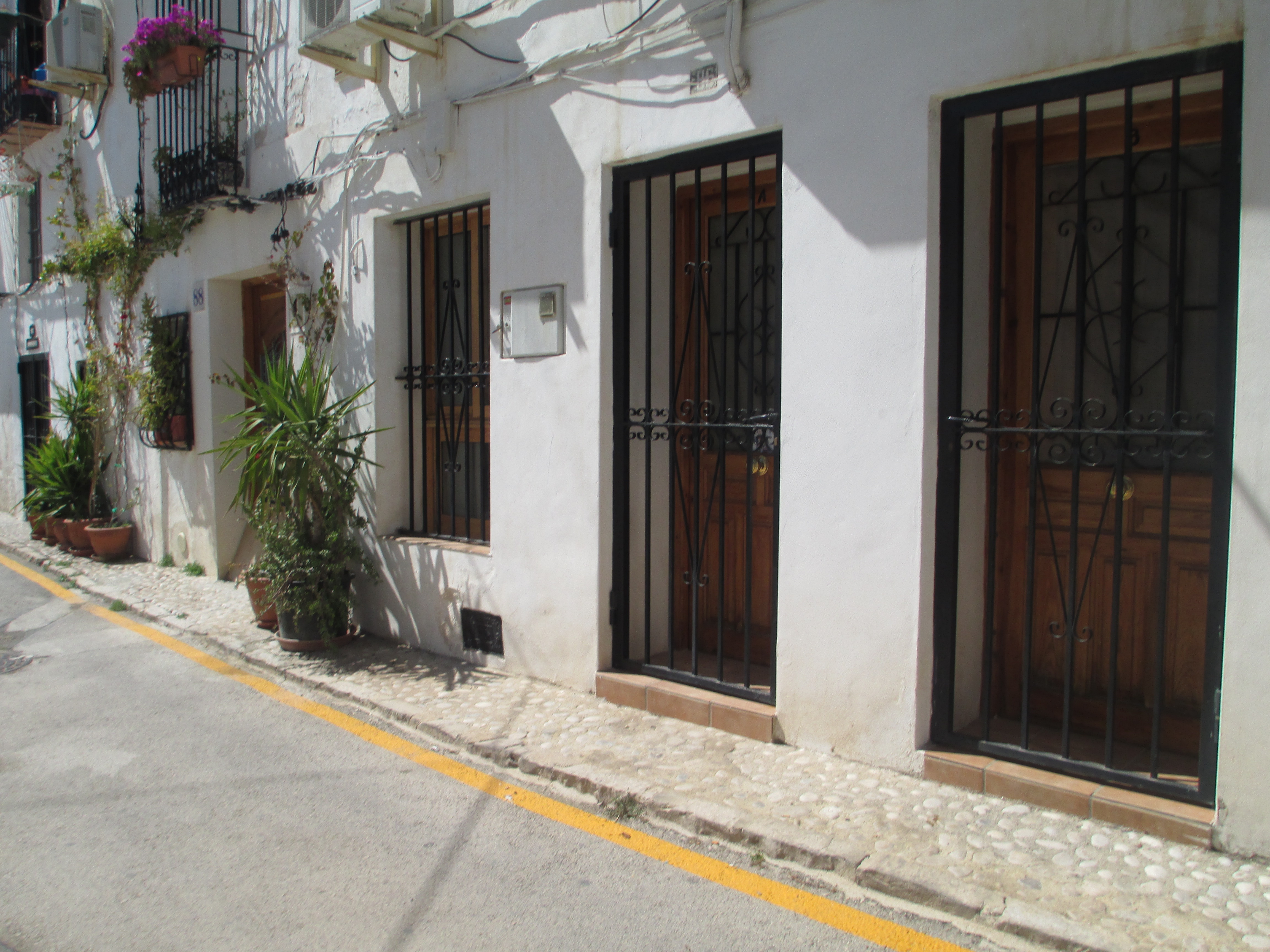
The small “sidewalk” to the right of the plant was where I had to put the laundry stand to dry my clothes in my first apartment.

My first vacation rental was on the first floor on a busy street, so the laundry rack was placed on the incredibly narrow uneven, cobblestone “sidewalk.” Both the uneven surface and wind, on different days, were the culprits in the toppling of my laundry. Wet clothes laying on a street where there are many cars, pedestrians and dogs does not bode well for having clean clothes. When I got my own apartment, there was both a metal laundry rack on the patio and laundry lines hanging off my balcony, both rusted. We are on the Mediterranean, after all. I purchased a small roll of metal line covered with plastic that looked perfect for the job of stringing new clothesline. The seemingly simple task of changing the laundry line was anything but. I had difficulty getting the old rusted line off, and sadly, it took me hours just to string the five new clotheslines. I should have paid more attention in Boy Scouts as to how to tie a secure knot. Wait, I wasn’t in Boy Scouts. Maybe that was my problem. Long story short, I inconsistently strung up each one trying to make them as taunt as possible, but ultimately was only marginally successful. But I was proud that I had accomplished that task. I soon found out there were other unanticipated laundry challenges, such as getting used to your underwear hanging outside for everyone to see, wind blowing your laundry off the line on the street below, unexpected rain saturating your clothes, and trying to accurately predict how long it would take to complete a wash cycle (it seems variable) so as to get the clothes hung before leaving, and anticipating how long would be needed to get things dry before night. On one occasion, the sheets were on the line when the weather suddenly turned foul, causing me to quickly bring them inside and try to dry them in front of a small space heater. At close to midnight, they were dry so I could make the bed. I felt a small sense of success over Mother Nature who, since I sold my car can no longer rain on it, instead seems to make it rain every time I hang laundry out to dry.
Visual Collage of Altea Spain This Week

29 Mar
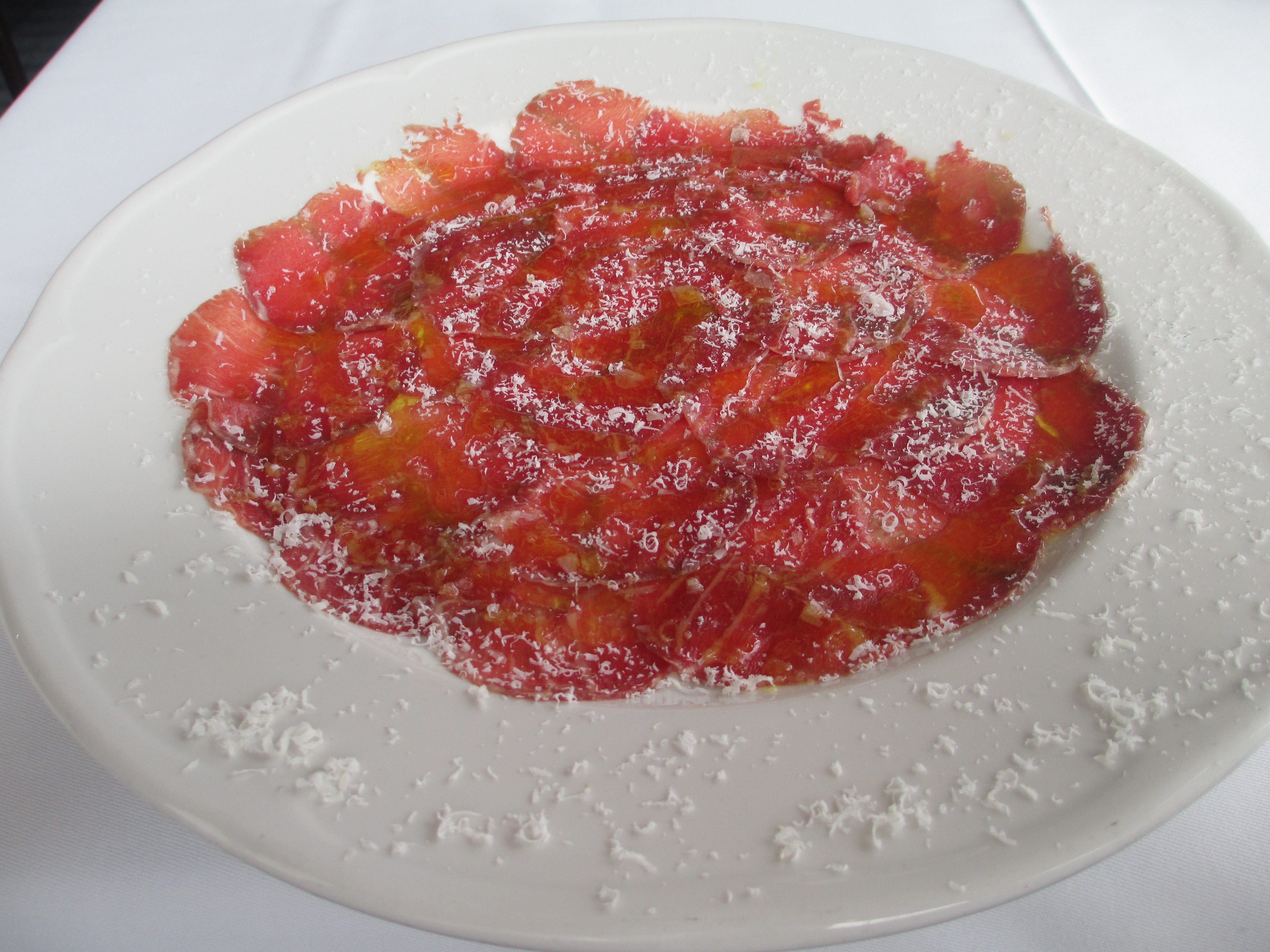
Carpaccio: El Bodegon de Pepe

Carpaccio: El Bodegon de Pepe

IMG_0457

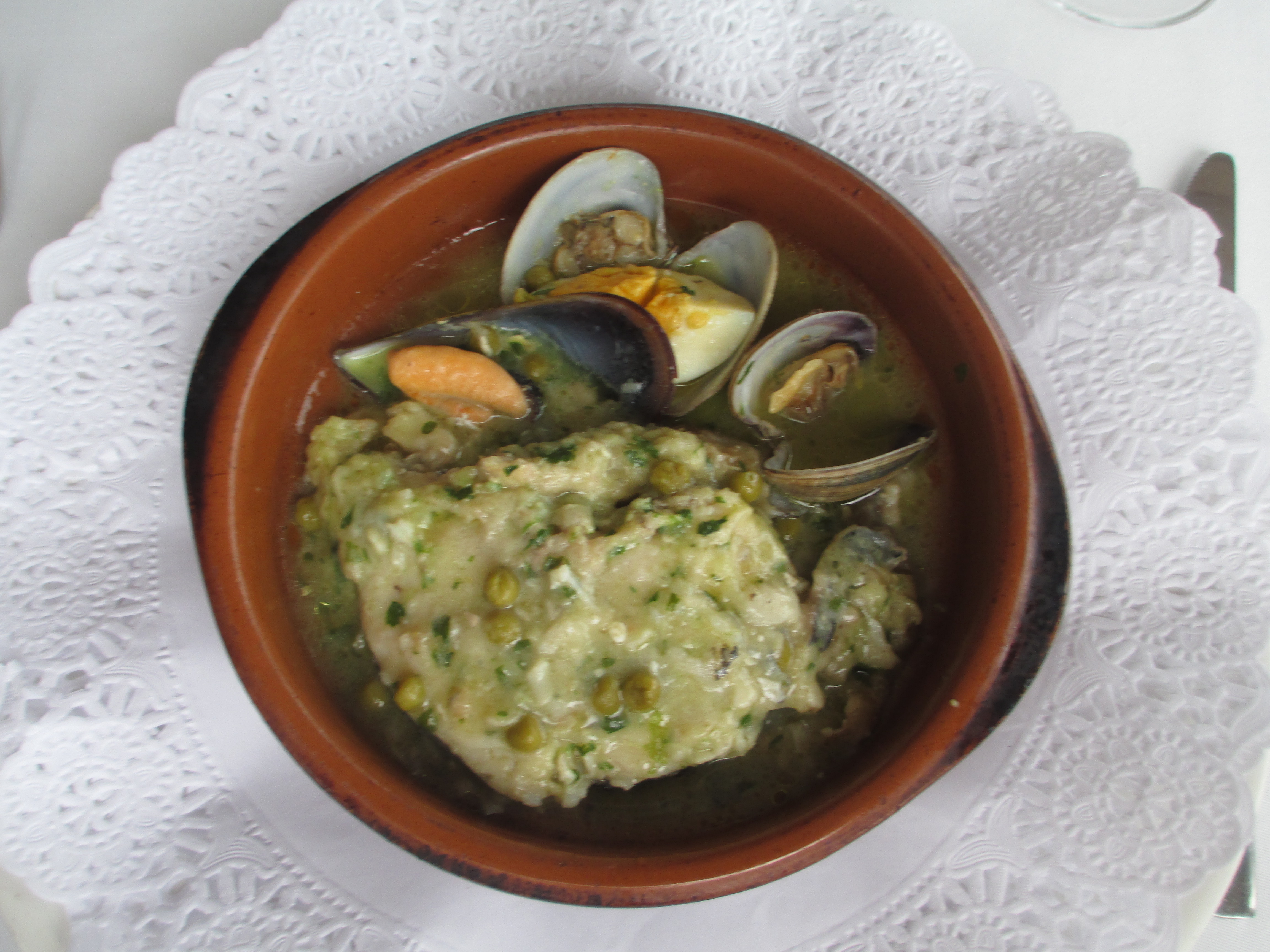
Fish with mussels and clams

IMG_0606

Tapas at Playa Fronton

IMG_0481

Door on Carrer Sol

IMG_0464

Ensalada mixta

IMG_0506

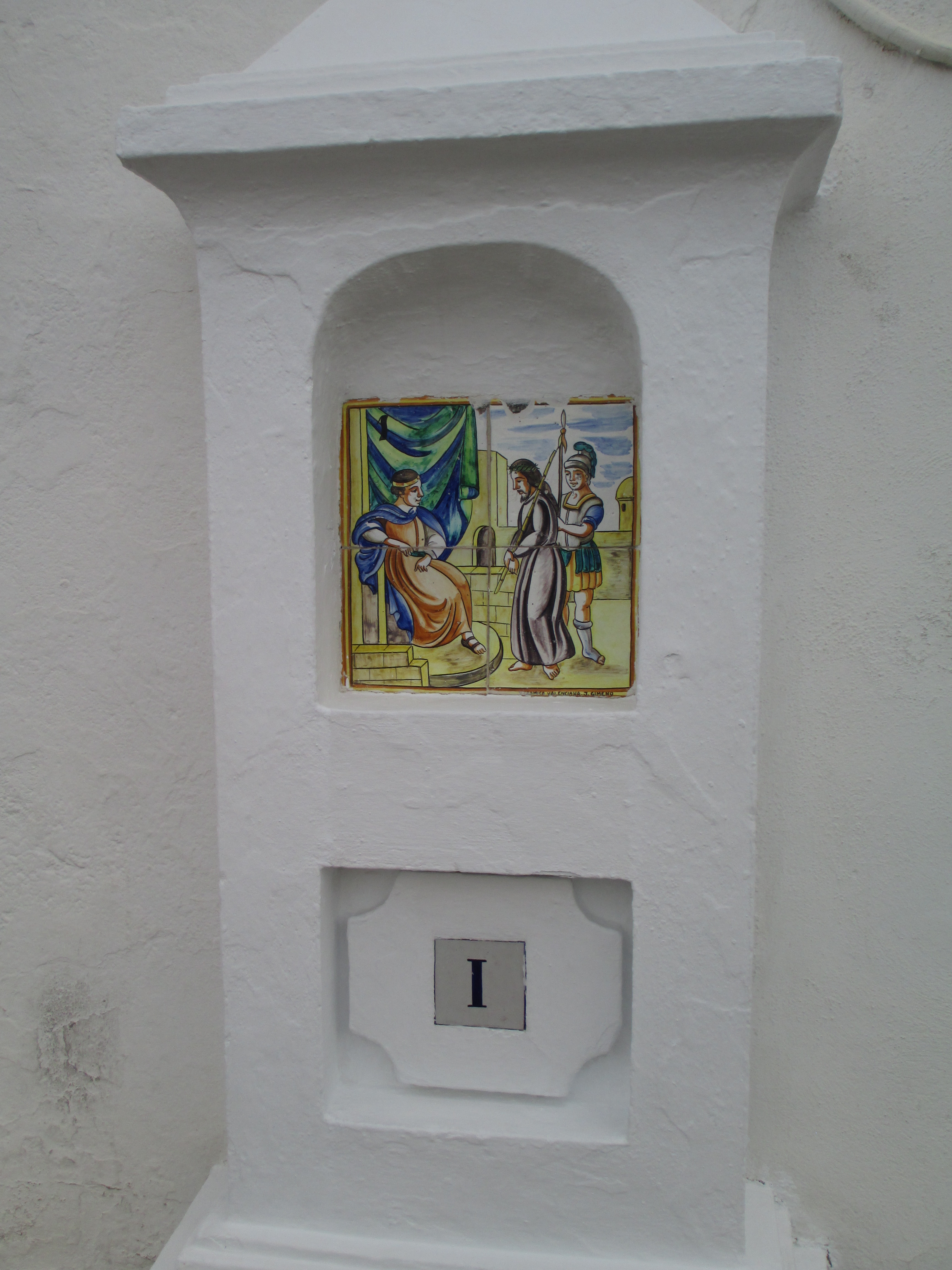
First station of the cross

IMG_0635

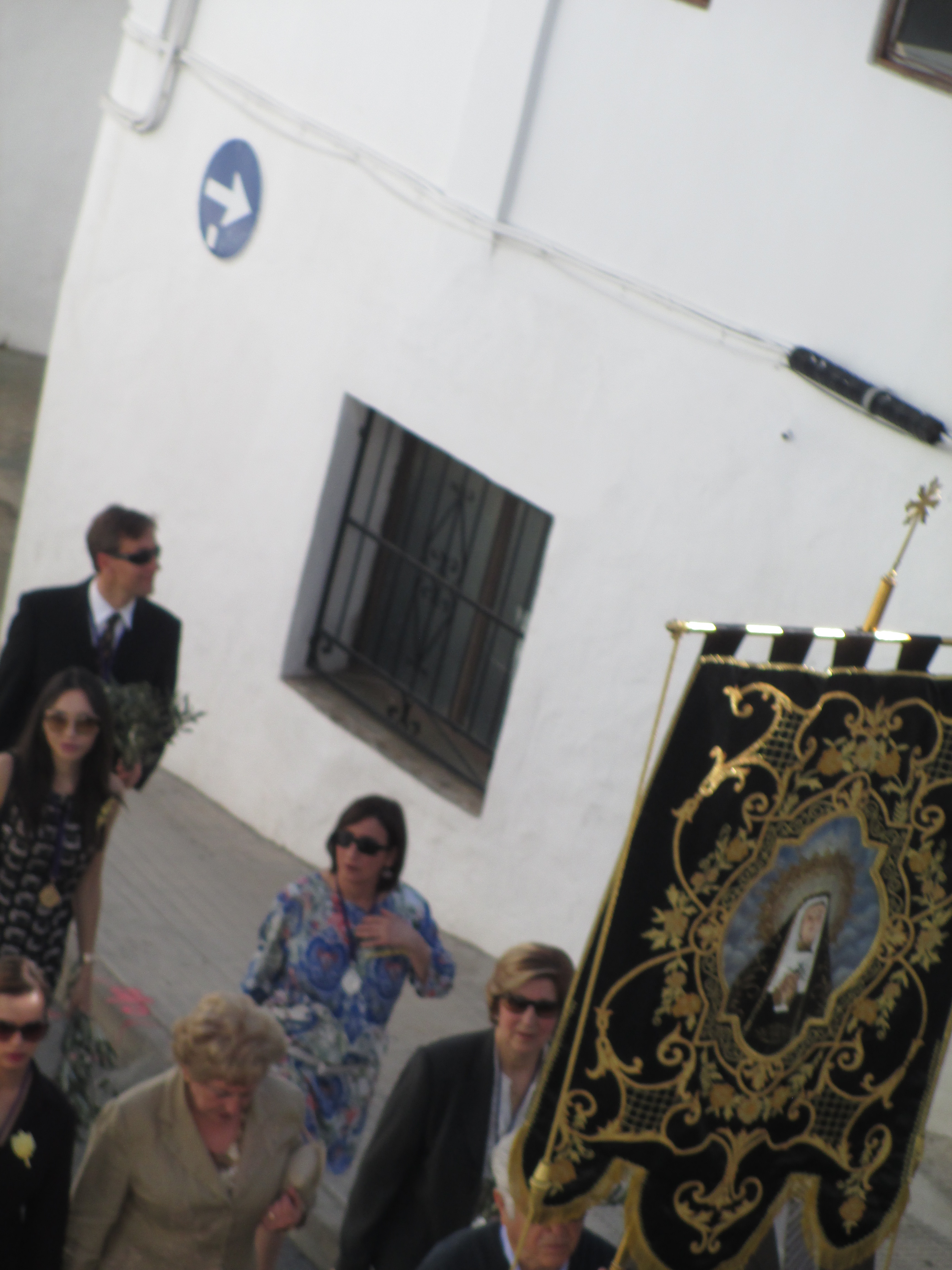
Part of Palm Sunday procession from my apartment window

IMG_0468

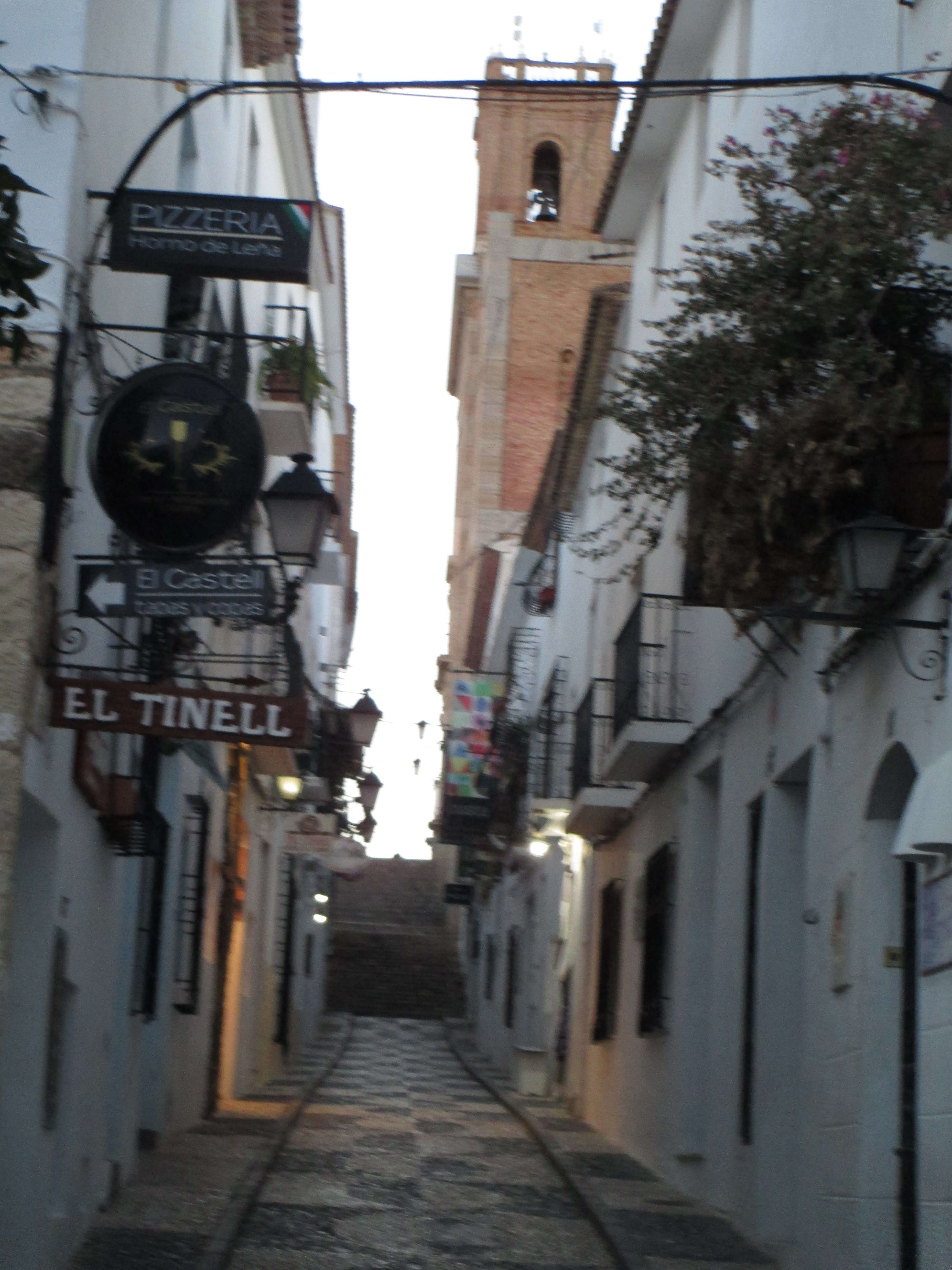
El Castell pizza: best in Altea

IMG_0610

View of Casco Antiguo from my friends’ Barry and Karen’s apartment


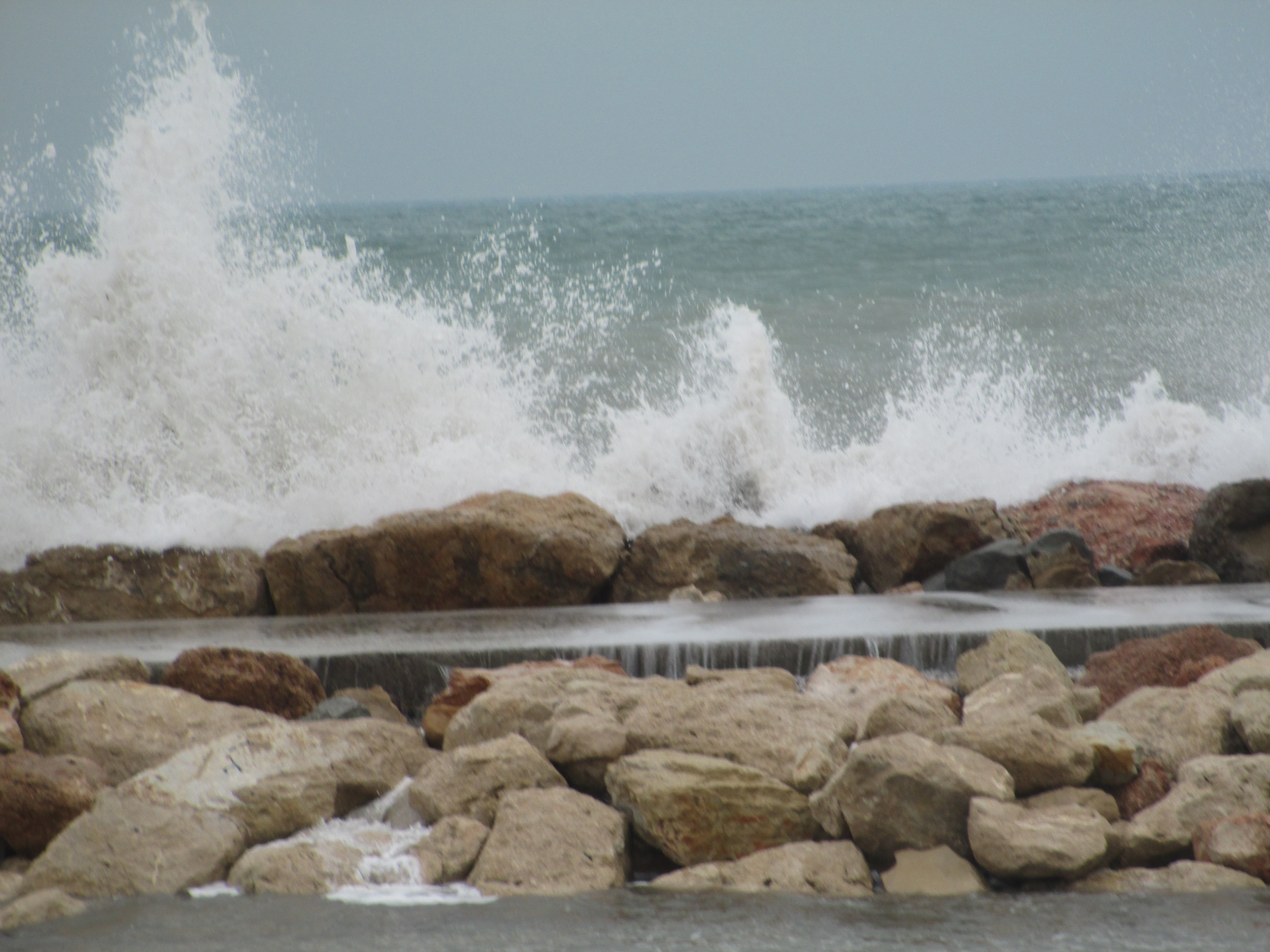
High waves on windy day

High waves on windy day

Food photos from Altea Spain

22 Mar
IMG_0422

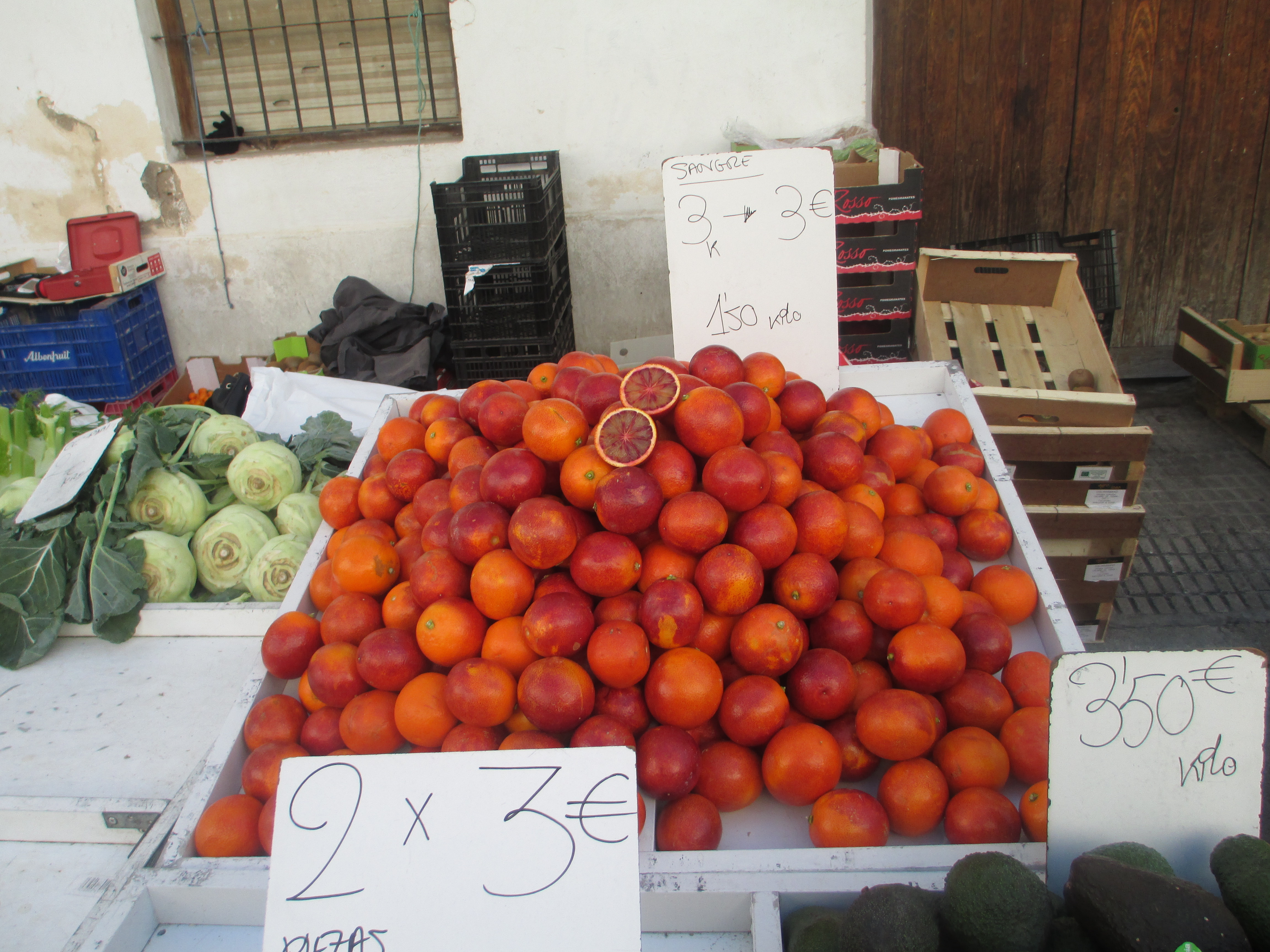
Flowers at market


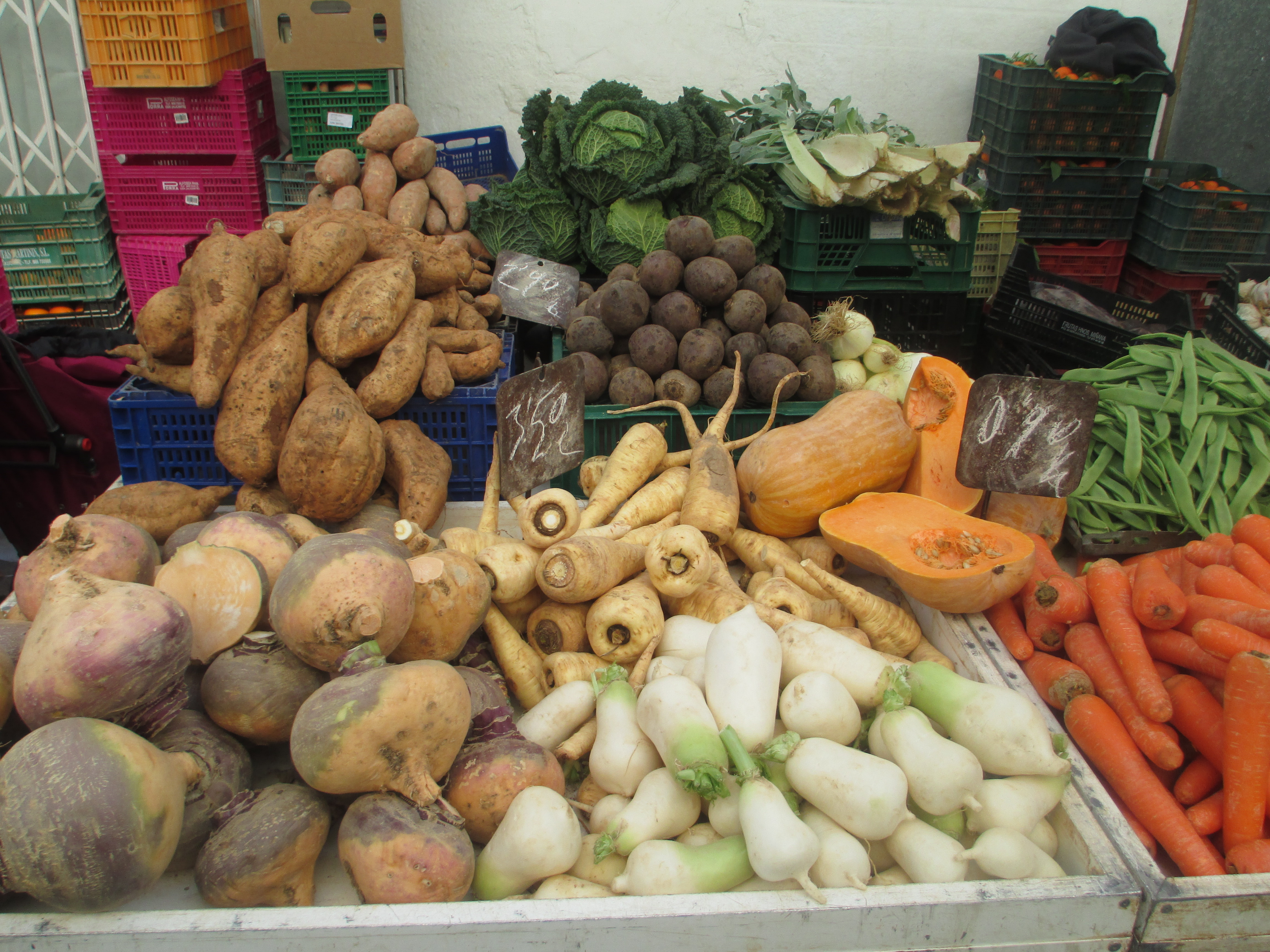
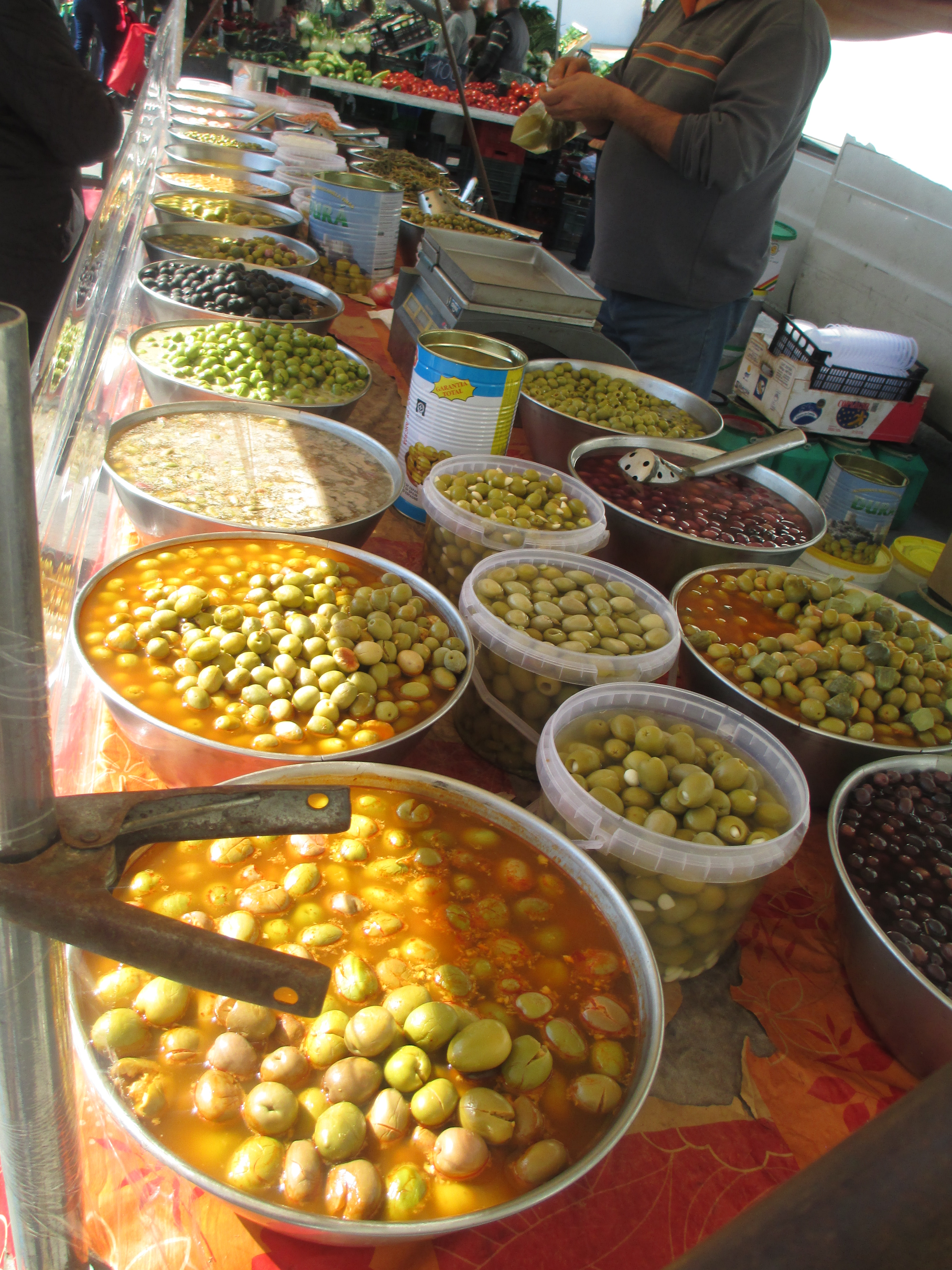
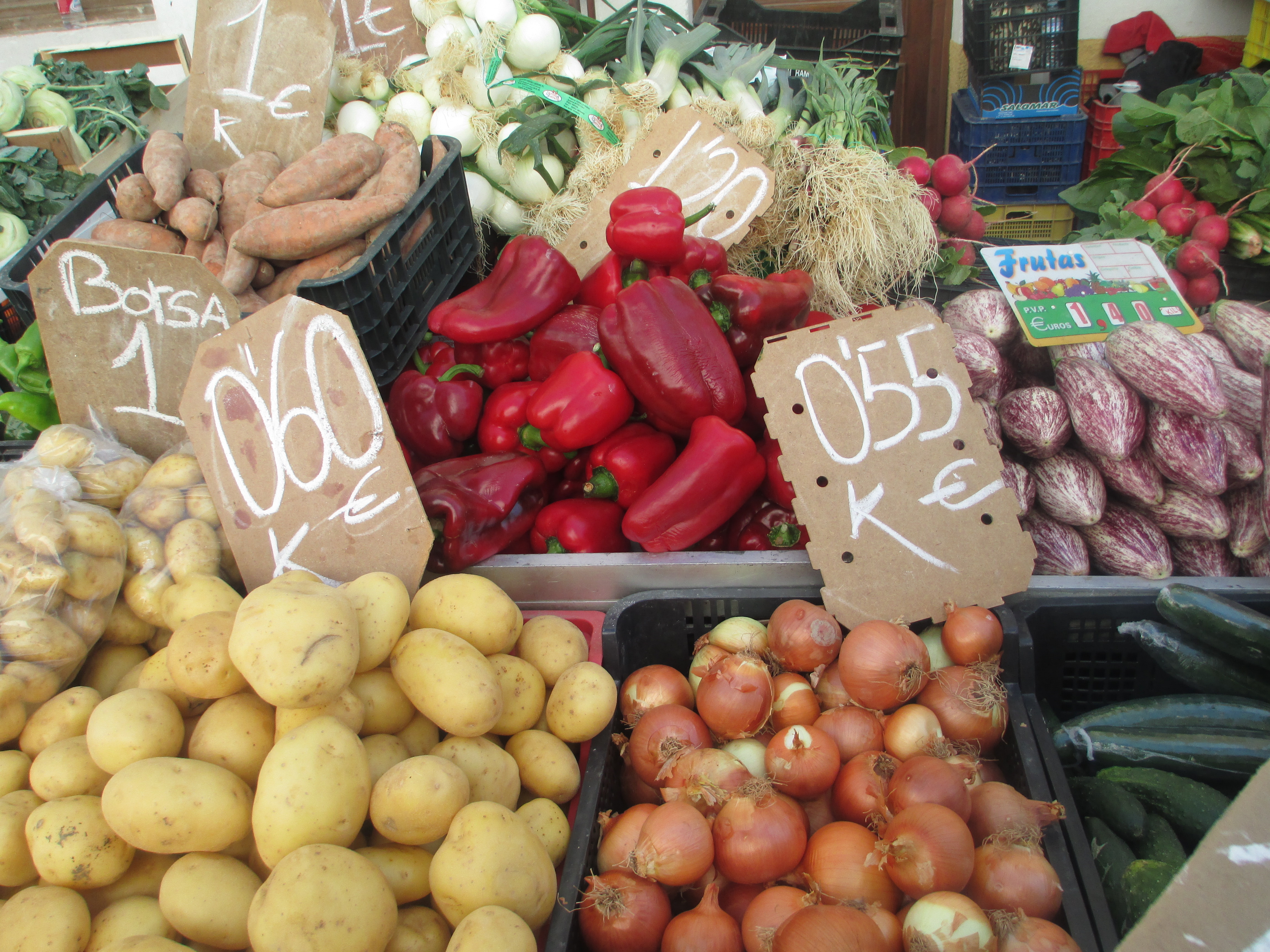
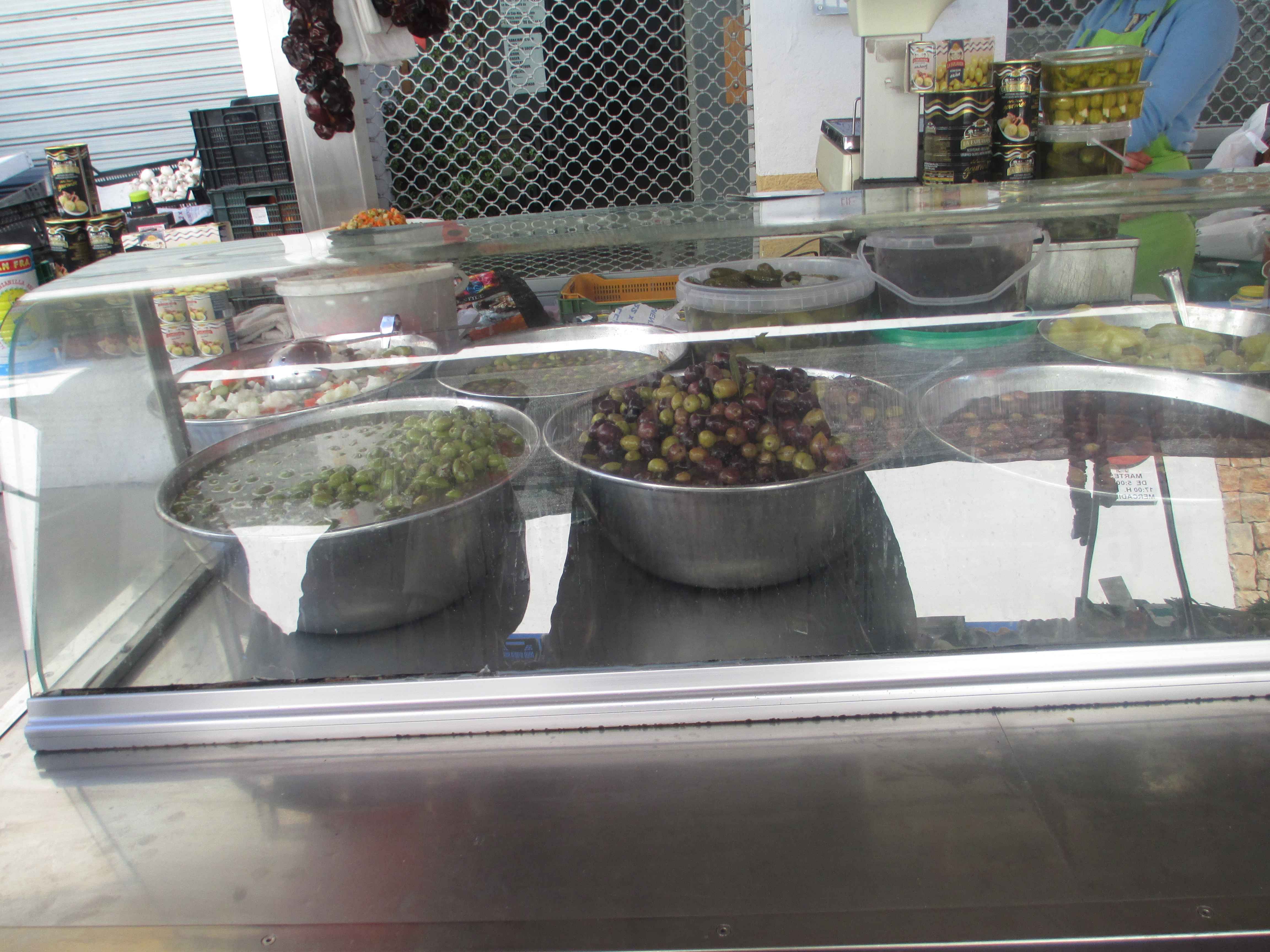
Spain is well-known for its culinary excellence, but perhaps less well understood is how regional the food is. For example, when we were in Toledo, the offerings included suckling lamb, suckling pig, quail, partridge which are available in that area. Here in Altea, located in the province of Valencian on the coast of the Mediterranean, the focus is naturally on fish, seafood and the bounty of local fruits and vegetables. There is a significant presence of typical French fare including baguettes, crepes, and pate, and Italian items including pasta and pizza. In this post, I will feature photos of some of the local products including from the weekly farmer’s market and local supermarket.

IMG_0431

IMG_0425

IMG_0429

IMG_0428

IMG_0433

IMG_0432

IMG_0435

IMG_0441

IMG_0438

IMG_0437

IMG_0376

IMG_0381

IMG_0375

IMG_0373


Party…Spanish style!!

19 Mar
IMG_0447

Party paella being prepared

Yesterday was a stellar day in that I was invited to the birthday fiesta of the “novio,” (boyfriend) of my good friend, Carmen, whom I have known for about a year. She came to Altea about a year ago, and now lives with Pepe in the adjacent town of La Nucia. Since La Nucia is slightly inland, the houses are more likely to be single-family detached homes, often on large plots of land in the undulating countryside which harbors fruit trees and other vegetation, horses, and other scenic pastoral sites. Although very close to my town of beachside Altea, it has considerably different feel.

Since I (proudly) no longer own a car, Pepe picked me up and drove to his “estancia” (ranch.) En route, he explained that he lived in Altea when he was young, but has been living in La Nucia for 40 years. Upon arrival, he gave me a tour of the house, outbuildings which housed two separate barbecues, and many fruit trees. I laughed as I recognized that the blue granite counters he had in his kitchen were the same as I had installed at my former house in California.

IMG_0445

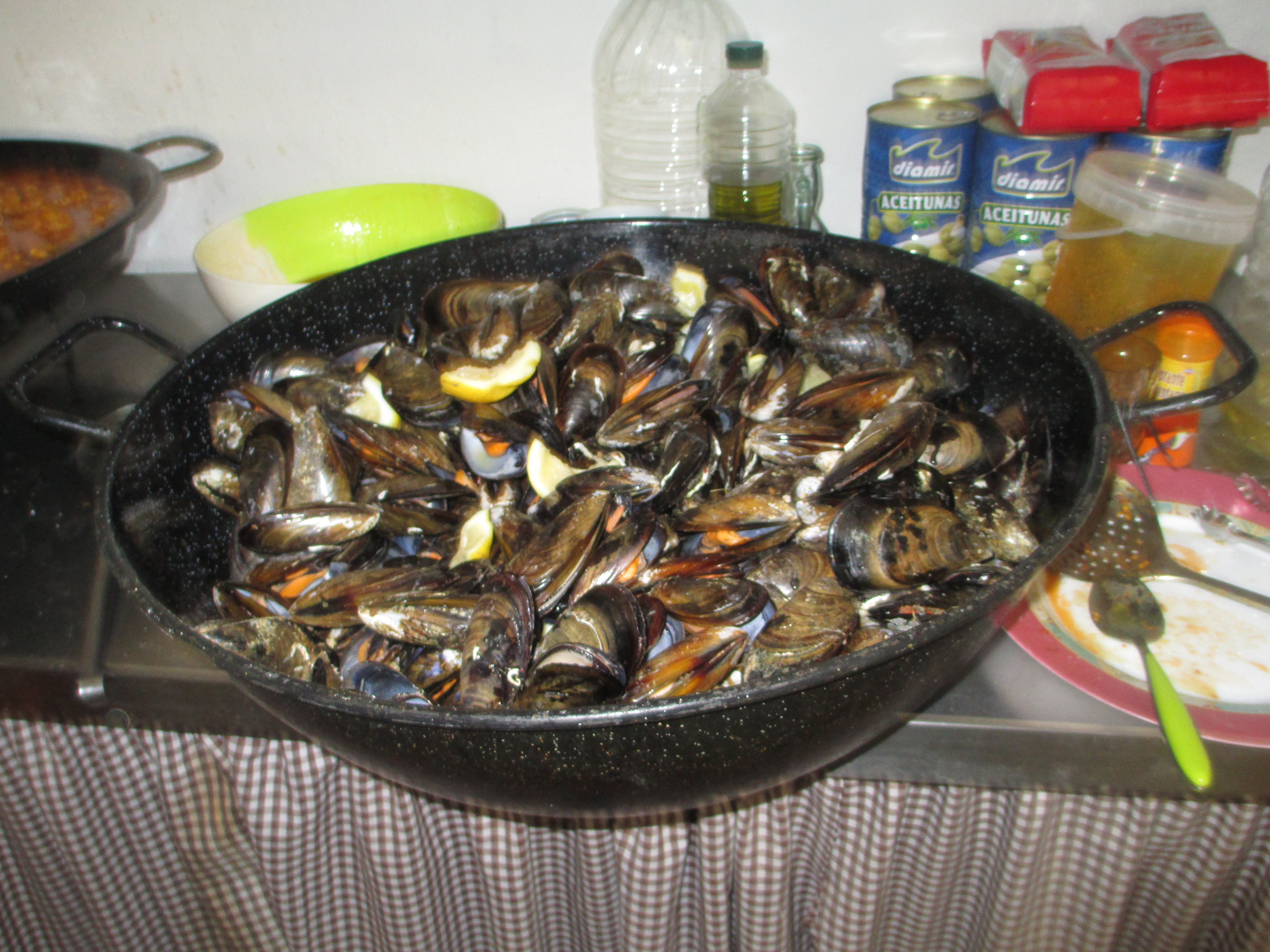
Mejillones (mussels) being cooked

Carmen, who is Cuban, was busy cooking dishes from her nascent land, including rice with black beans, pork (which had incredibly crispy delicious skins), and “tostones” (fried plantains.) Although I am not usually a fan of plantains, these were excellent. I watched as she pounded them a little flat and then fry them in oil. I rescued one batch from burning when she left the room to greet some newcomers. The following day (today as I write this,) when we spontaneously met for lunch and I told her how much I liked them when I usually don’t, she said she first soaks them in vinegar.

After her cooking creations were bundled for transport on party day, we took the short drive up the hill to the large outbuilding where the fiesta was to occur. Typical of this area, were two huge pans, one of paella and the other of mejillones (mussels) being expertly prepared by two local women. Paella, after all, is originally from Valencia, and Altea is part of the Communitat Valenciana (as they say in the local Valenciana dialect.)

IMG_0444

Carmen helping with the party preparation

Of course, there were the typical cheeses and cured meats available, with loaves of fresh baguettes (as common here as on my many trips to France,) free-flowing wine and beer. With the mussels and paella, several large mixed salads lightly dressed were served in the middle of the lengthy table.

The promise of Cuban music for dancing was frustrated by the lack of cooperation of the equipment brought for that purpose, but Pepe backed up his car to the large open doors of the building and cranked up his Cuban tunes. Rei, a local salsa teacher, got (almost) everyone up shaking their groove things. The multi-cultural assembly including locals, Columbians, Cubans, a Norwegian and others made for a great experience including the chance to practice my Spanish and find new dance friends for the weekly Sunday Cuban/salsa music at Club Cuba in nearby Albir.

Toward the end of the birthday party, they served what was the best dessert I have ever had, and even one of my best desserts ever (although I am not much of a sweet eater.) It was vanilla custard between layers of thin, crispy puff pastry like a mille-feuille (Napolean) but with fresh fruit on top.IMG_0450 As it was time to leave, leftovers and lemons from Pepe’s trees were offered to take home. I was driven home with my large, gorgeous lemons in hand, feeling utterly happy with my new life in Spain. Unfortunately, my photos do not reflect the full revelry of the day as my camera battery crashed but what few I got are shown here.

More Food Porn from Altea Spain

15 Mar
IMG_0304

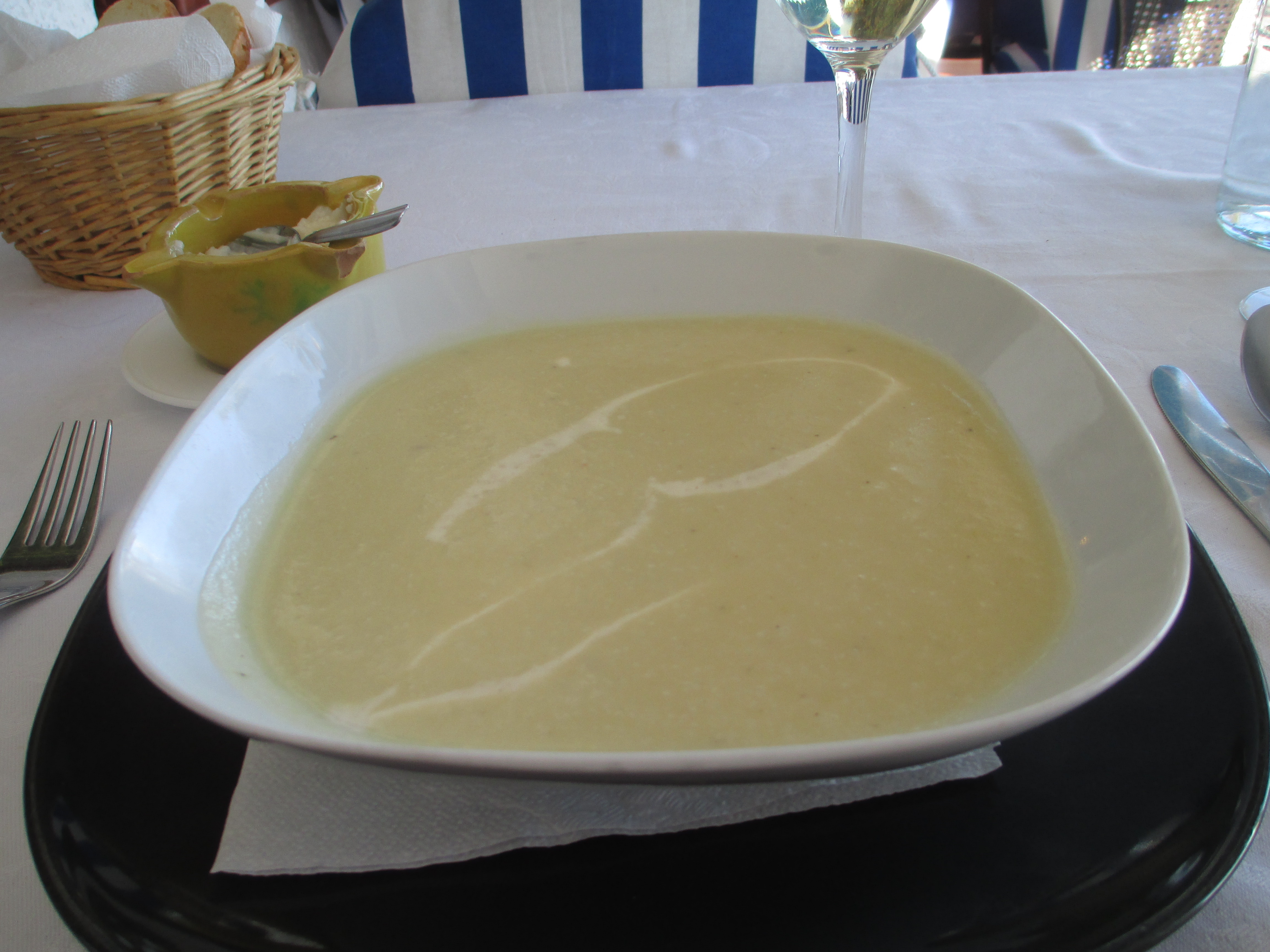
Sopa de puerros (leek soup)

IMG_0338

Paella con bandas (paella with calamari)

IMG_0337

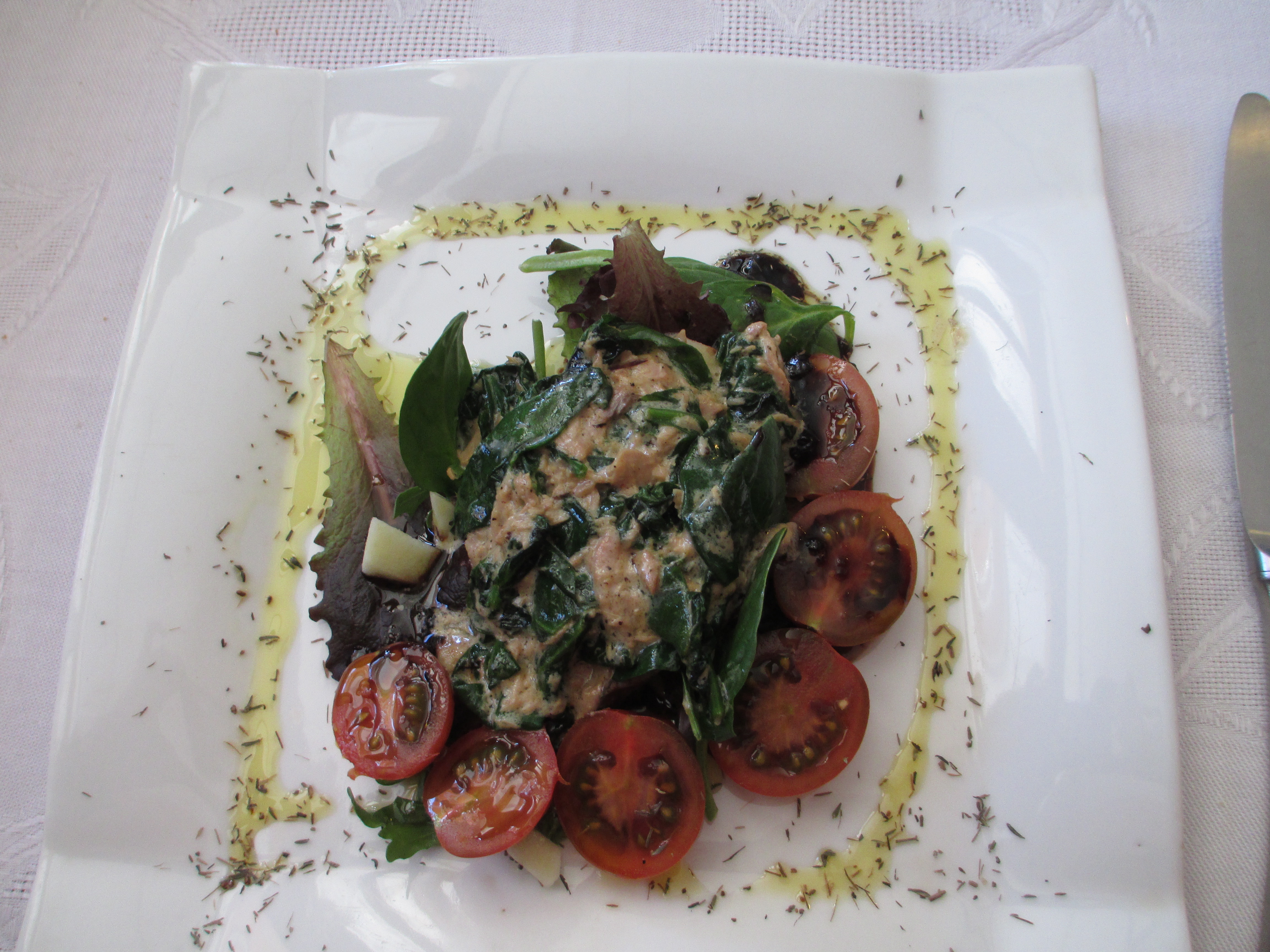
Enselada de tomates (salad of tomatoes)

IMG_0335

Almejas marinera (clams mariner-style)

IMG_0371[1]

Alcochofas a la parilla (grilled baby artichokes)

IMG_0370[1]

Enselada de puerros con jamon (Leek salad with ham)

IMG_0367[1]

Tripa en salsa (tripe in sauce)

IMG_0354[1]

canonigos, huevos con queso y jamon (cononigos (round green leaf herb), eggs with cheese and ham). Also typical bread served with grated tomato with olive oil

IMG_0357[1]

rabo de toro (oxtail)

IMG_0398[1]

pan y alioli (bread with Spanish version of aioli which has no egg). Note the container for the alioli can also be used as an ashtray. More about that on my humorous look at rules for smoking in Spain to be posted soon.

IMG_0400[1]

Chopitos (fried small baby calamari)

IMG_0403[1]

lenguado meuniere (sole meuniere)

IMG_0408[1]

Sole meuniere “after.” Don’t be afraid to tackle eating or cooking a whole fish!

IMG_0409[1]

Flan (a rare time I ate dessert)

IMG_0330

It was a dark and stormy night…


Adventures in Dining in Altea Spain

13 Mar
Za-vhu-Rw0KrgpGbsf9rKgna5tYGGiSH7RSw4Trjki0=w630-h503-no

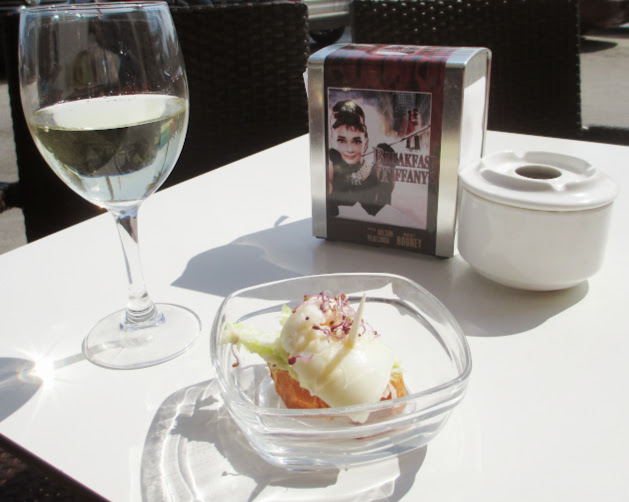
Tapa with egg and garnish 13 Mar ’15

“Pigs ears?” he asked in Spanish, apparently to be sure I knew what I was ordering when I pointed to one of the tapas trays. I admit I wasn’t 100 percent sure what they were when I ordered them, but every tapa I had ever eaten at beachside Fronton Playa in Altea (Spain) was spectacular. I grew up eating my fair share of offal, so I am game for trying just about anything. On this particular visit, I decided to order a couple of tapas, so I could get more than the typical small tapa bites. Along with the pig ears, I had some small breaded and fried octopus “pulpo” tentacles, which were tender, which is not always the case at many local eateries. The friendly owner reminds me of Danny Devito. On most visits, I order a “vino,” which is accompanied by a creative, tasty tapa, which is included in the inexpensive 1,50 €  IMG_0392


20140702_190936

Valentina in Casco Antiguo


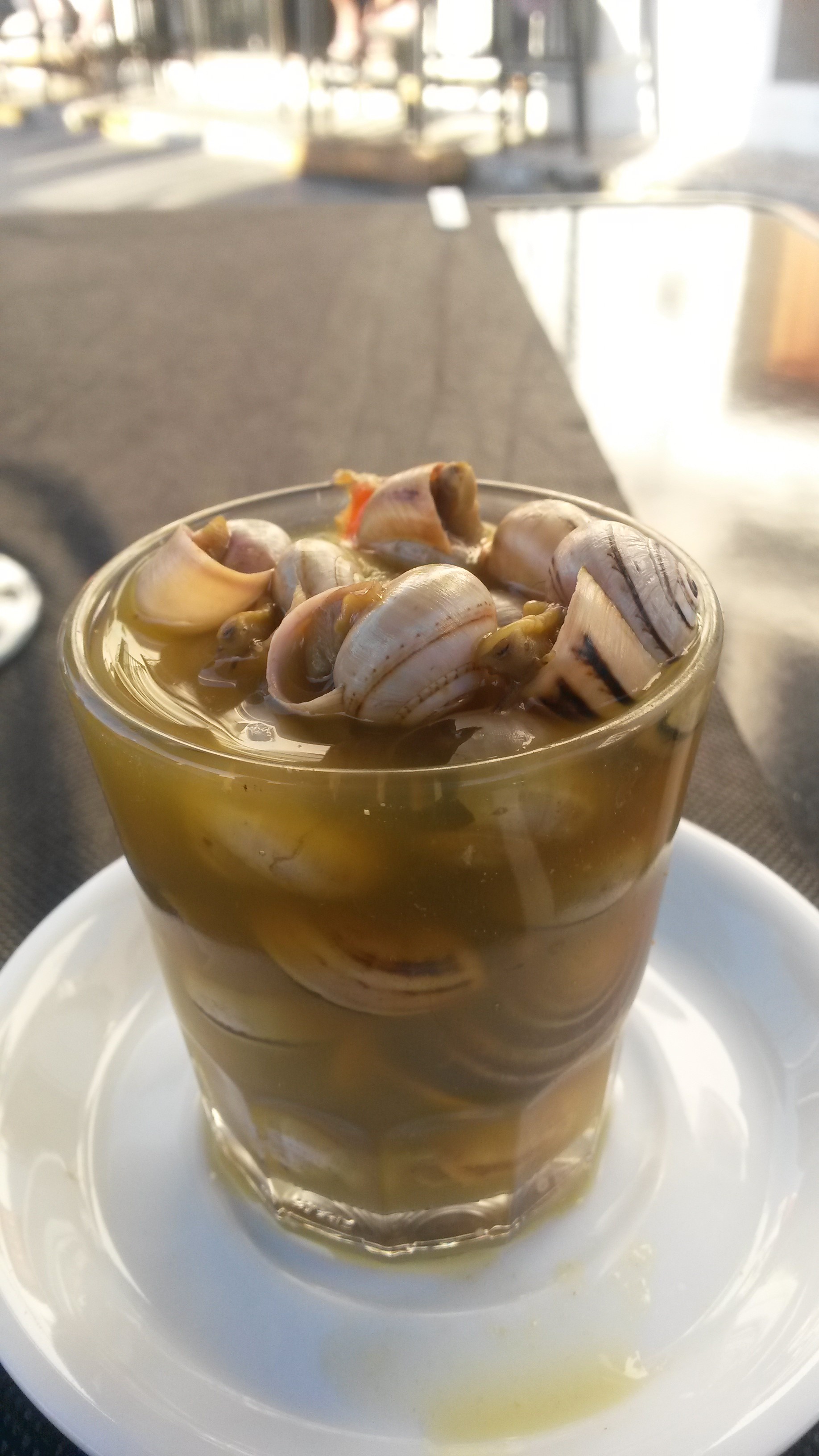
Valentina is another of my favorite tapas places where I have had interesting food forays. Andrea and his family hail from Puglia (Italy), but have lived here in Spain for many years. Andrea’s girlfriend, who is the chef, makes creative and delectable food. On one occasion, a darling two-year old girl repeatedly chanted, “Caracoles,” as she waited for the small snails to be prepared and served. She ate them like a pro. On several occasions, Andrea has brought me a tapa that he would not serve to everyone. One memorable tapa was something with a texture similar to tofu but with a meaty taste, saying he knew I would eat it. When I inquired as to what it was, he smiled and replied coagulated chicken blood. My son, Robbie, an executive chef in at Belcampo, a well-reviewed restaurant in Los Angeles specializing in their own humanely and sustainably raised animals, asked me to find out how it was made. 20140522_201050On one of the occasions I ordered something from the menu I had “Milhojas de pulpo y gula del Norte,” octopus with baby eels.


Dining in Spain is almost always a great adventure. I am an avid fish and seafood lover, and there is seldom a day that goes by when I haven’t had several of the many creatures available in the local Mediterranean waters. I am constantly trying new items from the sea including things we may have one of in California, like calamari. Here the calamari are large rings, about the size of onion rings, and often cooked by breading and frying. I find them too tough. Then there are “chopitos,” whole baby calamari with ink sacks intact, which are best when fried with a light almost-panko like crispness. Sepia is a cousin of sorts of calamari, which is larger and thicker, and is often grilled and served with a green “marinera” sauce, mariner’s sauce, not to be confused with the Italian tomato sauce, “marinara.” I have found some foods to not be worth the effort involved in trying to eat them. After a recent intense Zumba class, I went to a local tapas bar, regularly patronized by cordial smoking, drinking “abuelas” (grandmas) and their grandbabies, (and I mean no disrespect but it is very different than when I lived in San Luis Obispo county, California, where they were the first place to outlaw indoor smoking or smoking near food service.) At the café, I was told the grill had been turned off, but the fryer was working, so I ordered “patatas bravas” (spicy fried potatoes, which are not spicy if someone eats habanero sauce like I do), and fried fish. Note to self: check the type of fish before ordering. They were sardines and other equally small fish, which with my knife skills, yielded few consumable morsels. And the incredible number and quality of bivalves! Almejas (clams), berberechos (smaller clam-like content, with a scallop taste), the itsy bitsy tellinas (too much work), razor clams, mussels, oysters, gooseneck barnacles, and more.IMG_0380


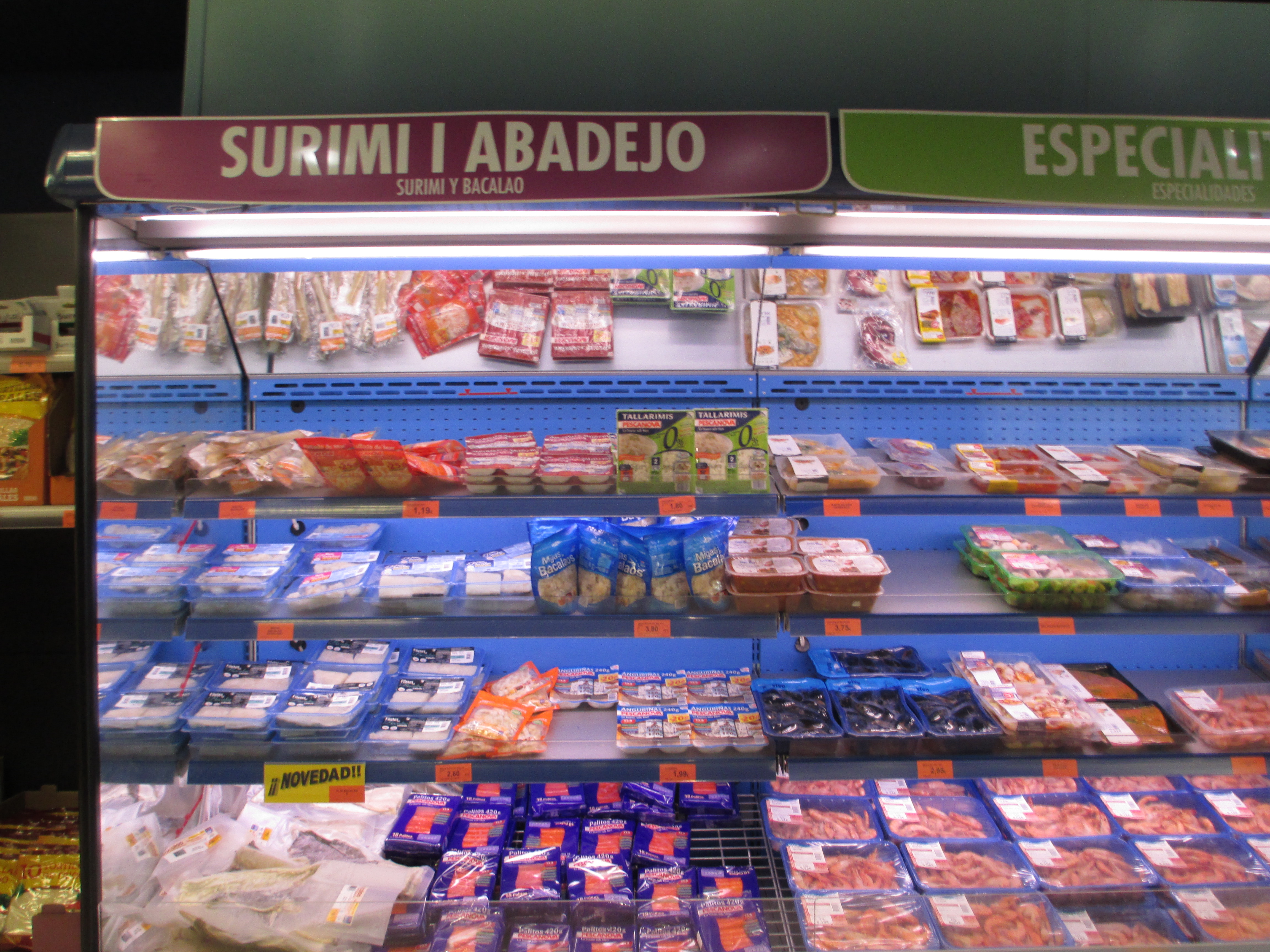
The grocery markets are filled with seemingly endless displays of fish and seafood: fresh, frozen, and canned (which are viewed as another great way to access seafood as opposed to American’s frequent opinions that canned food is of suspect quality.) For a foodie like me, the grocery and fresh food markets are intoxicating with their fresh and novel ingredients. As I was photographing the vast displays of fresh fish and seafood at a regular local grocery market, Mercadona, a female fishmonger admonished me from taking more photos. So here I will include a partial sample of the store’s offerings, and the selection of frozen and canned fish and seafood is even larger. (If you read Spanish and the words don’t look familiar, that is because the official language here in the Valenciana Community is “Valenciana,” but more about that surprise to me at another time.) If you look at the trays of fresh items from the sea, it is apparent that many home cooks are adept at using fresh whole fish and other types of seafood.IMG_0378


quaileggsI thought I hit the jackpot when I recently walked into a local market and found a beautiful dozen little quail eggs, for 0,90 €, less than the American equivalent of $1.00. On today’s cooking television shows, they showed how to make livers with “sangre” (blood) over a fire in the hearth, and “coda de cordero,” typical recipes from other parts of Spain. The food options here are inspirational, and I am eager for my two boxes of kitchen cooking supplies to arrive here from my former home in California. Those are the only things I had shipped here, (along with a few family and travel) mementos, which speaks to my priorities.

You can find my many restaurant, as well as other reviews, on Trip Advisor, as well as my map of the hundreds of places I have travelled.

IMG_0397

View walking home after tapas today


Why I Left “The Happiest Place in America” to move to Spain

6 Mar


altea

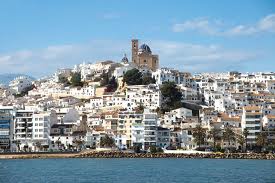
Hallmark photo of Altea

When I told people of my intention to abandon my lucrative professional career as a forensic psychologist in California and leave the San Luis Obispo area to move to Spain, I got one of two reactions. They either thought I was nuts or they were envious. In either case, they asked why I would leave the area that has been touted by Oprah Winfrey, National Geographic, U.S. News and numerous others, to be the best place to live in the United States, if not the world.

IMG_0314

Casco Antiguo (Old Town) Altea

My decision was based on a combination of factors that were sometimes difficult for me to explain, or perhaps more aptly, for them to understand. The quality of life in my small, picturesque beachside town of Altea (consistently rated as one of the top 10 most beautiful villages in Spain) far surpasses the stress and money-driven culture to which I had become accustomed. Life here and in many parts of Spain are driven first and foremost by family. One commonly sees multi-generational families strolling along the beachfront esplanade, dining or drinking together (often until very late at night), and fathers and grandfathers confidently and lovingly caring for the family babies and children (with no women in sight.) Spanish people work to live and generally are not consumed with a desire for wealth or material things. Besides family, friends, food and fun are valued. It didn’t take me long to appreciate this simpler, but more fulfilling existence.

Before I moved to Spain, I had a busy, in retrospect, too busy, career as a forensic psychologist specializing in the evaluation of and testimony as an expert on Sexually Violent Predators. As my third and youngest son was approaching high school graduation, I realized I was tired of working so hard to maintain our upscale lifestyle including our 3500 square foot home on a French-inspired fully landscaped acre, an expensive car, and the cost associated with living in a highly desirable area. After being the sole breadwinner and parent to my three boys for over 25 years, I wanted a change to a simpler, better quality life. For me, that meant Spain.

IMG_0305

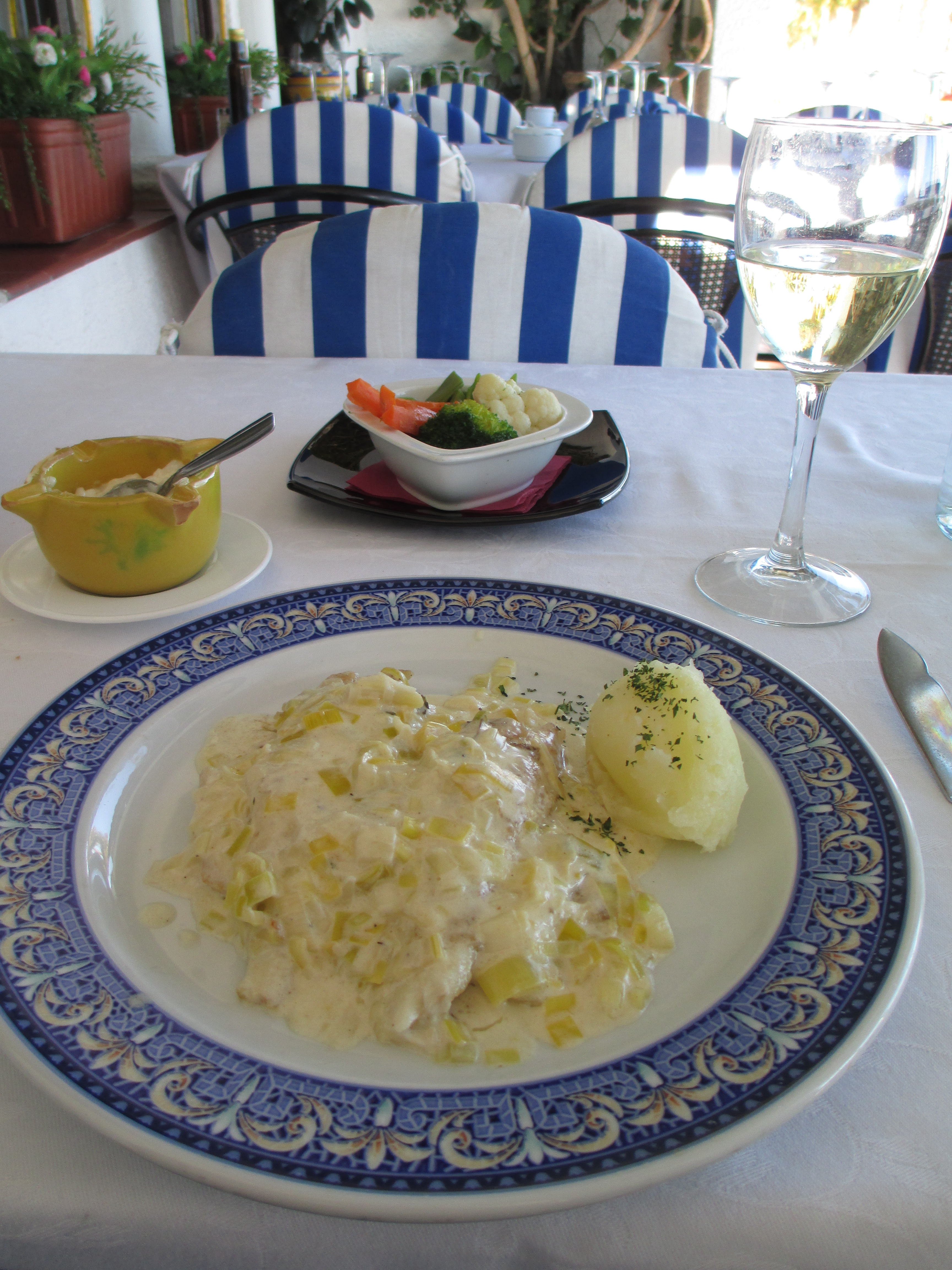
Fish with leek sauce at local beachside restaurant

My wanderlust had led me to travel to almost 40 countries, and while I had frequently fantasized about moving to Italy, France or Spain, I never really thought I would do it. When I reminded my youngest son of my plan to sell the house when the youngest graduated high school, he was less than pleased and would have liked to stay forever. The month before he was to graduate, I put the house on the market and I had accepted an offer only six days later. I felt pangs of guilt and he was none too happy to have to negotiate final exams, senior graduation activities, and moving all at the same time. Once I had put the house for sale, I interviewed three companies for my estate sale and selected the most experienced with the lowest commission rates. I sold everything from the pool table, to the grand piano and every bit of furniture, except the items I had promised to my sons and the few pieces of kitchenware and children’s mementos I planned to ship to Spain.

View from my place after sunset

View from my place after sunset

Even though I had previously travelled to Spain, it was to larger cities, not the type of quaint village I so desired. So I took the unorthodox approach of diligently researching all of my requirements on the internet which included a picturesque village on the Mediterranean, temperate weather, music and dance events, and no need for a car. Thus when I arrived in Altea, it was the first time I had been there. It was more beautiful and magical in person than photos could portray. At the top of the hill is the Altea’s iconic cathedral with its royal blue domes decorated with white ceramic tiles. The plaza on which it sits is the site for many of Altea’s festivals. Below, the white buildings cascade down from the top of the hill, in a manner reminiscent of a Greek village.

IMG_0327

View of Calpe from Altea beach at sunset

While there are many things I love about Spain, as anyone who has lived there knows, the bureaucracy is atrocious. If you need to conduct any official Spanish governmental business, expect to have to return multiple times to accomplish even a small task, and be prepared to be given different instructions each time. A case in point was my visa, which I did eventually receive after negotiating the inconsistent, and sometimes impossible, requirements. However, the details of that endeavor would take a whole, separate article!

Concurrently, I began diligent, daily practice of Castilian Spanish, as I only spoke basic Mexican Spanish. One of the things that attracted me to Spain was that I would be able to speak the language by the time I was ready to move there in an estimated year and a half while getting my affairs in order. I was in for a big surprise when I found out the primary language in Altea is Valenciana, similar to Catalan. Once in Spain, I readily made friends with locals, from Spain and many other countries, and honed my Spanish with practice each evening over drinks and tapas. I found it far easier to make friends in Spain than where I had been living in California for the past nearly 30 years. When I would head out for my evening at one of my customary places, I was typically greeted with, “¿Vino blanco?,” as the friendly waiters anticipated my usual white wine. A decent glass of house wine, white, red or rosé, is typically around 2€, and sometimes includes a tapa; beer is even less and these prices are at oceanfront spots frequented by locals and tourists, so prices can be even lower if one goes to places where there are primarily locals. While enjoying my wine and the view of the turquoise Mediterranean, I sometimes end up conversing with someone, and often we end up exchanging contact information or agreeing to meet on another occasion.

IMG_0330

View of Altea church at dusk

I wanted to test drive my town and neighborhood before renting or buying. I first stayed at a vacation rental I found on the web. This allowed me to live in Casco Antiguo, (old town,) like a local, and decide which particular area met my needs before settling on a permanent spot. In the northern Costa Blanca where I live, there are one or two bedroom apartments, some furnished, for as low as 300 Euros, which is currently about $340. Less expensive rentals are available away from the beach and the historic old town or if you go to the towns more inland.

Meals can be an incredibly good deal, as well. Many restaurants offer a “Menu del Dia” from which you can order two courses, and get bread with alioli (the Spanish version of aioli), a beverage (wine, beer, soda or bottled water), and either a dessert or coffee generally for around 10 to 13€. I was surprised that I quickly adapted to the Spanish tradition of having a larger, late lunch, and then later skipping dinner or having a tapa. This is very economical and resulted in the unexpected benefit of losing weight.

IMG_0317

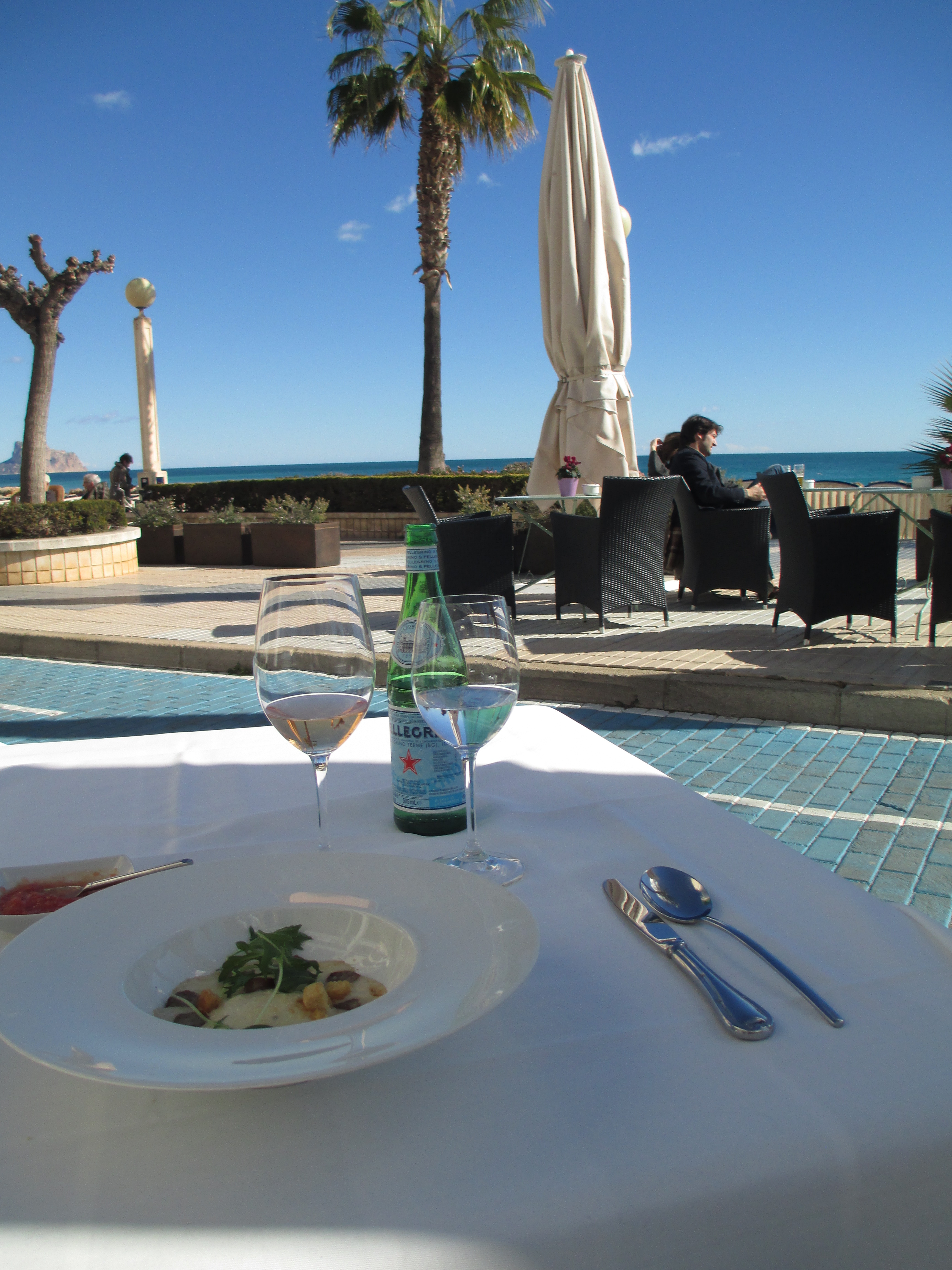
Beachside dining with Calpe in the distance

fill my days with Zumba and other dance classes,  a typical late and long Spanish lunch (almost always eating one of the many delicious fish or seafood choices), taking my dog to play at the new dog park, going home for a siesta or household tasks, and then heading out for an evening drink where I would meet up with friends to talk and dance, often well past midnight. On Sundays my Cuban friends and I head for live Cuban music at a bar which has a vibrant international crowd. My dream of a simple, fulfilling life has been realized.

Stay tuned for interesting and fun accounts of my time in Altea and beyond.