Why I Left “The Happiest Place in America” to move to Spain

6 Mar


altea

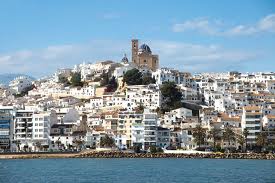
Hallmark photo of Altea

When I told people of my intention to abandon my lucrative professional career as a forensic psychologist in California and leave the San Luis Obispo area to move to Spain, I got one of two reactions. They either thought I was nuts or they were envious. In either case, they asked why I would leave the area that has been touted by Oprah Winfrey, National Geographic, U.S. News and numerous others, to be the best place to live in the United States, if not the world.
IMG_0314

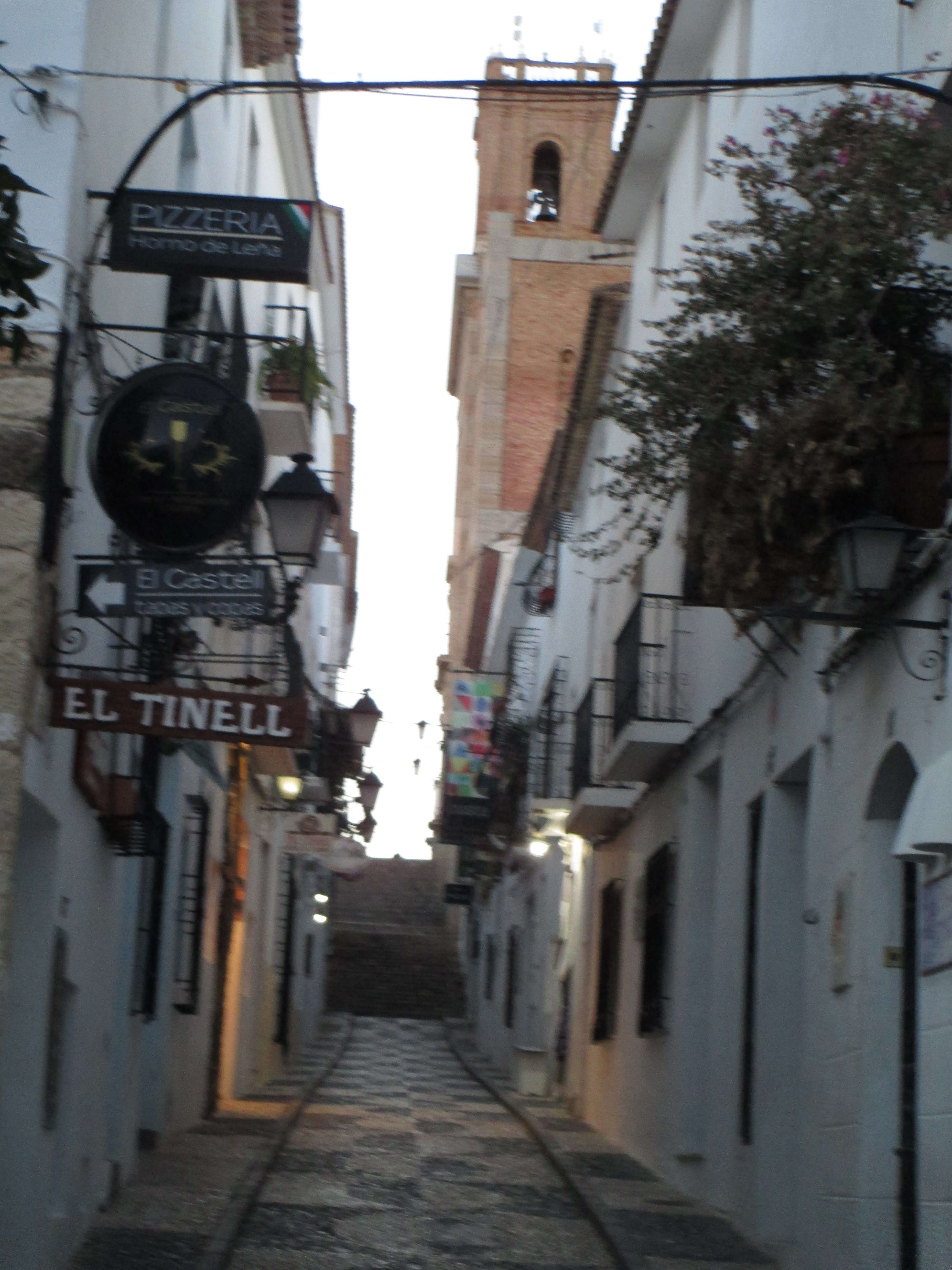
Casco Antiguo (Old Town) Altea

My decision was based on a combination of factors that were sometimes difficult for me to explain, or perhaps more aptly, for them to understand. The quality of life in my small, picturesque beachside town of Altea (consistently rated as one of the top 10 most beautiful villages in Spain) far surpasses the stress and money-driven culture to which I had become accustomed. Life here and in many parts of Spain are driven first and foremost by family. One commonly sees multi-generational families strolling along the beachfront esplanade, dining or drinking together (often until very late at night), and fathers and grandfathers confidently and lovingly caring for the family babies and children (with no women in sight.) Spanish people work to live and generally are not consumed with a desire for wealth or material things. Besides family, friends, food and fun are valued. It didn’t take me long to appreciate this simpler, but more fulfilling existence.

Before I moved to Spain, I had a busy, in retrospect, too busy, career as a forensic psychologist specializing in the evaluation of and testimony as an expert on Sexually Violent Predators. As my third and youngest son was approaching high school graduation, I realized I was tired of working so hard to maintain our upscale lifestyle including our 3500 square foot home on a French-inspired fully landscaped acre, an expensive car, and the cost associated with living in a highly desirable area. After being the sole breadwinner and parent to my three boys for over 25 years, I wanted a change to a simpler, better quality life. For me, that meant Spain.
IMG_0305

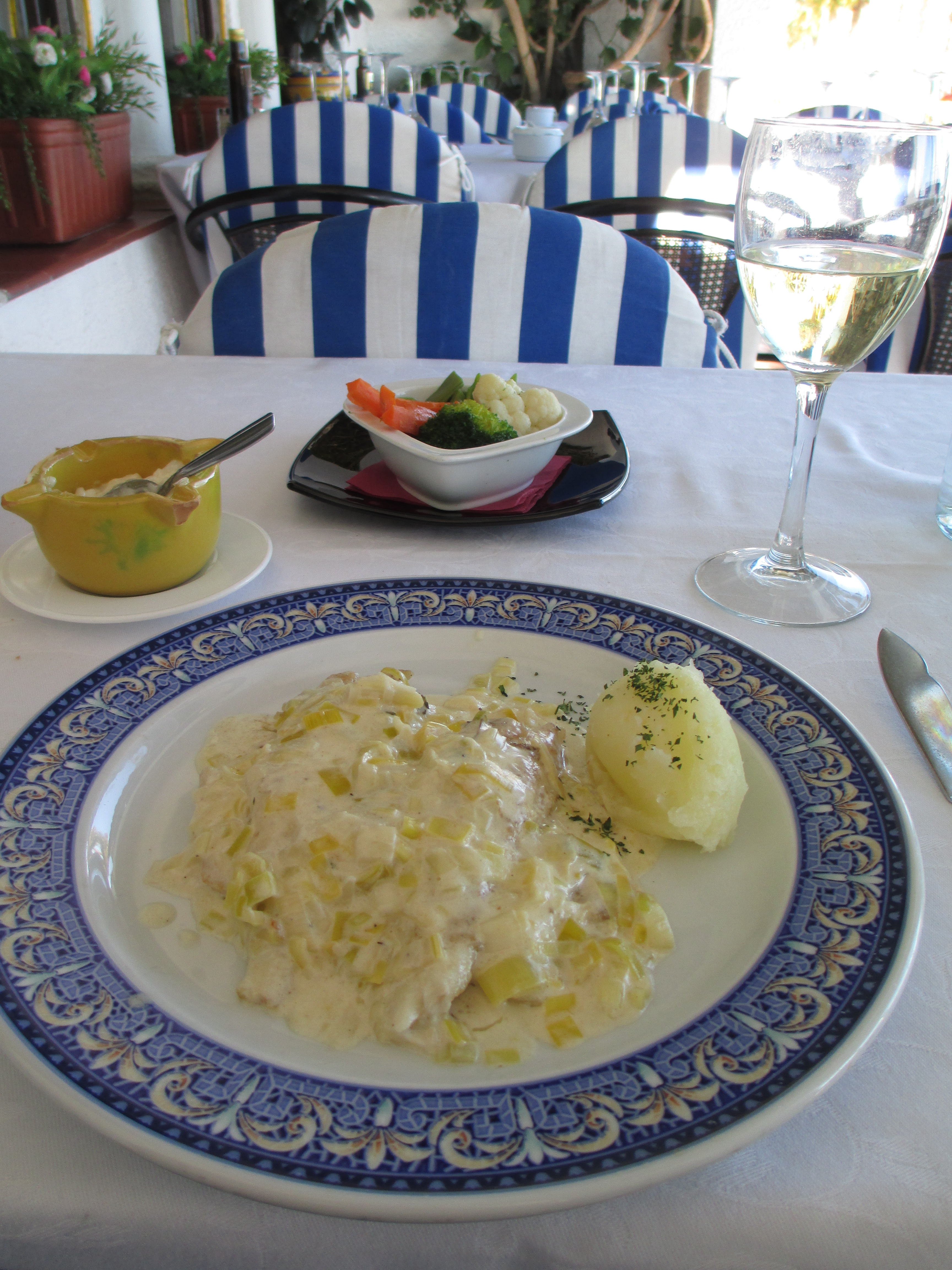
Fish with leek sauce at local beachside restaurant

My wanderlust had led me to travel to almost 40 countries, and while I had frequently fantasized about moving to Italy, France or Spain, I never really thought I would do it. When I reminded my youngest son of my plan to sell the house when the youngest graduated high school, he was less than pleased and would have liked to stay forever. The month before he was to graduate, I put the house on the market and I had accepted an offer only six days later. I felt pangs of guilt and he was none too happy to have to negotiate final exams, senior graduation activities, and moving all at the same time. Once I had put the house for sale, I interviewed three companies for my estate sale and selected the most experienced with the lowest commission rates. I sold everything from the pool table, to the grand piano and every bit of furniture, except the items I had promised to my sons and the few pieces of kitchenware and children’s mementos I planned to ship to Spain.

View from my place after sunset

View from my place after sunset

Even though I had previously travelled to Spain, it was to larger cities, not the type of quaint village I so desired. So I took the unorthodox approach of diligently researching all of my requirements on the internet which included a picturesque village on the Mediterranean, temperate weather, music and dance events, and no need for a car. Thus when I arrived in Altea, it was the first time I had been there. It was more beautiful and magical in person than photos could portray. At the top of the hill is the Altea’s iconic cathedral with its royal blue domes decorated with white ceramic tiles. The plaza on which it sits is the site for many of Altea’s festivals. Below, the white buildings cascade down from the top of the hill, in a manner reminiscent of a Greek village.

IMG_0327

View of Calpe from Altea beach at sunset

While there are many things I love about Spain, as anyone who has lived there knows, the bureaucracy is atrocious. If you need to conduct any official Spanish governmental business, expect to have to return multiple times to accomplish even a small task, and be prepared to be given different instructions each time. A case in point was my visa, which I did eventually receive after negotiating the inconsistent, and sometimes impossible, requirements. However, the details of that endeavor would take a whole, separate article!

Concurrently, I began diligent, daily practice of Castilian Spanish, as I only spoke basic Mexican Spanish. One of the things that attracted me to Spain was that I would be able to speak the language by the time I was ready to move there in an estimated year and a half while getting my affairs in order. I was in for a big surprise when I found out the primary language in Altea is Valenciana, similar to Catalan. Once in Spain, I readily made friends with locals, from Spain and many other countries, and honed my Spanish with practice each evening over drinks and tapas. I found it far easier to make friends in Spain than where I had been living in California for the past nearly 30 years. When I would head out for my evening at one of my customary places, I was typically greeted with, “¿Vino blanco?,” as the friendly waiters anticipated my usual white wine. A decent glass of house wine, white, red or rosé, is typically around 2€, and sometimes includes a tapa; beer is even less and these prices are at oceanfront spots frequented by locals and tourists, so prices can be even lower if one goes to places where there are primarily locals. While enjoying my wine and the view of the turquoise Mediterranean, I sometimes end up conversing with someone, and often we end up exchanging contact information or agreeing to meet on another occasion.

IMG_0330

View of Altea church at dusk

I wanted to test drive my town and neighborhood before renting or buying. I first stayed at a vacation rental I found on the web. This allowed me to live in Casco Antiguo, (old town,) like a local, and decide which particular area met my needs before settling on a permanent spot. In the northern Costa Blanca where I live, there are one or two bedroom apartments, some furnished, for as low as 300 Euros, which is currently about $340. Less expensive rentals are available away from the beach and the historic old town or if you go to the towns more inland.

Meals can be an incredibly good deal, as well. Many restaurants offer a “Menu del Dia” from which you can order two courses, and get bread with alioli (the Spanish version of aioli), a beverage (wine, beer, soda or bottled water), and either a dessert or coffee generally for around 10 to 13€. I was surprised that I quickly adapted to the Spanish tradition of having a larger, late lunch, and then later skipping dinner or having a tapa. This is very economical and resulted in the unexpected benefit of losing weight.
IMG_0317

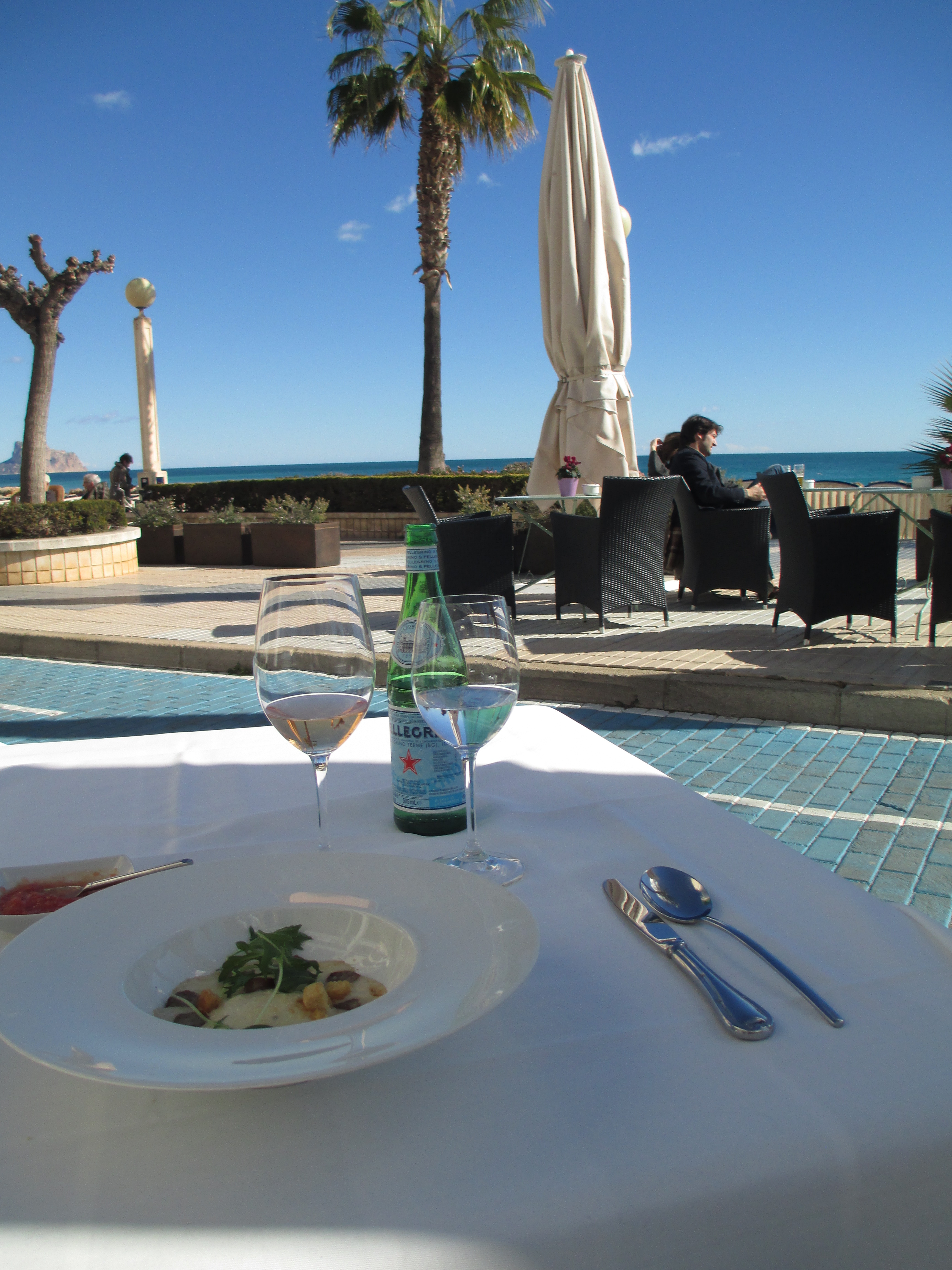
Beachside dining with Calpe in the distance

fill my days with Zumba and other dance classes,  a typical late and long Spanish lunch (almost always eating one of the many delicious fish or seafood choices), taking my dog to play at the new dog park, going home for a siesta or household tasks, and then heading out for an evening drink where I would meet up with friends to talk and dance, often well past midnight. On Sundays my Cuban friends and I head for live Cuban music at a bar which has a vibrant international crowd. My dream of a simple, fulfilling life has been realized.

Stay tuned for interesting and fun accounts of my time in Altea and beyond.


Update

16 May

Thanks to all who have visited my blog to date, which have included 60 countries. As you may have surmised, the blog is on hiatus for an as yet undetermined amount of time. I am working on some interesting content for my resumption, which will be several months away.

Jazzwax Link to my StarrTreks Blog

25 Jan
Charlie working with Barry Harris on movie "Bird"

Charlie working with Barry Harris on movie “Bird”

Marc Myers, journalist and regular contributor to the Wall Street Journal in music and arts, and recipient of the 2012 jazz blog of the year for his www.Jazzwax.com blog, provided a link on his blog to my article on vibraphonist, Charlie Shoemake, as well as my former monthly music column. My article on Charlie Shoemake was originally published in the SLO Journal Plus magazine in June 2013, and on my blog on July 26, 2013. To see Marc’s reference to my writings, scroll about a third of the way down his blog for “2013 week 46.”

This blog, www.starrtreks.com., also features many other interviews with talented and interesting musicians, in addition to other cultural and travel experienes

Swan’s Songs

25 Nov
Mike Swan

Mike Swan

Although he did not realize it at the time, playing with the Lester Lanin Orchestra at the royal wedding of Prince Charles and Lady Diana was one of the highlights of Mike Swan’s professional music career. This was one of a number of international music venues where Mike performed that had a formative influence on his varied musical repertoire. Presently, Mike performs his entertaining and diverse songs on bass guitar and vocals at La Bellasera Hotel in Paso Robles, California, on Thursday evenings with guitarist Adam Levine and Judy Philbin.

Mike always loved music and started playing the cornet in elementary school, and then went on to play the French horn in high school. He developed an interest in Dixieland music; when he and some friends formed a Dixieland band and could not find a banjo player, Mike borrowed a tenor banjo from family friends. Then he used a book to teach him to tune it and play basic chords. Once he got to the respected Reed College in Portland, he studied philosophy but continued his banjo playing by joining a “jug band.” During this time in college when folk music was big, he started playing the guitar, and later began playing bass guitar.

He left school to move to the San Francisco Bay area where he played banjo in a trio at the North Beach’s “Red Garter” which featured Dixieland music. Mike described the music they played as “cornball sing alongs” dating from the 1890’s through the Great American Songbook era. In 1967, the owner, Jack Dupen, offered Mike a job at the New York City Red Garter. Moving to New York with its 13 degree weather during the 1967 Christmas/New Year’s holidays was “like running away to the circus,” Mike joked. He also did some stints at the Red Garter’s Niagara Falls and Florence, Italy outposts, and subsequently started playing for competitor “My Father’s Mustache” where he led the band for two years.

Mike realized that if he wanted to continue to make a living playing music he would have to become a better guitar player and singer, and to that end he began studying with talented professional musicians in New York City. He honed his skills and expanded his repertoire which included jazz and ragtime. He learned songs in Italian, Swedish, German, and Hebrew/Yiddish which he performed at special events. The venues in which he performed expanded to private “society” parties for affluent patrons, Jewish celebrations, a private Aegean cruise, and Claridge’s in London while there for the royal wedding. When asked to share an interesting or fun experience, he related that they when he was playing with the Lester Lanin Orchestra they had a gig in Gstaad Switzerland, the second night the venue was at Eagle Ski Chalet which necessitated transporting their equipment by ski lifts. The themed party was pre-revolutionary Russian, for which attendees and musicians donned period costumes.

Besides his musical career, Mike also did corporate and IT work to help pay for raising his children and their college. In 2006, Mike said he and his wife were tired of their corporate work and the hectic pace of living in New York City. He stated, “Like a salmon swimming upstream,” they decided to return to California. They settled in northern San Luis Obispo County where Mike’s brother was living. Taking a break from music, Mike helped his brother with his import business. Then he received a call from a local Dixieland band which needed a banjo player, and with that, he became involved in the local music scene.

Mike is presently working on two CDs, having completed his first CD in “the early 2000’s” which consisted of a trio with him on banjo, along with a tuba and mandolin. Besides his weekly appearances at La Bellasera Hotel, he plays at many wineries where he jokingly described his function as “sonic wallpaper.” He also plays with Jazz in the Vines, and at private parties. He has been playing solo for hospice patients which he described as “rewarding.”  For more information on Mike and his performance schedule, go to http://mike-swan.com.

Best Family Vacations: Ojai

20 Nov
The Pink Moment

The Pink Moment
Courtesy: Ojai Valley Inn

We all hush at the magical “Pink Moment” when the sky to the east over the Topa Topa Mountains creates brilliant shades of pink as the sun sets in Ojai, California. This is one of the few places in the world where people can see this phenomenon due to the east-west orientation of the mountains.  Ojai is about 30 miles southeast of Santa Barbara or 90 miles north of LAX.

Ojai is one of my favorite places for a short stay with the family. We love the historic Spanish Colonial Ojai Valley Inn and Spa where I find the relaxing, casually elegant ambience evokes immediate relaxation. I can be perfectly content just soaking up the resort’s beautiful grounds, gardens and golf course, but we also enjoy the wide variety of activities for both adults and children on site, and in the town of Ojai. The Inn is pet-friendly and we enjoyed being able to take our dog with us.

I love the Mind and Body Studio located in the Spa Ojai building where they offer many different classes throughout the day, such as Pilates, several types of yoga, water exercise in the spa’s pool, stretching, cardio, spinning, Qi Gong, sometimes dance, and others. The Inn also offers classes for the mind such as meditation, physical wellness, and art classes at the Artist Cottage and Apothecary.

Ojai Valley Inn

Ojai Valley Inn
Courtesy: Ojai Valley Inn

The resort has a premier championship golf course, with excellent professional lessons and a sports psychologist to help with the important mental part of your skills. Upon arrival, staff take your golf clubs to the clubhouse where they clean your golf shoes and ready your clubs for your scheduled round of golf. Because it is such a popular course, reservations are recommended. The Inn’s storied tennis history dates back to the late 19th century and boasts being one of the top tennis facilities in a hotel or resort in the United States. Professional tennis instruction is available.

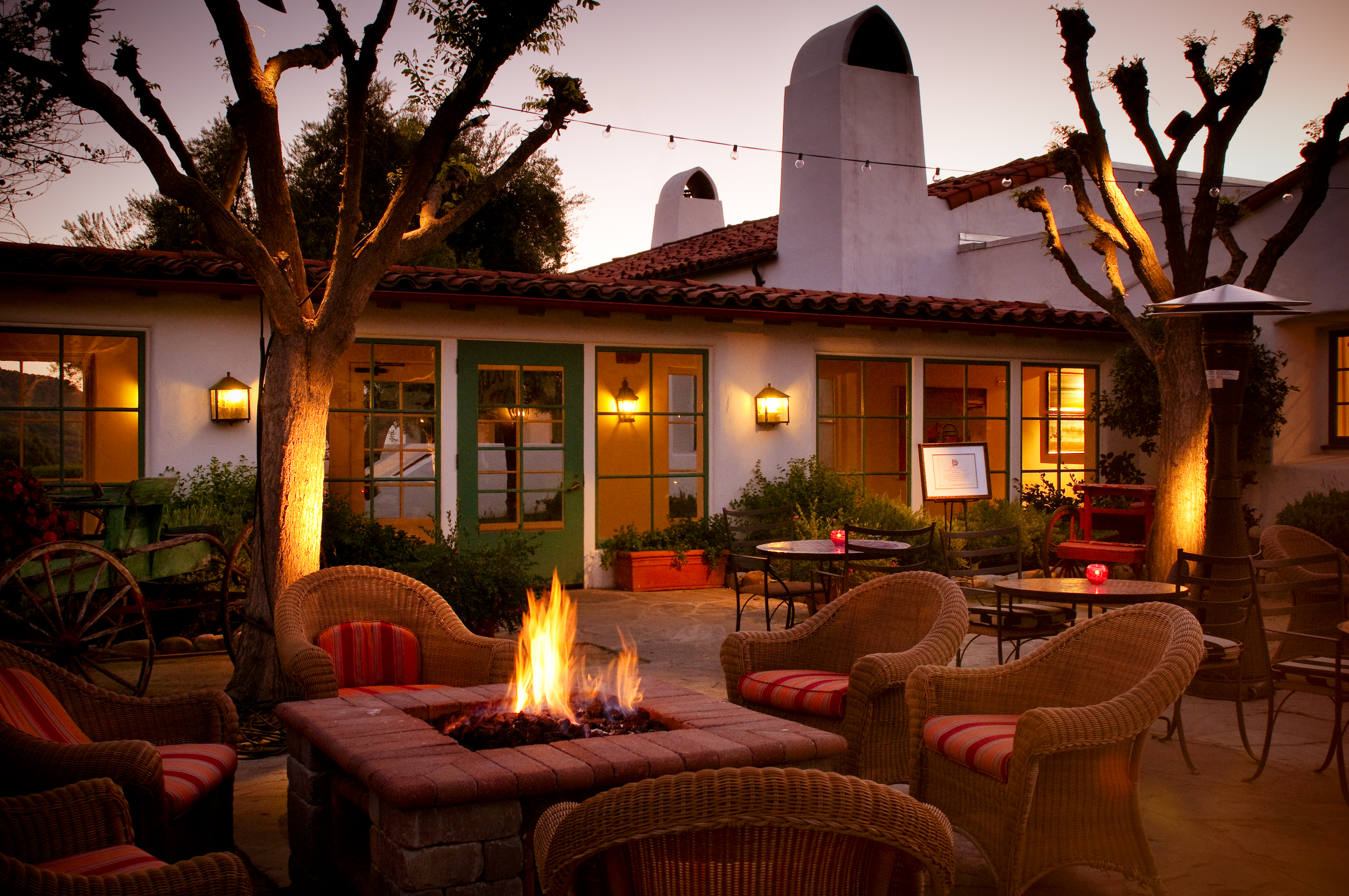
Outdoor Firepit

Outdoor Fire pit
Courtesy: Ojai Valley Inn

There are myriad activities that can be done alone, as a couple or a family including hiking, biking, basketball, fishing, softball, volleyball and tennis. Camp Oak offers creative, stimulating and fun themed half-day and full-day activities for five to twelve year-olds.  From 8 to 9 a.m., Acorn Hour at Camp Ojai hosts bonding for parents and their two to four year-old children by doing crafts or storytelling.  During the summer, there are complimentary movies to watch while floating in the main pool. Free popcorn is also provided.  The resort will arrange for horseback rides nearby that are suitable for the ages and skills of the riders; we have had fantastic experiences doing this.   A walk into downtown Ojai offers an opportunity to explore the inviting historic downtown area. Make sure to check out Bart’s Books, which is the largest independently-owned outdoor bookstore in the U.S.

In town, we like to have dinner at Azu, where they have Spanish- and Mediterranean-inspired comfort food.  They have many tapas style small dishes, as well as creative, tasty entrees. `The Ranch House requires a short but worthwhile drive for gourmet award-winning cuisine in a romantic atmosphere that has streams and lush plants.

There are several great spots to eat at the Ojai Valley Inn. The Oak Grill offers outdoor and indoor dining with the best Cobb salad I have ever had. Jimmy’s Pub is a good, casual après golf place for snacks, burgers, and drinks. More health conscious cuisine is available at the Spa’s restaurant, Café Verde. Maravilla is the Inn’s signature restaurant where they serve excellent, seasonally-inspired cuisine with locally-sourced produce featuring steaks, chops and seafood. The wine selection is excellent and the restaurant’s ambience is warm and inviting. Whenever we have been there on a week-end, in the evenings we have enjoyed entertaining live jazz in the lounge just in front of Maravilla while sitting near the warmth of the fireplace.

JUDY PHILBIN’S MUSIC MOZAIC

27 Oct
Judy Philbin

Judy Philbin

Judy Philbin smilingly sings a sublime samba to the delight of the audience. Whether performing to a concert audience or restaurants and wineries, Judy relishes the opportunity to be energized and inspired by her listeners. She is excited about her newly released CD, Keeping It Simple, in which she collaborated with local talented guitarist and composer, Adam Levine (see my March 2013 column www.slocoastjournal.com archives.) The CD includes jazz standards, pop tunes, and four originals with two written by her, and two more to which she wrote lyrics to Adam’s compositions. As the title reflects, they kept the music simple, and straightforward, with Judy on vocals, and Adam laying down from one to four guitar tracks for each song.

Judy always loved to sing, and retrospectively noted that she was privileged to start singing at age six in one of the stellar children’s choirs they had at the time at San Luis Obispo First Presbyterian Church. At six, she also began playing piano. Over the years, she learned a variety of instruments including percussion, stand-up bass, trumpet, and guitar. In the eighth grade, she noticed all the boys played brass and all the girls played woodwinds, so she decided to play trumpet, which she continued through high school. She also was active in choir. In high school, as was typical of the era, she played guitar and sang the typical “teen-age angst-filled songs,” and began singing in coffee houses.

After completing her college degree, which was not in music, she returned to her love of singing by becoming one of the founding members of the acclaimed San Luis Obispo Vocal Arts Ensemble. Motherhood led her to take a temporary hiatus from the time demands of performing, but when her children started school, she began collaborating with a friend to do sing-along concerts for kids. Her husband and two children were also involved, and they even performed on the Children’s Stage at the Live Oak Music Festival.

As a child, Judy felt enriched by living with her family in Guatemala for two years, from ages four to six years of age, while her father worked there. She was drawn to the simple, traditional music there, particularly marimbas and flutes, and has since enjoyed music from Central and South America. She and her professor husband decided to give their children a similar experience living abroad by taking his taking a teaching position in Denmark, where they became involved with the international mix of people involved with the school.  During her two year stay in Denmark, she was impressed by and drawn to the quality jazz music. Upon return to San Luis Obispo, she was inspired to start developing her jazz and standards repertoire. To that end, she attended a workshop with Phil Mattson, a conductor, arranger, and father of the vocal jazz movement. He encouraged Judy to explore solo vocal work, which she has been doing seriously for the last five years. In 2007, she released her first album, Candle in the Window, which is a compilation of songs to provide comfort for those who have lost loved one. As a result she has performed numerous times nationally at conventions for The Compassionate Friends, which provides grief support after the loss of a child. She and her husband, who also sings, have been involved with the annual Central Coast Follies Parkinson’s fundraiser at the Clark Center for seven years, and she noted that the benefit has contributed over $250,000 toward Parkinson’s research.

Judy presently performs locally at restaurants, wineries, public concerts, and private parties. Nearly every Thursday evening, she, Adam Levine, and bass player, Mike Swan perform at La Bellasera Hotel in the lounge/restaurant starting around 6:30 p.m.; there is no cover charge. For information on Judy and her performance schedule, go to www.judyphilbin.com.  Judy encouraged locals to purchase the new release, Keeping it Simple, at local businesses which include Boo Boo Records (San Luis Obispo), Volume of Pleasure (Los Osos), and Matt’s Music (Paso Robles.) It can also be purchased from her website, Itunes and www.CDbaby.com.

THE KINDNESS OF SICILIAN STRANGERS

13 Oct
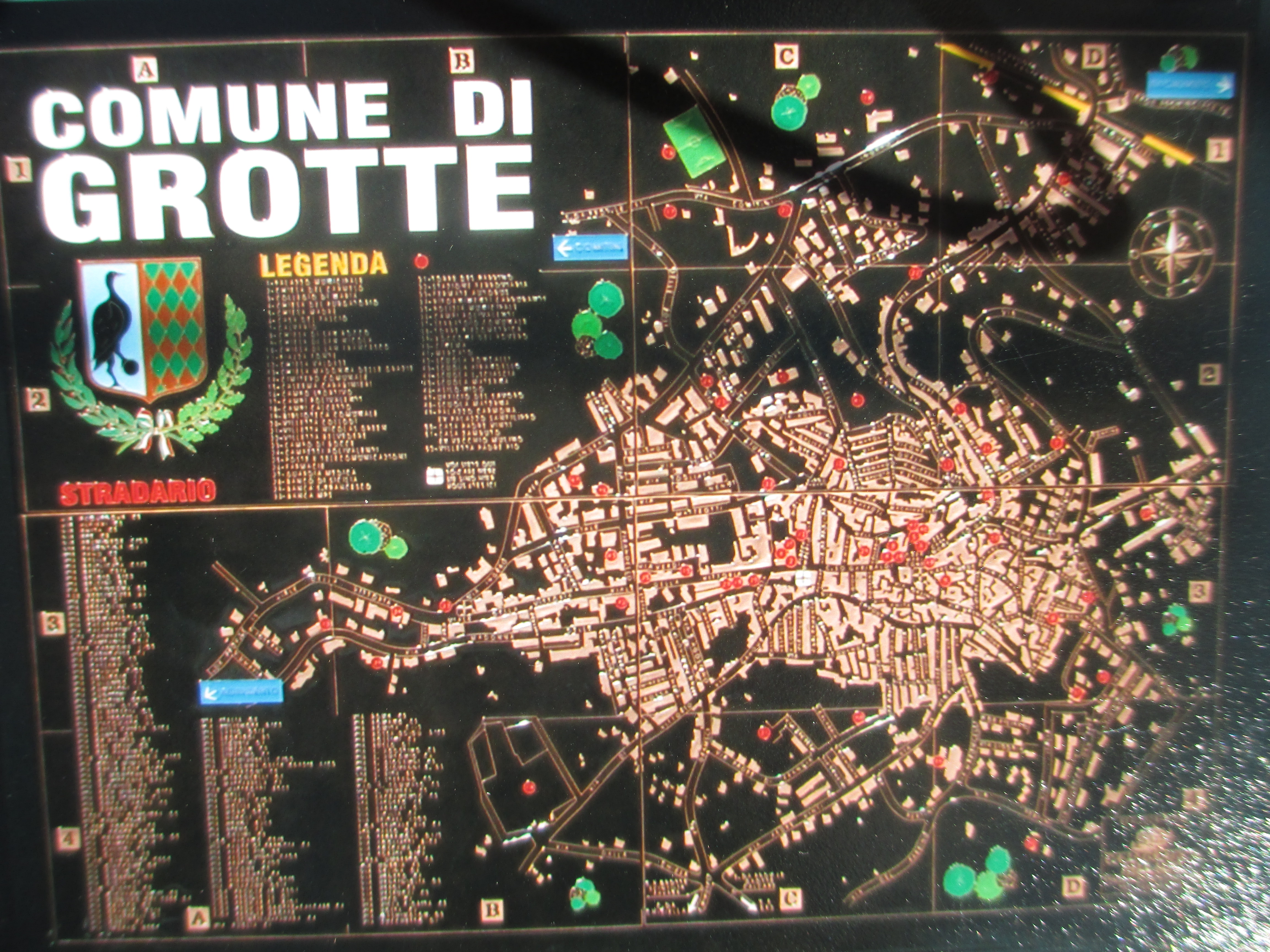
Map of Grotte

Map of Grotte

After travelling over 6000 miles to Grotte, Sicily to find my fiancé’s paternal homeland, we eagerly approached the Zaffuto tractor and farm supply store in hopes of finding relatives who shared the same last name. However, we didn’t anticipate that the store would be closed for the daily afternoon “riposo,” the Italian equivalent of siesta which occurs from noon to three.

En route to the tractor store, we drove through the small town of Grotte, (near the Agrigento Greek Temples in southern Sicily,) where we noticed that almost all of the shops were closed. So it should have been no surprise that the tractor store located on the outskirts of town was also closed.

Zaffuto tractor and farm supply store

Zaffuto tractor and farm supply store

A middle-aged woman emerged from the house next door saying something in Italian that we couldn’t understand. With our hands we managed to signal we were looking for the owners, who shared my finacé’s last name of Zaffuto. The woman raised three fingers signifying the time when the store would re-open, and then generously invited us into her home, which was on the second floor above the home’s garage.

Upstairs the home was decorated with traditional Italian furniture and antiques. She pointed to the chairs around the dining room table for us to be seated.  She served us beverages and a light snack while we continued to try to communicate with each other. Eventually, below we saw the men returning from their riposo, re-opening the store.

We said “grazie mille” and “ciao” to our hospitable hostess and proceeded to the store. With their chiseled good looks, well-coiffed black hair, designer sunglasses, and stylish clothes, the men looked like Italian models rather than workers in a tractor and farm supply store. None of the Zaffuto men spoke English, something not uncommon in small towns in Italy. Fortunately there was one man there who spoke some English because he had previously lived in Canada. As we attempted to exchange family histories, the men prepared and served us expertly-prepared espresso coffee from their commercial-sized machine.

Zaffuto men: Store owners on left and right

Zaffuto men: Store owners on left and right

As customers entered the store and needed assistance, we decided it was time to leave. We exchanged “il balecetto,” a kiss on each cheek, and bid our handsome hosts, “Arriverderci.”

Quest for Culatello

9 Oct
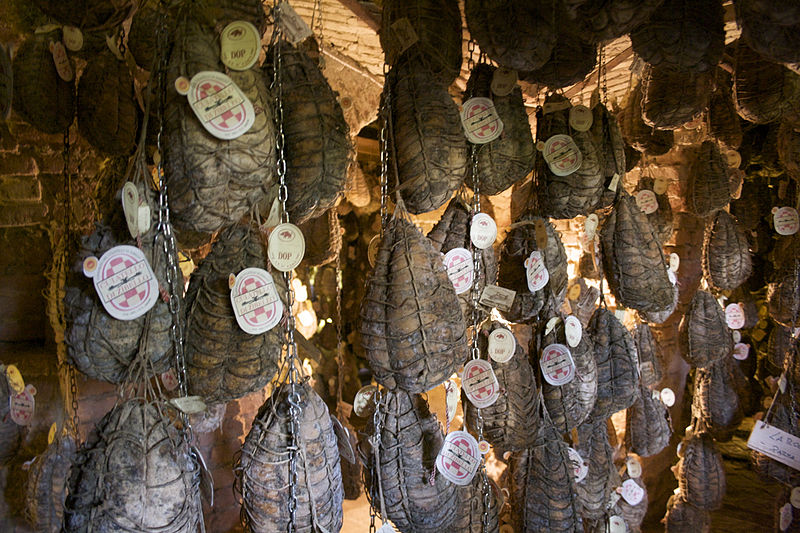
Culatelli di Zibello Source: Wikipedia Commons

Culatelli di Zibello
Source: Wikipedia Commons

I felt like a criminal when I smuggled the non-permitted item onto my flight from Bologna to Paris, and the next day from Paris back to Los Angeles. But I didn’t travel that far to be stripped of my prized Culatello di Zibello, considered by many salumi lovers to be the King of charcuterie. Better than its cousin prosciutto, culatello has an intense, complex salty, sweet and musty flavor with a supple texture.

Culatello, which literally means “little ass” is made from a single muscle from the hind leg of a pork. After the muscle is trimmed and the bone and skin are removed, it is massaged and salted. It is then encased in a cleaned pig bladder, and then typically hung from the ceiling of a 500 year old musty cave. This aging process can be from 16 to 18 months, or even as much of 30 months.

Culatello di Zibello is made in the Emilia-Romagna area of Italy near the foggy Po River area. The Emilia-Romagna area is best known for its prosciutto, Modena balsamic vinegar, Parmesan cheese, and the birthplace of tortellini (one legend is that they were inspired by Venus’ navel.) After a food- and music-centric week in Venice, I took the train to the Bologna region in search of food nirvana.

My first night in Bologna I dined at the historical Papagallo, of course ordering tortellini, as I always try to order the most “typical” food of the region I am visiting. Bologna is a vibrant, bustling college town, great for wandering under the porticos, and exploring the many historical and artistic sites. But my real quest was to try as much of the local fare that is thought to be amongst the best in Italy.

To that end, after a few days exploring Bologna, I decided to take the train to the nearby towns of Modena and Parma. (If taking the train from Bologna, make sure to be on the right platform.) The handsome ticket seller at the train station flirtatiously questioned my intention of seeing both towns in one day, but as it was my final full day in the area, I was determined to sample both. I typically just wander the streets and see what eateries invite me to dine, whether inexpensive local spots or upscale. In Modena, for lunch I found Hosteria Vecchia, which featured the typical cuisine of Modena. The restaurant was bustling with local businessmen, blue collar workers, and couples, all enjoying the fantastic fare.

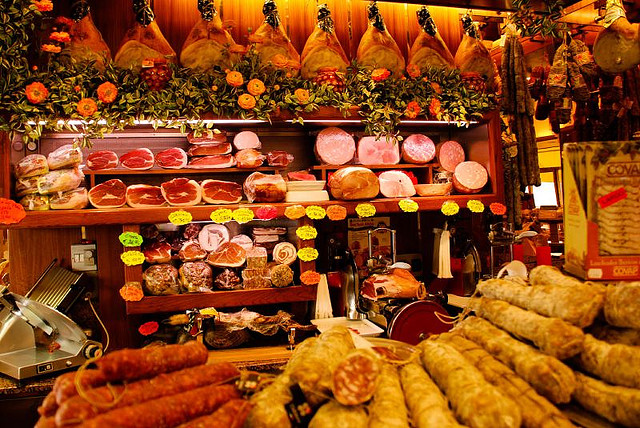
Salumeria Garibaldi Source: Flickr

Salumeria Garibaldi
Source: Flickr

After buying my aceto balsamico tradizionale (Modena balsamic vinegar aged at least 12 years), I continued on my food quest to Parma, now in pursuit of culatello. Again, preferring to let serendipity take its course, I wandered around Parma’s old town centre. I found cafes, and shops but not any salumeria. Dissappointed, I headed back to the train at dusk when I saw the illuminated Salumeria Garibaldi welcoming me. I managed to put in my order just before they closed. I chose three types of salumi including the culatello.

Back at my room in the elegant Grand Hotel Majestic Gia Baglioni, I ordered some aged Parmesan, a dry Lambrusco wine and proceeded to savor my culinary finds. I couldn’t eat all of the culatello, but there was no way I was going to throw it away.  I decided to take it with me, so my son, who was meeting back up with me in Paris, could try it with me. To that end, I wrapped the pungent culatello in multiple layers of plastic so hopefully it would not be detected before boarding the plane in Bologna and again in Paris. Once safely en route from Paris to Los Angeles, we devoured the sublime culatello, apparently without detection.

HAPPILY SINGING THE BLUES

27 Sep
Ted Waterhouse

Ted Waterhouse

Under the hot August sun in the expansive outdoor beer garden at the Barrel House Brewing Company, Ted Waterhouse was setting up for the weekly Thursday evening Real Blues Jam. The Barrel House Brewing Company is at the very south end of Paso Robles, California. He has gathered a group of talented local musicians who start the event by “jamming,” with Ted leading on guitar and vocals. Then musicians in the audience have an opportunity to sit in and play on the stage which is on the bed of an old, rusted truck.

Ted has become a regular fixture in the California’s Central Coast music scene since arriving here in 1980, after receiving his Bachelor’s degree in Anthropology. He didn’t initially intend to support himself as a musician. When he realized that to use his anthropology degree he would have to be an academician, he changed course.

At age 10, Ted said he started playing the guitar after his mother, a school teacher, took it up. Ted’s early formative influences were folk singers, other “American roots music” and Delta and Chicago blues. Living in the Los Angeles area, he was able to see some of the living contemporaries of Mississippi blues legend Robert Johnson including Lightnin’ Hopkins, Rev. Gary Davis, and Mississippi John Hurt.

In the 1970’s, unenamored with arena rock and disco, Ted expanded his music portfolio with “old jazz,” and swing jazz. Later he added honky tonk, country, varying styles of bluegrass and Western swing.  In 1973, Ted got his prized 1963 Stratocaster electric guitar on which he likes to play bottleneck slide. When he first got it, not knowing any better, he said he refinished it. Lately Ted had been playing his Telecaster, a sort of cousin to the Stratocaster. He also enjoys playing his resonator guitar, which is an acoustic guitar whose sound is produced by a spun metal cone instead of a wooden sound board.

Ted’s eclectic musical tastes are evident in the songs he writes and the different bands he puts together.  In The Blue Souls feature Ted and Debra Windsong on harmonica and vocals playing rockabilly, blues, and original songs. The Swingin’ Doors plays honky tonk and Western swing. Other groups Ted has had include the Hot and Cool Orchestra, Catalina Eddy and the Breeze, Viper Six who perform danceable swing jazz tunes primarily from the 1930’s and‘40s. Ted said he was excited about his new group Terraplane, the band’s name a take on the old Robert Johnson blues song Terraplane Blues. Chris Anderson will be playing keyboards. Ted related that this will be the first time he has had a regular keyboard player in one of his bands.  The incredible Jim Stromberg will be on percussion and vocals. He emphasized that songwriting is an important part of what he does.

In addition to the Barrel House Brewing Company, Ted enjoys playing in other venues including the Otter Rock Café in Morro Bay, Avila Bay Club, Atascadero Folk Festival, Live Oak Music Festival, Shell Café in Pismo Beach and wineries. To get on Ted’s mailing address for upcoming events, email him:  edcat@aol.com.

Courtesy: www.slocoastjournal.com

Top 12 Paso Robles Restaurants

29 Aug
Restaurant: Cuisine Meals Wine, Beer, Full Bar Patio: Resv? Dog/Family Friendly*
Il Cortile: Rustic Italian D WB Yes
Artisan: Creative American 11am to close FB No Dog
Bistro Laurent: Traditional French and Provencal LD WB Yes Dog
Buona Tavola: Northern Italian LD FB Yes Dog**
Paso Terra: Seafood, French D WB Yes Dog
Goshi: Traditional Japanese LD WB No Patio
Robert’s: Classic American LD LD Yes Dog
La Cosecha: Spanish, Central &
South American
LD FB Yes
Panolivo: French, Bakery, Mediterranean (Jaffa) BLD WB Yes Dog, Family
Berry Hill Bistro: Comfort, American Bistro LD FB Yes Dog
Estrella: Latin Riviera LD WB Yes Dog
Chico’s: Casual American, Seafood BLD WB Yes Dog, Family

Click the links to see my reviews posted on TripAdvisor, Yelp!, and Google

*All of the restaurants in Paso Robles are accommodating to children, but  those that tailor their restaurant and menu to families are identified as “family-friendly.”

**Pending approval of other patio patrons

For those with dogs, keep in mind some of the restaurants have limited outdoor seating, so make patio reservations to assure a spot.