Archive | Food RSS feed for this section

Party…Spanish style!!

19 Mar
IMG_0447

Party paella being prepared

Yesterday was a stellar day in that I was invited to the birthday fiesta of the “novio,” (boyfriend) of my good friend, Carmen, whom I have known for about a year. She came to Altea about a year ago, and now lives with Pepe in the adjacent town of La Nucia. Since La Nucia is slightly inland, the houses are more likely to be single-family detached homes, often on large plots of land in the undulating countryside which harbors fruit trees and other vegetation, horses, and other scenic pastoral sites. Although very close to my town of beachside Altea, it has considerably different feel.

Since I (proudly) no longer own a car, Pepe picked me up and drove to his “estancia” (ranch.) En route, he explained that he lived in Altea when he was young, but has been living in La Nucia for 40 years. Upon arrival, he gave me a tour of the house, outbuildings which housed two separate barbecues, and many fruit trees. I laughed as I recognized that the blue granite counters he had in his kitchen were the same as I had installed at my former house in California.

IMG_0445

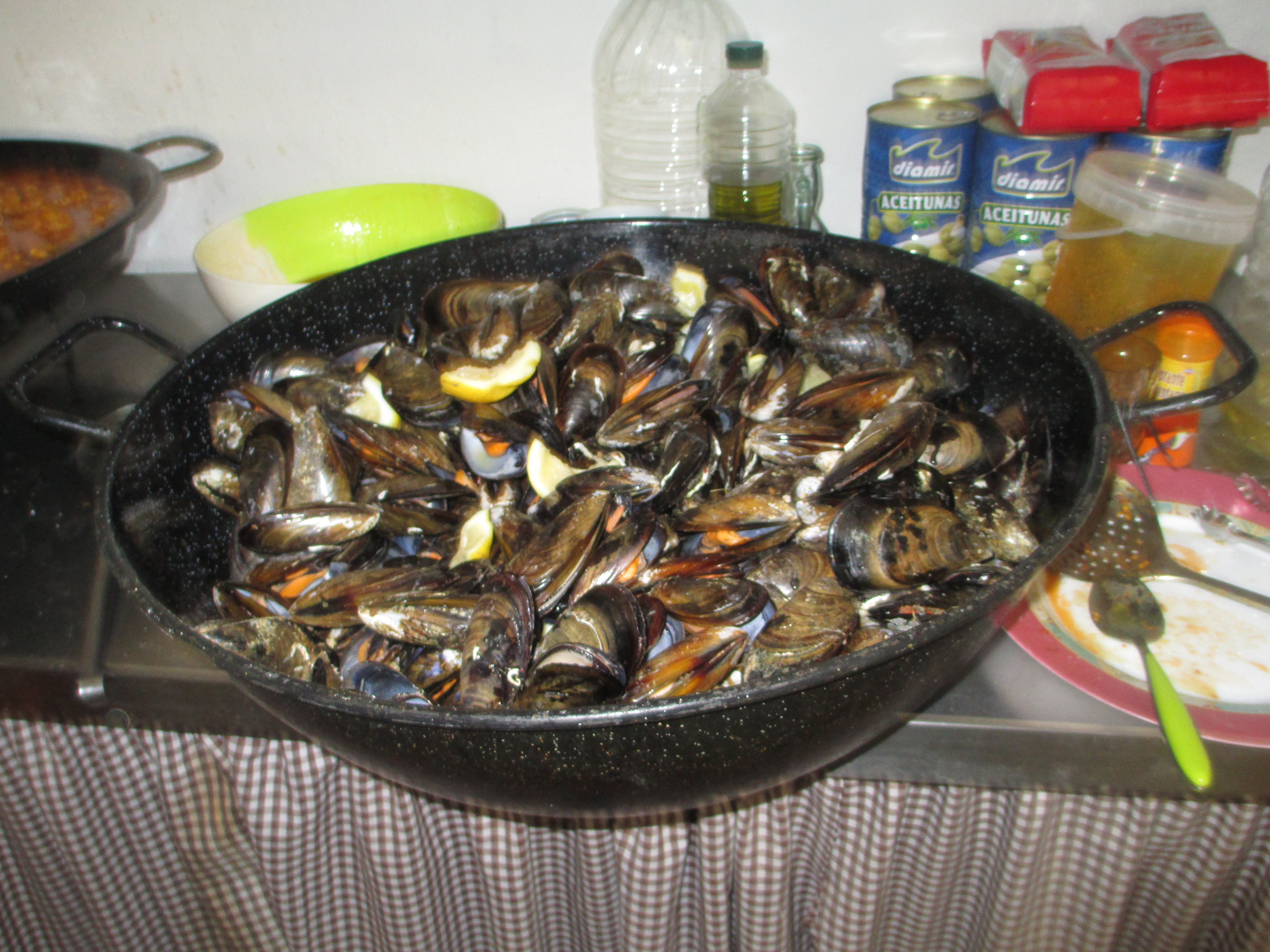
Mejillones (mussels) being cooked

Carmen, who is Cuban, was busy cooking dishes from her nascent land, including rice with black beans, pork (which had incredibly crispy delicious skins), and “tostones” (fried plantains.) Although I am not usually a fan of plantains, these were excellent. I watched as she pounded them a little flat and then fry them in oil. I rescued one batch from burning when she left the room to greet some newcomers. The following day (today as I write this,) when we spontaneously met for lunch and I told her how much I liked them when I usually don’t, she said she first soaks them in vinegar.

After her cooking creations were bundled for transport on party day, we took the short drive up the hill to the large outbuilding where the fiesta was to occur. Typical of this area, were two huge pans, one of paella and the other of mejillones (mussels) being expertly prepared by two local women. Paella, after all, is originally from Valencia, and Altea is part of the Communitat Valenciana (as they say in the local Valenciana dialect.)

IMG_0444

Carmen helping with the party preparation

Of course, there were the typical cheeses and cured meats available, with loaves of fresh baguettes (as common here as on my many trips to France,) free-flowing wine and beer. With the mussels and paella, several large mixed salads lightly dressed were served in the middle of the lengthy table.

The promise of Cuban music for dancing was frustrated by the lack of cooperation of the equipment brought for that purpose, but Pepe backed up his car to the large open doors of the building and cranked up his Cuban tunes. Rei, a local salsa teacher, got (almost) everyone up shaking their groove things. The multi-cultural assembly including locals, Columbians, Cubans, a Norwegian and others made for a great experience including the chance to practice my Spanish and find new dance friends for the weekly Sunday Cuban/salsa music at Club Cuba in nearby Albir.

Toward the end of the birthday party, they served what was the best dessert I have ever had, and even one of my best desserts ever (although I am not much of a sweet eater.) It was vanilla custard between layers of thin, crispy puff pastry like a mille-feuille (Napolean) but with fresh fruit on top.IMG_0450 As it was time to leave, leftovers and lemons from Pepe’s trees were offered to take home. I was driven home with my large, gorgeous lemons in hand, feeling utterly happy with my new life in Spain. Unfortunately, my photos do not reflect the full revelry of the day as my camera battery crashed but what few I got are shown here.

More Food Porn from Altea Spain

15 Mar
IMG_0304

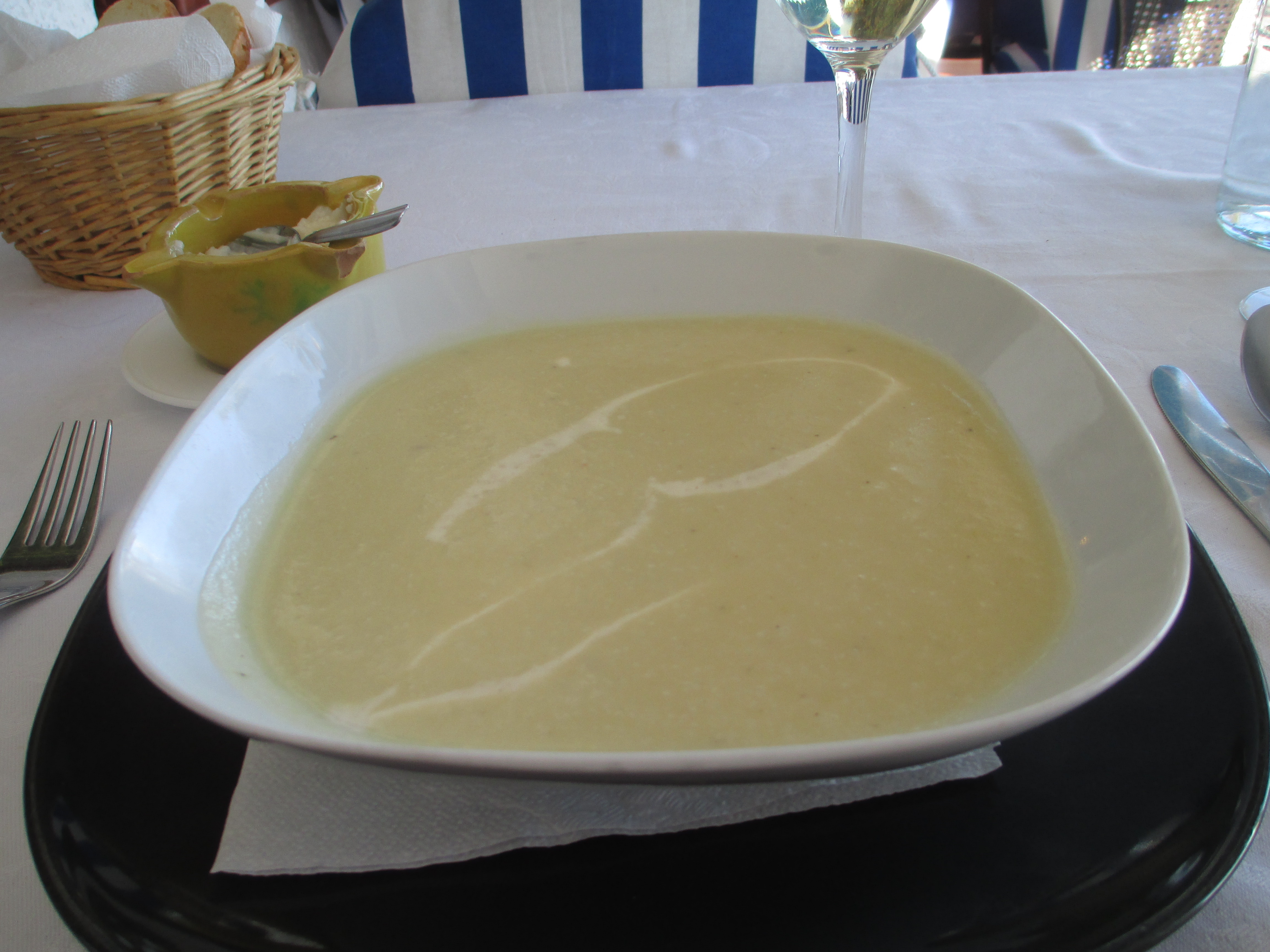
Sopa de puerros (leek soup)

IMG_0338

Paella con bandas (paella with calamari)

IMG_0337

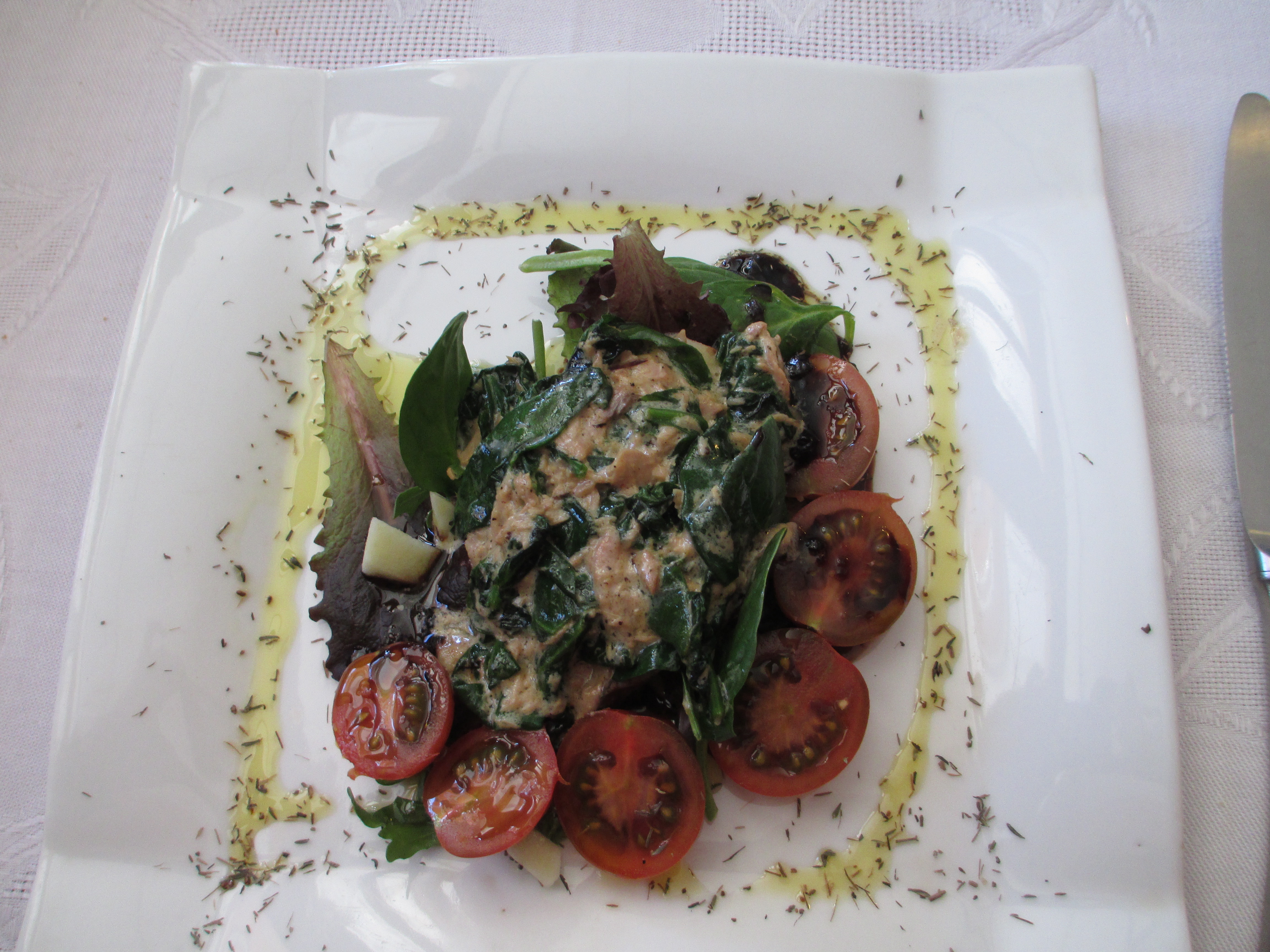
Enselada de tomates (salad of tomatoes)

IMG_0335

Almejas marinera (clams mariner-style)

IMG_0371[1]

Alcochofas a la parilla (grilled baby artichokes)

IMG_0370[1]

Enselada de puerros con jamon (Leek salad with ham)

IMG_0367[1]

Tripa en salsa (tripe in sauce)

IMG_0354[1]

canonigos, huevos con queso y jamon (cononigos (round green leaf herb), eggs with cheese and ham). Also typical bread served with grated tomato with olive oil

IMG_0357[1]

rabo de toro (oxtail)

IMG_0398[1]

pan y alioli (bread with Spanish version of aioli which has no egg). Note the container for the alioli can also be used as an ashtray. More about that on my humorous look at rules for smoking in Spain to be posted soon.

IMG_0400[1]

Chopitos (fried small baby calamari)

IMG_0403[1]

lenguado meuniere (sole meuniere)

IMG_0408[1]

Sole meuniere “after.” Don’t be afraid to tackle eating or cooking a whole fish!

IMG_0409[1]

Flan (a rare time I ate dessert)

IMG_0330

It was a dark and stormy night…


Adventures in Dining in Altea Spain

13 Mar
Za-vhu-Rw0KrgpGbsf9rKgna5tYGGiSH7RSw4Trjki0=w630-h503-no

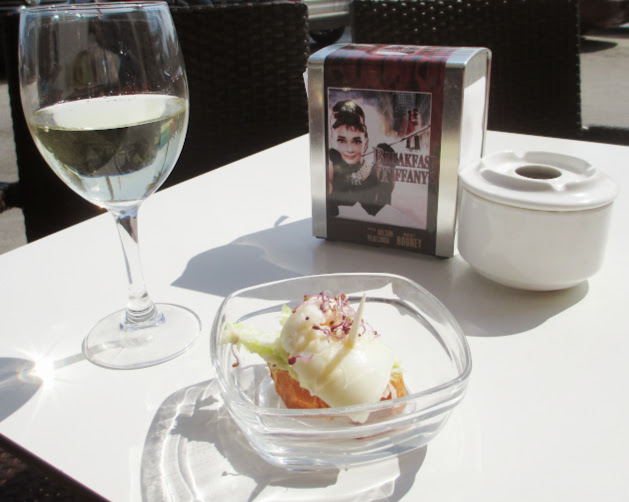
Tapa with egg and garnish 13 Mar ’15

“Pigs ears?” he asked in Spanish, apparently to be sure I knew what I was ordering when I pointed to one of the tapas trays. I admit I wasn’t 100 percent sure what they were when I ordered them, but every tapa I had ever eaten at beachside Fronton Playa in Altea (Spain) was spectacular. I grew up eating my fair share of offal, so I am game for trying just about anything. On this particular visit, I decided to order a couple of tapas, so I could get more than the typical small tapa bites. Along with the pig ears, I had some small breaded and fried octopus “pulpo” tentacles, which were tender, which is not always the case at many local eateries. The friendly owner reminds me of Danny Devito. On most visits, I order a “vino,” which is accompanied by a creative, tasty tapa, which is included in the inexpensive 1,50 €  IMG_0392


20140702_190936

Valentina in Casco Antiguo


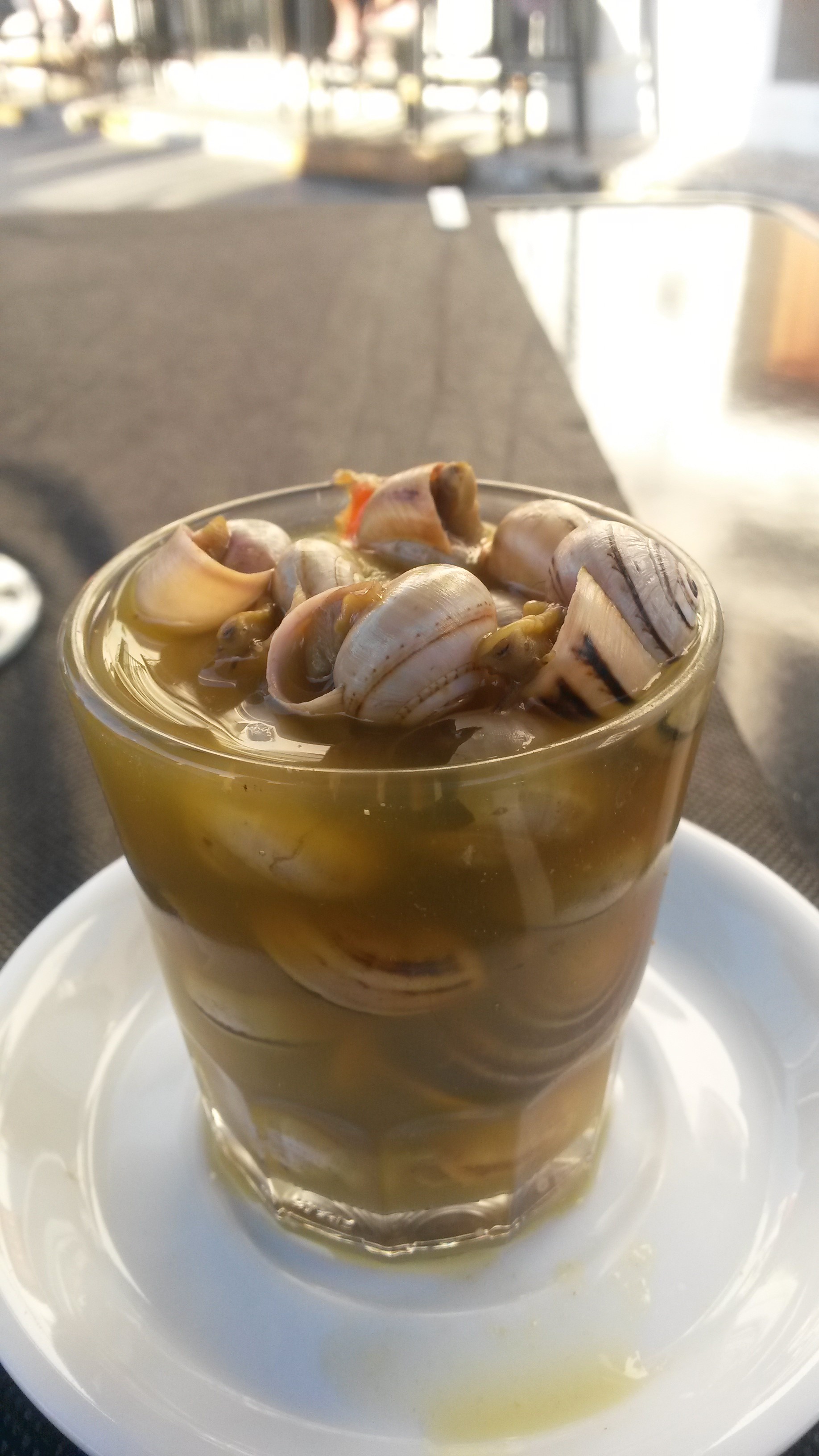
Valentina is another of my favorite tapas places where I have had interesting food forays. Andrea and his family hail from Puglia (Italy), but have lived here in Spain for many years. Andrea’s girlfriend, who is the chef, makes creative and delectable food. On one occasion, a darling two-year old girl repeatedly chanted, “Caracoles,” as she waited for the small snails to be prepared and served. She ate them like a pro. On several occasions, Andrea has brought me a tapa that he would not serve to everyone. One memorable tapa was something with a texture similar to tofu but with a meaty taste, saying he knew I would eat it. When I inquired as to what it was, he smiled and replied coagulated chicken blood. My son, Robbie, an executive chef in at Belcampo, a well-reviewed restaurant in Los Angeles specializing in their own humanely and sustainably raised animals, asked me to find out how it was made. 20140522_201050On one of the occasions I ordered something from the menu I had “Milhojas de pulpo y gula del Norte,” octopus with baby eels.


Dining in Spain is almost always a great adventure. I am an avid fish and seafood lover, and there is seldom a day that goes by when I haven’t had several of the many creatures available in the local Mediterranean waters. I am constantly trying new items from the sea including things we may have one of in California, like calamari. Here the calamari are large rings, about the size of onion rings, and often cooked by breading and frying. I find them too tough. Then there are “chopitos,” whole baby calamari with ink sacks intact, which are best when fried with a light almost-panko like crispness. Sepia is a cousin of sorts of calamari, which is larger and thicker, and is often grilled and served with a green “marinera” sauce, mariner’s sauce, not to be confused with the Italian tomato sauce, “marinara.” I have found some foods to not be worth the effort involved in trying to eat them. After a recent intense Zumba class, I went to a local tapas bar, regularly patronized by cordial smoking, drinking “abuelas” (grandmas) and their grandbabies, (and I mean no disrespect but it is very different than when I lived in San Luis Obispo county, California, where they were the first place to outlaw indoor smoking or smoking near food service.) At the café, I was told the grill had been turned off, but the fryer was working, so I ordered “patatas bravas” (spicy fried potatoes, which are not spicy if someone eats habanero sauce like I do), and fried fish. Note to self: check the type of fish before ordering. They were sardines and other equally small fish, which with my knife skills, yielded few consumable morsels. And the incredible number and quality of bivalves! Almejas (clams), berberechos (smaller clam-like content, with a scallop taste), the itsy bitsy tellinas (too much work), razor clams, mussels, oysters, gooseneck barnacles, and more.IMG_0380


The grocery markets are filled with seemingly endless displays of fish and seafood: fresh, frozen, and canned (which are viewed as another great way to access seafood as opposed to American’s frequent opinions that canned food is of suspect quality.) For a foodie like me, the grocery and fresh food markets are intoxicating with their fresh and novel ingredients. As I was photographing the vast displays of fresh fish and seafood at a regular local grocery market, Mercadona, a female fishmonger admonished me from taking more photos. So here I will include a partial sample of the store’s offerings, and the selection of frozen and canned fish and seafood is even larger. (If you read Spanish and the words don’t look familiar, that is because the official language here in the Valenciana Community is “Valenciana,” but more about that surprise to me at another time.) If you look at the trays of fresh items from the sea, it is apparent that many home cooks are adept at using fresh whole fish and other types of seafood.IMG_0378


quaileggsI thought I hit the jackpot when I recently walked into a local market and found a beautiful dozen little quail eggs, for 0,90 €, less than the American equivalent of $1.00. On today’s cooking television shows, they showed how to make livers with “sangre” (blood) over a fire in the hearth, and “coda de cordero,” typical recipes from other parts of Spain. The food options here are inspirational, and I am eager for my two boxes of kitchen cooking supplies to arrive here from my former home in California. Those are the only things I had shipped here, (along with a few family and travel) mementos, which speaks to my priorities.

You can find my many restaurant, as well as other reviews, on Trip Advisor, as well as my map of the hundreds of places I have travelled.

IMG_0397

View walking home after tapas today


Why I Left “The Happiest Place in America” to move to Spain

6 Mar


altea

Hallmark photo of Altea

When I told people of my intention to abandon my lucrative professional career as a forensic psychologist in California and leave the San Luis Obispo area to move to Spain, I got one of two reactions. They either thought I was nuts or they were envious. In either case, they asked why I would leave the area that has been touted by Oprah Winfrey, National Geographic, U.S. News and numerous others, to be the best place to live in the United States, if not the world.

IMG_0314

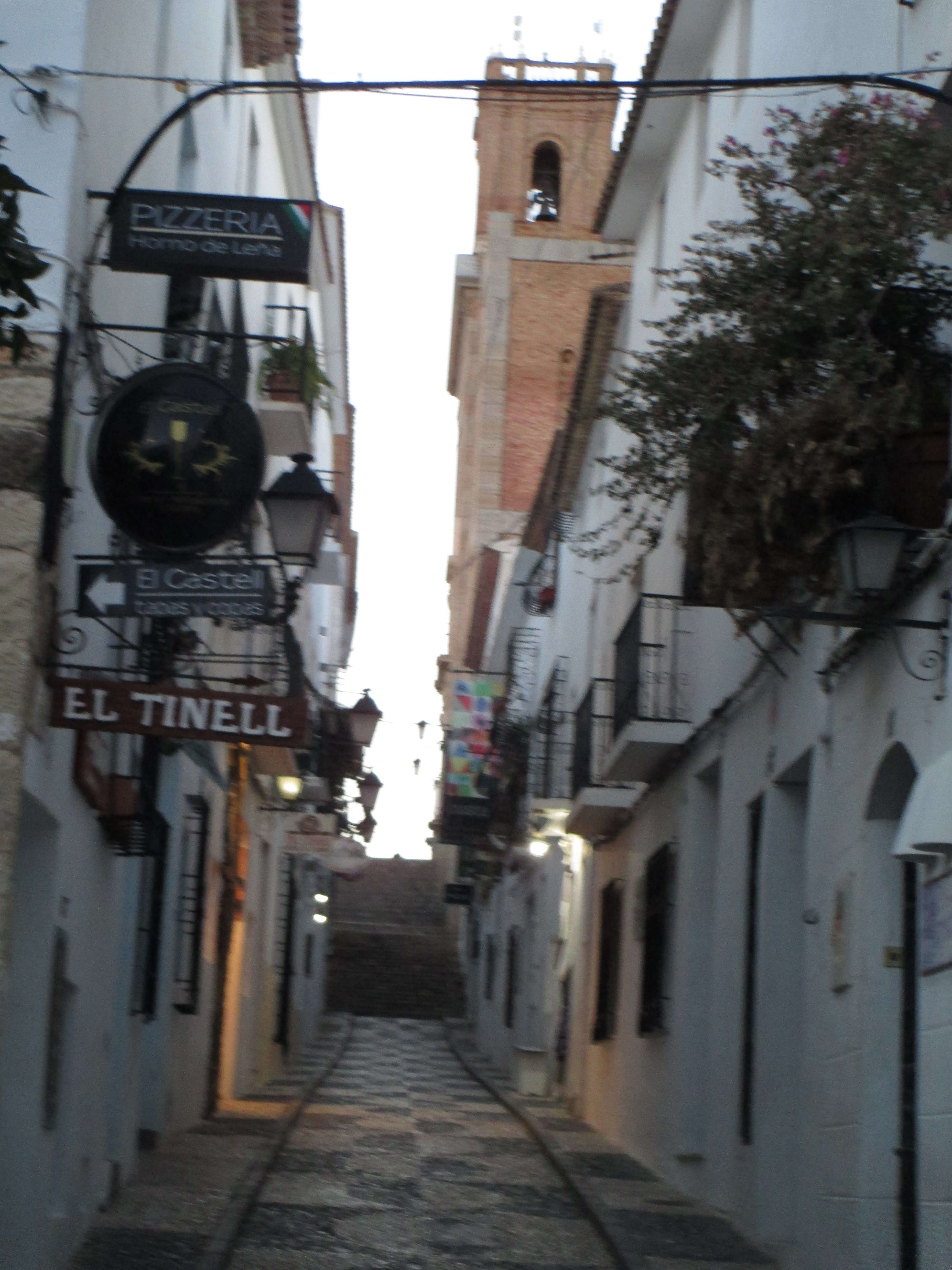
Casco Antiguo (Old Town) Altea

My decision was based on a combination of factors that were sometimes difficult for me to explain, or perhaps more aptly, for them to understand. The quality of life in my small, picturesque beachside town of Altea (consistently rated as one of the top 10 most beautiful villages in Spain) far surpasses the stress and money-driven culture to which I had become accustomed. Life here and in many parts of Spain are driven first and foremost by family. One commonly sees multi-generational families strolling along the beachfront esplanade, dining or drinking together (often until very late at night), and fathers and grandfathers confidently and lovingly caring for the family babies and children (with no women in sight.) Spanish people work to live and generally are not consumed with a desire for wealth or material things. Besides family, friends, food and fun are valued. It didn’t take me long to appreciate this simpler, but more fulfilling existence.

Before I moved to Spain, I had a busy, in retrospect, too busy, career as a forensic psychologist specializing in the evaluation of and testimony as an expert on Sexually Violent Predators. As my third and youngest son was approaching high school graduation, I realized I was tired of working so hard to maintain our upscale lifestyle including our 3500 square foot home on a French-inspired fully landscaped acre, an expensive car, and the cost associated with living in a highly desirable area. After being the sole breadwinner and parent to my three boys for over 25 years, I wanted a change to a simpler, better quality life. For me, that meant Spain.

IMG_0305

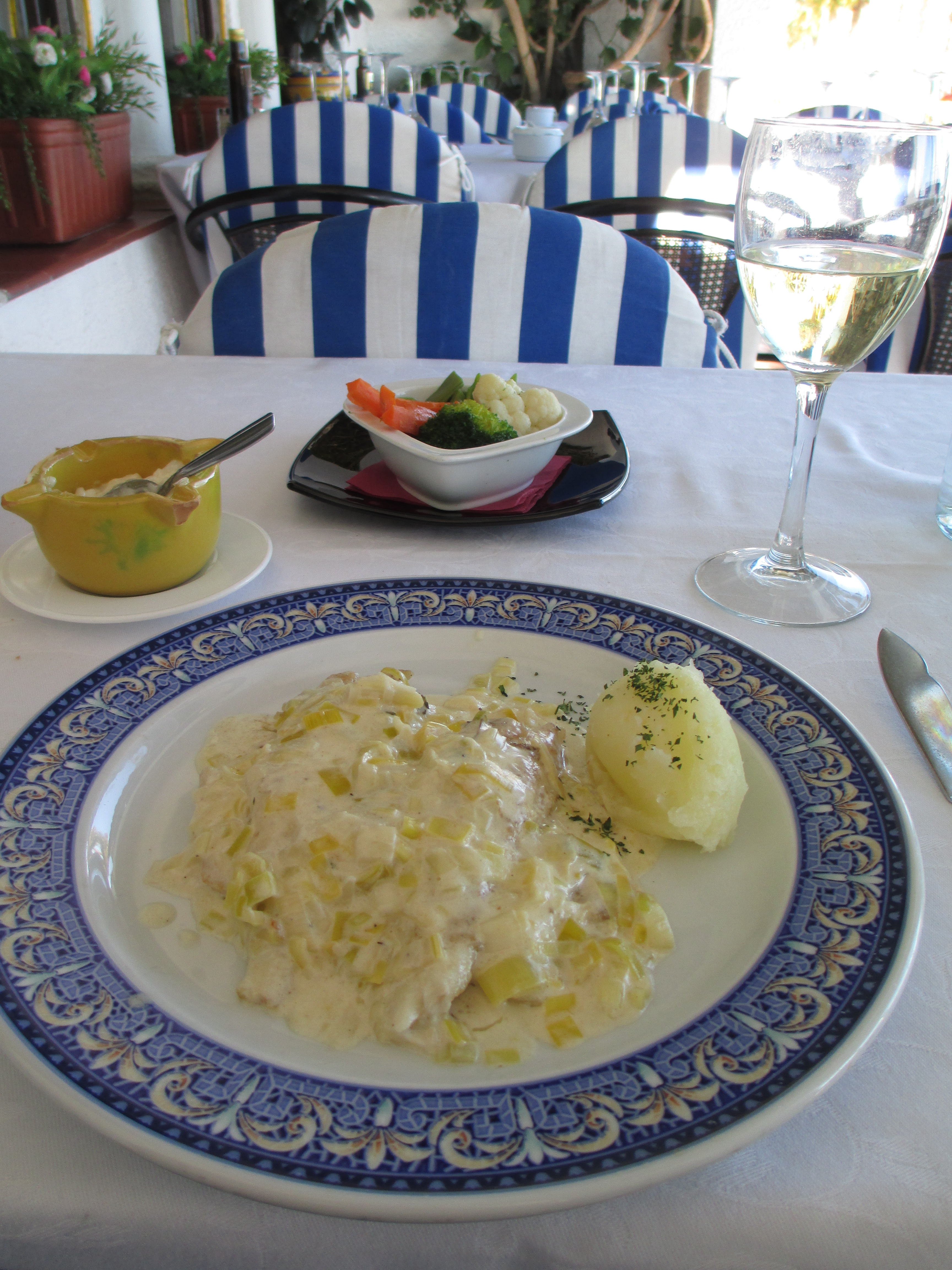
Fish with leek sauce at local beachside restaurant

My wanderlust had led me to travel to almost 40 countries, and while I had frequently fantasized about moving to Italy, France or Spain, I never really thought I would do it. When I reminded my youngest son of my plan to sell the house when the youngest graduated high school, he was less than pleased and would have liked to stay forever. The month before he was to graduate, I put the house on the market and I had accepted an offer only six days later. I felt pangs of guilt and he was none too happy to have to negotiate final exams, senior graduation activities, and moving all at the same time. Once I had put the house for sale, I interviewed three companies for my estate sale and selected the most experienced with the lowest commission rates. I sold everything from the pool table, to the grand piano and every bit of furniture, except the items I had promised to my sons and the few pieces of kitchenware and children’s mementos I planned to ship to Spain.

View from my place after sunset

View from my place after sunset

Even though I had previously travelled to Spain, it was to larger cities, not the type of quaint village I so desired. So I took the unorthodox approach of diligently researching all of my requirements on the internet which included a picturesque village on the Mediterranean, temperate weather, music and dance events, and no need for a car. Thus when I arrived in Altea, it was the first time I had been there. It was more beautiful and magical in person than photos could portray. At the top of the hill is the Altea’s iconic cathedral with its royal blue domes decorated with white ceramic tiles. The plaza on which it sits is the site for many of Altea’s festivals. Below, the white buildings cascade down from the top of the hill, in a manner reminiscent of a Greek village.

IMG_0327

View of Calpe from Altea beach at sunset

While there are many things I love about Spain, as anyone who has lived there knows, the bureaucracy is atrocious. If you need to conduct any official Spanish governmental business, expect to have to return multiple times to accomplish even a small task, and be prepared to be given different instructions each time. A case in point was my visa, which I did eventually receive after negotiating the inconsistent, and sometimes impossible, requirements. However, the details of that endeavor would take a whole, separate article!

Concurrently, I began diligent, daily practice of Castilian Spanish, as I only spoke basic Mexican Spanish. One of the things that attracted me to Spain was that I would be able to speak the language by the time I was ready to move there in an estimated year and a half while getting my affairs in order. I was in for a big surprise when I found out the primary language in Altea is Valenciana, similar to Catalan. Once in Spain, I readily made friends with locals, from Spain and many other countries, and honed my Spanish with practice each evening over drinks and tapas. I found it far easier to make friends in Spain than where I had been living in California for the past nearly 30 years. When I would head out for my evening at one of my customary places, I was typically greeted with, “¿Vino blanco?,” as the friendly waiters anticipated my usual white wine. A decent glass of house wine, white, red or rosé, is typically around 2€, and sometimes includes a tapa; beer is even less and these prices are at oceanfront spots frequented by locals and tourists, so prices can be even lower if one goes to places where there are primarily locals. While enjoying my wine and the view of the turquoise Mediterranean, I sometimes end up conversing with someone, and often we end up exchanging contact information or agreeing to meet on another occasion.

IMG_0330

View of Altea church at dusk

I wanted to test drive my town and neighborhood before renting or buying. I first stayed at a vacation rental I found on the web. This allowed me to live in Casco Antiguo, (old town,) like a local, and decide which particular area met my needs before settling on a permanent spot. In the northern Costa Blanca where I live, there are one or two bedroom apartments, some furnished, for as low as 300 Euros, which is currently about $340. Less expensive rentals are available away from the beach and the historic old town or if you go to the towns more inland.

Meals can be an incredibly good deal, as well. Many restaurants offer a “Menu del Dia” from which you can order two courses, and get bread with alioli (the Spanish version of aioli), a beverage (wine, beer, soda or bottled water), and either a dessert or coffee generally for around 10 to 13€. I was surprised that I quickly adapted to the Spanish tradition of having a larger, late lunch, and then later skipping dinner or having a tapa. This is very economical and resulted in the unexpected benefit of losing weight.

IMG_0317

Beachside dining with Calpe in the distance

fill my days with Zumba and other dance classes,  a typical late and long Spanish lunch (almost always eating one of the many delicious fish or seafood choices), taking my dog to play at the new dog park, going home for a siesta or household tasks, and then heading out for an evening drink where I would meet up with friends to talk and dance, often well past midnight. On Sundays my Cuban friends and I head for live Cuban music at a bar which has a vibrant international crowd. My dream of a simple, fulfilling life has been realized.

Stay tuned for interesting and fun accounts of my time in Altea and beyond.


Best Family Vacations: Ojai

20 Nov
The Pink Moment

The Pink Moment
Courtesy: Ojai Valley Inn

We all hush at the magical “Pink Moment” when the sky to the east over the Topa Topa Mountains creates brilliant shades of pink as the sun sets in Ojai, California. This is one of the few places in the world where people can see this phenomenon due to the east-west orientation of the mountains.  Ojai is about 30 miles southeast of Santa Barbara or 90 miles north of LAX.

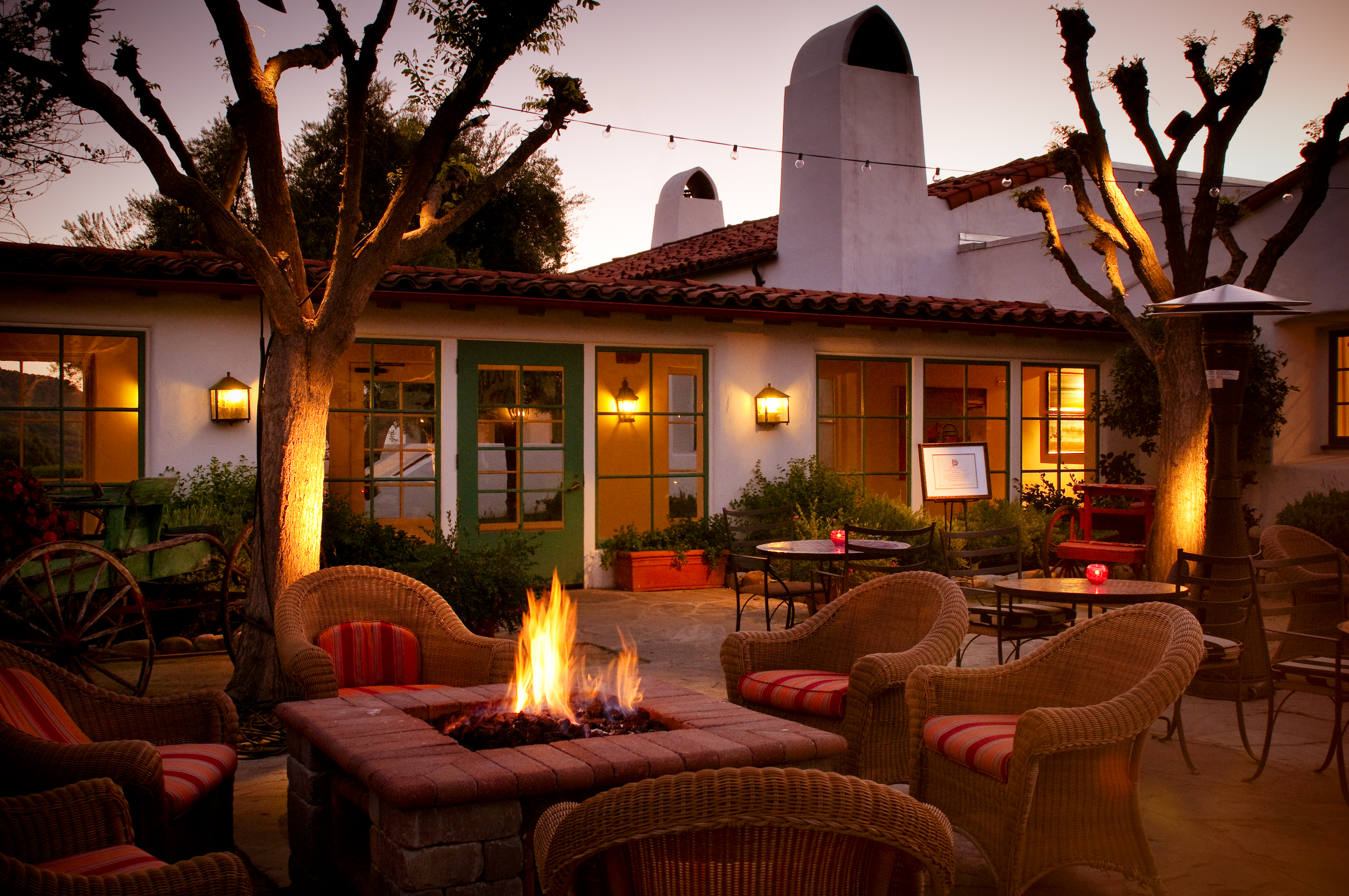
Ojai is one of my favorite places for a short stay with the family. We love the historic Spanish Colonial Ojai Valley Inn and Spa where I find the relaxing, casually elegant ambience evokes immediate relaxation. I can be perfectly content just soaking up the resort’s beautiful grounds, gardens and golf course, but we also enjoy the wide variety of activities for both adults and children on site, and in the town of Ojai. The Inn is pet-friendly and we enjoyed being able to take our dog with us.

I love the Mind and Body Studio located in the Spa Ojai building where they offer many different classes throughout the day, such as Pilates, several types of yoga, water exercise in the spa’s pool, stretching, cardio, spinning, Qi Gong, sometimes dance, and others. The Inn also offers classes for the mind such as meditation, physical wellness, and art classes at the Artist Cottage and Apothecary.

Ojai Valley Inn

Ojai Valley Inn
Courtesy: Ojai Valley Inn

The resort has a premier championship golf course, with excellent professional lessons and a sports psychologist to help with the important mental part of your skills. Upon arrival, staff take your golf clubs to the clubhouse where they clean your golf shoes and ready your clubs for your scheduled round of golf. Because it is such a popular course, reservations are recommended. The Inn’s storied tennis history dates back to the late 19th century and boasts being one of the top tennis facilities in a hotel or resort in the United States. Professional tennis instruction is available.

Outdoor Firepit

Outdoor Fire pit
Courtesy: Ojai Valley Inn

There are myriad activities that can be done alone, as a couple or a family including hiking, biking, basketball, fishing, softball, volleyball and tennis. Camp Oak offers creative, stimulating and fun themed half-day and full-day activities for five to twelve year-olds.  From 8 to 9 a.m., Acorn Hour at Camp Ojai hosts bonding for parents and their two to four year-old children by doing crafts or storytelling.  During the summer, there are complimentary movies to watch while floating in the main pool. Free popcorn is also provided.  The resort will arrange for horseback rides nearby that are suitable for the ages and skills of the riders; we have had fantastic experiences doing this.   A walk into downtown Ojai offers an opportunity to explore the inviting historic downtown area. Make sure to check out Bart’s Books, which is the largest independently-owned outdoor bookstore in the U.S.

In town, we like to have dinner at Azu, where they have Spanish- and Mediterranean-inspired comfort food.  They have many tapas style small dishes, as well as creative, tasty entrees. `The Ranch House requires a short but worthwhile drive for gourmet award-winning cuisine in a romantic atmosphere that has streams and lush plants.

There are several great spots to eat at the Ojai Valley Inn. The Oak Grill offers outdoor and indoor dining with the best Cobb salad I have ever had. Jimmy’s Pub is a good, casual après golf place for snacks, burgers, and drinks. More health conscious cuisine is available at the Spa’s restaurant, Café Verde. Maravilla is the Inn’s signature restaurant where they serve excellent, seasonally-inspired cuisine with locally-sourced produce featuring steaks, chops and seafood. The wine selection is excellent and the restaurant’s ambience is warm and inviting. Whenever we have been there on a week-end, in the evenings we have enjoyed entertaining live jazz in the lounge just in front of Maravilla while sitting near the warmth of the fireplace.

Quest for Culatello

9 Oct
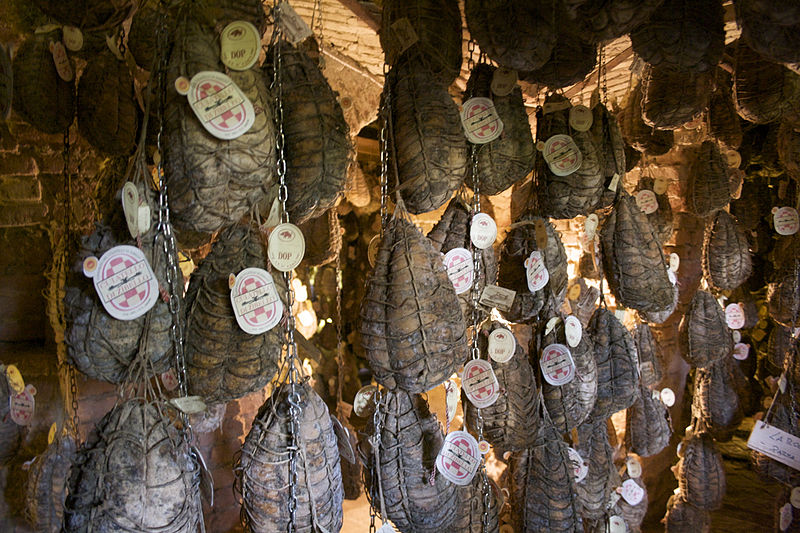
Culatelli di Zibello Source: Wikipedia Commons

Culatelli di Zibello
Source: Wikipedia Commons

I felt like a criminal when I smuggled the non-permitted item onto my flight from Bologna to Paris, and the next day from Paris back to Los Angeles. But I didn’t travel that far to be stripped of my prized Culatello di Zibello, considered by many salumi lovers to be the King of charcuterie. Better than its cousin prosciutto, culatello has an intense, complex salty, sweet and musty flavor with a supple texture.

Culatello, which literally means “little ass” is made from a single muscle from the hind leg of a pork. After the muscle is trimmed and the bone and skin are removed, it is massaged and salted. It is then encased in a cleaned pig bladder, and then typically hung from the ceiling of a 500 year old musty cave. This aging process can be from 16 to 18 months, or even as much of 30 months.

Culatello di Zibello is made in the Emilia-Romagna area of Italy near the foggy Po River area. The Emilia-Romagna area is best known for its prosciutto, Modena balsamic vinegar, Parmesan cheese, and the birthplace of tortellini (one legend is that they were inspired by Venus’ navel.) After a food- and music-centric week in Venice, I took the train to the Bologna region in search of food nirvana.

My first night in Bologna I dined at the historical Papagallo, of course ordering tortellini, as I always try to order the most “typical” food of the region I am visiting. Bologna is a vibrant, bustling college town, great for wandering under the porticos, and exploring the many historical and artistic sites. But my real quest was to try as much of the local fare that is thought to be amongst the best in Italy.

To that end, after a few days exploring Bologna, I decided to take the train to the nearby towns of Modena and Parma. (If taking the train from Bologna, make sure to be on the right platform.) The handsome ticket seller at the train station flirtatiously questioned my intention of seeing both towns in one day, but as it was my final full day in the area, I was determined to sample both. I typically just wander the streets and see what eateries invite me to dine, whether inexpensive local spots or upscale. In Modena, for lunch I found Hosteria Vecchia, which featured the typical cuisine of Modena. The restaurant was bustling with local businessmen, blue collar workers, and couples, all enjoying the fantastic fare.

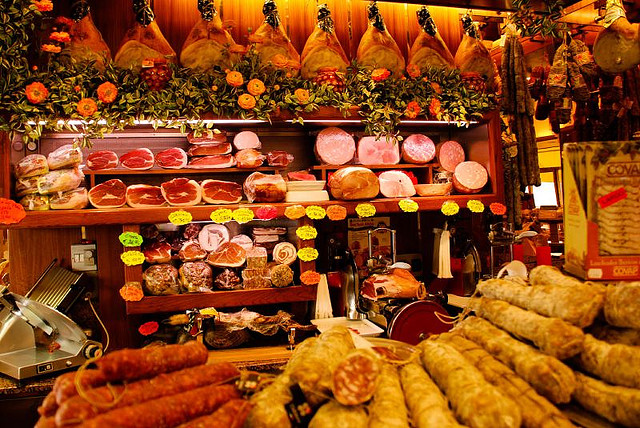
Salumeria Garibaldi Source: Flickr

Salumeria Garibaldi
Source: Flickr

After buying my aceto balsamico tradizionale (Modena balsamic vinegar aged at least 12 years), I continued on my food quest to Parma, now in pursuit of culatello. Again, preferring to let serendipity take its course, I wandered around Parma’s old town centre. I found cafes, and shops but not any salumeria. Dissappointed, I headed back to the train at dusk when I saw the illuminated Salumeria Garibaldi welcoming me. I managed to put in my order just before they closed. I chose three types of salumi including the culatello.

Back at my room in the elegant Grand Hotel Majestic Gia Baglioni, I ordered some aged Parmesan, a dry Lambrusco wine and proceeded to savor my culinary finds. I couldn’t eat all of the culatello, but there was no way I was going to throw it away.  I decided to take it with me, so my son, who was meeting back up with me in Paris, could try it with me. To that end, I wrapped the pungent culatello in multiple layers of plastic so hopefully it would not be detected before boarding the plane in Bologna and again in Paris. Once safely en route from Paris to Los Angeles, we devoured the sublime culatello, apparently without detection.

Top 12 Paso Robles Restaurants

29 Aug
Restaurant: Cuisine Meals Wine, Beer, Full Bar Patio: Resv? Dog/Family Friendly*
Il Cortile: Rustic Italian D WB Yes
Artisan: Creative American 11am to close FB No Dog
Bistro Laurent: Traditional French and Provencal LD WB Yes Dog
Buona Tavola: Northern Italian LD FB Yes Dog**
Paso Terra: Seafood, French D WB Yes Dog
Goshi: Traditional Japanese LD WB No Patio
Robert’s: Classic American LD LD Yes Dog
La Cosecha: Spanish, Central &
South American
LD FB Yes
Panolivo: French, Bakery, Mediterranean (Jaffa) BLD WB Yes Dog, Family
Berry Hill Bistro: Comfort, American Bistro LD FB Yes Dog
Estrella: Latin Riviera LD WB Yes Dog
Chico’s: Casual American, Seafood BLD WB Yes Dog, Family

Click the links to see my reviews posted on TripAdvisor, Yelp!, and Google

*All of the restaurants in Paso Robles are accommodating to children, but  those that tailor their restaurant and menu to families are identified as “family-friendly.”

**Pending approval of other patio patrons

For those with dogs, keep in mind some of the restaurants have limited outdoor seating, so make patio reservations to assure a spot.

WEEK-END IN PASO ROBLES CALIFORNIA

8 Aug
courtesy sloballoon.com

courtesy sloballoon.com

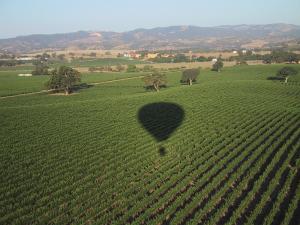
Soaring slowly over the alluvial golden hills punctuated by mature oak trees and orderly rows of grapevines in a hot air balloon can be a transcendent, once in a lifetime experience. This is just one of the many offerings stay in the bucolic wine country in northern San Luis Obispo County.  Every month has its unique activities, so determining travel dates warrant consideration of when the weather and activities meet the needs of the types of travelers: families, couples, friends or singles.

If arriving on Friday, head for the Paso Robles City Park for the weekly 2013 summer concert series which occurs through August 26, starting at 5:30. Watch the concert from one of the restaurants that have outdoor seating just across from the park: Reservations can be made for patio seating just across from the park at Berry Hill Bistro, Estrella, La Cosecha, or Chico’s or take a chance without a reservation at Artisan or Villa Creek. Food and beverages are also sold at the concert. Bring a sweater or jacket as it sometimes quickly cools down in the evening.

002

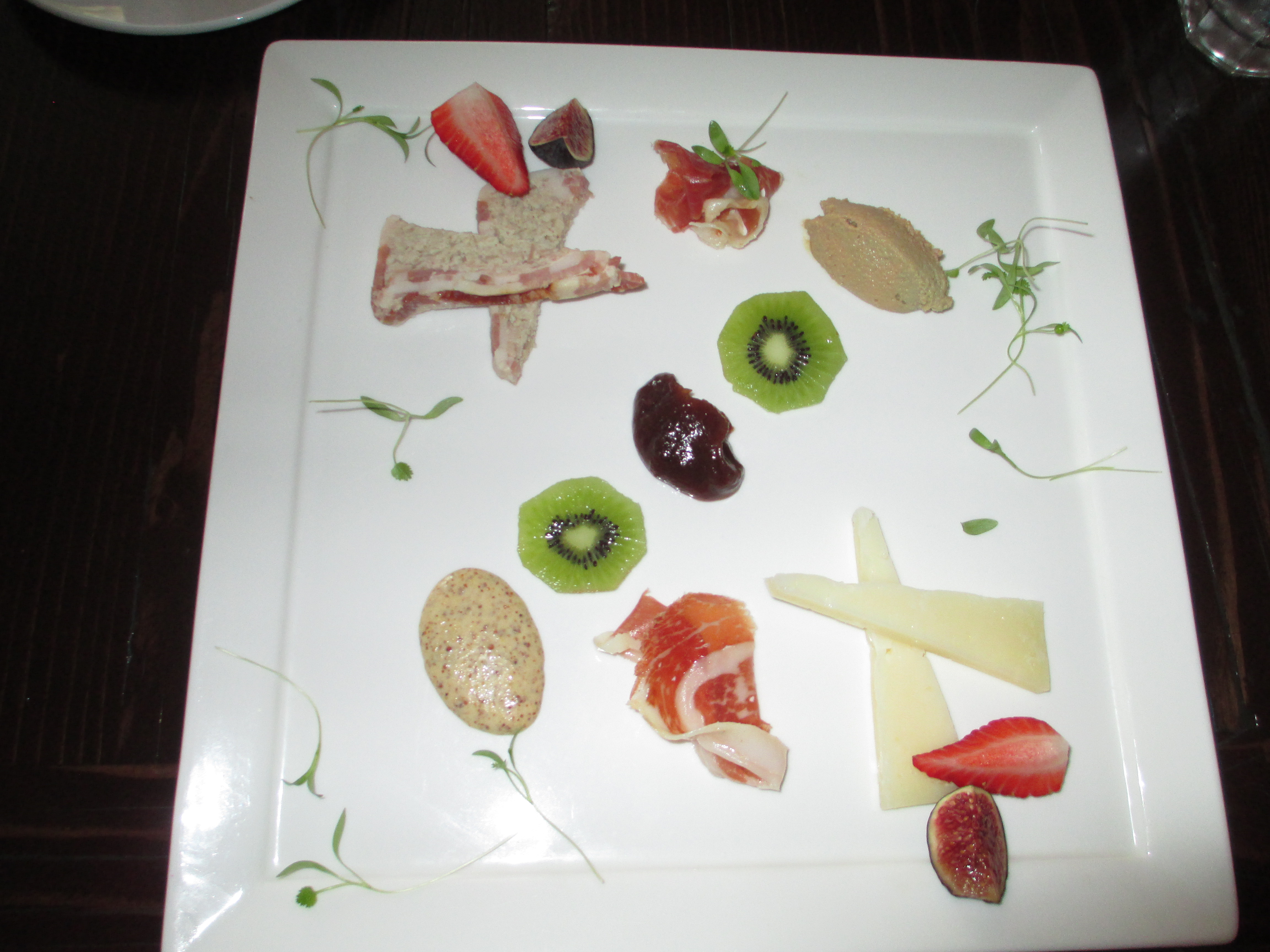
La Consecha charcuterie plate

“Paso” now boasts many of the best restaurants in the county. One of the newest, La Cosecha, (Spanish for harvest) Restaurant + Bar serves Spanish, Central and South American fare.  This casual eatery has the feel of a casual, friendly ambience of a neighborhood watering hole. They are open daily for lunch and dinner, with options of indoor regular or tall table seating, a communal table for large parties, and outdoor patio seating. Some of the highlights are the braised bone marrow appetizer, Iberico ham with figs, Honduran-style empanadas, Black cod mofongo and the delectable paella of the day. The bar stocks Spanish sherries, food-inspired wines and beers, and has a dedicated mixologist who concocts seasonal craft cocktails such as the seasonal caipirinha made with Brazilian chaçaca, St. Germaine, limes and blueberries.

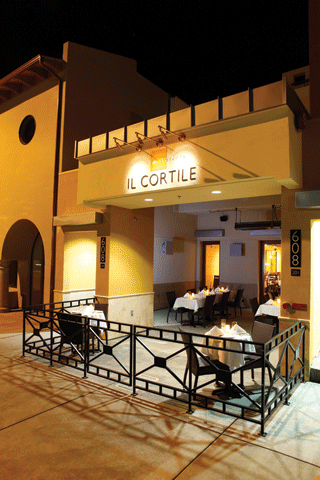
Il Cortile

Il Cortile

Honduran-born Chef Santos MacDonal and his welcoming wife, Carole, also own one of Paso’s other best eateries, Il Cortile Ristorante, which specializes in rustic Italian food in their upscale, but comfortable restaurant. Dinner specialties include such creative appetizers as grilled octopus, crostini porchetta, pan-roasted quail with prisciutto-filled tortellini, and a bountiful selection of mozzarella cheeses.  Santos’ homemade pastas and, when available, pork osso bucco, are house favorites. Just a half block from the city park, they are open for dinner daily from 5:00 p.m.

Artisan serves locally-sourced, creative American Fare. Now open daily starting at 11 a.m., Artisan is now at their new location, a stylish modern building, just across from the city park. The Kobayashi brothers have added an outdoor dog-friendly seating area, a full bar with some new menu items such as pizza. Chef Chris has a knack for unique combinations that wow the palate such as duck confit salad, spinach, pt. reyes blue, smoked almonds, “fried egg;” abalone tostada, avocado, pork belly carnitas; hanger steak, asparagus, black trumpets, bacon tater tots; and Alaskan halibut, burnt flour orecchiette, peas, morels, green garlic. For a list of best restaurants in Paso Robles, including information about type of cuisine, which meals they are open, patios and whether those seats can be reserved, wine or full bar, family-friendly, and dog-friendly.

D'Anbino Winery and Tasting Room

D’Anbino Winery and Tasting Room

Paso offers an array of live musical and entertainment venues that appeal to varied interests. D’Anbino Cellars, a short walk from downtown, is one of the premier musical venues in the county, attracting local and nationally-renowned musicians who perform varied styles including jazz, bluegrass, blues, rock, funk, soul, and Great American Songbook. Their website provides information about events which include both afternoon and evening entertainment.  Presently, they offer salsa lessons Friday evenings from 6:30 to 7:30 p.m. with an opportunity afterward to practice new moves. During the warm months, the Pony Club, the wine bar in the Hotel Cheval, offers nightly solo or duo artists which start in the early evening on Friday and Saturday, and at 5:00 p.m. Sundays. Listen on the outdoor patio under the shade of the large shade tree. Other local bars offering live entertainment include The Pour House, Pappy McGregor’s, and The Cattleman’s Lounge in The Paso Robles Inn. All of these music venues offer snacks or full meals. Also, many of the Paso Robles area wineries feature live music, especially in the summer. Vina Robles Winery recently opened their 3300 seat “boutique amphitheatre” which attracts big name acts like the Moody Blues, Darius Rucker, Tony Bennett, B.B. King, and George Lopez.

Festivals provide the perfect opportunity to experience local culture and food. The “First Saturdays: Wine and the Arts” occurs monthly from 5 to 8 p.m. They feature a wide array of art including mixed media, oil painting, jewelry, photography and quilting, with several wineries as participating venues. At the annual Olive Festival, this year on August 17, there are a number of entertaining activities for adults and children. There are many other family friendly activities in Paso Robles, as well.
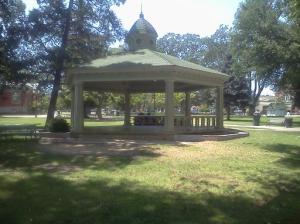
 

Paso Robles City Park

Paso Robles City Park

One of the more popular festivals is the Classic Car Show Weekend, which occurs Labor Day week-end. It features members’ cars dating back to 1923 which are displayed at the car cruise and show. Starting Sunday September 29th at 3:00 p.m., The North SLO County Concert Association starts its 65th season, which will include 1930’s era vocalist diva Dawn Lambeth, a band featuring brass instruments, chamber music, and a vocal jazz quintet.

The celebrated Harvest Wine Weekend, October 18-20, visitors can experience the grape harvest up close; summon your inner Lucy for grape-stomping or enjoy more leisurely tours of wineries, many of which offer fantastic winemaker dinners and/or live music. The Paderewski Festival, scheduled for November 7-10, honors Ignancy Jan Paderewski, composer, virtuoso pianist, humanitarian, orator, and the first Prime Minister of Independent Poland after World War I. He visited Paso Robles on many occasions between 1914 and 1939, and owned over 2800 acres where he planted Zinfandel grapes, almonds and fruit trees. The festival features a variety of concerts, a piano master class, documentary, youth competition winners’ recital, and lecture. Traveller beware: some festivals and events can be very crowded, so take that into account when making plans.
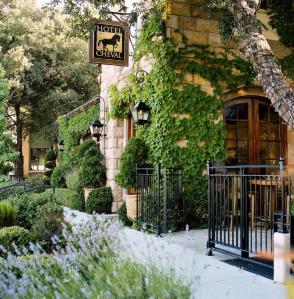
Hotel Cheval

The best downtown lodging is the 16 room European-inspired, boutique Hotel Cheval. The cozy rooms have plush towels, quality bedding and many other amenities. Welcome cookies, bedtime organic chocolates and breakfast are included. Options for rooms include fireplaces, outdoor patios, sundecks, and for dog owners, pet beds and food and water dishes.   The inviting central outdoor patio has a fireplace that visitors can stoke. The historic Paso Robles Inn first opened in 1891 and is the only hotel in the area that still offers thermal hot springs in guest rooms. The comfortable rooms are family and dog-friendly. The outdoor area includes a large grassy area, Koi pond, brook and flower garden. Ask for the “locals rate.” Although not in downtown Paso, Tuscan-inspired La Bellasera Hotel and Suites has luxury suites which include fireplace, whirlpool and patios. The outdoor pool also has a fireside cabana. Spa services are available at all three hotels.

article courtesy: slocoastjournal.com

SWING DANCING IN CATALINA’S CASINO BALLROOM

23 Jul

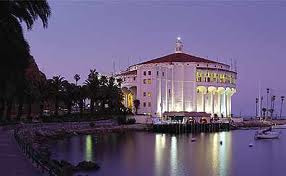
Catalina Casino Ballroom

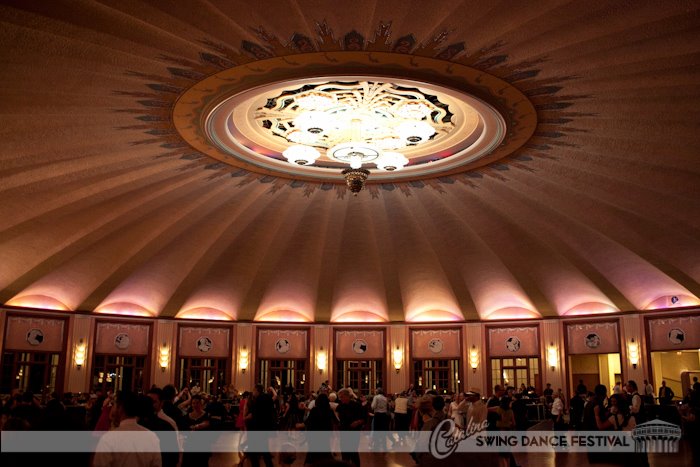
The “Big Band” wails swing music in the sybaritic art-deco Casino Ballroom in Avalon on Catalina Island. Dancers of all ages dressed in their ’40s finest triple-step, lindy, glide, and even perform aerials to the rhythmic, revved-up sounds of the Second World War. The Catalina Swing Dance Festival occurs annually in November (this year November 8-10.) During the day, a variety of  classes are available including the Charleston, Lindy Hop, Collegiate Shag, 1950s Teen Swing, the Balboa, and more. The Balboa dance uses small, close dance steps which were developed to cope with California’s Balboa Peninsula’s crowded dance floors in the 1920s. Instructors at the swing dance festival are enthusiastic, renowned professional performers and teachers. One needn’t have a dance partner to participate in the dance workshops or even be a dancer to enjoy this lively, nostalgic festival.

Swing Dancing in Casino Ballroom

Swing Dancing in Casino Ballroom

On Saturday evening, even non-dancers can enjoy the live big bands and decked-out dancers in against the backdrop of the largest circular ballroom in the world. When it was built in 1929 it became the tallest building in Los Angeles. In it early heyday, thousands of dancers would arrive by steamship for the privilege and pleasure of dancing in the historic ballroom, which can accommodate over 6000 dancers!  Built with dancers in mind, the ramps to the top floor ballroom facilitate relatively quick access to the dance floor and were also designed to prevent injuries or fatigue that could be caused by stairs. In addition, the hardwood floor was constructed over layers of foam, pine and cork, which are suspended over five feet.

Besides the Casino Ballroom events, there is après-festival karaoke at El Galleon Restaurant, as well as midnight swing dancing at Antonio’s. In addition, there are both planned and spontaneous swing dance demonstrations on Crescent Avenue, the main tourist walkway. For people who wish only to make a day trip, there is typically a special 12:45 a.m. return ferry to Long Beach.

Descanso Beach Club

Descanso Beach Club

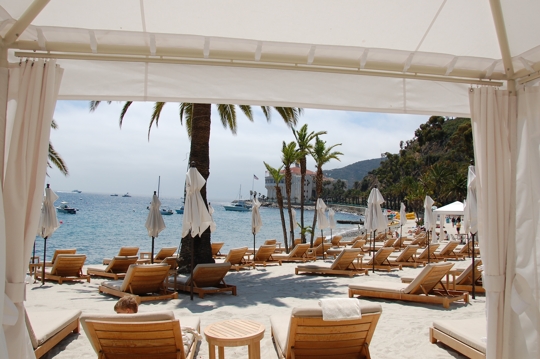
Non-dancers and dancers can enjoy the island’s many land, air and water activities. Too numerous to mention them all, some of the land highlights include Wrigley Gardens, interior tours, golf, walking tours, bike rentals, and ghost tours. Scuba, snorkeling and “snuba” are available, which will require donning a wetsuit due to the cold water this time of year. Although the Descanso Beach Club, on one of precious few sandy beach spots on the island, is scheduled to be closed from mid-October until mid-April for low season, they sometimes open for out-of season warm weather weekends. They have cocktails, beach chair rentals, and snorkeling. For the adventurous, there is a nearby zip line eco tour. Information about Catalina Island activities is available at: www.catalinachamber.com/island/activities.

The vibrantly painted Lobster Trap emphasizes fresh, tasty seafood in a casual and sometimes raucous atmosphere with friendly service at reasonable prices. Memorable appetizers include “monkey balls” (ahi-stuffed mushroom tempura), a variety of fresh fish with a choice of seven delectable sauces, as well as a good selection of chicken, beef and other land animals. A full bar, live weekend entertainment, and televised sporting events make this a fun and popular spot..

Inn on Mt. Ada

Inn on Mt. Ada

For a memorable lunch, head up to the Inn on Mt. Ada, the former Wrigley Mansion, perched atop a hill overlooking Avalon and its harbor. The highlight is spending several hours at the Inn with a lunch that includes unlimited beverages (wine, sodas, coffee and tea) and an extensive menu of salads, sandwiches, burgers, and the daily Mexican special. Even after finishing lunch, guests are free to roam the main floor of the Inn which houses the den, sun porch, living room, formal dining room, and the terrace, which reveals a spectacular view of Avalon, the harbor and beyond. The Inn is the premier place to stay on Catalina. Reservations required.

For a central hotel location with easy harbor and beach access, the newly-remodeled, mid-century style Pavilion Hotel is ideal for both couples and families. Amenities include continental breakfast, afternoon wine and cheese social, tranquil lounge areas, a cozy fire pit, and bright, airy rooms. The hotel is perfect for both families and couples. Luxurious accommodations are available at The Inn on Mt. Ada, but due to its location at the top of the hill, transportation is needed to get to the Inn and back to Avalon. Camping is another option for the adventurous or budget-minded.

Book the hotel, festival and ferry early and pack as lightly as possible due to the necessity of carting luggage from the car to the ferry, the hotel and then back. Round-trip ferries on Catalina Express to Avalon leave from Long Beach, San Pedro, and Dana Point. The length of the boat ride depends on the route and type of boat, so carefully consider all options. The other transportation options are helicopter, or private plane which lands on the perilous-looking runway high on the island.

MEET ADAM LEVINE!

21 Jul
Adam Levine

Adam Levine

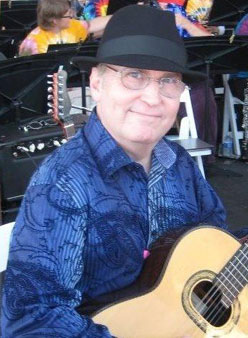
Meet Adam Levine! Not the front man for Maroon 5, but the local guitarist, composer and arranger who lives and performs on the Central Coast. His group, Human Nation, which has roots in jazz, blues, Latin and funk, melded with world rhythms, will be releasing their first CD later this year. Human Nation has performed to admiring followers at his favorite local venue, D’Anbino Vineyard and Cellars tasting room, as well as other wineries, the Paso Robles Ballroom, the Paso Robles City Park, and private functions. Adam’s precise finger work is featured in his upbeat composition Django’s Delight, an “homage to my guitar hero, Django Reinhardt,” the pioneering European virtuoso “gypsy” or “hot” guitarist.

Besides Adam on acoustic and electric guitar, other regular Human Nation band members include Danny Pelfry on sax, clarinet, flute and steel pan; Bill Wingfield on acoustic and electric bass; Brett Mitchell on keyboards; and Dean Giles on drums and percussion. Dave previously performed around the world as a bandleader and sideman on luxury cruises, at Walt Disney World and Universal Studios in Orlando, as well as with The Temptations, Manhattan Transfer, Smokey Robinson, and Marvin Hamlisch. He presently teaches sax at Cuesta College. Bill started performing professionally at age 16. After a musical career hiatus, he returned to playing in 1999, and like Adam, he also has been an instructor at the National Guitar Workshop. Brett studied at NYU with many famed musicians including Paul Simon, and he wrote music with classmate/friend Melissa Manchester. (For detailed information on Brett, see the February 2013 Mostly Music column). Dean has worked with many successful artists, and recorded music for film, television, and commercials. The Human Nation CD was recorded locally and they are presently finishing mixing in Los Angeles where they were pleased to have Ron Wagner, percussionist with Cirque du Soleil, lay down tracks.

Before coming to the Central Coast, Adam played too many places to name, some highlights being Branson, Missouri (known as the “Live Music Show Capital of the World”), New York, San Francisco and Los Angeles. He does composing and arranging, and has done studio session work including Capitol, Warner Brothers, and Motown Records. His commercial credits include McDonalds, Taco Bell and television show such as “Cheers,” “Simon and Simon,” “Merv Griffin,” and “Lawrence Welk”. Following the birth of his son in 1995, Adam and his wife, a classical pianist, decided to move to the beautiful Central Coast, where they had previously visited, seeking a more family-oriented environment.

Adam expected to find a shortage good local music on the Central Coast. Instead, he was surprised by the many talented musicians with whom he has been able to work, and he is now busier than ever. In addition to Human Nation, he regularly plays in three other groups. Counterpoint is a cabaret-style group, primarily spotlighting Big Band and contemporary pop, featuring vocalists, Brett and Julia Mitchell, Mostly Music column), Karinda Scott, and Steve McAndrew, with Brett on keyboard, as well as Human Nation musicians Bill Wingfield and Dean Giles all comprising the core group. It is very common for musicians, especially those doing jazz, to perform with multiple groups. This is the case for the two groups, the No Ego Amigos, which features Adam, Brett Mitchell, and Mike Swan on bass; the other trio features Adam, Brett and Judy Philbin on vocals. Both trios draw from the Great American Songbook during their regular performances on Thursday evening at the La Bellasera Hotel conveniently located on the southern outskirts of Paso Robles. La Bellasera is an intimate venue where one can relax by the fire and enjoy food or drink while the band plays within a few feet of the audience’s seating. This locale has the added benefit of easy access, no cover charge, and an early starting time of 6:30 p.m.

Raised in Baltimore, Adam started playing guitar at the same time his father took up guitar. According to Adam, “my father turned me on to bossanova.” Then Adam discovered the Beatles and decided he would play guitar for a living. He has studied at the Berklee School of Music and the Aspen Music School. He has studied privately with the venerable Joe Pass, generally considered to be one of the greatest jazz guitarists of the 20th century. Adam is passionate about teaching guitar, including at the Aspen Music School, Musician’s Institute and National Guitar Workshop in San Francisco, and the Grove School of Music in Los Angeles, and currently with his local private students. Regarding his present 20 students, Adam relates, “I love teaching. It keeps me balanced.” His students have done on to play with such stars as Norah Jones, George Benson, and Celine Dion.

He also relishes collaborating with other local musicians, such as George Wilkins, whose many accomplishments include a seven year tenure as Composer in Residence at Walt Disney Production, as well as Director of Music for Walt Disney Imagineering. Adam shared that this past Christmas, he and Human Nation and other musicians got together for an impromptu jam session, which included George Wilkins performing rare vocals; Kenny Lee Lewis, former lead guitarist, now bassist with the Steve Miller Band; Danny Pelfry, former sax player with Tower of Power, on guitar this night; and Danny Weis, one of the founding members of Iron Butterfly.

Asked about memorable or amusing anecdotes, Adam recalled that when performing on the Merv Griffin Show, Scottish singer, and guitarist, Donovan, asked to borrow a “plektrum.” Unsure what that was, Adam offered his guitar pick; a lucky guess apparently, as the pick was never returned. Adam recalled another memorable incident during the opening night of the Lawrence Welk Show when the bubble machine went out of control, dropping soapy liquid onto the sheet music, causing the ink to run.

For more information about Adam, Human Nation’s release date and performances for Human Nation’s new CD, or performances by other groups in which Adam plays, find him on AdamLevinemusic on Facebook, or www.Human-Nation.com.

Article courtesy of: www.slocoastjournal.com.