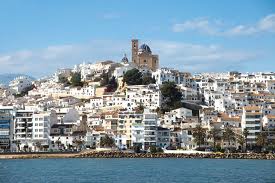
Hallmark photo of Altea
When I told people of my intention to abandon my lucrative professional career as a forensic psychologist in California and leave the San Luis Obispo area to move to Spain, I got one of two reactions. They either thought I was nuts or they were envious. In either case, they asked why I would leave the area that has been touted by Oprah Winfrey, National Geographic, U.S. News and numerous others, to be the best place to live in the United States, if not the world.

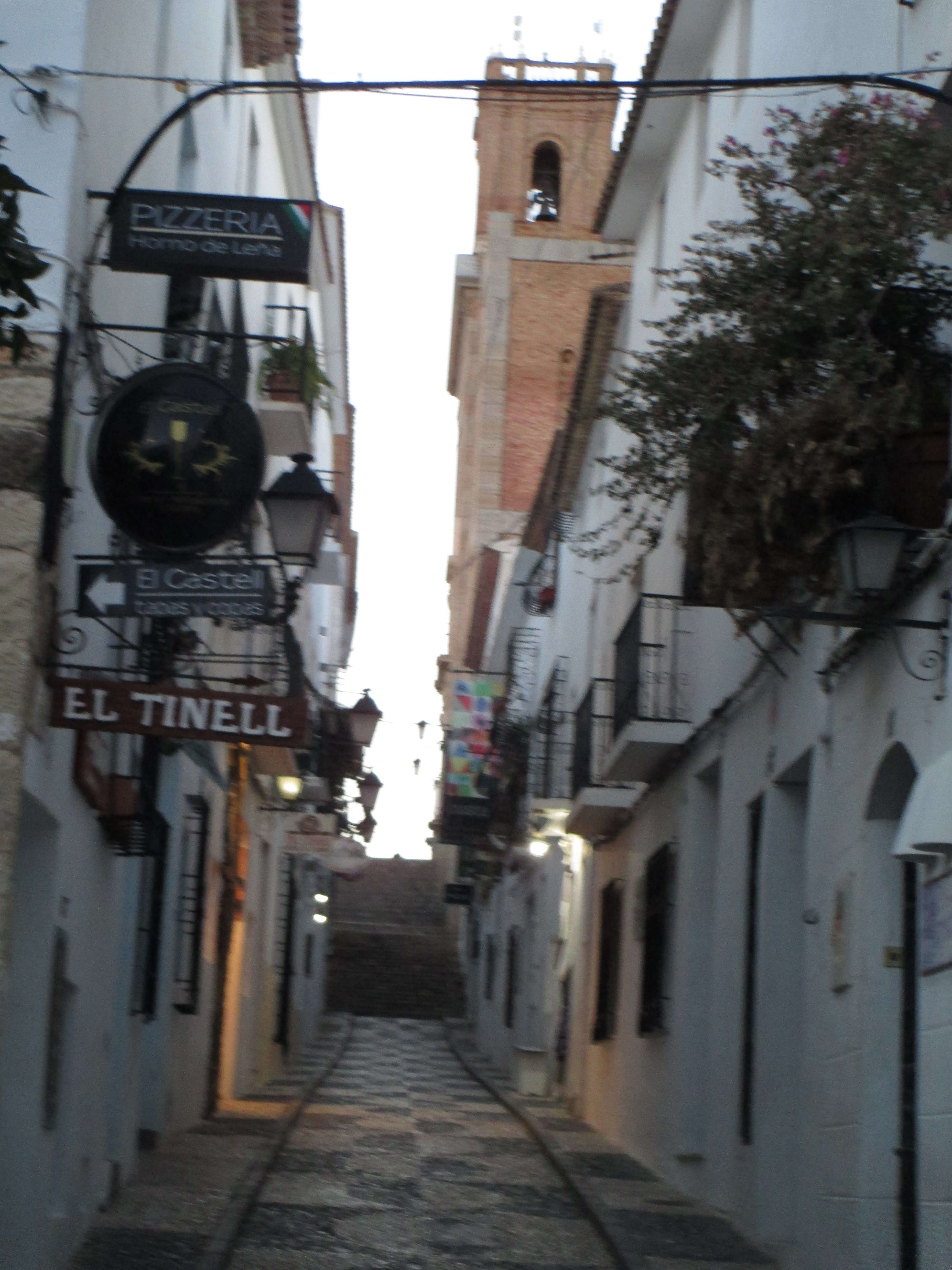
Casco Antiguo (Old Town) Altea
My decision was based on a combination of factors that were sometimes difficult for me to explain, or perhaps more aptly, for them to understand. The quality of life in my small, picturesque beachside town of Altea (consistently rated as one of the top 10 most beautiful villages in Spain) far surpasses the stress and money-driven culture to which I had become accustomed. Life here and in many parts of Spain are driven first and foremost by family. One commonly sees multi-generational families strolling along the beachfront esplanade, dining or drinking together (often until very late at night), and fathers and grandfathers confidently and lovingly caring for the family babies and children (with no women in sight.) Spanish people work to live and generally are not consumed with a desire for wealth or material things. Besides family, friends, food and fun are valued. It didn’t take me long to appreciate this simpler, but more fulfilling existence.
Before I moved to Spain, I had a busy, in retrospect, too busy, career as a forensic psychologist specializing in the evaluation of and testimony as an expert on Sexually Violent Predators. As my third and youngest son was approaching high school graduation, I realized I was tired of working so hard to maintain our upscale lifestyle including our 3500 square foot home on a French-inspired fully landscaped acre, an expensive car, and the cost associated with living in a highly desirable area. After being the sole breadwinner and parent to my three boys for over 25 years, I wanted a change to a simpler, better quality life. For me, that meant Spain.

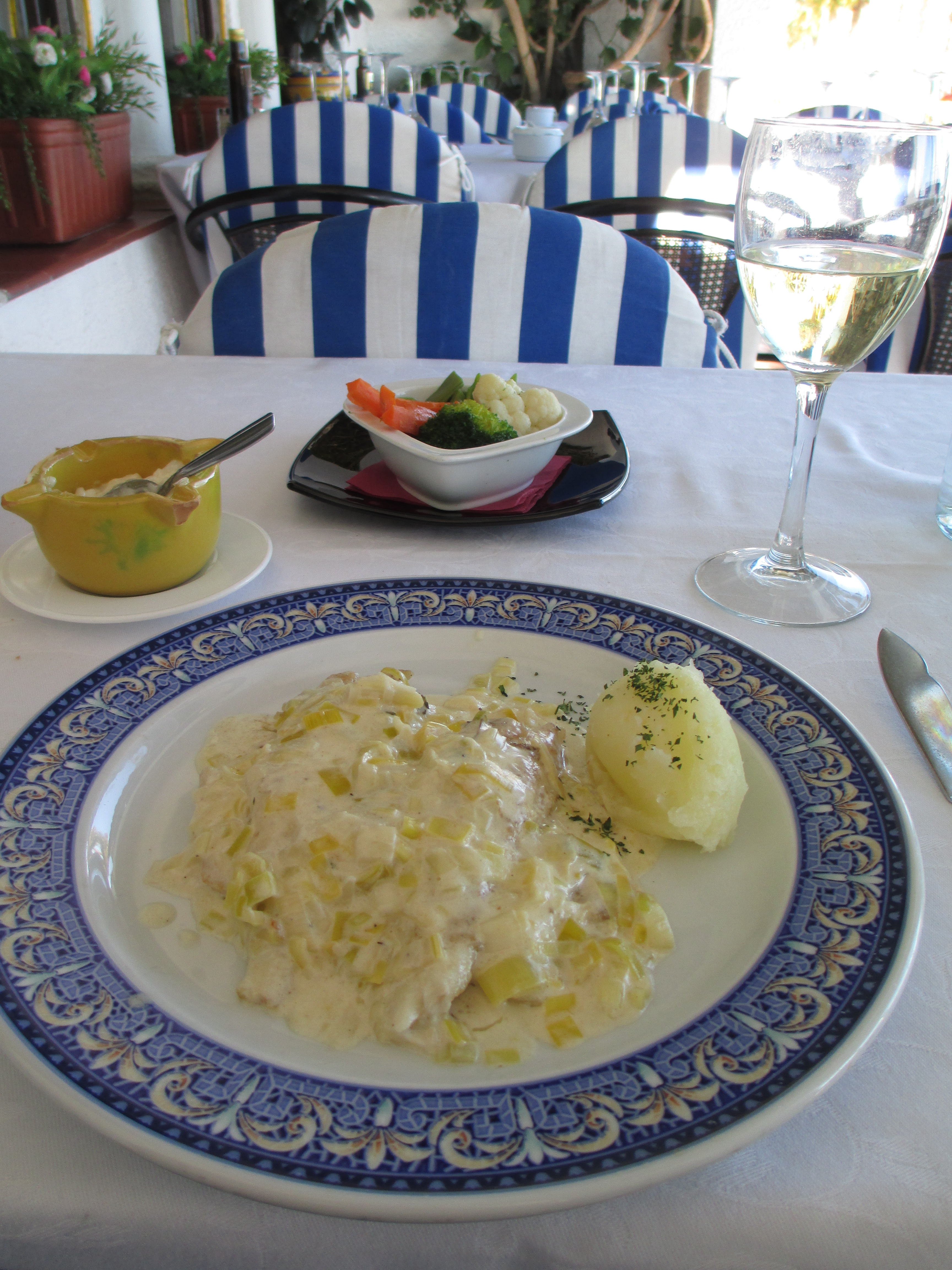
Fish with leek sauce at local beachside restaurant
My wanderlust had led me to travel to almost 40 countries, and while I had frequently fantasized about moving to Italy, France or Spain, I never really thought I would do it. When I reminded my youngest son of my plan to sell the house when the youngest graduated high school, he was less than pleased and would have liked to stay forever. The month before he was to graduate, I put the house on the market and I had accepted an offer only six days later. I felt pangs of guilt and he was none too happy to have to negotiate final exams, senior graduation activities, and moving all at the same time. Once I had put the house for sale, I interviewed three companies for my estate sale and selected the most experienced with the lowest commission rates. I sold everything from the pool table, to the grand piano and every bit of furniture, except the items I had promised to my sons and the few pieces of kitchenware and children’s mementos I planned to ship to Spain.

View from my place after sunset
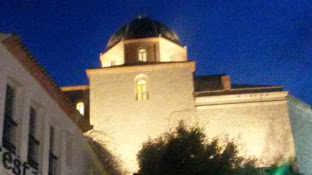
Even though I had previously travelled to Spain, it was to larger cities, not the type of quaint village I so desired. So I took the unorthodox approach of diligently researching all of my requirements on the internet which included a picturesque village on the Mediterranean, temperate weather, music and dance events, and no need for a car. Thus when I arrived in Altea, it was the first time I had been there. It was more beautiful and magical in person than photos could portray. At the top of the hill is the Altea’s iconic cathedral with its royal blue domes decorated with white ceramic tiles. The plaza on which it sits is the site for many of Altea’s festivals. Below, the white buildings cascade down from the top of the hill, in a manner reminiscent of a Greek village.

View of Calpe from Altea beach at sunset
While there are many things I love about Spain, as anyone who has lived there knows, the bureaucracy is atrocious. If you need to conduct any official Spanish governmental business, expect to have to return multiple times to accomplish even a small task, and be prepared to be given different instructions each time. A case in point was my visa, which I did eventually receive after negotiating the inconsistent, and sometimes impossible, requirements. However, the details of that endeavor would take a whole, separate article!
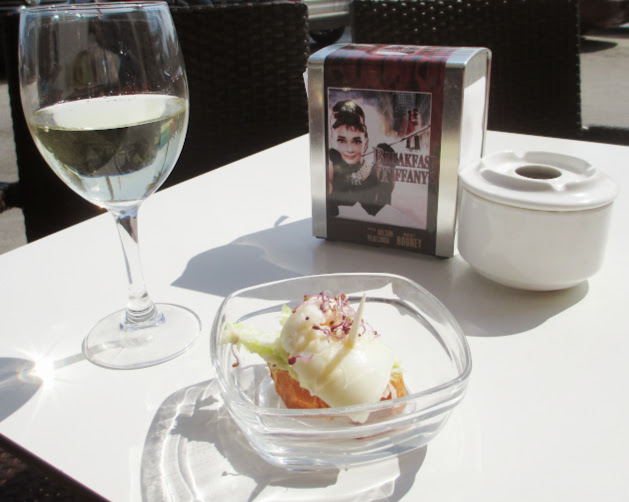
Concurrently, I began diligent, daily practice of Castilian Spanish, as I only spoke basic Mexican Spanish. One of the things that attracted me to Spain was that I would be able to speak the language by the time I was ready to move there in an estimated year and a half while getting my affairs in order. I was in for a big surprise when I found out the primary language in Altea is Valenciana, similar to Catalan. Once in Spain, I readily made friends with locals, from Spain and many other countries, and honed my Spanish with practice each evening over drinks and tapas. I found it far easier to make friends in Spain than where I had been living in California for the past nearly 30 years. When I would head out for my evening at one of my customary places, I was typically greeted with, “¿Vino blanco?,” as the friendly waiters anticipated my usual white wine. A decent glass of house wine, white, red or rosé, is typically around 2€, and sometimes includes a tapa; beer is even less and these prices are at oceanfront spots frequented by locals and tourists, so prices can be even lower if one goes to places where there are primarily locals. While enjoying my wine and the view of the turquoise Mediterranean, I sometimes end up conversing with someone, and often we end up exchanging contact information or agreeing to meet on another occasion.

View of Altea church at dusk
I wanted to test drive my town and neighborhood before renting or buying. I first stayed at a vacation rental I found on the web. This allowed me to live in Casco Antiguo, (old town,) like a local, and decide which particular area met my needs before settling on a permanent spot. In the northern Costa Blanca where I live, there are one or two bedroom apartments, some furnished, for as low as 300 Euros, which is currently about $340. Less expensive rentals are available away from the beach and the historic old town or if you go to the towns more inland.
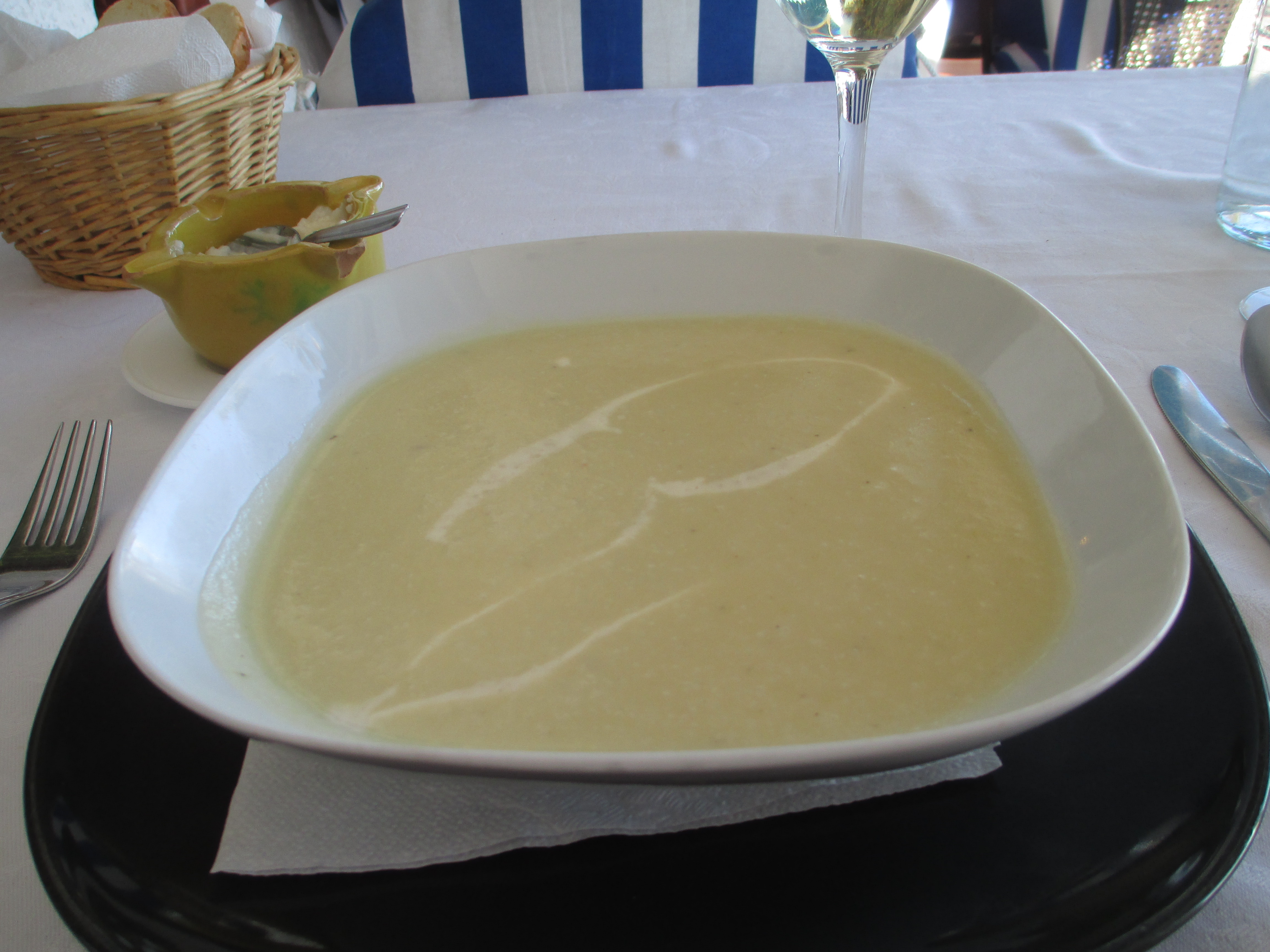
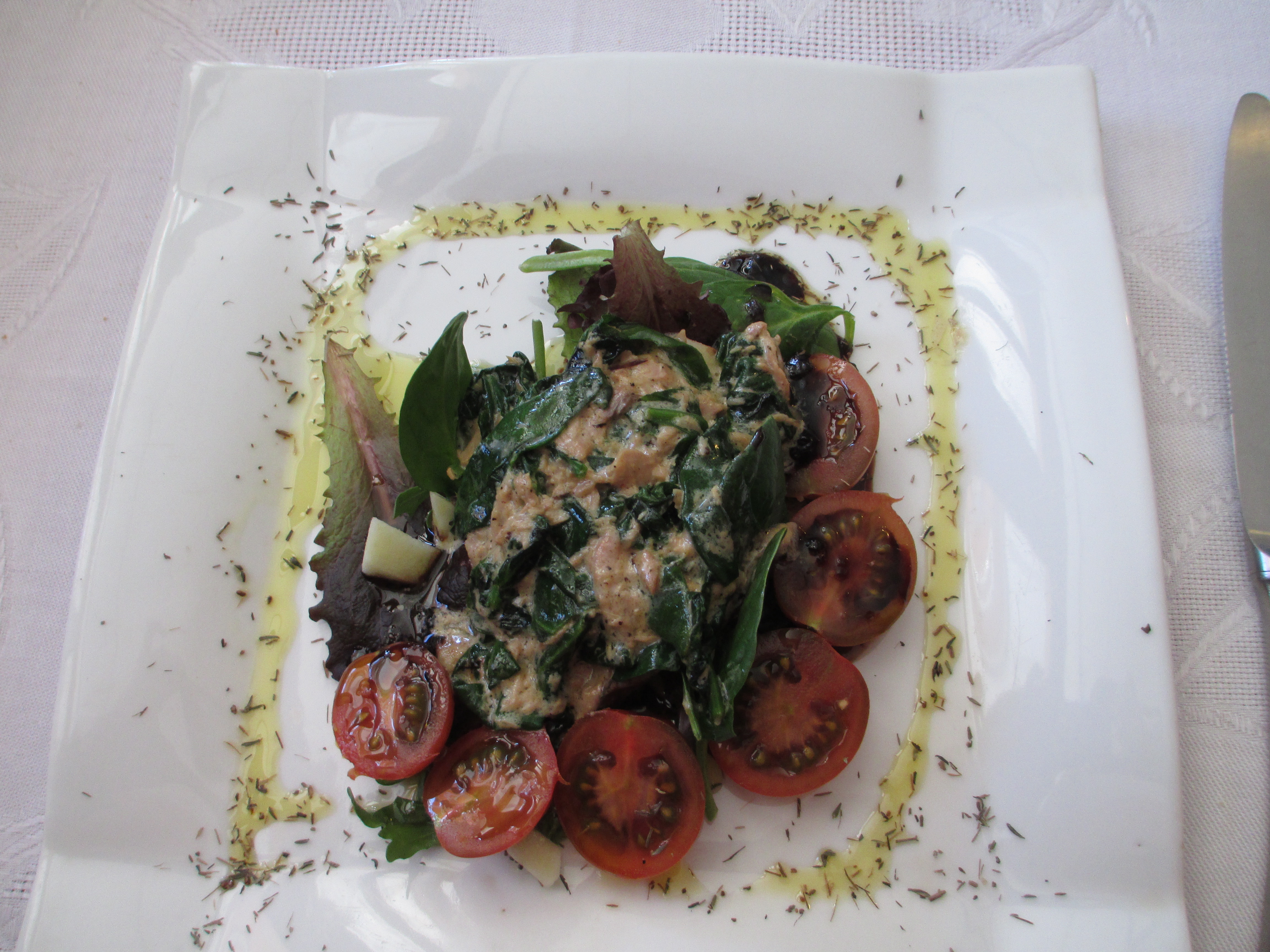
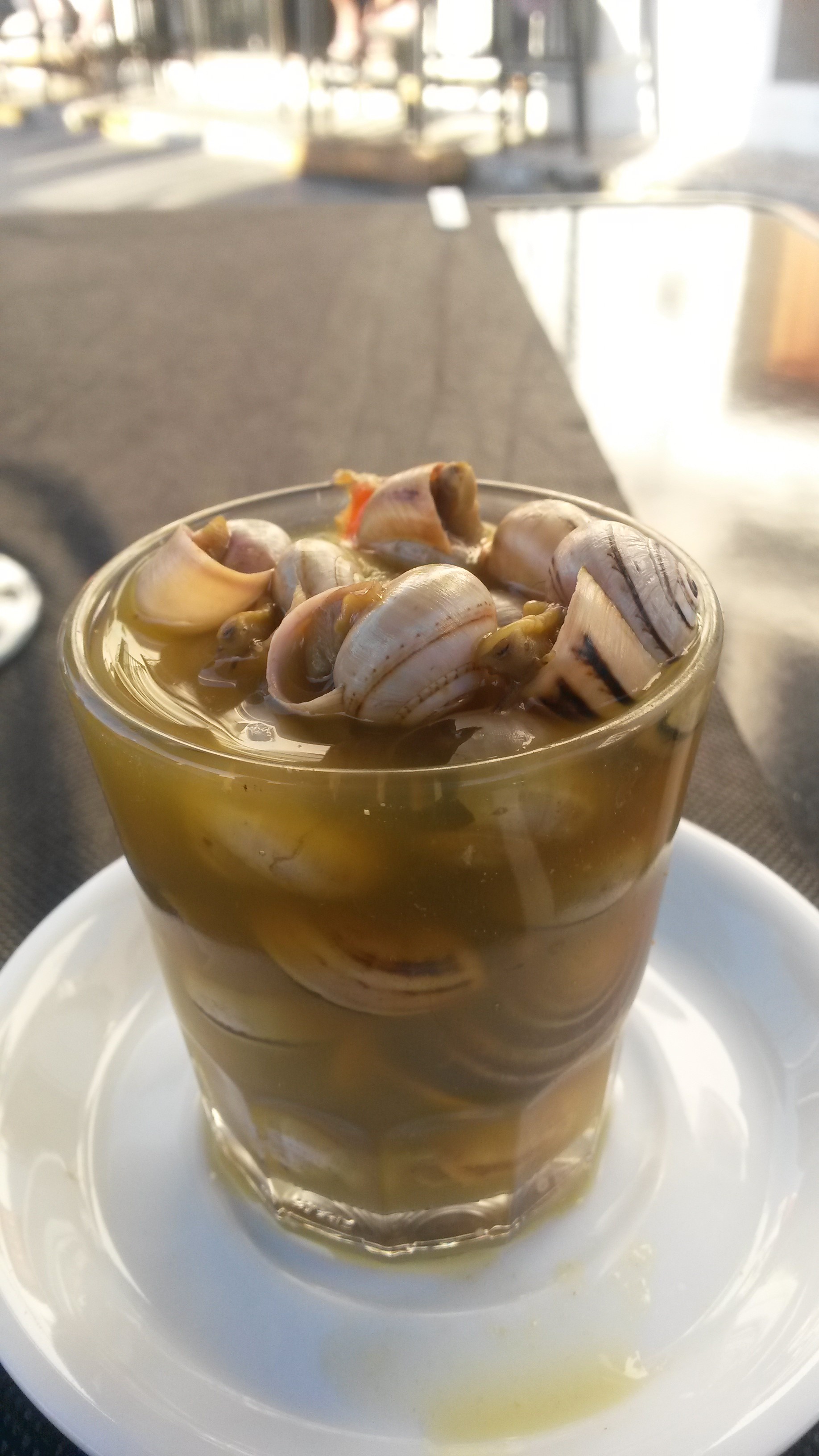
Meals can be an incredibly good deal, as well. Many restaurants offer a “Menu del Dia” from which you can order two courses, and get bread with alioli (the Spanish version of aioli), a beverage (wine, beer, soda or bottled water), and either a dessert or coffee generally for around 10 to 13€. I was surprised that I quickly adapted to the Spanish tradition of having a larger, late lunch, and then later skipping dinner or having a tapa. This is very economical and resulted in the unexpected benefit of losing weight.

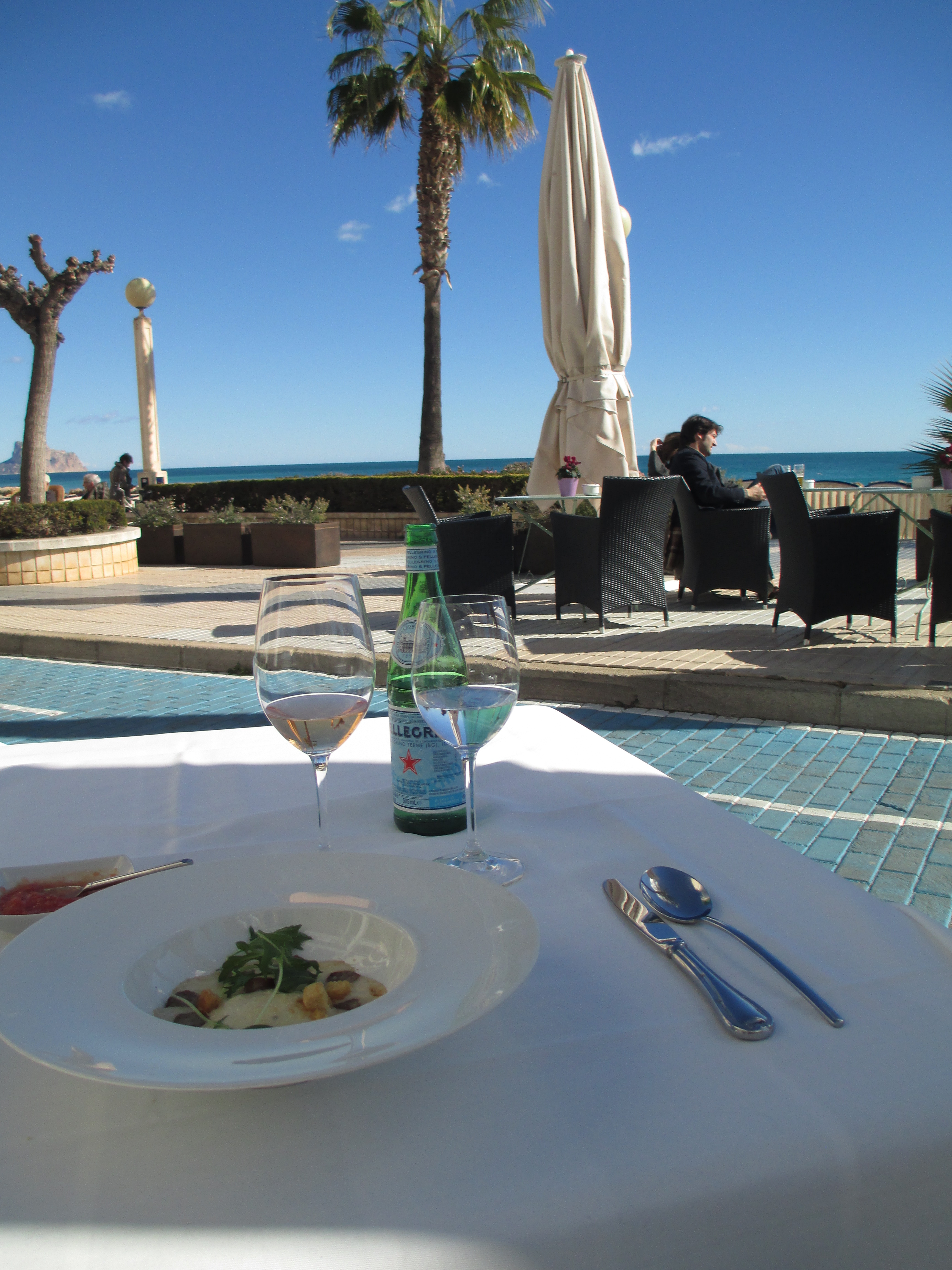
Beachside dining with Calpe in the distance
fill my days with Zumba and other dance classes, a typical late and long Spanish lunch (almost always eating one of the many delicious fish or seafood choices), taking my dog to play at the new dog park, going home for a siesta or household tasks, and then heading out for an evening drink where I would meet up with friends to talk and dance, often well past midnight. On Sundays my Cuban friends and I head for live Cuban music at a bar which has a vibrant international crowd. My dream of a simple, fulfilling life has been realized.
Stay tuned for interesting and fun accounts of my time in Altea and beyond.
Tags: Moving to Spain, Multicultural friends, Quality of life


![IMG_0371[1]](https://starrtreks.com/wp-content/uploads/2015/03/img_03711.jpg)
![IMG_0370[1]](https://starrtreks.com/wp-content/uploads/2015/03/img_03701.jpg)
![IMG_0367[1]](https://starrtreks.com/wp-content/uploads/2015/03/img_03671.jpg)
![IMG_0354[1]](https://starrtreks.com/wp-content/uploads/2015/03/img_03541.jpg)
![IMG_0357[1]](https://starrtreks.com/wp-content/uploads/2015/03/img_03571.jpg)
![IMG_0398[1]](https://starrtreks.com/wp-content/uploads/2015/03/img_03981.jpg)
![IMG_0400[1]](https://starrtreks.com/wp-content/uploads/2015/03/img_04001.jpg)
![IMG_0403[1]](https://starrtreks.com/wp-content/uploads/2015/03/img_04031.jpg)
![IMG_0408[1]](https://starrtreks.com/wp-content/uploads/2015/03/img_04081.jpg)
![IMG_0409[1]](https://starrtreks.com/wp-content/uploads/2015/03/img_04091.jpg)








 Starr Treks